Gerardo della Paolera – författare
Visar alla böcker från författaren Gerardo della Paolera. Handla med fri frakt och snabb leverans.
4 produkter
4 produkter
E-bok
PDF, Engelska, 20071 175 kr
Läs direkt efter köp
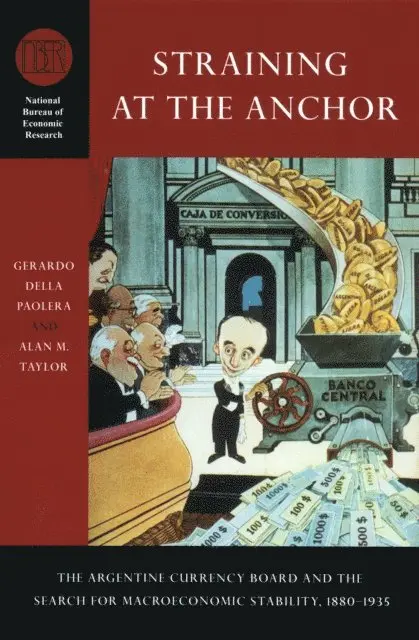
The "Argentine disappointment"—why Argentina persistently failed to achieve sustained economic stability during the twentieth century—is an issue that has mystified scholars for decades. In Straining the Anchor, Gerardo della Paolera and Alan M. Taylor provide many of the missing links that help explain this important historical episode. Written chronologically, this book follows the various fluctuations of the Argentine economy from its postrevolutionary volatility to a period of unprecedented prosperity to a dramatic decline from which the country has never fully recovered. The authors examine in depth the solutions that Argentina has tried to implement such as the Caja de Conversión, the nation''s first currency board which favored a strict gold-standard monetary regime, the forerunner of the convertibility plan the nation has recently adopted. With many countries now using—or seriously contemplating—monetary arrangements similar to Argentina''s, this important and persuasive study maps out one of history''s most interesting monetary experiments to show what works and what doesn''t.
Häftad, Engelska, 2011
686 kr
Skickas inom 7-10 vardagar
Argentine economic history has long presented a puzzle: how could a country that was once one of the world's richest, now fare so poorly? What is the economic story behind such long-run divergence? And how does economic reality reflect deeper social, institutional and political forces? Not since the publication of Carlos Díaz Alejandro's Essays on the Economic History of the Argentine Republic in 1970 has there been another standard reference for those seeking a more quantitative understanding of Argentina's development. In the intervening years research in the 'new economic history' has crafted a more sophisticated interpretation of the past. This 2004 book provides the reader access to research, focusing on long-run economic change, major developments in policy making, and important shifts in institutions and ideas. The lessons from Argentina's turbulent economic past represent the essential context for the issues that confront scholars, students, and policy-makers.
E-bok
Spanska, 2020117 kr
Läs direkt efter köp
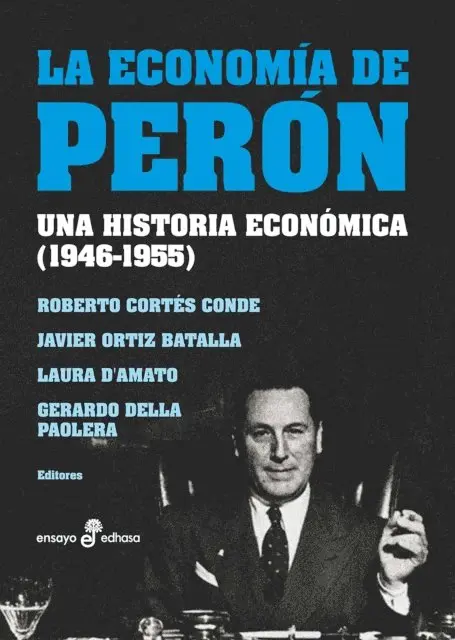
Es imposible entender la Argentina actual sin tener presente el período 1946-1955: los primeros dos gobiernos de Juan Domingo Perón. Aunque han pasado casi siete décadas desde entonces, los efectos de sus transformaciones se sienten hasta hoy. La perspectiva, el tiempo histórico transcurrido, nuestras sucesivas y cíclicas crisis, invitan a analizar ese tiempo de otra manera.Este libro, dirigido por Roberto Cortés Conde, Javier Ortiz Batalla, Laura D´Amato y Gerardo della Paolera, y con trabajos de reconocidos especialistas, se propone exactamente eso: una profunda revisión de las decisiones económicas tomadas en esos años. Las temerarias medidas de política monetaria y los cambios en el mercado laboral, el impacto en la industria y en el campo, en las finanzas y en lo fiscal. Si se tienen en cuenta los objetivos y las metas declamados por aquel peronismo, se verifica que sólo una se cumplió: la mejora en la vida de los trabajadores. La contracara de esto es una sucesión de déficits y desequilibrios, y un país que en 1955 estaba descapitalizado y que no era capaz de sostener, de manera genuina, esas mejoras en el tiempo. La base era frágil: se habían consumido las importantes reservas que el Banco Central tenía en 1945, en gran medida como consecuencia de la Segunda Guerra Mundial, y no se había logrado la transformación económica prometida. La economía de Perón discute la forma en que se implementaron esas políticas, señala sus numerosas contradicciones, hace una crítica aguda de su legado y demuestra que ciertos dilemas de mediados del siglo XX siguen vigentes, y agudizados, en la segunda década del siglo XXI.
Inbunden, Engelska, 2003
1 586 kr
Tillfälligt slut
Argentine economic history has long presented a puzzle: how could a country that was once one of the world's richest, now fare so poorly? What is the economic story behind such long-run divergence? And how does economic reality reflect deeper social, institutional and political forces? Not since the publication of Carlos Díaz Alejandro's Essays on the Economic History of the Argentine Republic in 1970 has there been another standard reference for those seeking a more quantitative understanding of Argentina's development. In the intervening years research in the 'new economic history' has crafted a more sophisticated interpretation of the past. This 2004 book provides the reader access to research, focusing on long-run economic change, major developments in policy making, and important shifts in institutions and ideas. The lessons from Argentina's turbulent economic past represent the essential context for the issues that confront scholars, students, and policy-makers.