Gerrit L. Verschuur – författare
Visar alla böcker från författaren Gerrit L. Verschuur. Handla med fri frakt och snabb leverans.
10 produkter
10 produkter
E-bok
Engelska, 1996351 kr
Läs direkt efter köp
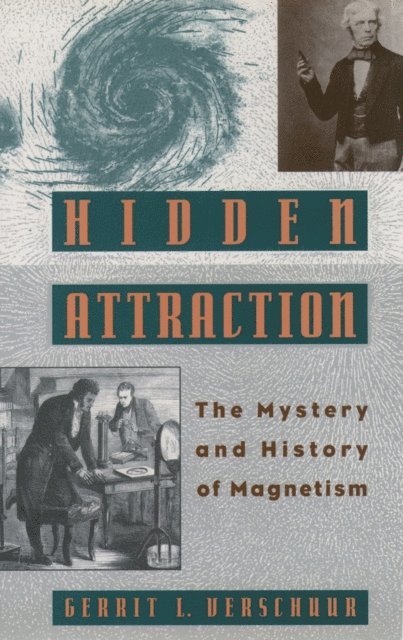
Long one of nature''s most fascinating phenomena, magnetism was once the subject of many superstitions. Magnets were thought useful to thieves, effective as a love potion or as a cure for gout or spasms. They could remove sorcery from women and put demons to flight and even reconcile married couples. It was said that a lodestone pickled in the salt of sucking fish had the power to attract gold. Today, these beliefs have been put aside, but magnetism is no less remarkable for our modern understanding of it. In Hidden Attraction, Gerrit L. Verschuur, a noted astronomer and National Book Award nominee for The Invisible Universe, traces the history of our fascination with magnetism, from the first discovery of magnets in Greece, to state-of-the-art theories that see magnetism as a basic force in the universe. The book begins with the early debunking of superstitions by Peter Peregrinus (Pierre de Maricourt), whom Roger Bacon hailed as one of the world''s first experimental scientists (Perigrinus held that "experience rather than argument is the basis of certainty in science"). Verschuur discusses William Gilbert, who confronted the multitude of superstitions about lodestones in De Magnete, widely regarded as the first true work of modern science, in which Gilbert reported his greatest insight: that the earth itself was magnetic. We also meet Hans Christian Oersted, who demonstrated that an electric current could influence a magnet (Oersted did this for the first time during a public lecture) and Andre-Marie Ampere, who showed that a current actually produced magnetism. Verschuur also examines the pioneering experiments and theoretical breakthroughs of Faraday and Maxwell and Zeeman (who demonstrated the relationship between light and magnetism), and he includes many lively stories of discovery, such as the use of frogs by Galvani and Volta, and Hertz''s accidental discovery of radio waves. Along the way, we learn many interesting scientific facts, perhaps the most remarkable of which is that lodestones are made by bacteria (a sediment organism known as GS-15 eats iron, converting ferric oxide to magnetite and, over billions of years, forming the magnetite layers in iron formations). Boasting many informative illustrations, this is an adventure of the mind, using the specific phenomenon of magnetism to show how we have moved from an era of superstitions to one in which the Theory of Everything looms on the horizon.
E-bok
Engelska, 1997153 kr
Läs direkt efter köp
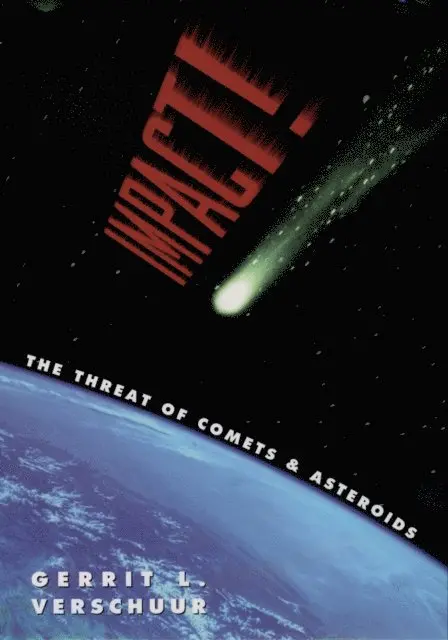
Most scientists now agree that some sixty-five million years ago, an immense comet slammed into the Yucatan, detonating a blast twenty million times more powerful than the largest hydrogen bomb, punching a hole ten miles deep in the earth. Trillions of tons of rock were vaporized and launched into the atmosphere. For a thousand miles in all directions, vegetation burst into flames. There were tremendous blast waves, searing winds, showers of molten matter from the sky, earthquakes, and a terrible darkness that cut out sunlight for a year, enveloping the planet in freezing cold. Thousands of species of plants and animals were obliterated, including the dinosaurs, some of which may have become extinct in a matter of hours. In Impact, Gerrit L. Verschuur offers an eye-opening look at such catastrophic collisions with our planet. Perhaps more important, he paints an unsettling portrait of the possibility of new collisions with earth, exploring potential threats to our planet and describing what scientists are doing right now to prepare for this awful possibility. Every day something from space hits our planet, Verschuur reveals. In fact, about 10,000 tons of space debris fall to earth every year, mostly in meteoric form. The author recounts spectacular recent sightings, such as over Allende, Mexico, in 1969, when a fireball showered the region with four tons of fragments, and the twenty-six pound meteor that went through the trunk of a red Chevy Malibu in Peekskill, New York, in 1992 (the meteor was subsequently sold for $69,000 and the car itself fetched $10,000). But meteors are not the greatest threat to life on earth, the author points out. The major threats are asteroids and comets. The reader discovers that astronomers have located some 350 NEAs ("Near Earth Asteroids"), objects whose orbits cross the orbit of the earth, the largest of which are 1627 Ivar (6 kilometers wide) and 1580 Betula (8 kilometers). Indeed, we learn that in 1989, a bus-sized asteroid called Asclepius missed our planet by 650,000 kilometers (a mere six hours), and that in 1994 a sixty-foot object passed within 180,000 kilometers, half the distance to the moon. Comets, of course, are even more deadly. Verschuur provides a gripping description of the small comet that exploded in the atmosphere above the Tunguska River valley in Siberia, in 1908, in a blinding flash visible for several thousand miles (every tree within sixty miles of ground zero was flattened). He discusses Comet Swift-Tuttle--"the most dangerous object in the solar system"--a comet far larger than the one that killed off the dinosaurs, due to pass through earth''s orbit in the year 2126. And he recounts the collision of Comet Shoemaker-Levy 9 with Jupiter in 1994, as some twenty cometary fragments struck the giant planet over the course of several days, casting titanic plumes out into space (when Fragment G hit, it outshone the planet on the infrared band, and left a dark area at the impact site larger than the Great Red Spot). In addition, the author describes the efforts of Spacewatch and other groups to locate NEAs, and evaluates the idea that comet and asteroid impacts have been an underrated factor in the evolution of life on earth. Astronomer Herbert Howe observed in 1897: "While there are not definite data to reason from, it is believed that an encounter with the nucleus of one of the largest comets is not to be desired." As Verschuur shows in Impact, we now have substantial data with which to support Howe''s tongue-in-cheek remark. Whether discussing monumental tsunamis or the innumerable comets in the Solar System, this book will enthrall anyone curious about outer space, remarkable natural phenomenon, or the future of the planet earth.
Häftad, Engelska, 1998
198 kr
Skickas inom 5-8 vardagar
reviews from hardback edition to be inserted
E-bok
PDF, Engelska, 1997158 kr
Läs direkt efter köp
Most scientists now agree that some sixty-five million years ago, an immense comet slammed into the Yucatan, detonating a blast twenty million times more powerful than the largest hydrogen bomb, punching a hole ten miles deep in the earth. Trillions of tons of rock were vaporized and launched into the atmosphere. For a thousand miles in all directions, vegetation burst into flames. There were tremendous blast waves, searing winds, showers of molten matter from the sky, earthquakes, and a terrible darkness that cut out sunlight for a year, enveloping the planet in freezing cold. Thousands of species of plants and animals were obliterated, including the dinosaurs, some of which may have become extinct in a matter of hours. In Impact, Gerrit L. Verschuur offers an eye-opening look at such catastrophic collisions with our planet. Perhaps more important, he paints an unsettling portrait of the possibility of new collisions with earth, exploring potential threats to our planet and describing what scientists are doing right now to prepare for this awful possibility. Every day something from space hits our planet, Verschuur reveals. In fact, about 10,000 tons of space debris fall to earth every year, mostly in meteoric form. The author recounts spectacular recent sightings, such as over Allende, Mexico, in 1969, when a fireball showered the region with four tons of fragments, and the twenty-six pound meteor that went through the trunk of a red Chevy Malibu in Peekskill, New York, in 1992 (the meteor was subsequently sold for $69,000 and the car itself fetched $10,000). But meteors are not the greatest threat to life on earth, the author points out. The major threats are asteroids and comets. The reader discovers that astronomers have located some 350 NEAs ("Near Earth Asteroids"), objects whose orbits cross the orbit of the earth, the largest of which are 1627 Ivar (6 kilometers wide) and 1580 Betula (8 kilometers). Indeed, we learn that in 1989, a bus-sized asteroid called Asclepius missed our planet by 650,000 kilometers (a mere six hours), and that in 1994 a sixty-foot object passed within 180,000 kilometers, half the distance to the moon. Comets, of course, are even more deadly. Verschuur provides a gripping description of the small comet that exploded in the atmosphere above the Tunguska River valley in Siberia, in 1908, in a blinding flash visible for several thousand miles (every tree within sixty miles of ground zero was flattened). He discusses Comet Swift-Tuttle--"the most dangerous object in the solar system"--a comet far larger than the one that killed off the dinosaurs, due to pass through earth''s orbit in the year 2126. And he recounts the collision of Comet Shoemaker-Levy 9 with Jupiter in 1994, as some twenty cometary fragments struck the giant planet over the course of several days, casting titanic plumes out into space (when Fragment G hit, it outshone the planet on the infrared band, and left a dark area at the impact site larger than the Great Red Spot). In addition, the author describes the efforts of Spacewatch and other groups to locate NEAs, and evaluates the idea that comet and asteroid impacts have been an underrated factor in the evolution of life on earth. Astronomer Herbert Howe observed in 1897: "While there are not definite data to reason from, it is believed that an encounter with the nucleus of one of the largest comets is not to be desired." As Verschuur shows in Impact, we now have substantial data with which to support Howe''s tongue-in-cheek remark. Whether discussing monumental tsunamis or the innumerable comets in the Solar System, this book will enthrall anyone curious about outer space, remarkable natural phenomenon, or the future of the planet earth.
E-bok
PDF, Engelska, 1996355 kr
Läs direkt efter köp
Long one of nature''s most fascinating phenomena, magnetism was once the subject of many superstitions. Magnets were thought useful to thieves, effective as a love potion or as a cure for gout or spasms. They could remove sorcery from women and put demons to flight and even reconcile married couples. It was said that a lodestone pickled in the salt of sucking fish had the power to attract gold. Today, these beliefs have been put aside, but magnetism is no less remarkable for our modern understanding of it. In Hidden Attraction, Gerrit L. Verschuur, a noted astronomer and National Book Award nominee for The Invisible Universe, traces the history of our fascination with magnetism, from the first discovery of magnets in Greece, to state-of-the-art theories that see magnetism as a basic force in the universe. The book begins with the early debunking of superstitions by Peter Peregrinus (Pierre de Maricourt), whom Roger Bacon hailed as one of the world''s first experimental scientists (Perigrinus held that "experience rather than argument is the basis of certainty in science"). Verschuur discusses William Gilbert, who confronted the multitude of superstitions about lodestones in De Magnete, widely regarded as the first true work of modern science, in which Gilbert reported his greatest insight: that the earth itself was magnetic. We also meet Hans Christian Oersted, who demonstrated that an electric current could influence a magnet (Oersted did this for the first time during a public lecture) and Andre-Marie Ampere, who showed that a current actually produced magnetism. Verschuur also examines the pioneering experiments and theoretical breakthroughs of Faraday and Maxwell and Zeeman (who demonstrated the relationship between light and magnetism), and he includes many lively stories of discovery, such as the use of frogs by Galvani and Volta, and Hertz''s accidental discovery of radio waves. Along the way, we learn many interesting scientific facts, perhaps the most remarkable of which is that lodestones are made by bacteria (a sediment organism known as GS-15 eats iron, converting ferric oxide to magnetite and, over billions of years, forming the magnetite layers in iron formations). Boasting many informative illustrations, this is an adventure of the mind, using the specific phenomenon of magnetism to show how we have moved from an era of superstitions to one in which the Theory of Everything looms on the horizon.
Inbunden, Engelska, 2006
2 221 kr
Skickas inom 10-15 vardagar
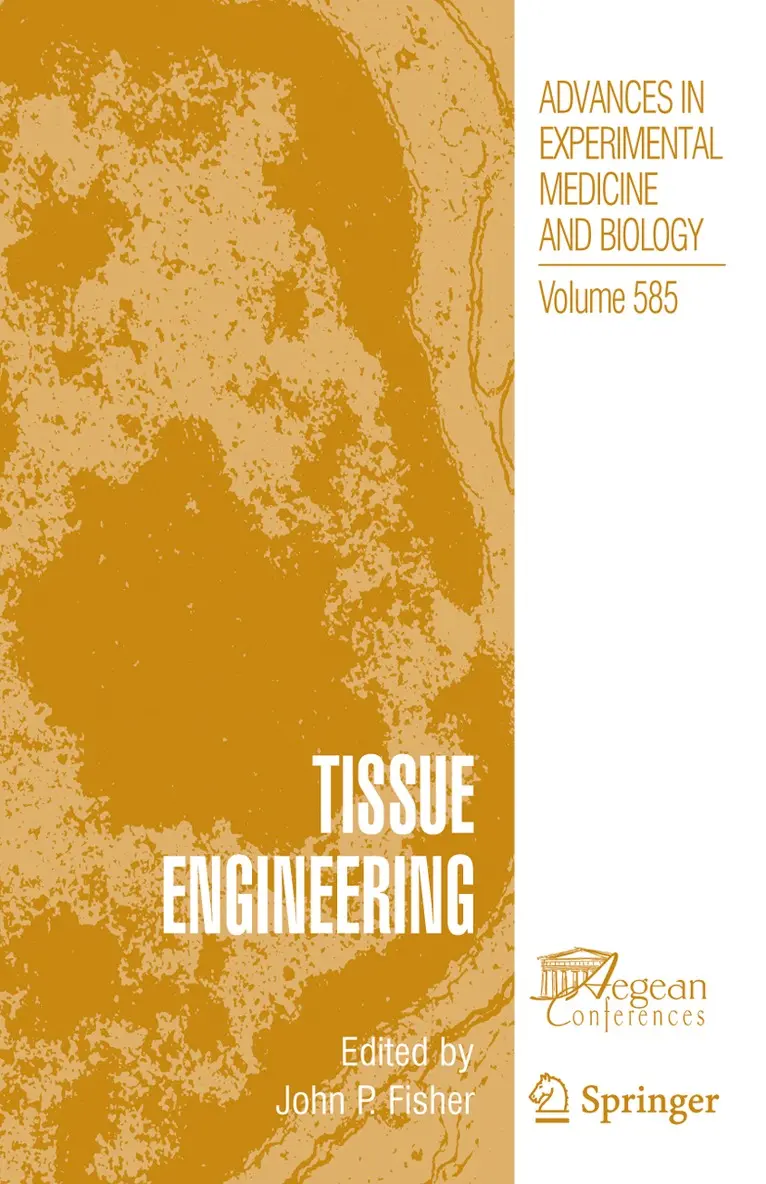
This special issue of Advances in Experimental Medicine and Biology includes much of the research presented at the recent Second International Tissue Engineering Conference. Held in Crete, Greece, as part of the Aegean Conference Series, the Second International Tissue Engineering Conference was organized by Dr. Kiki Hellman of the Hellman Group, Dr. John Jansen of the Nijmegen University Medical Center, and Dr. Antonios Mikos of Rice University. The conference brought over 150 researchers from around the world to the Knossos Royal Village Conference Center in Crete from May 22 to 27, 2005. Following along the lines of the conference program, this volume is divided into seven sections, focusing on stem cells, signals, scaffolds, applied technologies, animal models, regulatory issues, as well as specific tissue engineering strategies. Both original research papers and review papers are presented. The chapters reflect a diverse group of authors, including both clinicians and academicians. Furthermore, the issue contains - pers from Asia, Australia, Europe, and North America, demonstrating the international component of the conference. The intended audience for this issue includes researchers, advanced students, and - dustrial investigators. This issue should be a useful reference for tissue engineering courses as well as for researchers developing engineered tissues for clinical applications.
Häftad, Engelska, 2003
436 kr
Skickas inom 10-15 vardagar
In this provocative book, radio astronomer and author Gerrit L. Verschuur describes the phenomena of scientific curiosity and discovery by following the exciting story of interstellar matter. The discovery of "stuff between the stars" was the result of decades of work by hundreds of astronomers, and the evolving recognition of its existence has profoundly changed the way we view the Universe. Verschuur begins with E.E. Barnard, who puzzled for a quarter century over the interpretation of photographs of dark patches between the stars. Verschuur then traces the tortuous path to acceptance of the existence of interstellar matter. He shares with us the thrill of discovery that motivates astronomers, the use of metaphors and modeling by scientist, and other tricks of the astronomical trade. Finally, we learn about the modern study of interstellar matter: the discovery of complex organic molecules between the stars and how they may have seeded the early earth with the precursors for life, new insights into star formation, the structure of the Milky Way and the elusive interstellar magnetic field. More than a history, Interstellar Matters is a detective story that evokes the excitement and serendipity of science against the background of a century of shared effort by the world community of astronomers. From the reviews: "I can't imagine anyone interested in astronomy who won't enjoy this book - it's chocked full of science, personalities and insights. We are products of the stuff between the stars - Verschuur tells the fascinating story of how its existence was discovered. Interstellar Matters is his best book, I think. It's certainly one of the best astronomy popularizations I've read." (Leif J. Robinson, Sky & Telescope)
Häftad, Engelska, 1991
867 kr
Skickas inom 10-15 vardagar
Galactic and Extragalactic Radio Astronomy is a fundamental text for graduate students and professional astronomers and covers all aspects of radio astronomy beyond the solar system. Each chapter is written by a renowned expert in the field and contains a review of a particular area of radio astronomy and presents the latest observations and interpretations as well as an extensive view of the literature (as of 1988). Topics covered include: galactic continuum emission, HII regions, the diffuse interstellar medium, interstellar molecules, astronomical masers, neutral hydrogen, the galactic center, radio stars, supernova remnants, pulsars, extragalactic hydrogen, radio galaxies and quasars, the microwave background, and cosmological radio sources.
E-bok
PDF, Engelska, 20121 069 kr
Läs direkt efter köp
Galactic and Extragalactic Radio Astronomy is a fundamental text for graduate students and professional astronomers and covers all aspects of radio astronomy beyond the solar system. Each chapter is written by a renowned expert in the field and contains a review of a particular area of radio astronomy and presents the latest observations and interpretations as well as an extensive view of the literature (as of 1988). Topics covered include: galactic continuum emission, HII regions, the diffuse interstellar medium, interstellar molecules, astronomical masers, neutral hydrogen, the galactic center, radio stars, supernova remnants, pulsars, extragalactic hydrogen, radio galaxies and quasars, the microwave background, and cosmological radio sources.
Häftad, Engelska, 2012
544 kr
Skickas inom 10-15 vardagar
The present set of chapters by members of the staff of the National Radio Astronomy Observatory deals with the basic fields of research concerned with radio astronomy outside the solar system. The emphasis in this volume is on the type of data available and its interpretation. Basic theory is considered only where absolutely necessary, and little discussion of receivers or techniques is entered into in most of the chapters. The book is intended to take over where most textbooks on radio astronomy leave off, that is, in the discussion of what is actually known from the research done. In addition there is a chapter on the technical aspects of inter ferometry and aperture synthesis, since so much of modern radio astronomy depends, and will depend in an ever increasing manner, on such tools. The editors want to stress that the chapters were not necessarily expected to be compre hensive reviews of any of the fields being covered, but rather, overall outlines which the in dividual authors felt would be suitable for graduate students and interested workers in other fields. As a result, the lists of references are not complete. This only reflects the preferences of the individual authors and not the relative merit of those references included or omitted.