Gerry Whyte – författare
Visar alla böcker från författaren Gerry Whyte. Handla med fri frakt och snabb leverans.
5 produkter
5 produkter
E-bok
PDF, Engelska, 20183 627 kr
Läs direkt efter köp
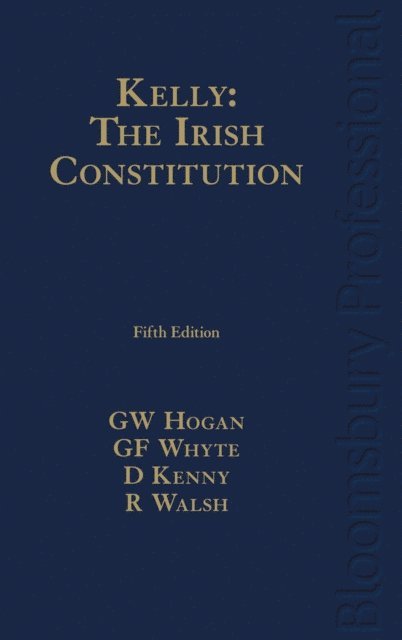
This seminal work, recognised as the authoritative and definitive commentary on Ireland''s fundamental law, provides a detailed guide to the structure of the Irish Constitution. Each Article is set out in full, in English and Irish, and examined in detail, with reference to all the leading Irish and international case law. It is essential reading for all who require knowledge of the Irish legal system and will prove a vital resource to legal professionals, students and scholars of constitutional and comparative law. This new edition is fully revised and reflects the substantive changes that have occurred in the 15 years since its last edition and includes expansion and major revision to cover the many constitutional amendments, significant constitutional cases, and developing trends in constitutional adjudication.The recent constitutional changes covered in this new edition include:* The 27th Amendment abolished the constitutional jus soli right to Irish Nationality.* The 28th Amendment allowed the State to ratify the Lisbon Treaty.* The 29th Amendment relaxed the prohibition on the reduction of the salaries of Irish judges.* The 30th Amendment allowed the State to ratify the European Fiscal Compact.* The 31st Amendment was a general statement of children''s rights and a provision intended to secure the power of the State to take children into care.* The 33rd Amendment mandated a new Court of Appeal* The 34th Amendment prohibited restriction on civil marriage based on sex.* The 36th Amendment allowed the Oireachtas to legislate for abortion.New sections include a look at the impact of the Constitution on substantive criminal law, and a detailed treatment of the impact of Article 40.5, protecting the inviolability of the dwelling, on both criminal procedure and civil law. Other sections have been expanded with in-depth analysis of referendums, challenges to campaigns and results, coverage of Oireachtas privilege, changes in constitutional interpretation, private property rights, and judicial independence. In particular extensive rewriting has taken place on the section dealing with the provisions relating to the courts contained in Article 34 following the establishment of the Court of Appeal and the far-reaching changes to the appellate structure from the 33rd Amendment of the Constitution Act 2013.This title is included in Bloomsbury Professional''s Irish Civil Litigation online service.
E-bok
Engelska, 20183 627 kr
Läs direkt efter köp
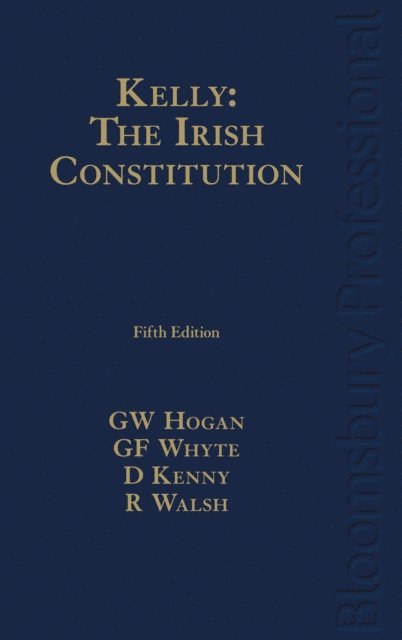
This seminal work, recognised as the authoritative and definitive commentary on Ireland''s fundamental law, provides a detailed guide to the structure of the Irish Constitution. Each Article is set out in full, in English and Irish, and examined in detail, with reference to all the leading Irish and international case law. It is essential reading for all who require knowledge of the Irish legal system and will prove a vital resource to legal professionals, students and scholars of constitutional and comparative law. This new edition is fully revised and reflects the substantive changes that have occurred in the 15 years since its last edition and includes expansion and major revision to cover the many constitutional amendments, significant constitutional cases, and developing trends in constitutional adjudication.The recent constitutional changes covered in this new edition include:* The 27th Amendment abolished the constitutional jus soli right to Irish Nationality.* The 28th Amendment allowed the State to ratify the Lisbon Treaty.* The 29th Amendment relaxed the prohibition on the reduction of the salaries of Irish judges.* The 30th Amendment allowed the State to ratify the European Fiscal Compact.* The 31st Amendment was a general statement of children''s rights and a provision intended to secure the power of the State to take children into care.* The 33rd Amendment mandated a new Court of Appeal* The 34th Amendment prohibited restriction on civil marriage based on sex.* The 36th Amendment allowed the Oireachtas to legislate for abortion.New sections include a look at the impact of the Constitution on substantive criminal law, and a detailed treatment of the impact of Article 40.5, protecting the inviolability of the dwelling, on both criminal procedure and civil law. Other sections have been expanded with in-depth analysis of referendums, challenges to campaigns and results, coverage of Oireachtas privilege, changes in constitutional interpretation, private property rights, and judicial independence. In particular extensive rewriting has taken place on the section dealing with the provisions relating to the courts contained in Article 34 following the establishment of the Court of Appeal and the far-reaching changes to the appellate structure from the 33rd Amendment of the Constitution Act 2013.This title is included in Bloomsbury Professional''s Irish Civil Litigation online service.
Häftad, 2025
902 kr
Skickas inom 7-10 vardagar
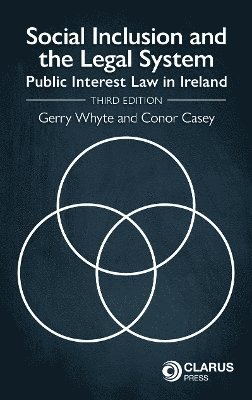
Focusing initially on the use of public interest litigation, the authors defend the constitutional and political legitimacy of such litigation, arguing that one can infer a commitment to social inclusion from the text of the Constitution and that where the political system has failed to address the needs of marginalized groups, the most appropriate agency for policing that constitutional norm is the judiciary. New material in this context explores the state’s possible legal duty to refrain from action that could impoverish an individual, considers how the constitutional right to protection of the person might be used to promote social inclusion and takes account of recent Supreme Court decisions on the interpretation of the Constitution and, in particular, on the recognition of derived constitutional rights.The authors also examine of efficacy of public interest litigation in protecting the interests of certain groups of children, members of the Traveller community, social welfare claimants and litigants seeking free legal aid. A new chapter also evaluates the use of litigation to protect those who are homeless or threatened with homelessness.In the final section of the book, the authors examine the role of the law generally in tackling social exclusion. They examine different models of legal aid and conclude that while the legal system is not capable of generating radical change in society, the strategic model of legal aid is capable of achieving limited but none the less worthwhile social reforms.
Häftad, Engelska, 2024
1 657 kr
Skickas inom 5-8 vardagar
Häftad, Engelska, 2021
1 704 kr
Skickas inom 5-8 vardagar