Gianluca Sgueo - Böcker
Visar alla böcker från författaren Gianluca Sgueo. Handla med fri frakt och snabb leverans.
5 produkter
5 produkter
979 kr
Skickas inom 10-15 vardagar
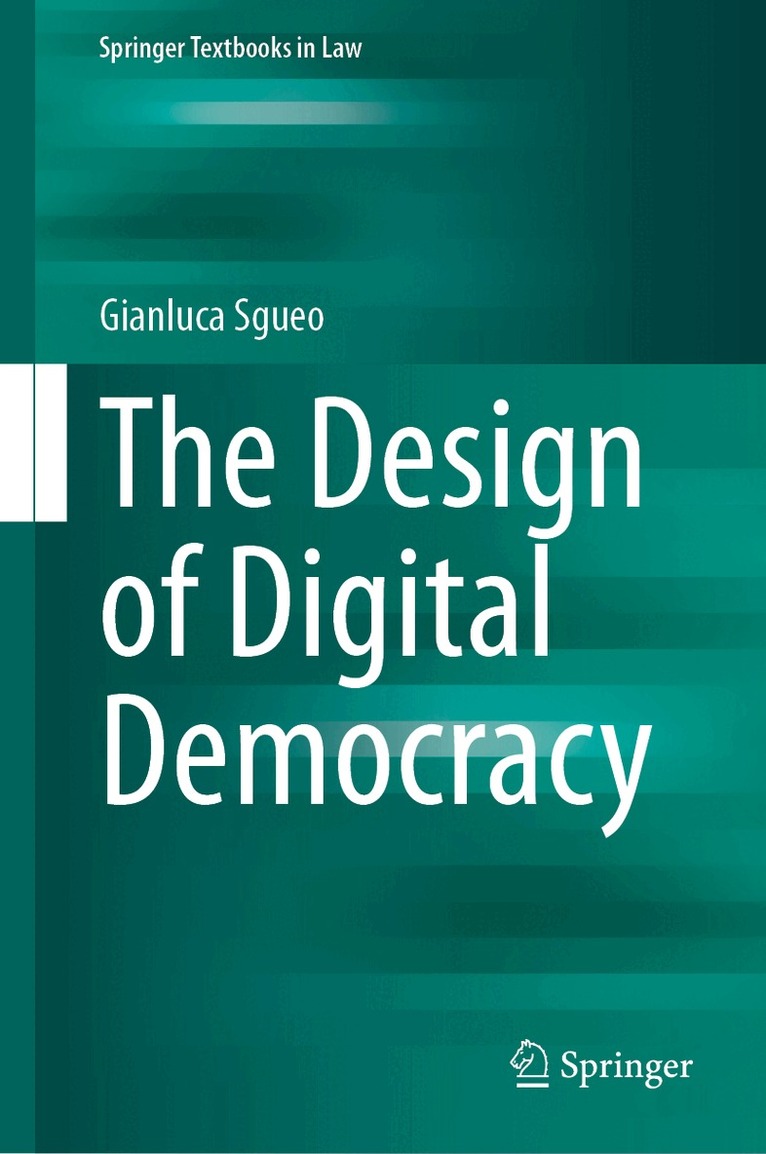
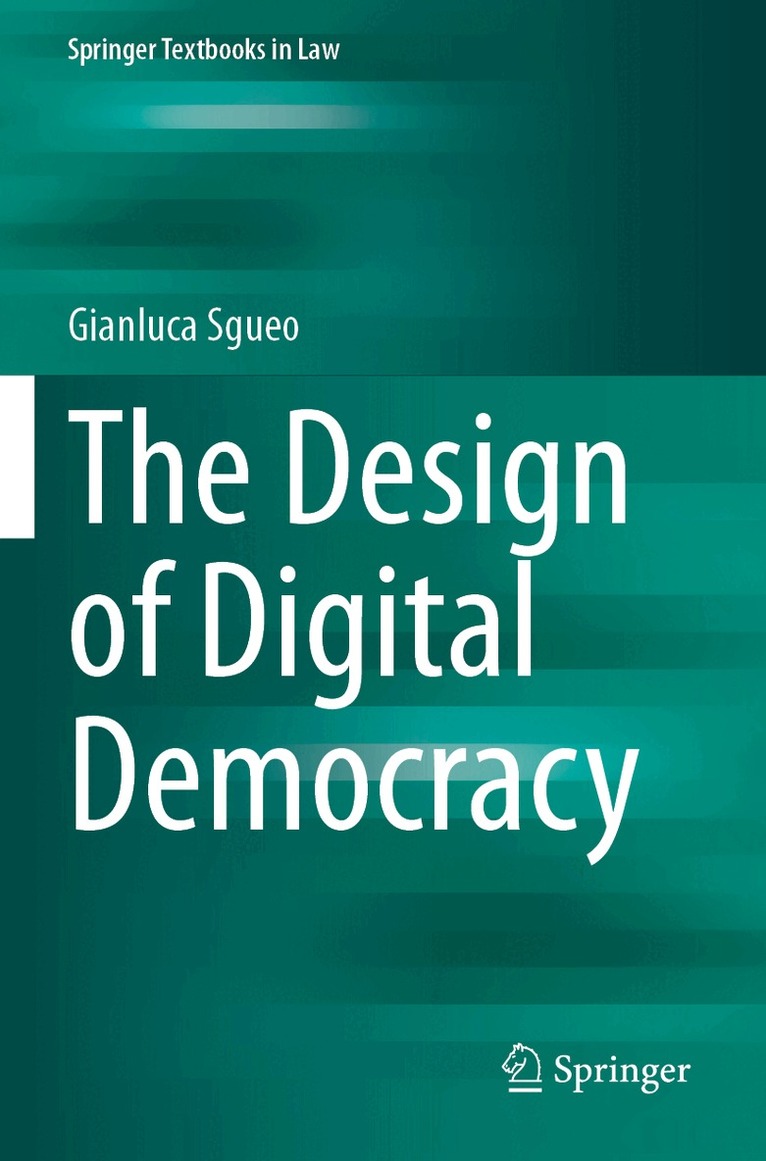
Ever-stronger ties between technology, entertainment and design are transforming our relationship with democratic decision-making. When we are online, or when we use digital products and services, we tend to focus more on certain factors like speed of service and user-friendliness, and to overlook the costs – both for ourselves and others. As a result, a widening gap separates our expectations of everything related to digitalization – including government – and the actual practice of democratic governance. Democratic regulators, unable to meet citizens’ demands for tangible, fast and gratifying returns, are seeing the poorest results ever recorded in terms of interest, engagement and retention, despite using the most cutting-edge technologies. This book explores various aspects of the relationship between democracy, technology and entertainment. These include, on the one hand, the role that digital technology has in strengthening our collective intelligence, nurturing empathic relations between citizens and democratic institutions, and supporting processes of political aggregation, deliberation and collaboration. On the other hand, they comprise the challenges accompanying digital technology for representation, transparency and inclusivity in democratic decision-making. The book’s main argument is that digital democratic spaces should be redesigned to narrow the gap between the expectations and outcomes of democratic decision-making. It suggests abandoning the notion of digital participatory rights as being fast and easy to enjoy. It also refutes the notion that digital democratic decision-making can only be effective when it delivers rapid and successful responses to the issues of the day, regardless of their complexity. Ultimately, the success or failure of digital democracy will depend on the ability of public regulators to design digital public spaces with a commitment to complexity, so as to make them appealing, but also effectiveat engaging citizens.
584 kr
Skickas inom 5-8 vardagar
687 kr
Skickas inom 10-15 vardagar
Ultimately, the success or failure of digital democracy will depend on the ability of public regulators to design digital public spaces with a commitment to complexity, so as to make them appealing, but also effectiveat engaging citizens.
Del 8 - Studies in European Economic Law and Regulation
Beyond Networks - Interlocutory Coalitions, the European and Global Legal Orders
Inbunden, Engelska, 2016
979 kr
Skickas inom 10-15 vardagar
Thisbook explores the activism promoted by organised networks of civil society actorsin opening up possibilities for more democratic supranational governance. Itexamines the positive and negative impact that such networks of civil societyactors – named “interlocutory coalitions” – may have on the convergence ofprinciples of administrative governance across the European legal system andother supranational legal systems. Thebook takes two main controversial aspects into account: the first relates tothe convergence between administrative rules pertaining to differentsupranational regulatory systems. Traditionally, the spread of methods ofadministrative governance has been depicted primarily against the background ofthe interactions between the domestic and the supranational arena, both from atop-down and bottom-up perspective. However, the exploration of interactionsoccurring at the supranational level between legal regimes is still notgrounded on adequate empirical evidence. The second controversial aspectconsidered in this book consists of the role of civil society actors operatingat the supranational level. In its discussion of the first aspect, the bookfocuses on the relations between the European administrative law and theadministrative principles of law pertaining to other supranational regulatoryregimes and regulators, including the World Bank, the International MonetaryFund, the World Trade Organization, the United Nations, the Organization forEconomic Cooperation and Development, the Asian Development Bank, and theCouncil of Europe. The examination of the second aspect involves theexploration of the still little examined, but crucial, role of civil societyorganised networks in shaping global administrative law. These “interlocutorycoalitions” include NGOs, think tanks, foundations, universities, andoccasionally activists with no formal connections to civil society organisations.The book describes such interlocutory coalitions as drivers of harmonizedprinciples of participatory democracy at the European and global levels.However, interlocutory coalitions show a number of tensions (e.g. thegovernability of coalitions, the competition among them) that may hamper the impactthey have on the reconfiguration of individuals’ rights, entitlements andresponsibilities in the global arena.
Del 8 - Studies in European Economic Law and Regulation
Beyond Networks - Interlocutory Coalitions, the European and Global Legal Orders
Häftad, Engelska, 2018
979 kr
Skickas inom 10-15 vardagar
Thisbook explores the activism promoted by organised networks of civil society actorsin opening up possibilities for more democratic supranational governance. Itexamines the positive and negative impact that such networks of civil societyactors – named “interlocutory coalitions” – may have on the convergence ofprinciples of administrative governance across the European legal system andother supranational legal systems. Thebook takes two main controversial aspects into account: the first relates tothe convergence between administrative rules pertaining to differentsupranational regulatory systems. Traditionally, the spread of methods ofadministrative governance has been depicted primarily against the background ofthe interactions between the domestic and the supranational arena, both from atop-down and bottom-up perspective. However, the exploration of interactionsoccurring at the supranational level between legal regimes is still notgrounded on adequate empirical evidence. The second controversial aspectconsidered in this book consists of the role of civil society actors operatingat the supranational level. In its discussion of the first aspect, the bookfocuses on the relations between the European administrative law and theadministrative principles of law pertaining to other supranational regulatoryregimes and regulators, including the World Bank, the International MonetaryFund, the World Trade Organization, the United Nations, the Organization forEconomic Cooperation and Development, the Asian Development Bank, and theCouncil of Europe. The examination of the second aspect involves theexploration of the still little examined, but crucial, role of civil societyorganised networks in shaping global administrative law. These “interlocutorycoalitions” include NGOs, think tanks, foundations, universities, andoccasionally activists with no formal connections to civil society organisations.The book describes such interlocutory coalitions as drivers of harmonizedprinciples of participatory democracy at the European and global levels.However, interlocutory coalitions show a number of tensions (e.g. thegovernability of coalitions, the competition among them) that may hamper the impactthey have on the reconfiguration of individuals’ rights, entitlements andresponsibilities in the global arena.