Gisele Pineau – författare
Visar alla böcker från författaren Gisele Pineau. Handla med fri frakt och snabb leverans.
4 produkter
4 produkter
Häftad, Engelska, 2003
246 kr
Skickas inom 10-15 vardagar
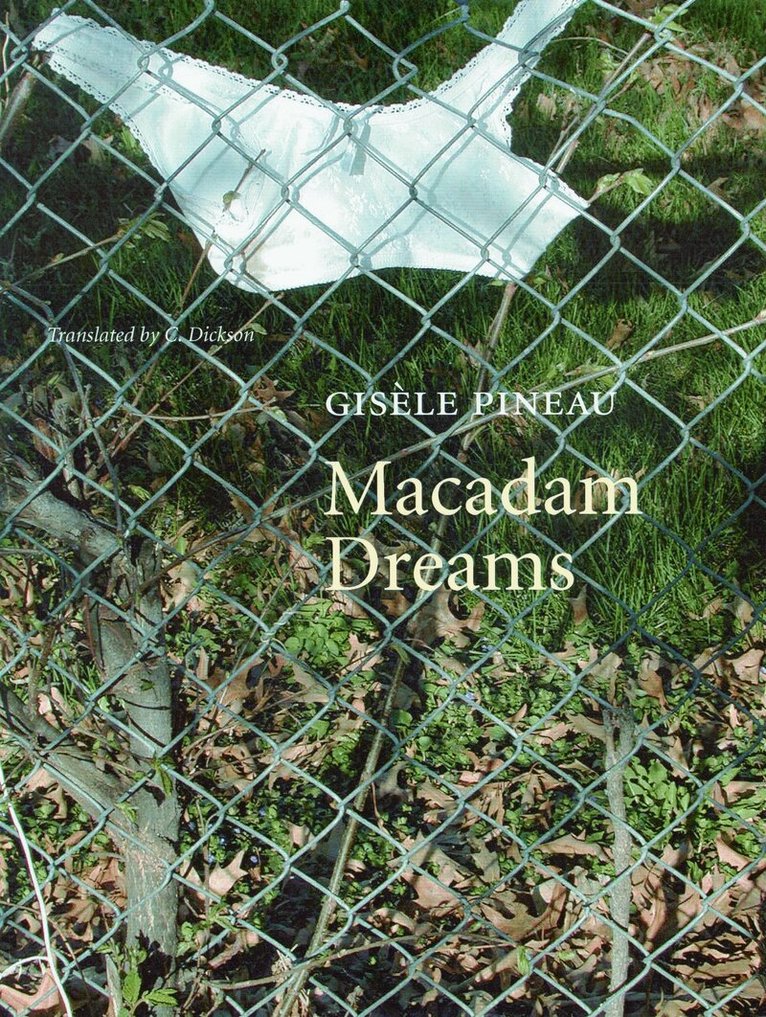
A cyclone inexorably sweeps Eliette into her past in this novel about the wayward violence of love and nature in Guadeloupe. In Macadam Dreams the celebrated Creole writer Gisèle Pineau cunningly unveils the two cataclysms that have devastated Eliette's life: first, the cyclone of 1928, when she was only eight years old, and now, Hurricane Hugo, whose destruction shatters the elaborate defenses the old woman has built around the sorrows and madness of her life in the small, accursed town of Savane Mulet. As Hugo unleashes its fury, a final blow frees Eliette's repressed memories of madness, isolation, and loss, and of the grievous failure of a prophecy that promised her a child. A story of self-discovery, Macadam Dreams speaks eloquently of the violence and poverty endured by women of this island nation—violence every bit as devastating, and seemingly inescapable, as the perpetually returning cyclone. Viewed by many as a canonical author in the Creole movement in Francophone literature, Pineau has created an extraordinary work that is recognized as a masterpiece of French-Caribbean literature.
Inbunden, Engelska, 2003
881 kr
Skickas inom 10-15 vardagar
This autobiographical novel of alienation and exile explores the alienation of a girl and her grandmother contending with life between two identities. As a young woman of colour and Caribbean ancestry - even though Paris-born - the girl is not accepted as not French enough.
Häftad, Engelska, 2003
357 kr
Skickas inom 10-15 vardagar
Gisèle Pineau was born, and spent the first fourteen years of her life, in Paris. Her parents, originally from the island of Guadeloupe, were part of the massive transplantation of Antilleans to the métropole after World War II. Most had left their homeland hoping to improve their lives and their children’s prospects. Born French nationals, all theoretically enjoyed equal footing with the Parisian French. The colour of their skin, however, meant a far different reality for Pineau’s family and their fellow émigrés. They lived on the outskirts of the city and on the margins of French society and culture.L’exil selon Julia, Gisèle Pineau’s compelling portrait of alienation and exile, was born of that experience. The critically acclaimed 1996 autobiographical novel, now available in its first English translation, explores the alienation of a girl and her grandmother contending with life between two identities. As a young woman of colour and Caribbean ancestry—even though Paris-born—the girl is not accepted, not French enough, for her fellow Parisians. Yet she is too cosmopolitan to fit into Guadeloupean society upon returning to the island for a visit. And since her parents have virtually silenced their Creole legacy hoping to become better assimilated, she has no base of traditional knowledge to fall back on for strength or guidance as she contends with her identity crisis. When her grandmother Julia moves in with the family, the stories, the culture, and the strong sense of cultural identity the older woman brings finally provide the girl with a sense of belonging that transforms her life.Powerful and accessible, Exile according to Julia is above all a moving and beautiful story of childhood, survival, and heritage that will speak to readers of all ages.
Häftad, Engelska, 2014
274 kr
Skickas inom 3-6 vardagar
When Sybille arrives in Paris from Guadeloupe with her infant son, she encounters the extravagant and marvellous Lila. Sybille is young and black with her life still ahead of her; an ex-actress, Lila is white and seventy years old. Despite their differences, the women become inseparable.Haunted by memories, Lila confides in Sybille and, among other things, relates the endless cycle of lovers in her life. Her most cherished memories are of Henry, a black man from the British Caribbean whom she met during the Liberation Day celebrations in Paris. Gradually, Sybille and Lila discover that the West Indies and the charm of Guadeloupe create a deep and common bond between them.The narrative leaps from one side of the Atlantic to the other, playing black against white, past against present, rural Caribbean culture against the urban life of Paris and New York. Sybille’s memories of her own tragic childhood form a counterpoint to tales of Henry growing up on the island of St. John. The stories contain mysterious and magical elements revolving around one central theme: how fate works to draw lovers apart.Despite repeated defeats, love still survives. In tales and in legends, mocking all obstacles, it circumvents the game of destiny and the tragic vanity of mankind.