Gladys I. McCormick – författare
Visar alla böcker från författaren Gladys I. McCormick. Handla med fri frakt och snabb leverans.
6 produkter
6 produkter
Del 9 - Violence in Latin American History
Last Door
A History of Torture in Mexico's War against Subversives
Inbunden, Engelska, 2025
1 546 kr
Skickas inom 3-6 vardagar
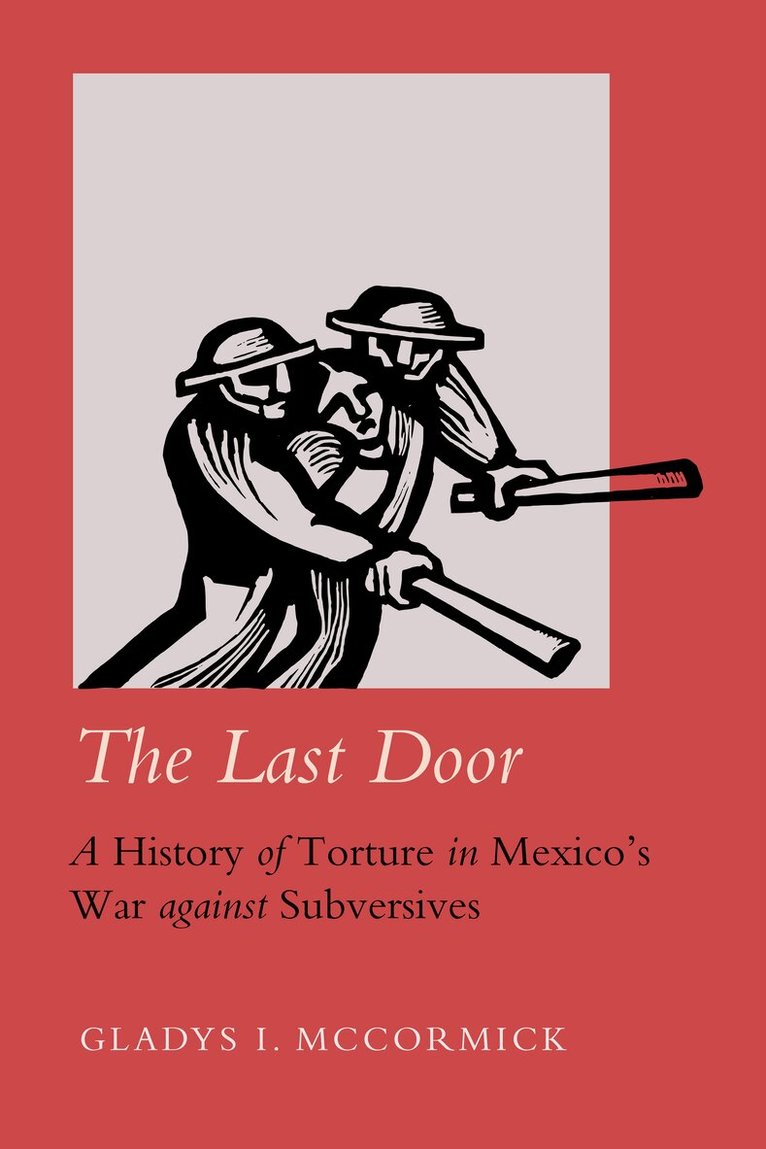
As guerrilla groups sprouted up across Mexico in the early 1970s, the military and police routinely resorted to extreme acts of violence, including the systematic use of torture. In The Last Door, Gladys McCormick provides the most thorough account of how torture became a crucial and routine practice of the Mexican government’s war against subversives. Drawing from extensive oral history interviews and declassified government documents, McCormick describes experiences of arrest, torture, and detention in which forced disappearances became all too common and advocates for justice rallied around political prisoners. Torture was not always about extracting information; it was also about inflicting punishment on a faceless so-called enemy and instilling terror into advocates of social change. As McCormick argues, torture became a quotidian practice of state making in Mexico during the 1970s, leaving individuals and their families forever changed. The lack of repercussions for government officials notorious for employing torture, even in spite of a growing movement for truth and justice, has led to entrenched impunity that is endemic in Mexico as its contemporary security crisis continues.
Del 9 - Violence in Latin American History
Last Door
A History of Torture in Mexico's War against Subversives
Häftad, Engelska, 2025
262 kr
Skickas inom 5-8 vardagar
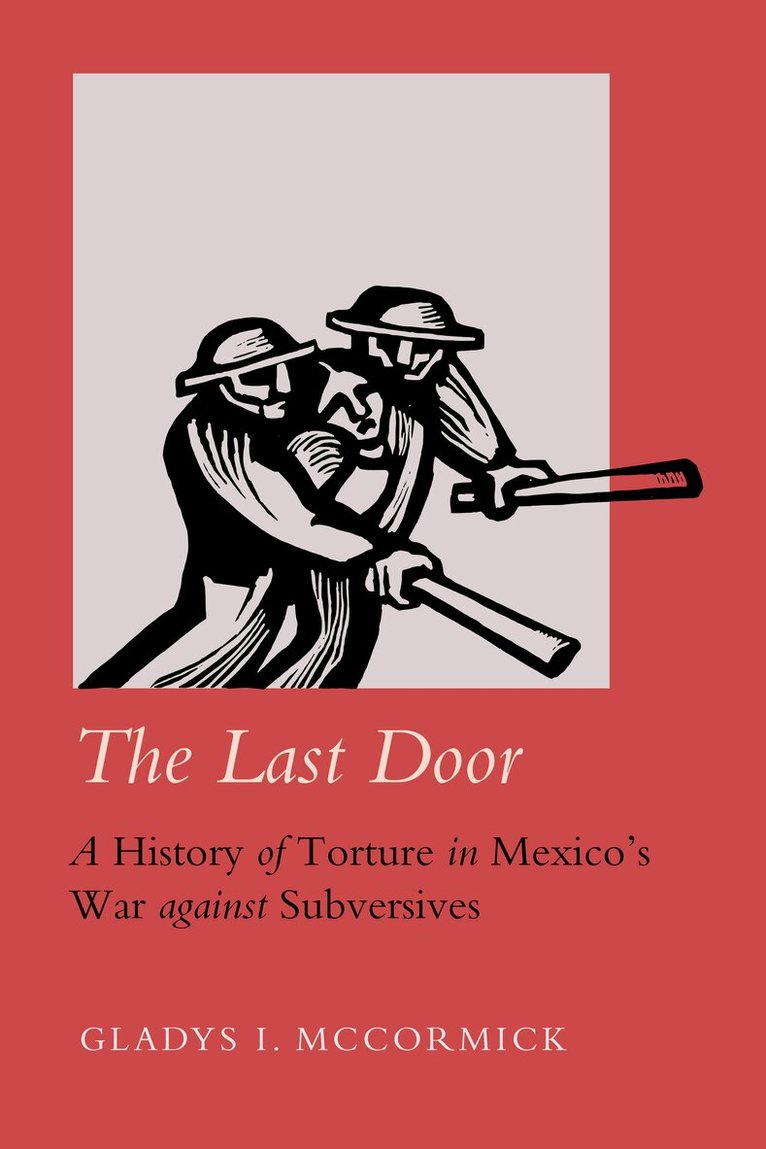
As guerrilla groups sprouted up across Mexico in the early 1970s, the military and police routinely resorted to extreme acts of violence, including the systematic use of torture. In The Last Door, Gladys McCormick provides the most thorough account of how torture became a crucial and routine practice of the Mexican government’s war against subversives. Drawing from extensive oral history interviews and declassified government documents, McCormick describes experiences of arrest, torture, and detention in which forced disappearances became all too common and advocates for justice rallied around political prisoners. Torture was not always about extracting information; it was also about inflicting punishment on a faceless so-called enemy and instilling terror into advocates of social change. As McCormick argues, torture became a quotidian practice of state making in Mexico during the 1970s, leaving individuals and their families forever changed. The lack of repercussions for government officials notorious for employing torture, even in spite of a growing movement for truth and justice, has led to entrenched impunity that is endemic in Mexico as its contemporary security crisis continues.
E-bok
Engelska, 2025433 kr
Läs direkt efter köp
As guerrilla groups sprouted up across Mexico in the early 1970s, the military and police routinely resorted to extreme acts of violence, including the systematic use of torture. In The Last Door, Gladys McCormick provides the most thorough account of how torture became a crucial and routine practice of the Mexican government’s war against subversives. Drawing from extensive oral history interviews and declassified government documents, McCormick describes experiences of arrest, torture, and detention in which forced disappearances became all too common and advocates for justice rallied around political prisoners. Torture was not always about extracting information; it was also about inflicting punishment on a faceless so-called enemy and instilling terror into advocates of social change. As McCormick argues, torture became a quotidian practice of state making in Mexico during the 1970s, leaving individuals and their families forever changed. The lack of repercussions for government officials notorious for employing torture, even in spite of a growing movement for truth and justice, has led to entrenched impunity that is endemic in Mexico as its contemporary security crisis continues.
E-bok
Engelska, 20161 126 kr
Läs direkt efter köp
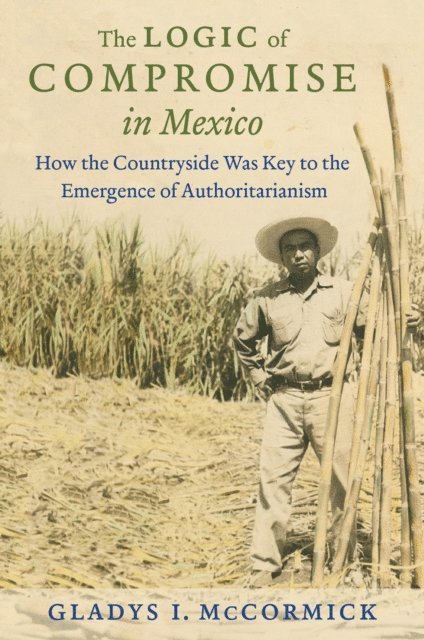
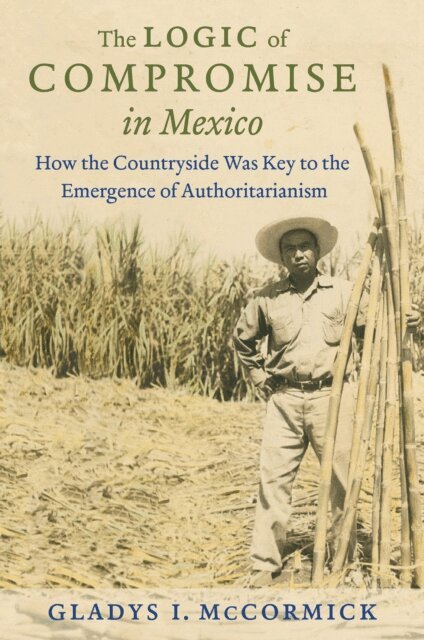
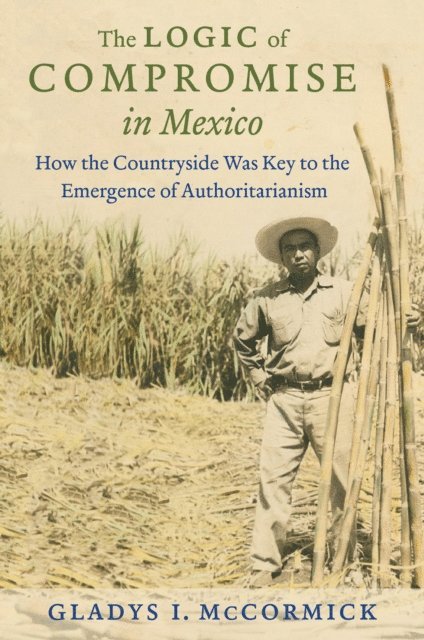
In this political history of twentieth-century Mexico, Gladys McCormick argues that the key to understanding the immense power of the long-ruling Partido Revolucionario Institucional (PRI) is to be found in the countryside. Using newly available sources, including declassified secret police files and oral histories, McCormick looks at large-scale sugar cooperatives in Morelos and Puebla, two major agricultural regions that serve as microcosms of events across the nation. She argues that Mexico''s rural peoples, despite shouldering much of the financial burden of modernization policies, formed the PRI regime''s most fervent base of support. McCormick demonstrates how the PRI exploited this support, using key parts of the countryside to test and refine instruments of control--including the regulation of protest, manipulation of collective memories of rural communities, and selective application of violence against critics--that it later employed in other areas, both rural and urban. With three peasant leaders, brothers named Ruben, Porfirio, and Antonio Jaramillo, at the heart of her story, McCormick draws a capacious picture of peasant activism, disillusion, and compromise in state formation, revealing the basis for an enduring political culture dominated by the PRI. On a broader level, McCormick demonstrates the connections among modern state building in Latin America, the consolidation of new forms of authoritarian rule, and the deployment of violence on all sides.
E-bok
PDF, Engelska, 2016277 kr
Läs direkt efter köp
In this political history of twentieth-century Mexico, Gladys McCormick argues that the key to understanding the immense power of the long-ruling Partido Revolucionario Institucional (PRI) is to be found in the countryside. Using newly available sources, including declassified secret police files and oral histories, McCormick looks at large-scale sugar cooperatives in Morelos and Puebla, two major agricultural regions that serve as microcosms of events across the nation. She argues that Mexico''s rural peoples, despite shouldering much of the financial burden of modernization policies, formed the PRI regime''s most fervent base of support. McCormick demonstrates how the PRI exploited this support, using key parts of the countryside to test and refine instruments of control--including the regulation of protest, manipulation of collective memories of rural communities, and selective application of violence against critics--that it later employed in other areas, both rural and urban. With three peasant leaders, brothers named Ruben, Porfirio, and Antonio Jaramillo, at the heart of her story, McCormick draws a capacious picture of peasant activism, disillusion, and compromise in state formation, revealing the basis for an enduring political culture dominated by the PRI. On a broader level, McCormick demonstrates the connections among modern state building in Latin America, the consolidation of new forms of authoritarian rule, and the deployment of violence on all sides.
E-bok
PDF, Engelska, 2016836 kr
Läs direkt efter köp
In this political history of twentieth-century Mexico, Gladys McCormick argues that the key to understanding the immense power of the long-ruling Partido Revolucionario Institucional (PRI) is to be found in the countryside. Using newly available sources, including declassified secret police files and oral histories, McCormick looks at large-scale sugar cooperatives in Morelos and Puebla, two major agricultural regions that serve as microcosms of events across the nation. She argues that Mexico''s rural peoples, despite shouldering much of the financial burden of modernization policies, formed the PRI regime''s most fervent base of support. McCormick demonstrates how the PRI exploited this support, using key parts of the countryside to test and refine instruments of control--including the regulation of protest, manipulation of collective memories of rural communities, and selective application of violence against critics--that it later employed in other areas, both rural and urban. With three peasant leaders, brothers named Ruben, Porfirio, and Antonio Jaramillo, at the heart of her story, McCormick draws a capacious picture of peasant activism, disillusion, and compromise in state formation, revealing the basis for an enduring political culture dominated by the PRI. On a broader level, McCormick demonstrates the connections among modern state building in Latin America, the consolidation of new forms of authoritarian rule, and the deployment of violence on all sides.