Glyn Coppack - Böcker
Visar alla böcker från författaren Glyn Coppack. Handla med fri frakt och snabb leverans.
4 produkter
4 produkter
182 kr
Tillfälligt slut
182 kr
Tillfälligt slut
414 kr
Tillfälligt slut
Owned by the National Trust and managed by English Heritage, Mount Grace Priory in North Yorkshire, established in 1398 and suppressed in 1539, was one of only nine successful Carthusian monasteries in England and one of the best-preserved medieval houses of that order in Europe. First excavated by Sir William St John Hope in 1896-1900 and in state guardianship since 1955 it is acknowledged as a type site for late-medieval Carthusian monasteries. The modern study of Mount Grace began in 1957 when Hope’s interpretation of the monks’ cells about the great cloister was found to be simplistic. This was followed between 1968 and 1974 by the excavation of individual monks’ cells in the west range of the great cloister and two cells in the north range, together with their gardens, areas not excavated by Hope. The examination of the monks’ cells was completed in 1985 by the excavation of the central cell of the north cloister range, together with its garden and the cloister alley outside the cell. The cultural material recovered from these cells indicated the ‘trade’ each monk practiced, predominantly the copying and binding of books. Because each cell was enclosed by high walls, the pottery and metalwork recovered could be identified to an individual monk. In 1987 English Heritage commissioned the re-excavation of two areas that had been examined by Hope, the water tower in the great cloister and the prior’s cell, refectory and kitchen in the south cloister range and the guest house in the west range of the inner court. The contrast between this semi-public area of the monastery and the monks’ cells was dramatic. Coupled with this excavation was a reappraisal of the architectural development of the monastery and reconstruction of lost structures such as the cloister alley walls and the central water tower.
214 kr
Skickas inom 11-20 vardagar
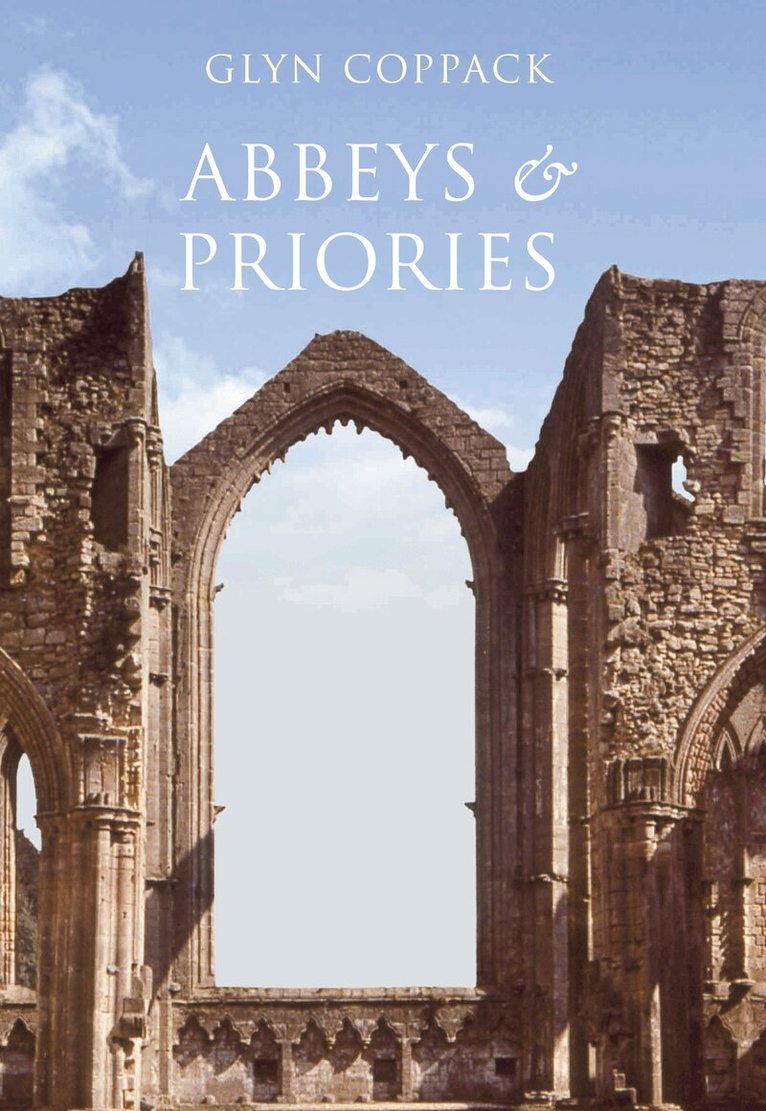
Within the stunning eighteenth-century park of Studley Royal in Yorkshire, lie the ruinous remains of Fountains Abbey – one of the finest examples of Cistercian architecture in Europe. Drawing on contemporary historical evidence, the results of excavations, and his English Heritage conservation work from the past 30 years, Glyn Coppack outlines the history of this fascinating site from its use as an early mission centre in 1132 through its subsequent growth over the centuries.Glyn Coppack works for English Heritage and is one of Britain’s foremost monastic scholars. He lives in north Lincolnshire.