Graham A. Tobin – författare
Visar alla böcker från författaren Graham A. Tobin. Handla med fri frakt och snabb leverans.
11 produkter
11 produkter
Inbunden, Engelska, 2001
1 090 kr
Skickas inom 10-15 vardagar
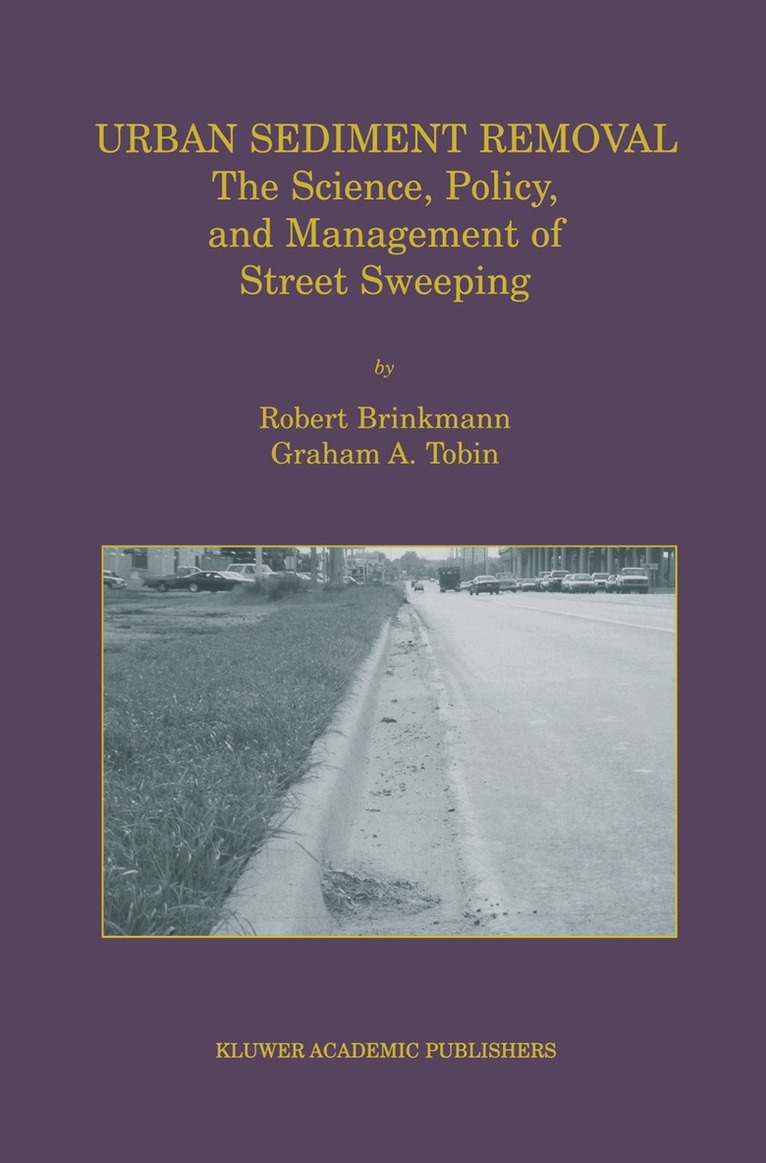
There is not an extensive literature on street sweeping. Much of the research that has been completed exists in the "gray" area of technical reports and government documents. Furthermore, a great deal of this research is locally based, and has not been widely published. Indeed, our review of the scientific literature, revealed that, while storm water quality has received a lot of attention, few academicians have been involved in street sweeping research per se. Thus, throughout our research into street we sweeper effectiveness, sweeping protocols, and sweeping practices, wished that there had been a book summarizing some of the important issues associated with street sweeping. As our frustration grew, we realized that we were uniquely poised to write such a book as our research had encompassed a variety of different projects including sweeper testing, waste management, and related storm water quality. Also, early on in this exercise, we recognized that there was a growing demand for information about street sweeping policies and management, especially for studies focusing on the effectiveness of different sweeping schedules, on waste management operations, and on non-point, pollution reduction practices associated with storm water runoff. It was abundantly clear that there was a profound lack of research on street sweeping that could assist with developing local, regional, or national policies. There was, in effect, little guidance for city managers on these issues.
E-bok
Engelska, 2011170 kr
Läs direkt efter köp
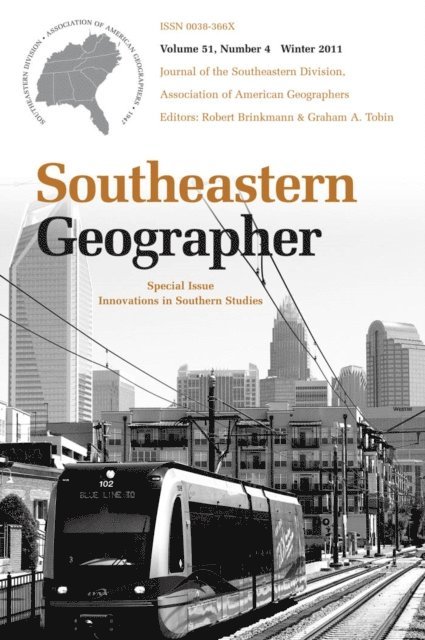
Southeastern Geographer is published by UNC Press for the Southeastern Division of the Association of American Geographers (www.sedaag.org). The quarterly journal publishes the academic work of geographers and other social and physical scientists, and features peer-reviewed articles and essays that reflect sound scholarship and contain significant contributions to geographical understanding, with a special interest in work that focuses on the southeastern United States.Table of Contents, Volume 51, Number 1:Introduction: Robert Brinkmann and Graham TobinEconomic Geography in the SouthGuest Editor: James O. WheelerIntroduction: Economic Geography in the SouthJames O. WheelerThe Furniture Foothills and the Spatial Fix: Globalization in the Furniture IndustrySusan M. WalcottMapping NASCAR Valley: Charlotte as a Knowledge CommunityRon L. Mitchelson and Derek H. AldermanThe Southern Culture of Risk Capital: The Path Dependence of Entrepreneurial FinanceWilliam GravesRenewable Energy in North Carolina: The Potential Supply Chainand Connections to Existing Renewable and Energy Efficiency FirmsKeith G. Debbage and Jacob F. KiddAfrican American and Hispanic Self-Employment in the Charlotte Metropolitan AreaQingfang WangPapersHurricane Katrina as a Lens for Assessing Socio-Spatial Change in New Orleans Case Watkins and Ronald R. Hagelman, IIIDrought and Other Driving Forces behind Population Change in Six Rural Counties in the United StatesJustin T. Maxwell and Peter T. SouleMapping Existing and Potential River Cane (Arundinaria gigantea) Habitat in Western North CarolinaJoni L. Bugden, Christopher D. Storie, Carey L. BurdaUnder-Tapped? An Analysis of Craft Brewing in the Southern United States James Baginski and Thomas L. BellCitizenship Contested: The 1930s Domestic Migrant Experience in California''s San Joaquin Valley Toni AlexanderBook Reviews: Perspectives on Carbon TradeReviewed by Mary Finley-BrookCarbon Markets: An International Business Guide Arnaud Brohe, Nick Eyre, and Nicholas HowarthCarbon Trading: How It Works and Why It Fails Tamra Gilbertson and Oscar Reyes
E-bok
Engelska, 2011170 kr
Läs direkt efter köp
Table of Contents, Volume 51, Number 2:Special IssueCarolina del Norte: Geographies of Latinization in the SouthGuest Editors: Altha J. Cravey and Gabriela ValdiviaCarolina del Norte: An Introduction Altha J. Cravey and Gabriela Valdiviapart i: notes from the fieldWe Play Too: Latina Integration through Soccer in the ''''New South'''' Paul Cuadrospart ii: papersLatino Migration and Neoliberalism in the U.S. South: Notes Toward a Rural Cosmopolitanism Jeff PopkeMexican Families in North Carolina: The Socio-historical Contexts of Exit and Settlement Krista M. PerreiraBorders, Border-Crossing, and Political Art in North Carolina Gabriela Valdivia, Joseph Palis, and Matthew ReillyThe Emerging Geographies of a Latina/o Studies Program Maria DeGuzmanCommentary: New Directions in the Nuevo South Jamie Winderspart iii: 2010 aag study of the american southspecialty group''s plenary paperIntroduction Jonathan LeibRe-Placing Southern Geographies: The Role of Latino Migration in Transforming the South, Its Identities, and Its Study Jamie WindersRobert Yarbrough and Thomas Chapman, Discussants
E-bok
Engelska, 2011170 kr
Läs direkt efter köp
Table of Contents for Fall 2011:Assessing Spatial Hydrological Data Integration to Characterize Geographic Trends in Small Reservoirs in the Apalachicola- Chattahoochee-Flint River BasinAmber Ignatius and Jon Anthony StallinsSpatial Patterns of Ecological Integrity in South Carolina WatershedsJohn A. Kupfer and Peng GaoThe 2007 Mid-South Summer Drought and Heat Wave in Historical PerspectiveGregory B. Goodrich, J. Kyle Thompson, Stanley D. Wingard, and Kylie J. BatsonCity Limits? The Impact of Annexation on the Frequency of Municipal Incorporation in North CarolinaRussell M. SmithGIS Educational Opportunities at Historically Black Colleges and Universities in the United StatesRakesh Malhotra and Gordana VlahovicA Geography of Appalachian IdentityChristopher A. Cooper, H. Gibbs Knotts, and Katy L. EldersGeographic NotePosted Redux: Campaign Signs, Race, and Political Participation in Mississippi, 2008J.O. Joby BassBook Reviews----------------------------------Southeastern Geographer is published by UNC Press for the Southeastern Division of the Association of American Geographers (www.sedaag.org). The quarterly journal publishes the academic work of geographers and other social and physical scientists, and features peer-reviewed articles and essays that reflect sound scholarship and contain significant contributions to geographical understanding, with a special interest in work that focuses on the southeastern United States.
E-bok
Engelska, 2012170 kr
Läs direkt efter köp
Table of Contents for Volume 51, Number 4 (Winter 2011)Introduction: With Thanks Graham A. Tobin and Robert BrinkmannInnovations in Southern Studies within Geography Derek H. Alderman and William GravesThe Bible Belt in a Changing South: Shrinking, Relocating, and Multiple Buckles Stanley D. Brunn, Gerald R. Webster, and J. Clark ArcherEmerging Patterns of Growth and Change in the Southeast Benjamin J. ShultzGeographies of Race in the American South: The Continuing Legacies of Jim Crow Segregation Joshua F. J. InwoodJim Crow, Civil Defense, and the Hydrogen Bomb: Race, Evacuation Planning, and the Geopolitics of Fear in 1950s Savannah, Georgia Jonathan Leib and Thomas ChapmanRepresenting the Immigrant: Social Movements, Political Discourse, and Immigration in the U.S. South Jamie WindersWater, Water, Everywhere? Toward a Critical Water Geography of the South Christopher F. MeindlThe Politics of Mobility in the South: A Commentary on Sprawl,Automobility, and the Gulf Oil Spill Jason HendersonSoutheastern Geographer is published by UNC Press for the Southeastern Division of the Association of American Geographers (www.sedaag.org). The quarterly journal publishes the academic work of geographers and other social and physical scientists, and features peer-reviewed articles and essays that reflect sound scholarship and contain significant contributions to geographical understanding, with a special interest in work that focuses on the southeastern United States.
Häftad, Engelska, 2012
1 090 kr
Skickas inom 10-15 vardagar
There is not an extensive literature on street sweeping. Much of the research that has been completed exists in the "gray" area of technical reports and government documents. Furthermore, a great deal of this research is locally based, and has not been widely published. Indeed, our review of the scientific literature, revealed that, while storm water quality has received a lot of attention, few academicians have been involved in street sweeping research per se. Thus, throughout our research into street we sweeper effectiveness, sweeping protocols, and sweeping practices, wished that there had been a book summarizing some of the important issues associated with street sweeping. As our frustration grew, we realized that we were uniquely poised to write such a book as our research had encompassed a variety of different projects including sweeper testing, waste management, and related storm water quality. Also, early on in this exercise, we recognized that there was a growing demand for information about street sweeping policies and management, especially for studies focusing on the effectiveness of different sweeping schedules, on waste management operations, and on non-point, pollution reduction practices associated with storm water runoff. It was abundantly clear that there was a profound lack of research on street sweeping that could assist with developing local, regional, or national policies. There was, in effect, little guidance for city managers on these issues.
E-bok
PDF, Engelska, 20121 367 kr
Läs direkt efter köp
There is not an extensive literature on street sweeping. Much of the research that has been completed exists in the "gray" area of technical reports and government documents. Furthermore, a great deal of this research is locally based, and has not been widely published. Indeed, our review of the scientific literature, revealed that, while storm water quality has received a lot of attention, few academicians have been involved in street sweeping research per se. Thus, throughout our research into street we sweeper effectiveness, sweeping protocols, and sweeping practices, wished that there had been a book summarizing some of the important issues associated with street sweeping. As our frustration grew, we realized that we were uniquely poised to write such a book as our research had encompassed a variety of different projects including sweeper testing, waste management, and related storm water quality. Also, early on in this exercise, we recognized that there was a growing demand for information about street sweeping policies and management, especially for studies focusing on the effectiveness of different sweeping schedules, on waste management operations, and on non-point, pollution reduction practices associated with storm water runoff. It was abundantly clear that there was a profound lack of research on street sweeping that could assist with developing local, regional, or national policies. There was, in effect, little guidance for city managers on these issues.
Häftad, Engelska, 2017
844 kr
Skickas inom 5-8 vardagar
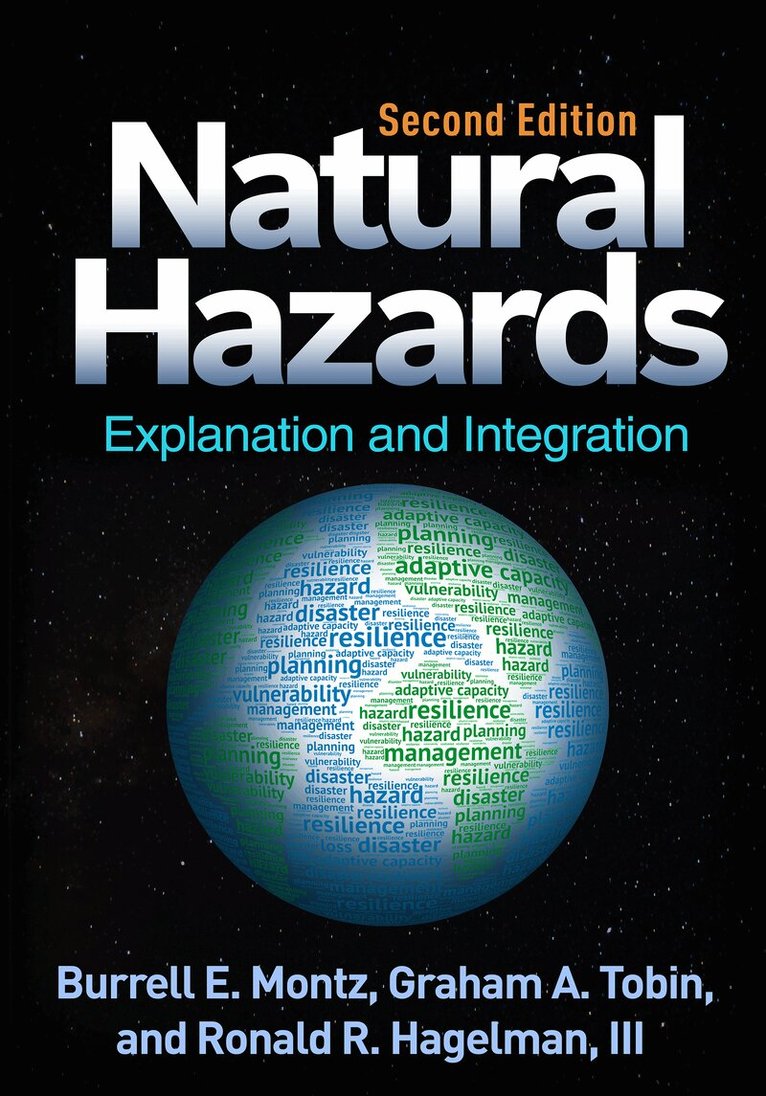
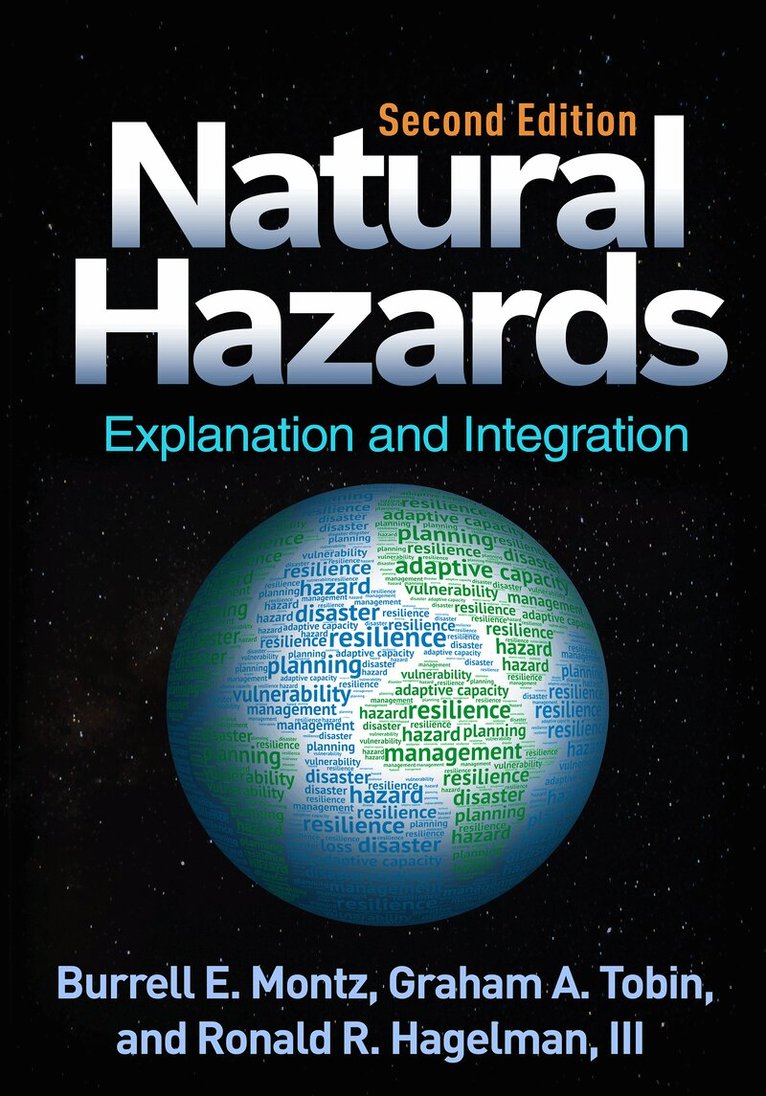
What can we learn from the spatial patterns of disasters? What human and structural factors need to be addressed to explain hazard vulnerability? As populations grow and the climate warms, how can natural hazards be mitigated? Thoroughly revised and updated, and now with a more global perspective, the second edition of this accessible text provides an integrated framework for understanding and managing natural hazards. Numerous case studies from around the world illustrate the complexities of extreme geophysical events and highlight their physical, social, political, and economic dimensions. The text identifies essential principles for tackling the fundamental causes of differential vulnerabilities that perpetuate human distress, and for promoting recovery and resilience.New to This Edition*New frameworks for understanding human resilience and adaptive capacity in recovery, dynamics of risk and uncertainty, and more.*Chapter on spatial and temporal aspects of hazards.*Discussions of cutting-edge topics, such as chronic disasters, controversies in international aid, and how hazards affect regions differentially.*Many new case studies, including Hurricanes Katrina and Charley, Superstorm Sandy, the 2011 Japan tsunami, Ecuador's chronic volcanic hazard, and others.*Reflects 20 years of research advances across the physical and social sciences, development trends, new technologies, and ongoing global climate change.
Inbunden, Engelska, 2017
1 262 kr
Skickas inom 5-8 vardagar
What can we learn from the spatial patterns of disasters? What human and structural factors need to be addressed to explain hazard vulnerability? As populations grow and the climate warms, how can natural hazards be mitigated? Thoroughly revised and updated, and now with a more global perspective, the second edition of this accessible text provides an integrated framework for understanding and managing natural hazards. Numerous case studies from around the world illustrate the complexities of extreme geophysical events and highlight their physical, social, political, and economic dimensions. The text identifies essential principles for tackling the fundamental causes of differential vulnerabilities that perpetuate human distress, and for promoting recovery and resilience.New to This Edition*New frameworks for understanding human resilience and adaptive capacity in recovery, dynamics of risk and uncertainty, and more.*Chapter on spatial and temporal aspects of hazards.*Discussions of cutting-edge topics, such as chronic disasters, controversies in international aid, and how hazards affect regions differentially.*Many new case studies, including Hurricanes Katrina and Charley, Superstorm Sandy, the 2011 Japan tsunami, Ecuador's chronic volcanic hazard, and others.*Reflects 20 years of research advances across the physical and social sciences, development trends, new technologies, and ongoing global climate change.
E-bok
PDF, Engelska, 2017974 kr
Läs direkt efter köp
What can we learn from the spatial patterns of disasters? What human and structural factors need to be addressed to explain hazard vulnerability? As populations grow and the climate warms, how can natural hazards be mitigated? Thoroughly revised and updated, and now with a more global perspective, the second edition of this accessible text provides an integrated framework for understanding and managing natural hazards. Numerous case studies from around the world illustrate the complexities of extreme geophysical events and highlight their physical, social, political, and economic dimensions. The text identifies essential principles for tackling the fundamental causes of differential vulnerabilities that perpetuate human distress, and for promoting recovery and resilience. New to This Edition *New frameworks for understanding human resilience and adaptive capacity in recovery, dynamics of risk and uncertainty, and more. *Chapter on spatial and temporal aspects of hazards. *Discussions of cutting-edge topics, such as chronic disasters, controversies in international aid, and how hazards affect regions differentially. *Many new case studies, including Hurricanes Katrina and Charley, Superstorm Sandy, the 2011 Japan tsunami, Ecuador's chronic volcanic hazard, and others. *Reflects 20 years of research advances across the physical and social sciences, development trends, new technologies, and ongoing global climate change.
E-bok
Engelska, 2017974 kr
Läs direkt efter köp
What can we learn from the spatial patterns of disasters? What human and structural factors need to be addressed to explain hazard vulnerability? As populations grow and the climate warms, how can natural hazards be mitigated? Thoroughly revised and updated, and now with a more global perspective, the second edition of this accessible text provides an integrated framework for understanding and managing natural hazards. Numerous case studies from around the world illustrate the complexities of extreme geophysical events and highlight their physical, social, political, and economic dimensions. The text identifies essential principles for tackling the fundamental causes of differential vulnerabilities that perpetuate human distress, and for promoting recovery and resilience. New to This Edition *New frameworks for understanding human resilience and adaptive capacity in recovery, dynamics of risk and uncertainty, and more. *Chapter on spatial and temporal aspects of hazards. *Discussions of cutting-edge topics, such as chronic disasters, controversies in international aid, and how hazards affect regions differentially. *Many new case studies, including Hurricanes Katrina and Charley, Superstorm Sandy, the 2011 Japan tsunami, Ecuador's chronic volcanic hazard, and others. *Reflects 20 years of research advances across the physical and social sciences, development trends, new technologies, and ongoing global climate change.