Graham E. Rotheray – författare
Visar alla böcker från författaren Graham E. Rotheray. Handla med fri frakt och snabb leverans.
5 produkter
5 produkter
Del 11 - Naturalists' Handbooks
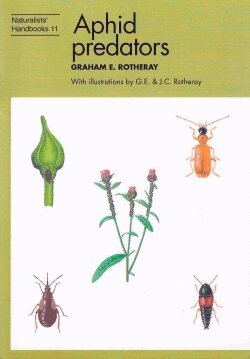
Aphid predators
Häftad, Engelska, 1989
323 kr
Skickas inom 7-10 vardagar
Del 11 - Naturalists' Handbooks
Aphid predators
Häftad, Engelska, 2024
513 kr
Skickas inom 5-8 vardagar
Aphids and their colonies are excellent arenas in which to observe predators in action. A range of insects come to eat or parasitise the aphids or to drink their honeydew.9781784275105 and 9781784275167 are digital reprints of 9780855462697 (1989).
Del 11 - Naturalists' Handbooks
Aphid predators
Inbunden, Engelska, 2024
791 kr
Skickas inom 3-6 vardagar
Aphids and their colonies are excellent arenas in which to observe predators in action. A range of insects come to eat or parasitise the aphids or to drink their honeydew.9781784275105 and 9781784275167 are digital reprints of 9780855462697 (1989).
Inbunden, Engelska, 2019
1 622 kr
Skickas inom 10-15 vardagar
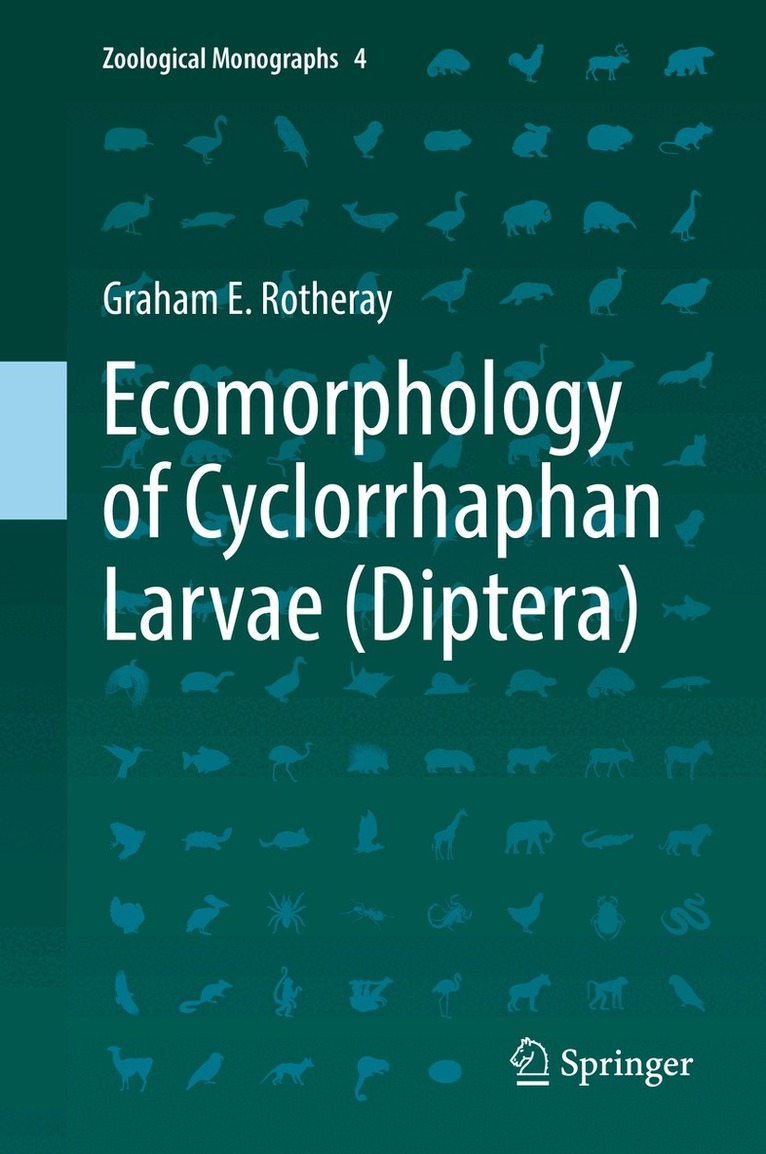
This book offers an overview of the larva of Diptera Cyclorrhapha. It first discusses the principal forms, functions and roles of larvae, and then evaluates feeding, locomotion and respiration in larval saprophages, phytophages and zoophages as keys to understanding and predicting larval morphology. It also highlights how the environment affects morphology, the adaptiveness of morphological features and compares the adaptive features. Assessing the larval attributes that have the potential to explain the success of the Cyclorrhapha, the book also suggests future research directions and provides a summary of main findings and conclusions. As such, it appeals to entomologists, evolutionary biologists and Diptera researchers in all fields.
E-bok
Engelska, 20192 049 kr
Läs direkt efter köp
This book offers an overview of the larva of Diptera Cyclorrhapha. It first discusses the principal forms, functions and roles of larvae, and then evaluates feeding, locomotion and respiration in larval saprophages, phytophages and zoophages as keys to understanding and predicting larval morphology. It also highlights how the environment affects morphology, the adaptiveness of morphological features and compares the adaptive features. Assessing the larval attributes that have the potential to explain the success of the Cyclorrhapha, the book also suggests future research directions and provides a summary of main findings and conclusions. As such, it appeals to entomologists, evolutionary biologists and Diptera researchers in all fields.