Graham Robson – författare
Ford Cortina
91 kr
Skickas inom 10-15 vardagar
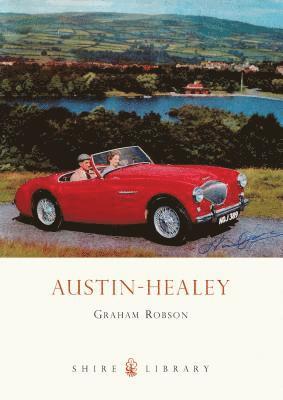
Austin-Healey
115 kr
Skickas inom 10-15 vardagar
Jaguar
115 kr
Skickas inom 10-15 vardagar
Jaguar
110 kr
Läs direkt efter köp
Jaguar
110 kr
Läs direkt efter köp
Triumph Sports Cars
113 kr
Skickas inom 5-8 vardagar
Triumph Sports Cars
106 kr
Läs direkt efter köp
Triumph Sports Cars
107 kr
Läs direkt efter köp
327 kr
Skickas inom 7-10 vardagar
220 kr
Skickas
270 kr
Skickas
218 kr
Skickas
370 kr
Skickas inom 3-6 vardagar
143 kr
Läs direkt efter köp
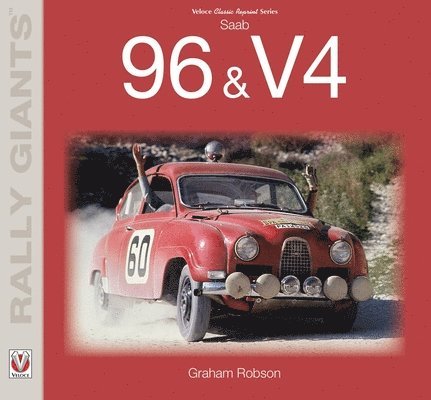
The complete story of the front-wheel-drive Saab 96 made the brand into a rally icon in the 1960s. Superstar driving from Erik Carlsson, his wife Pat Moss-Carlsson and - later - from Stig Blomqvist, all brought real publicity and admiration for a car that always lacked the sheer straight-line performance of its rivals.Saabs like this, however, never wanted for strength, or for amazing handling and traction, and they succeeded in events as diverse as the Monte Carlo, Britain''s RAC rally, special stage events in every Scandinavian country, and the rough-and-tough Spa-Sofia-Liege Marathon.The big change came in 1967, when the 96 became the V4, looking almost the same as before, but with a new and more powerful four-stroke Ford-Germany V4 engine. Works cars continued to be competitive in carefully chosen events for many years, and it was only the arrival of much more specialised rivals that made them outdated. Saab, though, was not finished with rallying, as the V4''s successors, the much larger and more powerful 99 and 99 Turbo types, proved. More than any other car of its era, the 96 and V4 models proved that front-wheel-drive allied to true superstar driving could produce victory where no-one expected it.
154 kr
Läs direkt efter köp
This book is based on a concept placed with Veloce by Anthony Pritchard shortly before his death in 2013. Graham Robson has written a detailed and superbly illustrated account of the Formula 1 cars powered by the Ford DFV V8 engine. This all-conquering power unit was the result of discussions between Colin Chapman, boss of the Lotus car company, and the UK Ford Motor Company. Design, development and manufacture was entrusted to the Cosworth company in Northampton, in response to Lotus'' desperate need for an engine for the 3000cc Formula 1 regulations that came into force for 1966. Lotus had exclusive use of the DFV in 1967, its first season, when Jim Clark drove the DFV-powered Lotus 49 to four World Championship victories.Becoming available to other Formula 1 teams in 1968, adopters included McLaren and Matra. Graham Hill won the Drivers'' Championship with DFV-powered Lotus cars in 1968, and drivers of DFV-powered cars won the Championship in 13 out of 16 years. Year by year, the power of the DFV engine increased; new companies were set up to overhaul the DFV; and engines prepared by these companies were more powerful than those emanating from the factory.Robson''s narrative starts with a look at Ford''s strategy of entering F1, a description of the design and development of this engine, and details the successes - and failures - of every Formula 1 car powered by the DFV engine. During these years the only manufacturer to successfully challenge DFV power was Ferrari, with drivers Lauda and Scheckter winning the Drivers'' Championship on three occasions. Because the DFV later gave rise to successful derivatives, such as the turbocharged DFX, and the DFY, DFZ and DFR evolutions, these are also analysed.This important book is illustrated with more than 300 photographs, most of which come from the UK Ford Motor Company''s own archives.
371 kr
Skickas inom 3-6 vardagar
361 kr
Skickas inom 7-10 vardagar
262 kr
Läs direkt efter köp
Relating the story of Triumph cars is complex enough, but to include all the earlier events which persuaded Siegfried Bettman to begin car manufacture in 1923 is even more so.The two authors, however - both of them experts in all things Triumph, the cars, and the political events surrounding them - have assembled and presented an enthralling story of the way the car-making side of the business came to prosper, was then afflicted by financial problems, and then rescued from oblivion by Standard in 1944.Thereafter, Triumph once again became a prominent marque, eventually dominated Standard, and (from the 1960s onwards) became an important cast member in the melodramatic events which involved Leyland, BMC and eventually British Leyland. This, however, is not merely a turbulent trawl through the historical record, for both authors were also successful in locating the important characters whose efforts made it possible for Triumph to excite the world. Along the way, the career of cars as famous as the Glorias and Dolomites of the 1930s, the Heralds, Spitfires and TRs of the post-war years, and the headline-grabbing exploits in racing and rallying build up a story which no fictional writer could have created.
323 kr
Skickas
148 kr
Läs direkt efter köp
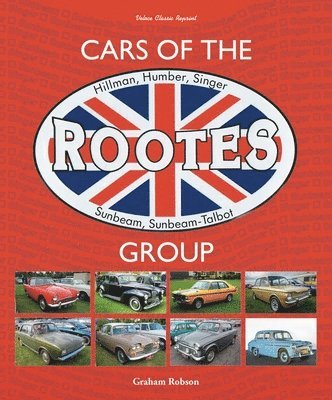
From the early 1930s until the mid-1970s the Rootes Group was one of Britain''s foremost car manufacturers, producing and selling a multitude of models under the Hillman, Humber, Singer, Sunbeam and Sunbeam-Talbot badges. Some of these cars have been the subject of individual model histories, but this is the first book to bring the total Rootes model line together in one major reference book.Written by one of Britain''s most able car historians, the late Graham Robson, this book has now been reprinted for future generations to enjoy. It covers the company''s history, and details all the major marques within the Rootes Group. The book looks at the overall marketing strategies as well as the widespread use of common components across the range. Individual descriptions of each model built results in a book of great breadth and absorbing interest, that will be welcomed back by all classic car enthusiasts.
155 kr
Läs direkt efter köp
372 kr
Skickas inom 7-10 vardagar
372 kr
Skickas inom 7-10 vardagar
281 kr
Skickas inom 7-10 vardagar
550 kr
Kommande
370 kr
Skickas inom 3-6 vardagar
147 kr
Läs direkt efter köp
160 kr
Läs direkt efter köp
148 kr
Läs direkt efter köp
Escort RS1800 (Escort MkII) : This is a Rally Giant because it was consistently the fastest, most successful and most versatile car in the second half of the 1970s. Developed from the MkI, it was a conventional front engine/rear drive machine, which rallied with 2-litre engines of up to 270bhp. Rally successes were legendary - British (RAC), Safari, Acropolis, Finland (1000 Lakes), Sweden, Portugal, Canada, and many more. The cars won 17 World Rallies between 1975 and 1981. RS1800s won the World Makes Championship in 1979, and were always close to victory, always competitive. Escort drivers like Bjorn Waldegard (1979) and Ari Vatanen (1981) won the World Drivers'' Championships. Over the years hundreds - and this is no exaggeration - of RS1800s were built for motor sport, and were the ideal car for almost any condition in the world because they were very powerful, but simple and rugged. The RS1800 was also the layout template which was copied by other manufacturers for cars like the Talbot Sunbeam-Lotus, the Vauxhall Chevette HSR and the Nissan GTs of the late 1970s/early 1980s, which were really all Escort ''clones''.Ford claims, and it may be right, that RS1800s have won more rallies, at World, International and National level than any other car in the world.
146 kr
Läs direkt efter köp