GrA!inne de BAºrca – författare
Visar alla böcker från författaren GrA!inne de BAºrca. Handla med fri frakt och snabb leverans.
9 produkter
9 produkter
E-bok
PDF, Engelska, 2021573 kr
Läs direkt efter köp
In recent years, human rights have come under fire, with the rise of political illiberalism and the coming to power of populist authoritarian leaders in many parts of the world who contest and dismiss the idea of human rights. More surprisingly, scholars and public intellectuals, from both the progressive and the conservative side of the political spectrum, have also been deeply critical, dismissing human rights as flawed, inadequate, hegemonic, or overreaching.While acknowledging some of the shortcomings, this book presents an experimentalist account of international human rights law and practice and argues that the human rights movement remains a powerful and appealing one with widespread traction in many parts of the globe. Using three case studies to illuminate the importance and vibrancy of the movement around the world, the book argues that its potency and legitimacy rest on three main pillars: First, it is based on a deeply-rooted and widelyappealing moral discourse that integrates the three universal values of human dignity, human welfare, and human freedom. Second, these values and their elaboration in international legal instruments have gained widespread - even if thin - agreement among states worldwide. Third, human rights law andpractice is highly dynamic, with human rights being activated, shaped, and given meaning and impact through the on-going mobilization of affected individuals and groups, and through their iterative engagement with multiple domestic and international institutions and processes.The book offers an account of how the human rights movement has helped to promote human rights and positive social change, and argues that the challenges of the current era provide good reasons to reform, innovate, and strengthen that movement, rather than to abandon it or to herald its demise.
E-bok
Engelska, 2021573 kr
Läs direkt efter köp
In recent years, human rights have come under fire, with the rise of political illiberalism and the coming to power of populist authoritarian leaders in many parts of the world who contest and dismiss the idea of human rights. More surprisingly, scholars and public intellectuals, from both the progressive and the conservative side of the political spectrum, have also been deeply critical, dismissing human rights as flawed, inadequate, hegemonic, or overreaching.While acknowledging some of the shortcomings, this book presents an experimentalist account of international human rights law and practice and argues that the human rights movement remains a powerful and appealing one with widespread traction in many parts of the globe. Using three case studies to illuminate the importance and vibrancy of the movement around the world, the book argues that its potency and legitimacy rest on three main pillars: First, it is based on a deeply-rooted and widelyappealing moral discourse that integrates the three universal values of human dignity, human welfare, and human freedom. Second, these values and their elaboration in international legal instruments have gained widespread - even if thin - agreement among states worldwide. Third, human rights law andpractice is highly dynamic, with human rights being activated, shaped, and given meaning and impact through the on-going mobilization of affected individuals and groups, and through their iterative engagement with multiple domestic and international institutions and processes.The book offers an account of how the human rights movement has helped to promote human rights and positive social change, and argues that the challenges of the current era provide good reasons to reform, innovate, and strengthen that movement, rather than to abandon it or to herald its demise.
E-bok
PDF, Engelska, 2021688 kr
Läs direkt efter köp
This last decade has been particularly turbulent for the EU. Beset by crises - the financial crisis, the rule of law crisis, the migration crisis, Brexit, and the pandemic - European Law has had to adapt and change in a way not previously seen.First published in 1999, the goal then was to reflect on the important developments that had been made since the creation of the EEC. That goal has not changed. From EU Administrative Law through to the Regulation of Network Industries, each chapter in this seminal work assess the legal and political forces that have shaped the evolution of EU law.With new chapters covering the Rule of Law, Judicial Reform, Brexit, Constitutional and Legal Theory, Refugee and Asylum law, and Data Governance, this third edition of The Evolution of EU Law is a must read for any student or academic of EU law.
E-bok
Engelska, 2021688 kr
Läs direkt efter köp
This last decade has been particularly turbulent for the EU. Beset by crises - the financial crisis, the rule of law crisis, the migration crisis, Brexit, and the pandemic - European Law has had to adapt and change in a way not previously seen.First published in 1999, the goal then was to reflect on the important developments that had been made since the creation of the EEC. That goal has not changed. From EU Administrative Law through to the Regulation of Network Industries, each chapter in this seminal work assess the legal and political forces that have shaped the evolution of EU law.With new chapters covering the Rule of Law, Judicial Reform, Brexit, Constitutional and Legal Theory, Refugee and Asylum law, and Data Governance, this third edition of The Evolution of EU Law is a must read for any student or academic of EU law.
E-bok
PDF, Engelska, 20221 163 kr
Läs direkt efter köp
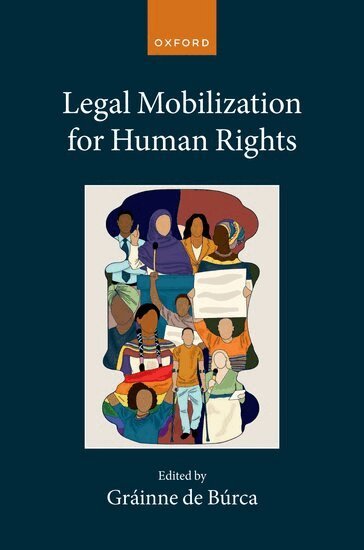
The traditionally top-down focus in human rights scholarship on laws, institutions, and courts has begun to turn towards a bottom-up focus on activists, advocacy groups, affected communities, and social movements. The essays collected in Legal Mobilization for Human Rights examine a range of issues including which groups claim rights, what they are mobilizing to protect, the goals they pursue, the forums they use, the obstacles they encounter, and the extent of their success or failure. Case studies reveal key themes such as: the importance of human rights to marginalized communities; how political and societal authoritarianism shapes opportunities for effective mobilization; the importance of the choice of forum for instigating change; the role intermediary actors such as NGOs play in innovating strategies to address challenges; the possibilities for subaltern mobilization to reshape human rights law; and the importance of supporting genuinely community-led legal mobilization.
E-bok
Engelska, 20221 163 kr
Läs direkt efter köp
The traditionally top-down focus in human rights scholarship on laws, institutions, and courts has begun to turn towards a bottom-up focus on activists, advocacy groups, affected communities, and social movements. The essays collected in Legal Mobilization for Human Rights examine a range of issues including which groups claim rights, what they are mobilizing to protect, the goals they pursue, the forums they use, the obstacles they encounter, and the extent of their success or failure. Case studies reveal key themes such as: the importance of human rights to marginalized communities; how political and societal authoritarianism shapes opportunities for effective mobilization; the importance of the choice of forum for instigating change; the role intermediary actors such as NGOs play in innovating strategies to address challenges; the possibilities for subaltern mobilization to reshape human rights law; and the importance of supporting genuinely community-led legal mobilization.
Inbunden, Engelska, 2021
2 363 kr
Skickas inom 7-10 vardagar
This last decade has been particularly turbulent for the EU. Beset by crises - the financial crisis, the rule of law crisis, the migration crisis, Brexit, and the pandemic - European Law has had to adapt and change in a way not previously seen. First published in 1999, the goal then was to reflect on the important developments that had been made since the creation of the EEC. That goal has not changed. From EU Administrative Law through to the Regulation of Network Industries, each chapter in this seminal work assess the legal and political forces that have shaped the evolution of EU law.With new chapters covering the Rule of Law, Judicial Reform, Brexit, Constitutional and Legal Theory, Refugee and Asylum law, and Data Governance, this third edition of The Evolution of EU Law is a must read for any student or academic of EU law.
Häftad, Engelska, 2021
780 kr
Skickas inom 5-8 vardagar
This last decade has been particularly turbulent for the EU. Beset by crises - the financial crisis, the rule of law crisis, the migration crisis, Brexit, and the pandemic - European Law has had to adapt and change in a way not previously seen. First published in 1999, the goal then was to reflect on the important developments that had been made since the creation of the EEC. That goal has not changed. From EU Administrative Law through to the Regulation of Network Industries, each chapter in this seminal work assess the legal and political forces that have shaped the evolution of EU law.With new chapters covering the Rule of Law, Judicial Reform, Brexit, Constitutional and Legal Theory, Refugee and Asylum law, and Data Governance, this third edition of The Evolution of EU Law is a must read for any student or academic of EU law.
Inbunden, Engelska, 2022
1 344 kr
Skickas inom 5-8 vardagar
The traditionally top-down focus in human rights scholarship on laws, institutions, and courts has begun to turn towards a bottom-up focus on activists, advocacy groups, affected communities, and social movements. The essays collected in Legal Mobilization for Human Rights examine a range of issues including which groups claim rights, what they are mobilizing to protect, the goals they pursue, the forums they use, the obstacles they encounter, and the extent of their success or failure. Case studies reveal key themes such as: the importance of human rights to marginalized communities; how political and societal authoritarianism shapes opportunities for effective mobilization; the importance of the choice of forum for instigating change; the role intermediary actors such as NGOs play in innovating strategies to address challenges; the possibilities for subaltern mobilization to reshape human rights law; and the importance of supporting genuinely community-led legal mobilization.