Greg Welty – författare
Visar alla böcker från författaren Greg Welty. Handla med fri frakt och snabb leverans.
5 produkter
5 produkter
Häftad, Engelska, 2025
275 kr
Skickas inom 5-8 vardagar
Häftad, Engelska, 2018
129 kr
Skickas
Many people argue that the presence of evil in the world is proof that God cannot exist, or if He does exist, cannot be good or all–powerful.Greg Welty uses biblical exegesis alongside his experience as a philosopher to present a different conclusion. God, the sovereign Creator and Sustainer of the world, really does work all things for good. A must–read for anyone struggling with this issue.Chapter titles include:1. What is the Problem of Evil?2. The Greater–Good Theodicy: A Threefold Argument for Three Biblical Themes3. Licensing the Greater–Good Theodicy: God’s Sovereignty over Evil4. Limiting the Greater–Good Theodicy: The Inscrutability of God’s Purposes5. Can Free Will or the Laws of Nature Solve the Problem of Evil?6. ObjectionsAppendix: Going Beyond Job, Joseph and Jesus for the Greater–Good Theodicy The Big Ten: Critical Questions Answered is a Christian apologetics series which addresses ten commonly asked questions about God, the Bible, and Christianity. Each book, while easy to read, is challenging and thought–provoking, dealing with subjects ranging from hell to science. A good read whatever your present opinions. The first two titles in the series are:Why Should I Believe Christianity? by James N. AndersonDoes Christianity Really Work? by Williams Edgar
Häftad, Engelska, 2019
366 kr
Skickas inom 5-8 vardagar
Inbunden, Engelska, 2019
571 kr
Skickas inom 5-8 vardagar
E-bok
Engelska, 2019584 kr
Läs direkt efter köp
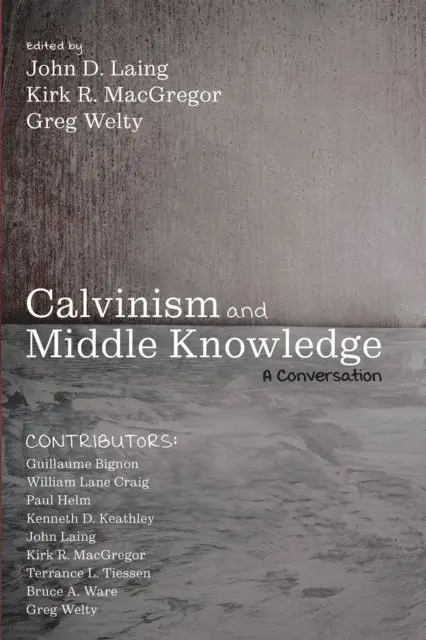
Calvinism and Middle Knowledge is an anthology of essays that moves the discussion of Molinism/middle knowledge out of the philosophical arena, where it has almost exclusively remained, and into the broader theological community. In particular, it sparks a conversation between Calvinists and Molinists regarding the fruitfulness or deficiencies of middle knowledge and the feasibility or infeasibility of Calvinist use of middle knowledge without acceptance of libertarian human freedom. To this end, nine distinguished experts address such topics as the history of the doctrine of middle knowledge, the potential role of Molinism in discussions of evolution and intelligent design, Calvinist concerns with Molinism, and Calvinist appropriation of middle knowledge. This book empowers theologians, historians, biblical scholars, and pastors to join the ongoing conversation and to judge for themselves what explanatory role middle knowledge may or may not play in accounts of providence and practical theology.