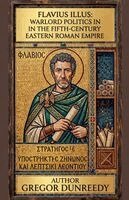
In the fifth century, as the Western Roman Empire collapsed under the weight of its own military dependence, one man came closer than any other to imposing the same fate on the East. Flavius Illus was born in the limestone highlands of the Taurus — the rough country the Romans called Isauria — and he died there, beheaded after a four-year siege in a cliff fortress, with the emperor's brother and a preserved empress in a coffin as the last assets of a failed bid for permanent power. In between, he ran the Eastern Roman Empire.In the fifth century, as the Western Roman Empire collapsed under the weight of its own military dependence, one man came closer than any other to imposing the same fate on the East. Flavius Illus was born in the limestone highlands of the Taurus — the rough country the Romans called Isauria — and he died there, beheaded after a four-year siege in a cliff fortress, with the emperor's brother and a preserved empress in a coffin as the last assets of a failed bid for permanent power. In between, he ran the Eastern Roman Empire.Flavius Illus: is the first full narrative reconstruction of a career that shaped the destiny of Byzantium. For two decades, Illus controlled palace appointments, managed the emperor's information, and held the emperor's brother hostage as guarantee of imperial good behaviour. When the arrangement finally broke, he proclaimed a rival emperor, built a rebel court in Antioch, and retreated into the highlands when the field campaign failed. What followed — the Papirium siege, the executions, the Isaurian War under Anastasius — was the crucible in which the early Byzantine political order was forged.Drawing on Malchus, Candidus, Damascius, and the chronicle tradition, Gregor Dunreedy reconstructs a life that illuminates why the East survived where the West did not. What followed — the Papirium siege, the executions, the Isaurian War under Anastasius — was the crucible in which the early Byzantine political order was forged.Drawing on Malchus, Candidus, Damascius, and the chronicle tradition, Gregor Dunreedy reconstructs a life that illuminates why the East survived where the West did not.