Guillermo Trejo – författare
Visar alla böcker från författaren Guillermo Trejo. Handla med fri frakt och snabb leverans.
10 produkter
10 produkter
Inbunden, Engelska, 2012
1 240 kr
Skickas inom 7-10 vardagar
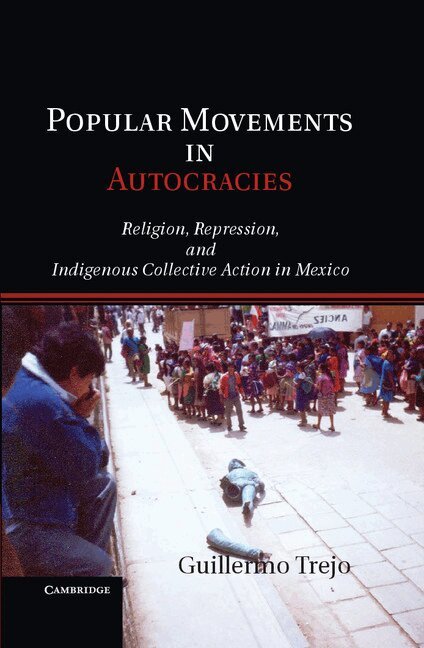
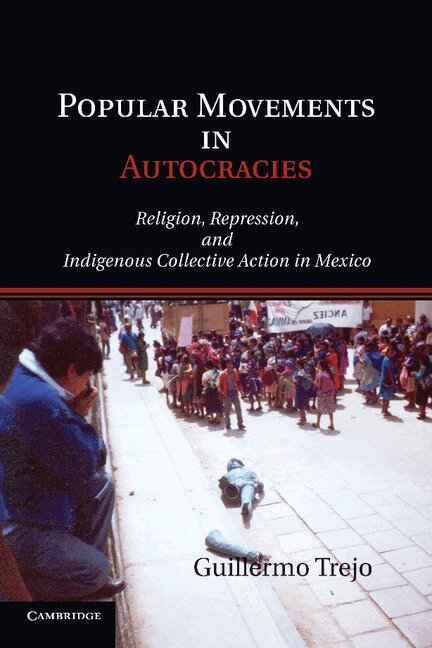
This book presents a new explanation of the rise, development and demise of social movements and cycles of protest in autocracies; the conditions under which protest becomes rebellion; and the impact of protest and rebellion on democratization. Focusing on poor indigenous villages in Mexico's authoritarian regime, the book shows that the spread of US Protestant missionaries and the competition for indigenous souls motivated the Catholic Church to become a major promoter of indigenous movements for land redistribution and indigenous rights. The book explains why the outbreak of local rebellions, the transformation of indigenous claims for land into demands for ethnic autonomy and self-determination, and the threat of a generalized social uprising motivated national elites to democratize. Drawing on an original dataset of indigenous collective action and on extensive fieldwork, the empirical analysis of the book combines quantitative evidence with case studies and life histories.
E-bok
Engelska, 2026428 kr
Läs direkt efter köp
Häftad, Engelska, 2026
326 kr
Skickas inom 7-10 vardagar
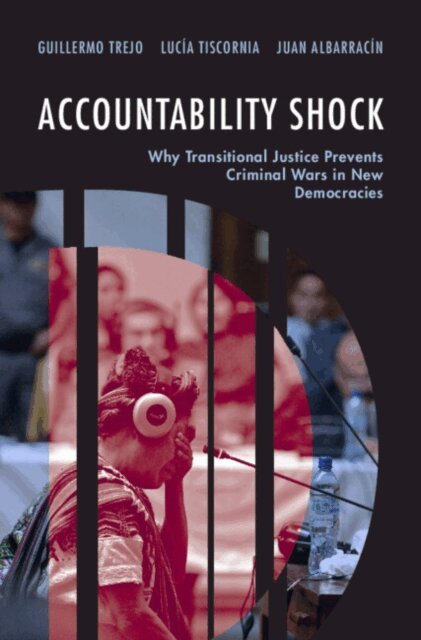
Accountability Shock presents the first systematic explanation of why some 'Third Wave' democracies developed peacefully while others became the world's most violent. The book demonstrates how robust transitional justice processes - combining truth commissions with prosecution of autocratic-era atrocities - prevent criminal violence in new democracies. By holding authoritarian specialists in violence accountable, new democracies can break state impunity, preventing them from becoming key actors in the production of large-scale criminal violence and reshaping the logic of state coercion in democracy. With in-depth analyses of six Latin American cases, the work illuminates why transitional justice is crucial for addressing state-criminal collusion in hybrid contexts. Forged out of a close collaboration between transitional justice scholars and practitioners, Accountability Shock strengthens existing connections while offering practical insights for countries still grappling with authoritarian legacies and violence.
Inbunden, Engelska, 2026
1 429 kr
Skickas inom 7-10 vardagar
Accountability Shock presents the first systematic explanation of why some 'Third Wave' democracies developed peacefully while others became the world's most violent. The book demonstrates how robust transitional justice processes - combining truth commissions with prosecution of autocratic-era atrocities - prevent criminal violence in new democracies. By holding authoritarian specialists in violence accountable, new democracies can break state impunity, preventing them from becoming key actors in the production of large-scale criminal violence and reshaping the logic of state coercion in democracy. With in-depth analyses of six Latin American cases, the work illuminates why transitional justice is crucial for addressing state-criminal collusion in hybrid contexts. Forged out of a close collaboration between transitional justice scholars and practitioners, Accountability Shock strengthens existing connections while offering practical insights for countries still grappling with authoritarian legacies and violence.
E-bok
PDF, Engelska, 2026413 kr
Läs direkt efter köp
Häftad, Engelska, 2014
448 kr
Skickas inom 7-10 vardagar
This book presents a new explanation of the rise, development and demise of social movements and cycles of protest in autocracies; the conditions under which protest becomes rebellion; and the impact of protest and rebellion on democratization. Focusing on poor indigenous villages in Mexico's authoritarian regime, the book shows that the spread of US Protestant missionaries and the competition for indigenous souls motivated the Catholic Church to become a major promoter of indigenous movements for land redistribution and indigenous rights. The book explains why the outbreak of local rebellions, the transformation of indigenous claims for land into demands for ethnic autonomy and self-determination, and the threat of a generalized social uprising motivated national elites to democratize. Drawing on an original dataset of indigenous collective action and on extensive fieldwork, the empirical analysis of the book combines quantitative evidence with case studies and life histories.
Häftad, Engelska, 2020
503 kr
Skickas inom 7-10 vardagar
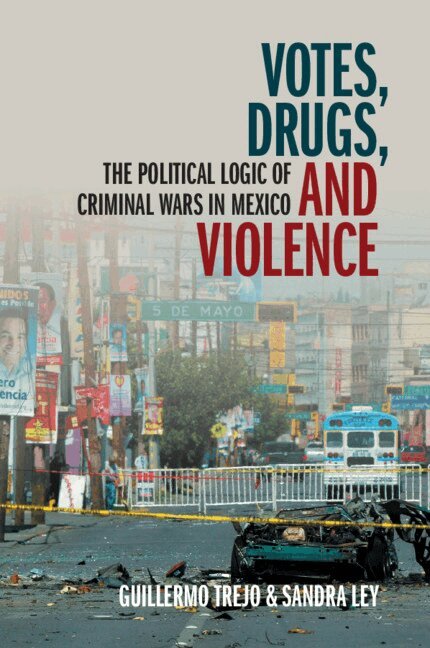
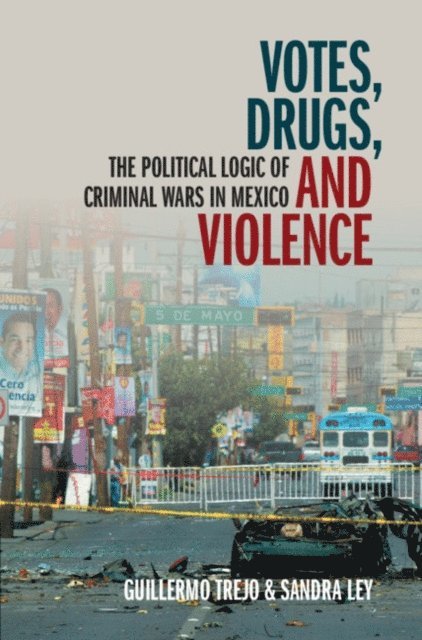
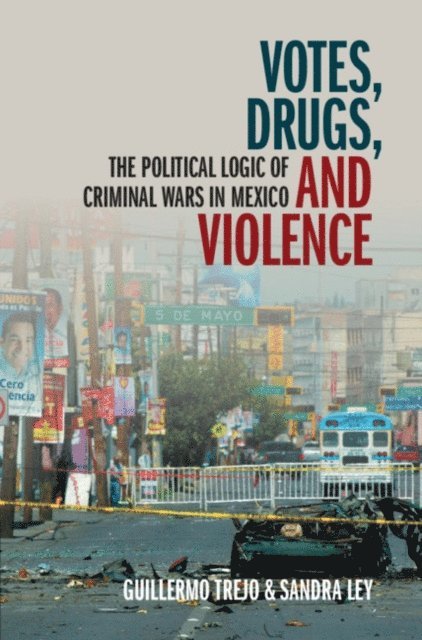
One of the most surprising developments in Mexico's transition to democracy is the outbreak of criminal wars and large-scale criminal violence. Why did Mexican drug cartels go to war as the country transitioned away from one-party rule? And why have criminal wars proliferated as democracy has consolidated and elections have become more competitive subnationally? In Votes, Drugs, and Violence, Guillermo Trejo and Sandra Ley develop a political theory of criminal violence in weak democracies that elucidates how democratic politics and the fragmentation of power fundamentally shape cartels' incentives for war and peace. Drawing on in-depth case studies and statistical analysis spanning more than two decades and multiple levels of government, Trejo and Ley show that electoral competition and partisan conflict were key drivers of the outbreak of Mexico's crime wars, the intensification of violence, and the expansion of war and violence to the spheres of local politics and civil society.
Inbunden, Engelska, 2020
1 540 kr
Skickas inom 7-10 vardagar
One of the most surprising developments in Mexico's transition to democracy is the outbreak of criminal wars and large-scale criminal violence. Why did Mexican drug cartels go to war as the country transitioned away from one-party rule? And why have criminal wars proliferated as democracy has consolidated and elections have become more competitive subnationally? In Votes, Drugs, and Violence, Guillermo Trejo and Sandra Ley develop a political theory of criminal violence in weak democracies that elucidates how democratic politics and the fragmentation of power fundamentally shape cartels' incentives for war and peace. Drawing on in-depth case studies and statistical analysis spanning more than two decades and multiple levels of government, Trejo and Ley show that electoral competition and partisan conflict were key drivers of the outbreak of Mexico's crime wars, the intensification of violence, and the expansion of war and violence to the spheres of local politics and civil society.
E-bok
PDF, Engelska, 2020633 kr
Läs direkt efter köp
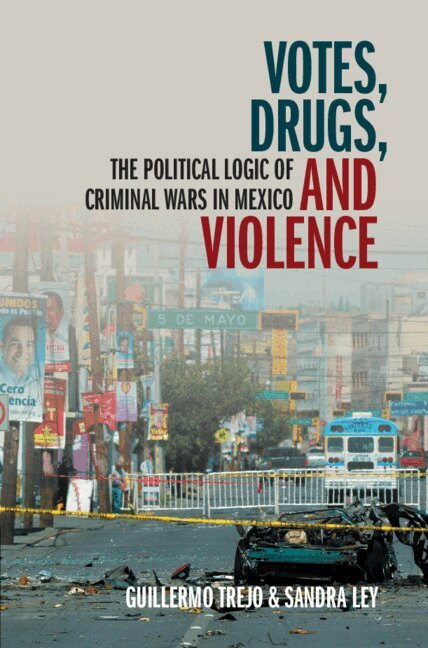
One of the most surprising developments in Mexico''s transition to democracy is the outbreak of criminal wars and large-scale criminal violence. Why did Mexican drug cartels go to war as the country transitioned away from one-party rule? And why have criminal wars proliferated as democracy has consolidated and elections have become more competitive subnationally? In Votes, Drugs, and Violence, Guillermo Trejo and Sandra Ley develop a political theory of criminal violence in weak democracies that elucidates how democratic politics and the fragmentation of power fundamentally shape cartels'' incentives for war and peace. Drawing on in-depth case studies and statistical analysis spanning more than two decades and multiple levels of government, Trejo and Ley show that electoral competition and partisan conflict were key drivers of the outbreak of Mexico''s crime wars, the intensification of violence, and the expansion of war and violence to the spheres of local politics and civil society.
E-bok
Engelska, 2020611 kr
Läs direkt efter köp
One of the most surprising developments in Mexico''s transition to democracy is the outbreak of criminal wars and large-scale criminal violence. Why did Mexican drug cartels go to war as the country transitioned away from one-party rule? And why have criminal wars proliferated as democracy has consolidated and elections have become more competitive subnationally? In Votes, Drugs, and Violence, Guillermo Trejo and Sandra Ley develop a political theory of criminal violence in weak democracies that elucidates how democratic politics and the fragmentation of power fundamentally shape cartels'' incentives for war and peace. Drawing on in-depth case studies and statistical analysis spanning more than two decades and multiple levels of government, Trejo and Ley show that electoral competition and partisan conflict were key drivers of the outbreak of Mexico''s crime wars, the intensification of violence, and the expansion of war and violence to the spheres of local politics and civil society.