Gül Şen – författare
Visar alla böcker från författaren Gül Şen. Handla med fri frakt och snabb leverans.
6 produkter
6 produkter
Häftad, Turkiska, 2025
628 kr
Skickas inom 5-8 vardagar
E-bok
PDF, Engelska, 2016836 kr
Läs direkt efter köp
The essays discuss continuity and change in Bilād al Shām (Greater Syria) during the sixteenth century, examining to what extent Egypt and Greater Syria were affected by the transition from Mamluk to Ottoman rule. This is explored in a variety of areas: diplomatic relations, histories and historiography, fiscal and agricultural administration, symbolic orders, urban developments, local perspectives and material culture. In order to rethink the sixteenth century from a transitional perspective and thus overcome the conventional dynasty-centered fields of research Mamlukists and Ottomanists have been brought together, shedding light on the remarkable sixteenth century, so decisive for the formation of early modern Muslim empires.
E-bok
PDF, Engelska, 2020836 kr
Läs direkt efter köp
Slaves and Slave Agency in the Ottoman Empire offers a new contribution to slavery studies relating to the Ottoman Empire. Given the fact that the classical binary of ''slavery'' and ''freedom'' derives from the transatlantic experience, this volume presents an alternative approach by examining the strong asymmetric relationships of dependency documented in the Ottoman Empire. A closer look at the Ottoman social order discloses manifold and ambiguous conditions involving enslavement practices, rather than a single universal pattern. The authors examine various forms of enslavement and dependency with a particular focus on agency, i. e. the room for maneuver, which the enslaved could secure for themselves, or else the available options for action in situations of extreme individual or group dependencies.
E-bok
PDF, Engelska, 2022774 kr
Läs direkt efter köp
While the Ottoman conquest of the Mamluk realm in 1516-17 doubtlessly changed the balance of political power in Egypt and Greater Syria, the changes must be seen as a wide-ranging transition process. The present collection of essays provides several case studies on the changing situation during the fifteenth and sixteenth centuries and explains how the reconfiguration of political power affected both Egypt and Greater Syria. With reference to the first volume (2017), this second volume continues the debate on key issues of the transition period with contributions by scholars from both Mamluk and Ottoman studies. By combining these perspectives, the authors provide a more comprehensive and nuanced picture of the process of transformation from Mamluk to Ottoman rule.
Del 74 - Ottoman Empire and its Heritage
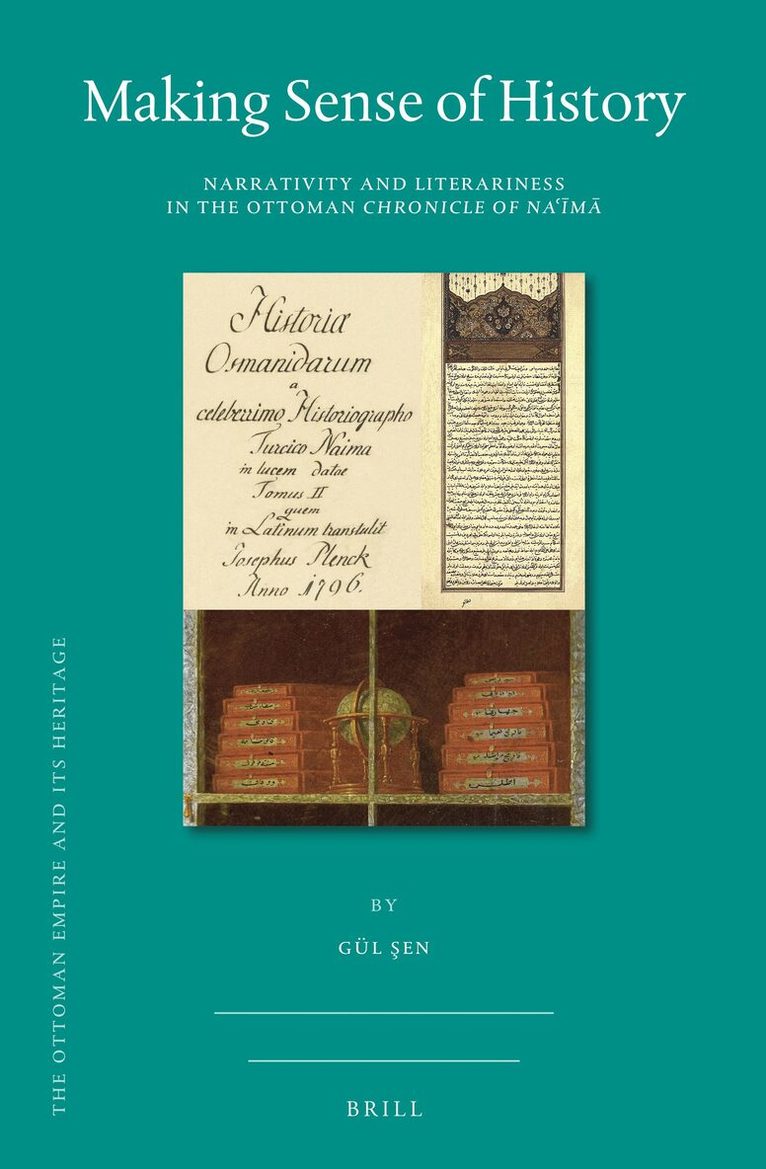
Making Sense of History
Narrativity and Literariness in the Ottoman Chronicle of Naʿīmā
Inbunden, Engelska, 2022
1 764 kr
Skickas inom 5-8 vardagar
In Making Sense of History: Narrativity and Literariness in the Ottoman Chronicle of Nam, Gül en offers the first comprehensive analysis of narrativity in the most prominent official Ottoman court chronicle. Using an interdisciplinary approach that combines methods from history and literary studies, en focuses on the purpose and function of the chroniclenot just what the text says but why Nam wrote it and how he shaped the narrated reality on the textual level. As a case study on the literalization of historical material, Making Sense of History provides insights into the historiographical and literary conventions underpinning Nams chronicle and contributes to our understanding of elite mentalities in the early modern Ottoman world by highlighting the authors use of key concepts such as history and time.
E-bok
PDF, Engelska, 20221 913 kr
Läs direkt efter köp
In Making Sense of History: Narrativity and Literariness in the Ottoman Chronicle of Na?ima, Gul Sen offers the first comprehensive analysis of narrativity in the most prominent official Ottoman court chronicle. Using an interdisciplinary approach that combines methods from history and literary studies, Sen focuses on the purpose and function of the chronicle-not just what the text says but why Na?ima wrote it and how he shaped the narrated reality on the textual level. As a case study on the literalization of historical material, Making Sense of History provides insights into the historiographical and literary conventions underpinning Na?ima's chronicle and contributes to our understanding of elite mentalities in the early modern Ottoman world by highlighting the author's use of key concepts such as history and time.