China's Assimilationist Language Policy
The Impact on Indigenous/Minority Literacy and Social Harmony
2 421 kr
Skickas inom 10-15 vardagar
The Impact on Indigenous/Minority Literacy and Social Harmony
2 421 kr
Skickas inom 10-15 vardagar
603 kr
Läs direkt efter köp
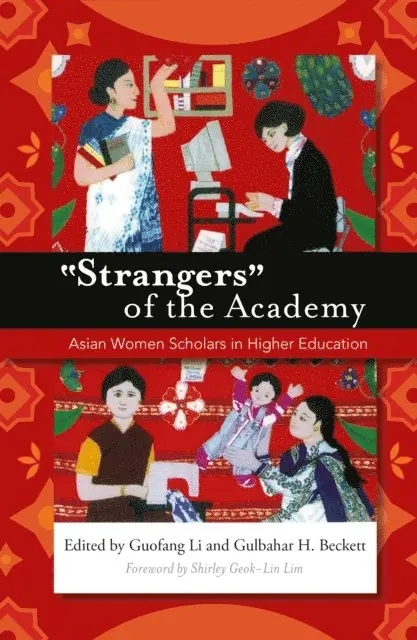
No less than other minorities, Asian women scholars are confronted with racial discrimination and stereotyping as well as disrespect for their research, teaching, and leadership, and are underrepresented in academia. In the face of such barriers, many Asian female scholars have developed strategies to survive and thrive. This book is among the first to examine their lived experience in Western academic discourses. It addresses the socio-cultural, political, academic, and personal issues that Asian female scholars encounter in higher education. The contributors to this book include first- and second-generation immigrants who are teachers and researchers in higher education and who come from a wide range of Asian nations and backgrounds. They here combine new research and personal narratives to explore the intersecting layers of relationships that impact their lives—language, culture, academic discourses, gender, class, generation, and race. The book is replete with the richness and complexity of these scholars’ struggles and triumphs in their professional and personal realms.This powerful and engaging volume:* Examines and celebrates the struggles and triumphs that Asian female scholars experience as they try to “make it†in academic environments that may differ sharply from the culture of their countries of origin; * Highlights the unique contributions the authors have made to research, theory, and the profession;* Establishes the authors’ claim to visibility and a voice for themselves and more generally for Asian women in the academy; * Opens a dialogue on these critical issues by sharing the academic and personal experiences of senior and junior scholars alike; and * Contributes to the on-going discussion on issues pertinent to the status of minority female scholars in higher education.
603 kr
Läs direkt efter köp
No less than other minorities, Asian women scholars are confronted with racial discrimination and stereotyping as well as disrespect for their research, teaching, and leadership, and are underrepresented in academia. In the face of such barriers, many Asian female scholars have developed strategies to survive and thrive. This book is among the first to examine their lived experience in Western academic discourses. It addresses the socio-cultural, political, academic, and personal issues that Asian female scholars encounter in higher education. The contributors to this book include first- and second-generation immigrants who are teachers and researchers in higher education and who come from a wide range of Asian nations and backgrounds. They here combine new research and personal narratives to explore the intersecting layers of relationships that impact their lives—language, culture, academic discourses, gender, class, generation, and race. The book is replete with the richness and complexity of these scholars’ struggles and triumphs in their professional and personal realms.This powerful and engaging volume:* Examines and celebrates the struggles and triumphs that Asian female scholars experience as they try to “make it†in academic environments that may differ sharply from the culture of their countries of origin; * Highlights the unique contributions the authors have made to research, theory, and the profession;* Establishes the authors’ claim to visibility and a voice for themselves and more generally for Asian women in the academy; * Opens a dialogue on these critical issues by sharing the academic and personal experiences of senior and junior scholars alike; and * Contributes to the on-going discussion on issues pertinent to the status of minority female scholars in higher education.
2 117 kr
Skickas inom 10-15 vardagar
629 kr
Skickas inom 10-15 vardagar
701 kr
Läs direkt efter köp
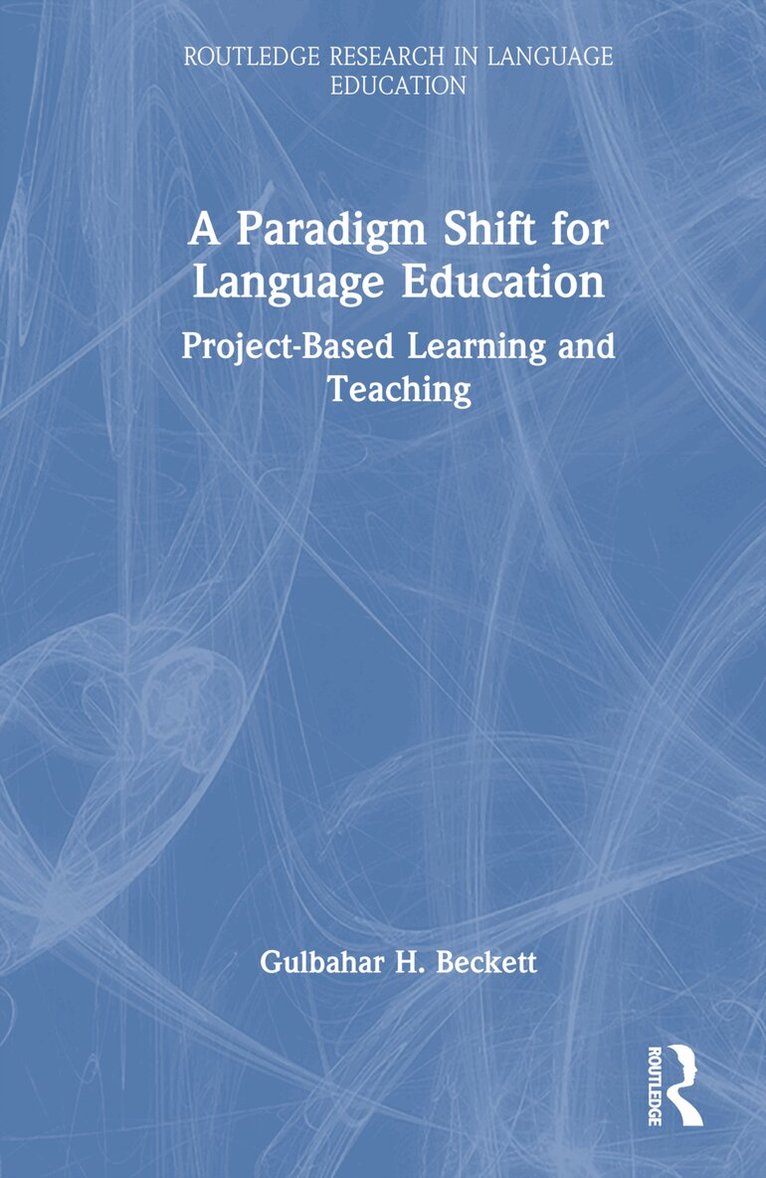
This book investigates the argument for the significance and necessity of project-based learning and teaching (PBLT), as it becomes increasingly important in language education.
Drawing on research and professional literature spanning over 100 years, it explores the research foundations and the historical and theoretical antecedents of PBLT, articulating the application of PBLT as a valuable approach for second language education pedagogy and research. Utilizing qualitative classroom research conducted in Canada, it then moves to address key concerns surrounding the difficulties of effectively implementing PBLT with existing curriculum and keeping track of content acquisition, cognitive and social skills development, and language learning.
Authoritatively written, and offering fresh insight into how the field can be advanced by engaging second language (L2) students in deeper learning and higher order thinking with 21st-century PBLT contextually, situationally, and multimodally, it makes a valuable pedagogical and research contribution that benefits practitioners and researchers in the field. As such, it will appeal to researchers, faculty, and L2 professionals with interests in L2 education, multimodal teaching and learning, and applied linguistics.
701 kr
Läs direkt efter köp
This book investigates the argument for the significance and necessity of project-based learning and teaching (PBLT), as it becomes increasingly important in language education.
Drawing on research and professional literature spanning over 100 years, it explores the research foundations and the historical and theoretical antecedents of PBLT, articulating the application of PBLT as a valuable approach for second language education pedagogy and research. Utilizing qualitative classroom research conducted in Canada, it then moves to address key concerns surrounding the difficulties of effectively implementing PBLT with existing curriculum and keeping track of content acquisition, cognitive and social skills development, and language learning.
Authoritatively written, and offering fresh insight into how the field can be advanced by engaging second language (L2) students in deeper learning and higher order thinking with 21st-century PBLT contextually, situationally, and multimodally, it makes a valuable pedagogical and research contribution that benefits practitioners and researchers in the field. As such, it will appeal to researchers, faculty, and L2 professionals with interests in L2 education, multimodal teaching and learning, and applied linguistics.
735 kr
Läs direkt efter köp
733 kr
Läs direkt efter köp
620 kr
Skickas inom 10-15 vardagar
2 352 kr
Skickas inom 10-15 vardagar
The Impact on Indigenous/Minority Literacy and Social Harmony
1 013 kr
Läs direkt efter köp
The Impact on Indigenous/Minority Literacy and Social Harmony
1 010 kr
Läs direkt efter köp
The Impact on Indigenous/Minority Literacy and Social Harmony
877 kr
Skickas inom 10-15 vardagar
511 kr
Skickas inom 10-15 vardagar
641 kr
Skickas inom 5-8 vardagar
1 134 kr
Skickas inom 5-8 vardagar
457 kr
Läs direkt efter köp
686 kr
Läs direkt efter köp
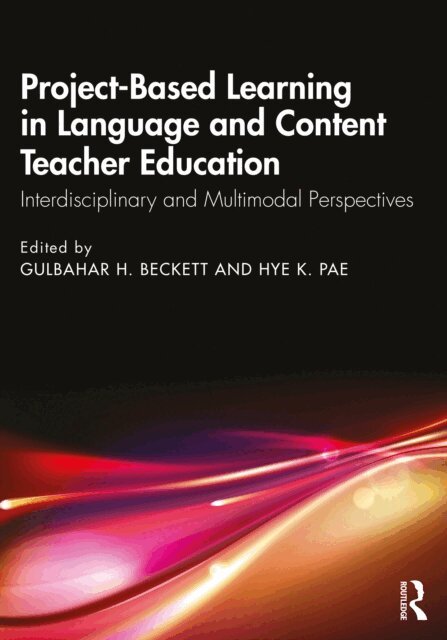
Dewey''s idea of Project-based Learning (PBL) was introduced into the field of second language education nearly two decades ago as a way to reflect the principles of student-centered teaching (Hedge, 1993). Since then, PBL has also become a popular language and literacy activity at various levels and in various contexts (see Beckett, 1999; Fried-Booth, 2002; Levis & Levis, 2003; Kobayashi, 2003; Luongo- Orlando, 2001; Mohan & Beckett, 2003; Weinstein, 2004). For example, it has been applied to teach various ESL and EFL skills around the world (e.g., Fried-Booth, 2002). More recently, PBL has been heralded as the most appropriate approach to teaching content-based second language education (Bunch, et al., 2001; Stoller, 1997), English for specific purposes (Fried-Booth, 2002), community-based language socialization (Weinstien, 2004), and critical and higher order thinking as well as problem-solving skills urged by the National Research Council (1999). Despite this emphasis, there is a severe shortage of empirical research on PBL and research-based frameworks and models based on sound theoretical guidance in general and second and foreign language education in particular (Thomas, 2000). Also missing from the second and foreign language education literature is systematic discussion of PBL work that brings together representative work, identifying obvious gaps, and guiding the field toward future directions. This, first of its kind, volume bridges these obvious gaps through the original work of international scholars from Canada, Israel, Japan, Singapore, and the US.