Gunn - Böcker
Visar alla böcker från författaren Gunn. Handla med fri frakt och snabb leverans.
4 produkter
4 produkter
616 kr
Skickas inom 5-8 vardagar
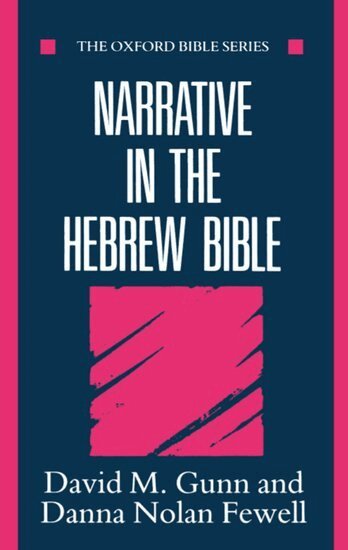
After almost two centuries of historical criticism, biblical scholarship has recently taken major shifts in direction, most notably towards literary study of the Bible. Much germinal criticism has taken as its primary focus narrative texts of the Hebrew Bible (the `Old Testament'). This book belongs in this movement and provides a lucid guide to its interpretative possibilities. It tries to be both theoretical and practical, combining discussion of method and the business of reading in general with numerous illustrations through readings of particular texts. The opening chapter indicates how literary criticism is related to other dominant ways of reading the text over the last two thousand years, using as an example the story of Cain and Abel. In subsequent methodological chapters, the authors discuss characters, not excluding the narrator and God; plot, modifying recent theory to accommodate the peculiar complexity of biblical narratives; and the play of language through repetition, ambiguity, multivalence, metaphor and intertextuality. The concluding chapter, on readers and responsibility, explores the ideological dimension of narrative interpretation, with particular attention to Genesis 1-3, a story which has generated much discussion about gender and social hierarchy. Does this text define or challenge the statusquo (of either the ancient or the modern world)? The authors lay out some of the debate and question what values are at work when we and others read and champion readings. Other extended readings include: the stories of Abraham and Sarah, and of Tamar and Judah in Genesis, the book of Jonah, and the account of Nebuchadnezzar and the three Jews thrown into the fiery furnace, fromthe book of Daniel. An extensive bibliography completes the book, arranged by subject and biblical text.
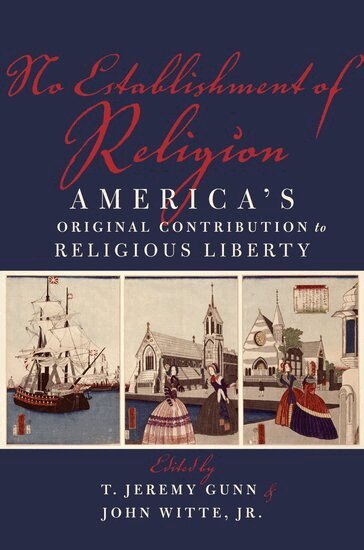
No Establishment of Religion
America's Original Contribution to Religious Liberty
Inbunden, Engelska, 2012
1 932 kr
Skickas inom 5-8 vardagar
America's most original legal invention may be the First Amendment guarantee that ''Congress shall make no law respecting an establishment of religion.'' This constitutional provision rejected the millennium-old Western policy of supporting one form of Christianity in each nation and subjugating all other faiths. It was both original and deeply challenging. The new nation encountered difficulty removing the traditional laws that controlled religious doctrine, liturgy, and church life and that discriminated against unpopular religions, and found it even harder to decide more subtle legal questions that continue to divide Americans today: Did the constitutional prohibition on establishment of religion prohibit governmental support for religion altogether, or did it just bar preferential support for some religions over others? Did it require that government remove Sabbath day, blasphemy, oath-swearing and other laws historically rooted in religion, or could those laws now be justified on grounds of tradition, morality, or utility? Did it mean the removal of all religious texts, symbols, and ceremonies from public documents and government lands, or could a democratic government represent these in ever more inclusive ways? Did the First Amendment Establishment Clause bind only "Congress " or were state and local governments bound, too? This twelve essays of this volume examine the diverse and shifting answers to these questions from the founding era until modern times. They show how the eighteenth-century founders took the first decisive steps toward disestablishment of religion, but with diverse political, theological, and philosophical goals in mind. No Establishment of Religion also shows how America's ongoing battles over religion and education, immigration, polygamy, religious funding, religious exemptions, and more have made the original and evolving understanding of disestablishment of religion a source of perennial cultural and constitutional controversy. The authors of the essays stake out strong and sometimes competing positions on what ''no establishment of religion'' meant to the American founders and what it can and should mean for America today. They represent a wide array of perspectives on the genesis and genius of America's original contribution to religious liberty, exposing the fallacies of viewing America as either a Christian nation bent on perpetuating biblical ideals or a secular nation built with a high and impregnable wall of separation between church and state.
380 kr
Skickas inom 5-8 vardagar
258 kr
Skickas inom 5-8 vardagar