Guy Warner – författare
Visar alla böcker från författaren Guy Warner. Handla med fri frakt och snabb leverans.
10 produkter
10 produkter
E-bok
Engelska, 2021257 kr
Läs direkt efter köp
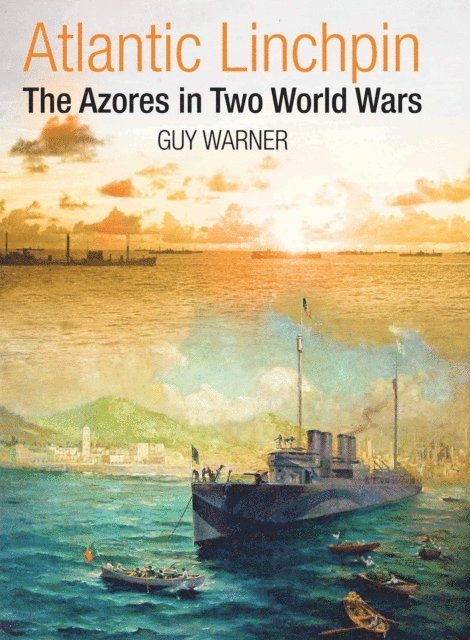
On a map the Azores appear as nine tiny specks in the middle of the Atlantic Ocean, but their location was to prove strategically vital in two world wars. The Atlantic became a crucial battleground twice within the space of 25 years, as the US ‘arsenal of democracy’ sent firstly stores, arms, and equipment, followed by many thousands of troops to fight in Europe. In both desperate and closely fought struggles at sea, Germany sought to stem the flow and thereby win the war by cutting this vital lifeline using a new weapon – the ocean-going submarine. In the First World War, the Azores became a mid-Atlantic refueling location, a base for US and Portuguese naval vessels and – in a hugely innovative contribution to the anti-submarine war – for the patrol seaplanes and flying boats of the US Marine Corps. Portugal was neutral during the Second World War but when Winston Churchill invoked a treaty dating from 1373, permission was given in 1943 for an RAF Coastal Command base to be very rapidly established at Lagens. From there convoys could be protected and U-boats could be harried and sunk, so closing the notorious mid-Atlantic gap. Later, it also became an important staging post for US aircraft, as it had been in the previous conflict. The significance of the Azores has been overlooked in most military histories, but this extensively researched and copiously illustrated book from historian Guy Warner provides a detailed but balanced appraisal. The author has had access to archives and photographic collections in the UK, USA, Portugal, and the Azores, consulting with local historians to produce a book that sheds much new light on a hitherto under-appreciated facet of twentieth-century history.
E-bok
Engelska, 2021122 kr
Läs direkt efter köp
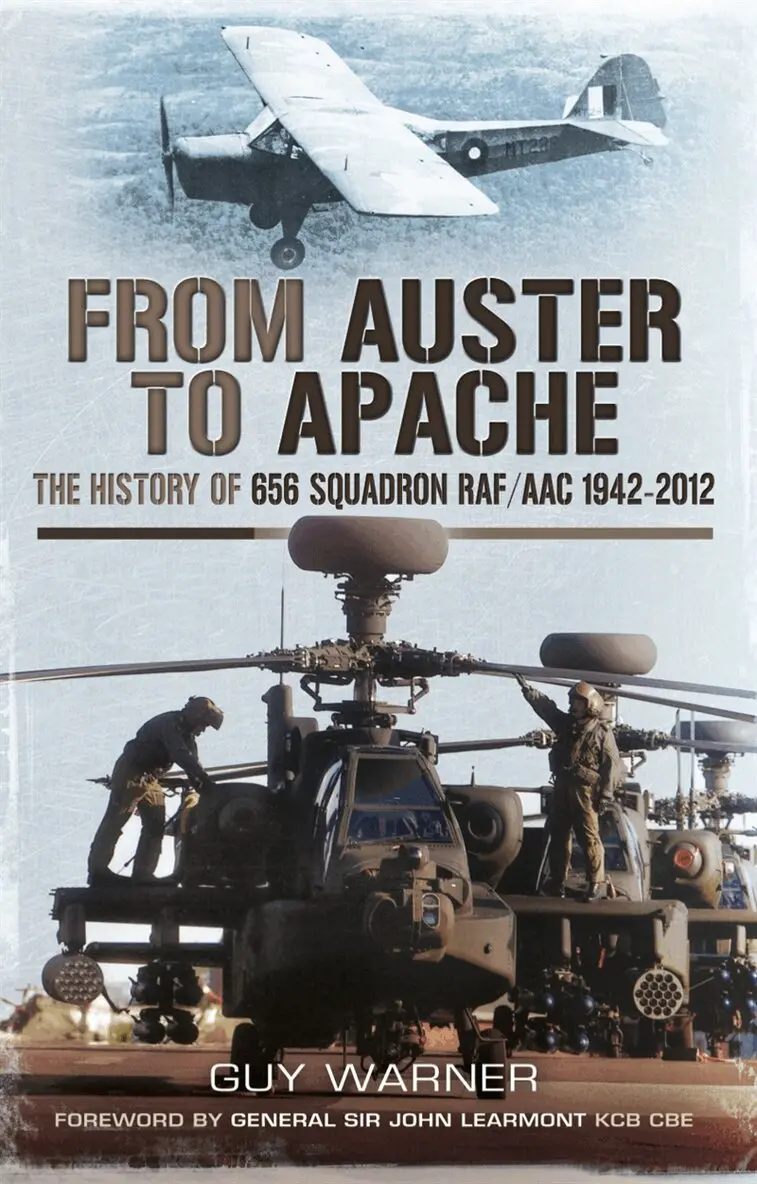
This is the 70th Anniversary year of 656 Squadron, which first formed on 31st December 1942. Over the intervening years the Squadron has served with great distinction in India, Burma, Java, Malaya, Borneo, Hong Kong, the UK, the Falkland Islands, Bosnia, Kosovo and, most recently, in Afghanistan. This is 656’s story, told in full and for the first time.656 Squadron’s story is a diverse one, characterized by active deployment in a diverse range of wartime theaters. It was the only Air Observation Post (AOP) squadron to serve with the “Forgotten Army”, 14th Army under General Sir Bill Slim in Burma and, after the successful conclusion of this campaign, the Squadron was posted to Malaya, from where it took part in the little known but fierce campaign countering separatists in Java. This was followed by the long campaign against Chinese communist terrorists in Malaya (Malayan Emergency). In addition, many members of the Squadron served in the Korean War. Subsequently there was considerable involvement in the “Confrontation” with Indonesia in Borneo and policing and internal security work in Hong Kong. Following its return to the UK in 1979, there were deployments on active service to Rhodesia, the Falkland Islands (both during and after the war) and Bosnia and Kosovo. In 2001 the Squadron was chosen to be the Army’s first Apache Attack Helicopter Squadron, and has now undertaken three operational tours in Afghanistan. Overall it has amassed well over 200,000 operational flying hours making it the most operational squadron in the entire history of army air warfare. It was also, of course, most recently on active service as a sea-based strike unit over the skies of Libya.It is a quite remarkable fact that the Squadron, and indeed the British Army, have both come full circle; directing fire from the air in 1944, to being the artillery in the air, directed from the ground in 2011.
E-bok
Engelska, 2021123 kr
Läs direkt efter köp
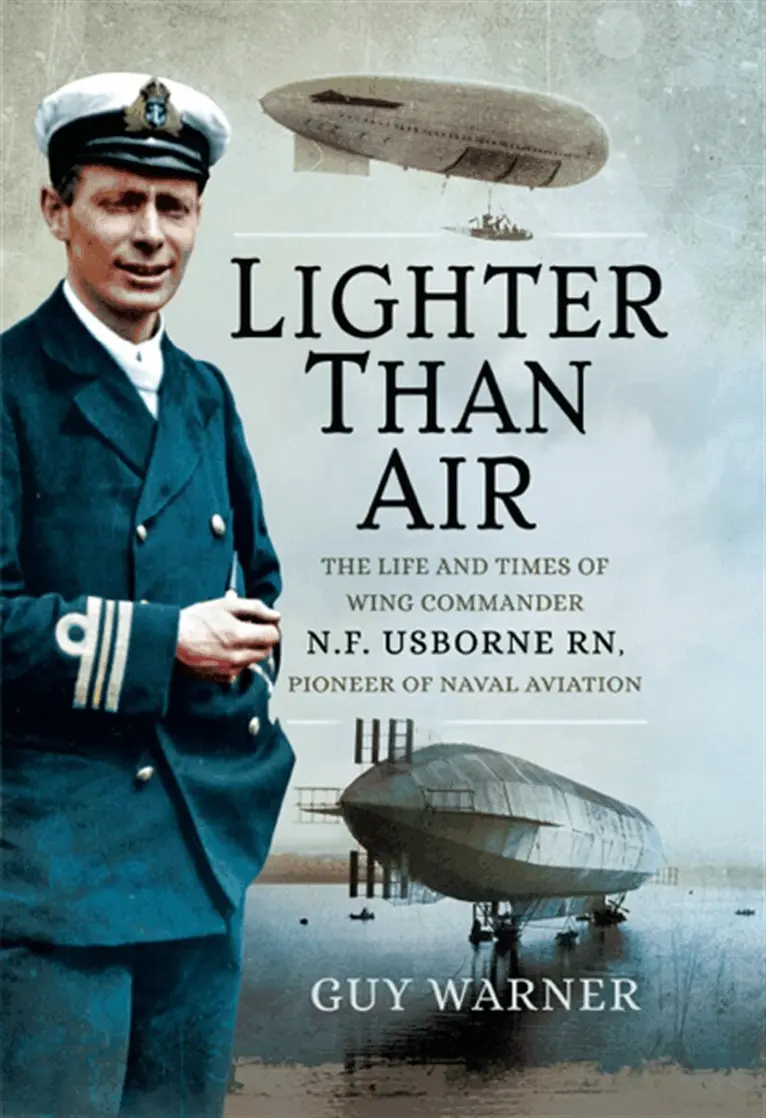
Neville Florian Usborne entered the Royal Navy as a cadet in 1897. In the years between him joining up and the outbreak of the First World War, he engaged in a huge number of enterprises and endeavors. Praise and respect garnered in accordance with his achievements all helped to establish his reputation in later years as an 'irreplaceable' pioneer and a leading light of early British airship design. His fertile imagination and enterprising spirit fused to form a dynamic personality, able in wartime to draw up countless schemes in an effort to outwit the enemy.His chief task during the Great War was to dream up new tactics and designs to combat the Zeppelin menace, perceived as one of the most damaging threats of the entire conflict. He was also deeply involved in the design of the very successful SS and Coastal Class airships; indeed, during 1915 he was actually appointed Inspector Commander of Airships at the Admiralty. Unfortunately, his illustrious career was destined to be cut short in 1916 when he was killed testing a prototype of one of his own designs. This new biography seeks to shine a light on an overlooked pioneer of early aviation and it does so in entertaining and reverential style. The importance of Usborne the pioneer is made plain; as one of his contemporaries commented upon his death No one can talk of the early days of British airship design without mention of his name and work. A personality was lost on that February day which was irreplaceable.
Häftad, Engelska, 2024
219 kr
Skickas
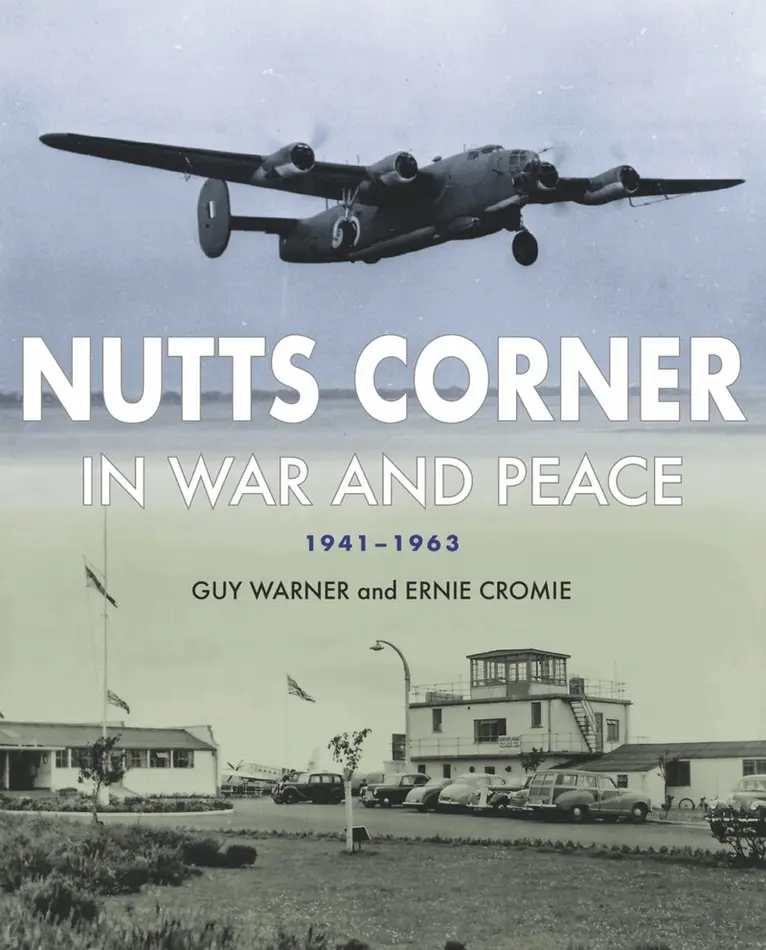
Nutts Corner airfield was conceived and built during the Second World War, constructed for military use before evolving into a new civil airport for Northern Ireland in December 1946. Written by well-known aviation historians Guy Warner and the late Ernie Cromie, this is the first book to reveal the full story of Nutts Corner. It shares the history of the airfield, involving the RAF, RN and USAAF and many early, long-gone airlines such as BEA, Silver City and BKS. Fully-illustrated, it covers the wide range of aircraft and incidents seen over the years, through military and civil use, and the important impact on local people. This is the fascinating story of the vital and diverse roles played by Nutts Corner during and after the war, opening up Northern Ireland’s economy and laying the foundations for later expansion.
Häftad, Engelska, 2026
219 kr
Skickas
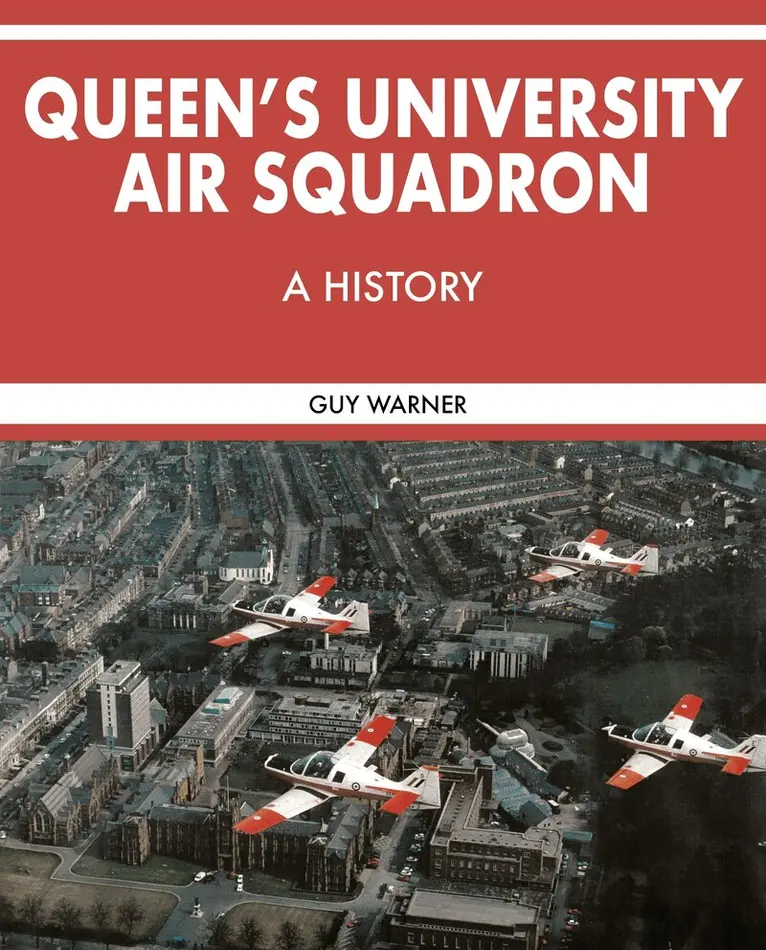
Formed in wartime Belfast in 1941, Queen’s University Air Squadron became a vital link between university life and the Royal Air Force. From its early days at Sydenham, training young men for wartime service, through decades of flying Tiger Moths, Chipmunks and Bulldogs over Northern Ireland, QUAS built a remarkable record of achievement, service and camaraderie.Drawing on official records, photographs, personal memories and contemporary accounts, Guy Warner tells the story of a squadron that was shaped by war, post-war renewal, the coming of jet-age aviation, and the difficult years of the Troubles. Along the way are tales of first solos, summer camps, air displays, visiting dignitaries, sporting triumphs, mishaps, close calls and the everyday humour of squadron life.Richly illustrated and carefully researched, Queen’s University Air Squadron: A History is both an aviation history and a tribute to the generations of students, instructors, ground staff and supporters who made the Squadron what it was. It will appeal to former members, aviation enthusiasts, Queen’s alumni and anyone interested in Northern Ireland’s military and flying heritage.
E-bok
PDF, Engelska, 201128 kr
Läs direkt efter köp
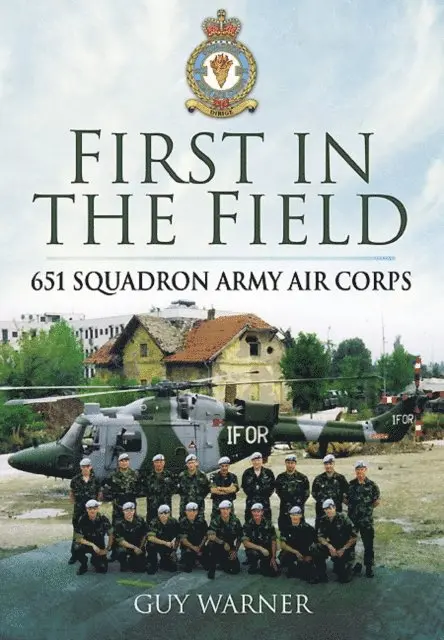
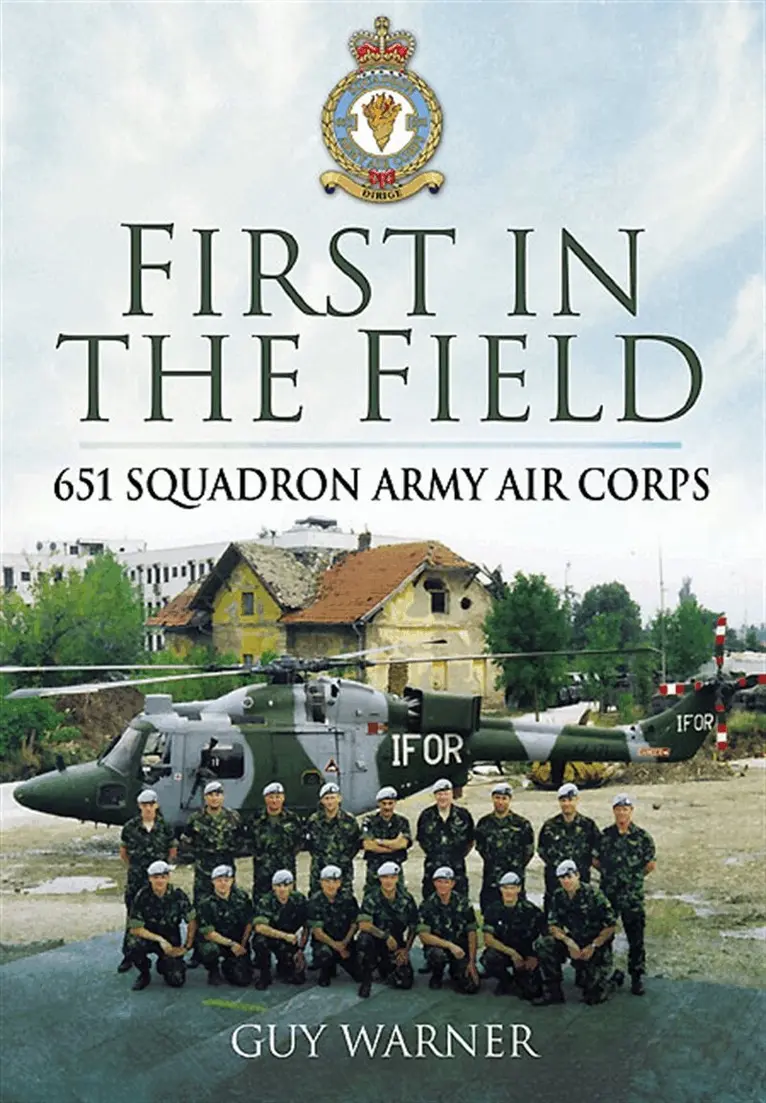
651 was the first Air Observation Post (AOP) Squadron, formed at Old Sarum on August 1 1941 to work closely with army units in artillery spotting and liaison. It was still part of the RAF but all the pilots, drivers and signalers were from the Royal Artillery, while the RAF supplied the Adjutant, Engineer Officer and technicians. It is therefore the premier Army Air Corps squadron. Its first aircraft were an assortment of Taylorcraft Plus Cs and Ds, three Piper Cubs and a Stinson Voyager. Then later that year all 651s aircraft were replaced by the version of the Plus D manufactured by Taylorcraft in Britain and renamed the Auster I. These were deployed on active service in November 1942, to Algeria and then Tunisia, as part of Operation Torch. Its main duties were the direction of artillery fire, reconnaissance and light liaison. By May 1943 Tunisia was under Allied control and 651 moved to Sicily in support of offensive operations by 8th Army in August. Now equipped with Auster IIIs and flying by night and day, support was given to XIII Corps on the coast of the island, registering targets and directing counter-battery fire, including that of Royal Naval warships. On September 4, it became the first AOP unit to cross the Straits of Messina to participate in the invasion of Italy, again with 8th Army. In May 1944, the Squadron flew in support of 2nd Polish Corps during the capture of Monte Cassino, a major obstacle in the advance of Allied forces on Rome. Throughout the remainder of the war the Auster IVs and Vs of 651 Squadron worked with almost every division in Italy as they came in and out of the front line. Over the years that followed, 651 Squadron served in Austria, Palestine on internal security duties (where a landing was made on the aircraft carrier HMS Ocean in 1947), Eritrea protecting Italian civilians from Shifta bandits, Libya, Iraq during the Persian Oil Dispute, Egypt patrolling the Canal Zone and Cyprus, where in August 1953 HQ and 1910 Flights were the first AOP assets to deploy there. Further marks of Auster were introduced, AOP 6s, 9s and T.7sIn 2000 it was selected as the Attack Helicopter Fielding Squadron to bring the Westland Apache AH.1 into service, in which role it served very successfully for the next three years at Middle Wallop. Then in 2004 it was all change again with a move to RAF Odiham to operate the Defender AL.1 in the ISTAR (Intelligence, Surveillance, Target Acquisition, and Reconnaissance) support role as part of the Joint Special Forces Aviation Wing. Since that time it has been continuously engaged in operations.
E-bok
Engelska, 202177 kr
Läs direkt efter köp
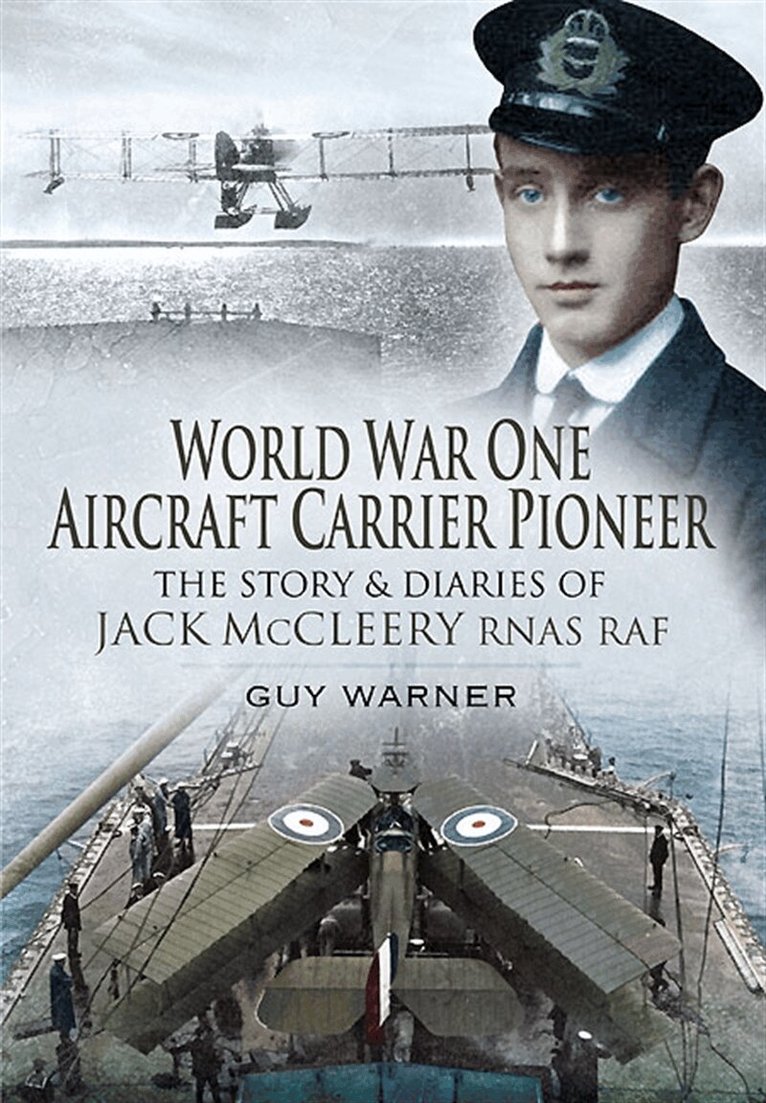
Jack McCleery was born in Belfast in 1898, the son of a mill owning family. He joined the RNAS in 1916 as a Probationary Flight Officer. During the next ten months he completed his training at Crystal Palace, Eastchurch, Cranwell, Frieston, Calshot and Isle of Grain, flying more than a dozen landplanes, seaplanes and flying boats, gaining his wings as a Flight Sub-Lieutenant. In July 1917 he was posted to the newly commissioning aircraft carrier HMS Furious, which would be based at Scapa Flow and Rosyth. He served in this ship until February 1919, flying Short 184 seaplanes and then Sopwith 1½ Strutters off the deck. He also flew a large number of other types during this time from shore stations at Turnhouse, East Fortune and Donibristle.He served with important and well-known naval airmen including Dunning, Rutland (of Jutland) and Bell Davies VC. He witnessed Dunning’s first successful landing on a carrier flying a Sopwith Pup in 1917 and his tragic death a few days later. He also witnessed the Tondern raid in 1918, the world’s first carrier strike mission. He took part in more than a dozen sweeps into the North Sea by elements of the Grand Fleet and Battle Cruiser Fleet. He carried out reconnaissance missions off the coast of Denmark, landing in the sea to be picked up by waiting destroyers. He witnessed the surrender of the High Seas Fleet. Promoted to Captain, he acted as temporary CO of F Squadron for a time postwar.
E-bok
Engelska, 2021120 kr
Läs direkt efter köp
651 was the first Air Observation Post (AOP) Squadron, formed at Old Sarum on August 1 1941 to work closely with army units in artillery spotting and liaison. It was still part of the RAF but all the pilots, drivers and signalers were from the Royal Artillery, while the RAF supplied the Adjutant, Engineer Officer and technicians. It is therefore the premier Army Air Corps squadron. Its first aircraft were an assortment of Taylorcraft Plus Cs and Ds, three Piper Cubs and a Stinson Voyager. Then later that year all 651’s aircraft were replaced by the version of the Plus D manufactured by Taylorcraft in Britain and renamed the Auster I. These were deployed on active service in November 1942, to Algeria and then Tunisia, as part of Operation Torch. Its main duties were the direction of artillery fire, reconnaissance and light liaison. By May 1943 Tunisia was under Allied control and 651 moved to Sicily in support of offensive operations by 8th Army in August. Now equipped with Auster IIIs and flying by night and day, support was given to XIII Corps on the coast of the island, registering targets and directing counter-battery fire, including that of Royal Naval warships. On September 4, it became the first AOP unit to cross the Straits of Messina to participate in the invasion of Italy, again with 8th Army. In May 1944, the Squadron flew in support of 2nd Polish Corps during the capture of Monte Cassino, a major obstacle in the advance of Allied forces on Rome. Throughout the remainder of the war the Auster IVs and Vs of 651 Squadron worked with almost every division in Italy as they came in and out of the front line. Over the years that followed, 651 Squadron served in Austria, Palestine on internal security duties (where a landing was made on the aircraft carrier HMS Ocean in 1947), Eritrea protecting Italian civilians from Shifta bandits, Libya, Iraq during the Persian Oil Dispute, Egypt patrolling the Canal Zone and Cyprus, where in August 1953 HQ and 1910 Flights were the first AOP assets to deploy there. Further marks of Auster were introduced, AOP 6s, 9s and T.7sIn 2000 it was selected as the Attack Helicopter Fielding Squadron to bring the Westland Apache AH.1 into service, in which role it served very successfully for the next three years at Middle Wallop. Then in 2004 it was all change again with a move to RAF Odiham to operate the Defender AL.1 in the ISTAR (Intelligence, Surveillance, Target Acquisition, and Reconnaissance) support role as part of the Joint Special Forces Aviation Wing. Since that time it has been continuously engaged in operations.
Häftad, Engelska, 2019
148 kr
Skickas inom 5-8 vardagar
Häftad, Engelska, 2020
367 kr
Tillfälligt slut