
GyA'zA' MolnA!r – författare
807 kr
Läs direkt efter köp
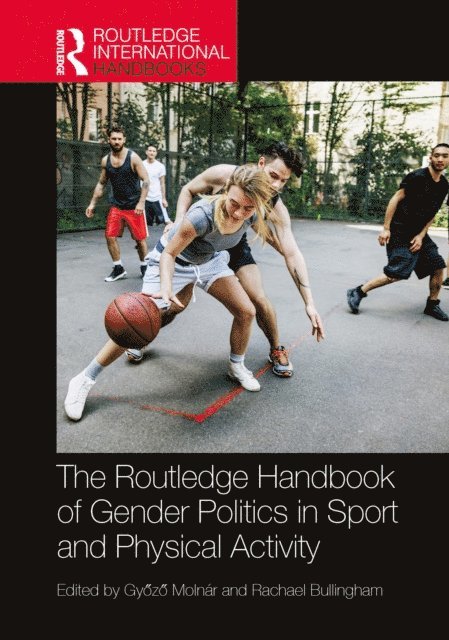
This progressive and broad-ranging handbook offers a comprehensive overview of the complex intersections between politics, gender, sport and physical activity, shining new light on the significance of gender, sport and physical activity in wider society.
Featuring contributions from leading and emerging researchers from around the world, the book makes the case that gender studies and critical thinking around gender are of particular importance in an era of increasingly intolerant populist politics. It examines important long-term as well as emerging themes, such as recent generational shifts in attitudes to gender identity in sport and the socio-cultural expectations on men and women that have traditionally influenced and often disrupted their engagement with sport and physical activity, and explores a wide range of current issues in contemporary sport, from debates around the contested gender binary and sex verification, to the role of the media and social media, and the significance of gender in sport leadership, policy and decision-making.
This book is an authoritative survey of the current state of play in research connecting gender, sport, physical activity and politics, and is an important contribution to both sport studies and gender studies. It is fascinating reading for any student, researcher, policy-maker or professional with an interest in sport, physical activity, social studies, public health or political science.
941 kr
Läs direkt efter köp
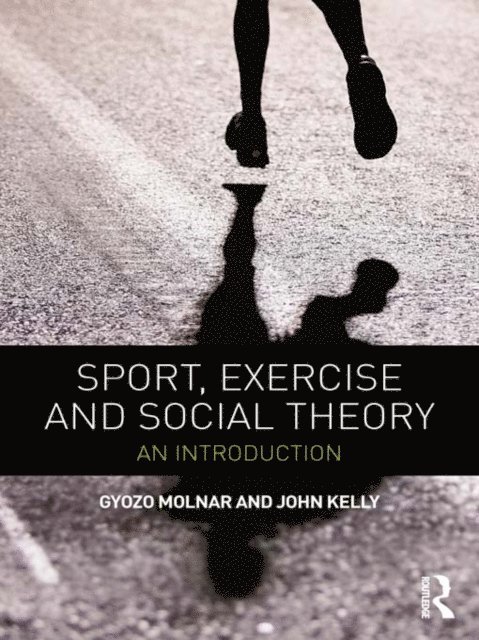
It is impossible to properly understand the role that sport and exercise play in contemporary society without knowing a little social theory. It is social theory that provides the vocabulary for our study of society, that helps us ask the right critical questions and that encourages us to look for the (real) story behind sport and exercise.
Sport, Exercise and Social Theory is a concise and engaging introduction to the key theories that underpin the study of sport, exercise and society, including feminism, post-modernism, (Neo-)Marxism and the sociological imagination. Using vivid examples and descriptions of sport-related events and exercise practices, the book explains why social theories are important as well as how to use them, giving students the tools to navigate with confidence through any course in the sociology of sport and exercise.
This book shows how theory can be used to debunk many of our traditional assumptions about sport and exercise and how they can be a useful window through which to observe wider society. Designed to be used by students who have never studied sociology before, and including a whole chapter on the practical application of social theory to their own study, it provides training in critical thinking and helps students to develop intellectual skills which will serve them throughout their professional and personal lives.
975 kr
Läs direkt efter köp
It is impossible to properly understand the role that sport and exercise play in contemporary society without knowing a little social theory. It is social theory that provides the vocabulary for our study of society, that helps us ask the right critical questions and that encourages us to look for the (real) story behind sport and exercise.
Sport, Exercise and Social Theory is a concise and engaging introduction to the key theories that underpin the study of sport, exercise and society, including feminism, post-modernism, (Neo-)Marxism and the sociological imagination. Using vivid examples and descriptions of sport-related events and exercise practices, the book explains why social theories are important as well as how to use them, giving students the tools to navigate with confidence through any course in the sociology of sport and exercise.
This book shows how theory can be used to debunk many of our traditional assumptions about sport and exercise and how they can be a useful window through which to observe wider society. Designed to be used by students who have never studied sociology before, and including a whole chapter on the practical application of social theory to their own study, it provides training in critical thinking and helps students to develop intellectual skills which will serve them throughout their professional and personal lives.