H. C. Erik Midelfort - Böcker
Visar alla böcker från författaren H. C. Erik Midelfort. Handla med fri frakt och snabb leverans.
3 produkter
3 produkter
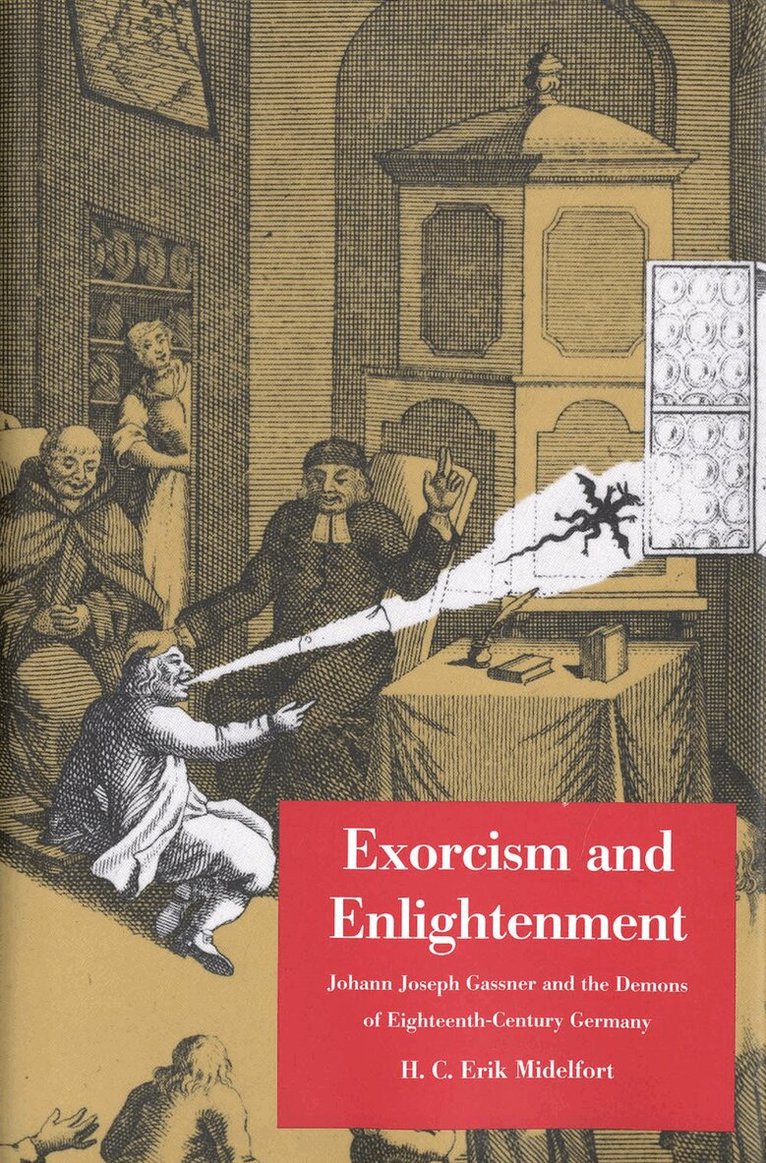
Exorcism and Enlightenment
Johann Joseph Gassner and the Demons of Eighteenth-Century Germany
Inbunden, Engelska, 2005
782 kr
Skickas inom 5-8 vardagar
In the late eighteenth century, Catholic priest Johann Joseph Gassner (1727–1779) discovered that he had extraordinary powers of exorcism. Deciding that demons were responsible for most human ailments, he healed thousands, rich and poor, Protestant and Catholic. In this book H. C. Erik Midelfort delves deeply into records of the time to explore Gassner’s remarkable exorcising campaign, chronicle the official efforts to curb him, and reconstruct the sufferings of the afflicted.Gassner’s activities triggered a Catholic religious revival as well as a noisy skeptical reaction. In response to those who doubted that he was really casting out demons, Gassner marshaled hundreds of eyewitness reports that seemed to prove his exorcisms really worked. Midelfort describes the enormous public controversy that resulted, and he demonstrates that the Gassner episode yields important insights into the German Enlightenment and Counter-Enlightenment, the limitations of eighteenth-century debate, and the ongoing role of magic and belief in an age of scientific enlightenment.
Witch Hunting in Southwestern Germany, 1562-1684
The Social and Intellectual Foundations
Inbunden, Engelska, 1972
743 kr
Skickas inom 7-10 vardagar
This book is an analysis of witchcraft and witch hunting as they appeared in southwestern Germany in the sixteenth and seventeenth centuries. Starting from a short analysis of some basic problems in the interpretation of European witchcraft, it proceeds to a study of the shifting denominational views regarding witches and the growth of Catholic orthodoxy. That theoretical vantage yields insight into the patterns in time, space, and confession that characterized all witch hunts in the German Southwest. There follows a narrative analysis of the largest witch hunts and the general crisis of confidence they produced. Analysis is complemented by a summary of what is known about the people accused of witchcraft, as well as an examination of the popular suspicion directed toward old women at the start of most panics and the breakdown of this stereotype as the panics progressed.
373 kr
Skickas inom 7-10 vardagar
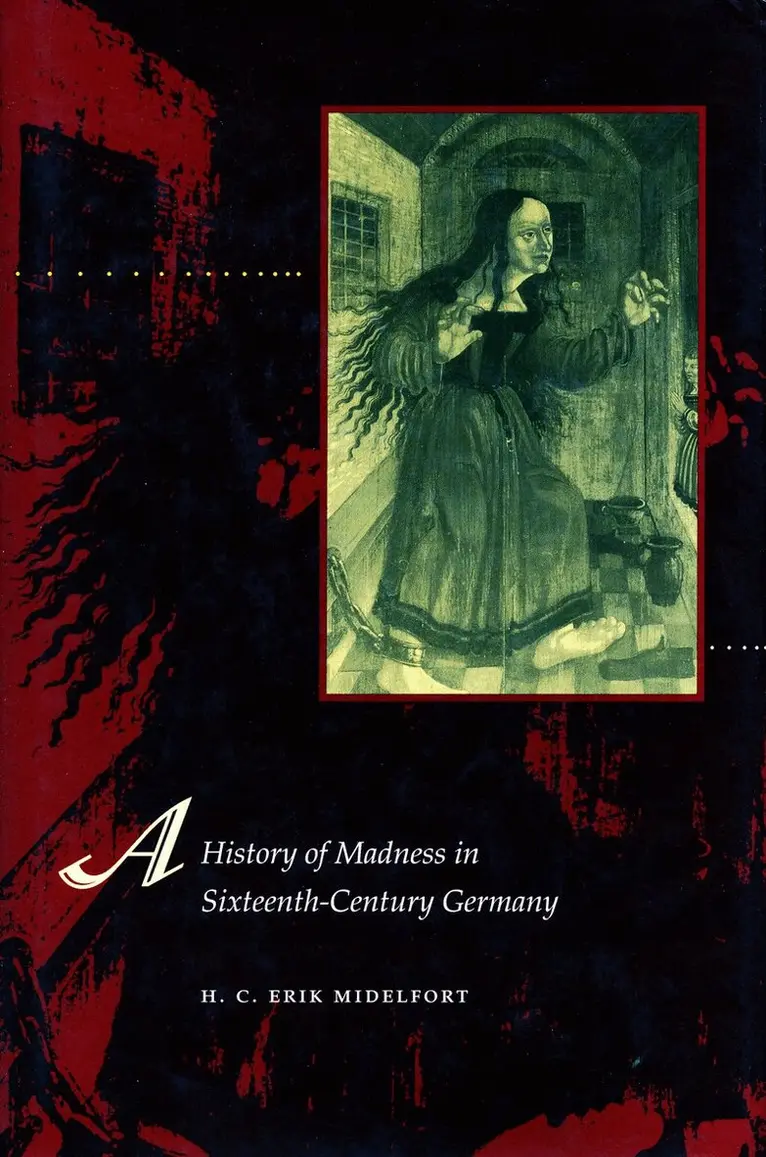
This magisterial work explores how Renaissance Germans understood and experienced madness. It focuses on the insanity of the world in general but also on specific disorders; examines the thinking on madness of theologians, jurists, and physicians; and analyzes the vernacular ideas that propelled sufferers to seek help in pilgrimage or newly founded hospitals for the helplessly disordered. In the process, the author uses the history of madness as a lens to illuminate the history of the Renaissance, the Reformation and Counter-Reformation, the history of poverty and social welfare, and the history of princely courts, state building, and the civilizing process.Rather than try to fit historical experience into modern psychiatric categories, this book reconstructs the images and metaphors through which Renaissance Germans themselves understood and experienced mental illness and deviance, ranging from such bizarre conditions as St. Vitus's dance and demonic possession to such medical crises as melancholy and mania. By examining the records of shrines and hospitals, where the mad went for relief, we hear the voices of the mad themselves.For many religious Germans, sin was a form of madness and the sinful world was thoroughly insane. This book compares the thought of Martin Luther and the medical-religious reformer Paracelsus, who both believed that madness was a basic category of human experience. For them and others, the sixteenth century was an age of increasing demonic presence; the demon-possessed seemed to be everywhere. For Renaissance physicians, however, the problem was finding the correct ancient Greek concepts to describe mental illness. In medical terms, the late sixteenth century was the age of melancholy. For jurists, the customary insanity defense did not clarify whether melancholy persons were responsible for their actions, and they frequently solicited the advice of physicians.Sixteenth-century Germany was also an age of folly, with fools filling a major role in German art and literature and present at every prince and princeling's court. The author analyzes what Renaissance Germans meant by folly and examines the lives and social contexts of several court fools.