H. J. Senn - Böcker
Visar alla böcker från författaren H. J. Senn. Handla med fri frakt och snabb leverans.
7 produkter
7 produkter
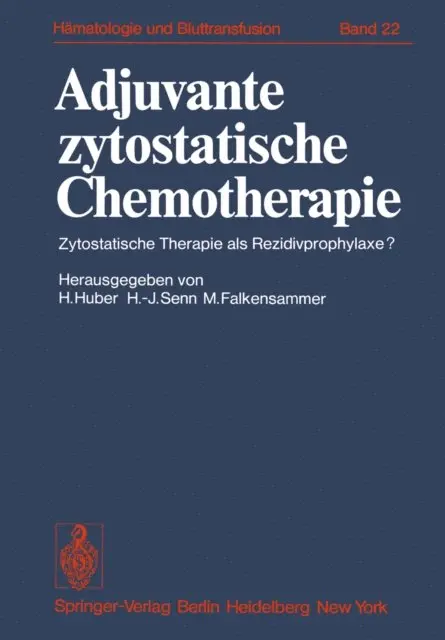
Adjuvante zytostatische Chemotherapie
Zytostatische Therapie als Rezidivprophylaxe?
Häftad, Tyska, 1978
567 kr
Skickas inom 10-15 vardagar
Das Konzept der experimentellen Onkologie, schon im Stadium der Mikrometa- stasierung zytostatischer Medikamente einzusetzen, wird derzeit bei verschiede- nen menschlichen Tumoren auf breiter Basis untersucht. Damit hat die Frage nach den Erfolgsaussichten und der Indikationsstellung fur adjuvante zytostati- sche Therapie in den letzten Jahren an besonderer Aktualitat gewonnen. Bei einigen Erkrankungen, die dem osteogenen und Ewing-Sarkom, Wilmstumoren, dem embryonalen Rhabdomyosarkom, manchen Hodentumoren u. a., sind Erfolgsaussichten dieses Vorgehens deutlich, bei weit haufigeren Neoplasien, wie dem Mammacarcinom, Ovarialcarcinom, bei malignen Lymphomen u. a., wird die Indikationsstellung lebhaft diskutiert. Die arztliche Entscheidung zu dieser Therapieform wird durch die Diskussion in der bffentlichkeit keineswegs und laBt zusammenfassende, kritische Informationen zu diesem erleichtert Thema besonders suchen.Die gemeinsame Tagung der Deutschen und bsterreichischen Gesellschaft fUr Hamatologie und Onkologie im November 1977 in Linz gab Gelegenheit, die Grundlagen adjuvanter zytostatischer Therapien und den derzeitigen Stand ihrer praktischen Anwendung zu diskutieren, wobei auch Gefahren und Nebenwir- kuilgen breiter Raum gegeben wurde. Urn der Wichtigkeit der Frage gerecht zu werden und die Ergebnisse moglichst auf den letzten Stand zu bringen, konnten fur die Publikation zusatzliche Referenten mit internationalem Ansehen gewonnen werden. Die wichtigsten Diskussionsbemerkungen wurden ebenfalls aufgenommen. Sie mochten dokumentieren, wie viele Fragen noch offen sind und weiterer gemeinsamer Anstrengungen bedurfen. Die Publikation dieses Bandes wurde durch gemeinsame Bemuhungen unserer Mitarbeiter in Linz, St. Gallen und Innsbruck ermoglicht, denen wir besonders verpflichtet sind. Frau Doktor G. Kratzer und Herr Oberarzt Dr. H.
2 164 kr
Skickas inom 10-15 vardagar
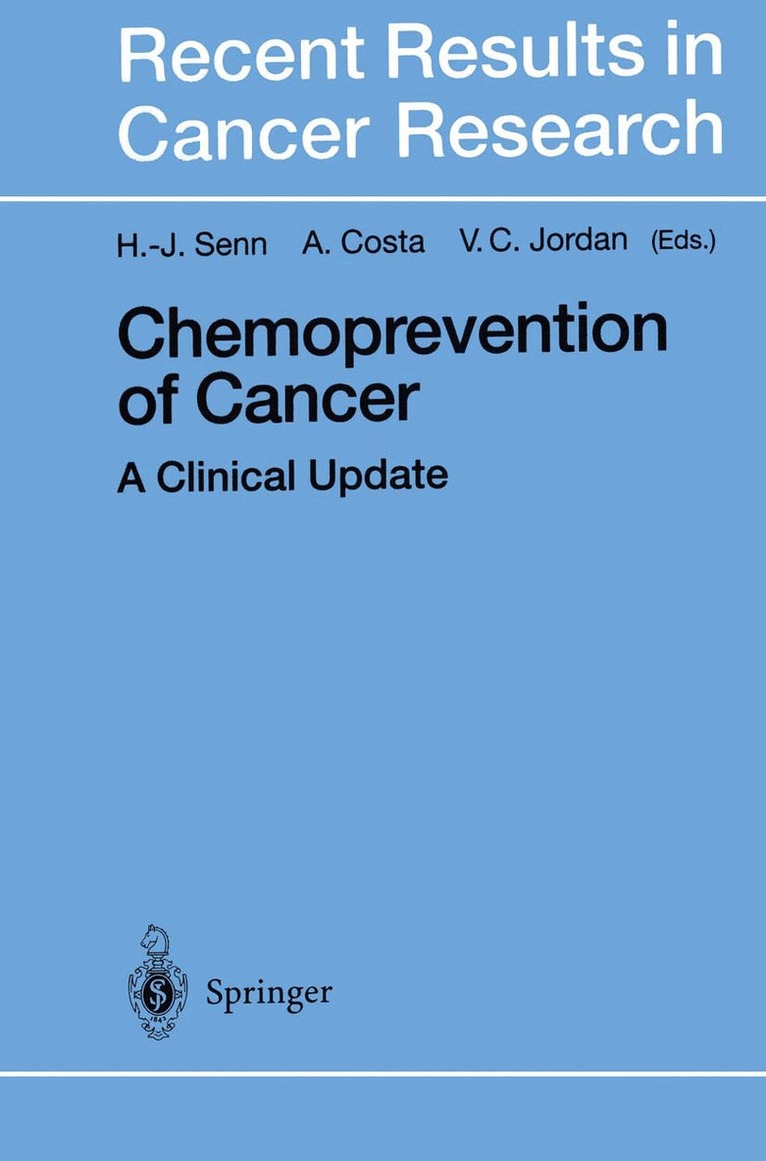
Identification of cancer risk factors and potential prevention strategies have been some of the most important medical and research contributions to the improvement of public health in the past half-century (Steele 2003). Und- standing the role of lifestyle, exposure to endogenous factors and exogenous environmental factors, and individual genetic and epigenetic variability have contributed significantly to this effort. Cancer prevention strategies have been developed based on results of epidemiologic, preclinical, and clinical studies that have generated clues for identifying risk factors that may be modulated by changes in lifestyle, such as smoking cessation or dietary modification (Greenwald 2002a). In addition, significant progress in medical interventions involving chemoprevention-a pharmacological approach to intervention that aims to prevent, arrest, or reverse either the initiation phase of carcinogenesis or the progression of premalignant cells-is beg- ning to pay dividends in reducing risks associated with cancer.Emerging technologies, identification of biomarkers of risk, and advances in genetics research also are finding applications in chemoprevention research that p- mise to speed the acquisition of knowledge on the molecular and cellular - fects of chemopreventive agents. 2 Lifestyle Approaches Population studies from the 1950s through the early 1980s provided c- pelling evidence that modifiable lifestyle choices can either increase or - crease cancer risk. For example, several landmark epidemiologic studies in the 1950s showed a clear association between smoking and lung cancer (Wynder and Graham 1950; Levin et al. 1950). In 1964, the U. S.
2 164 kr
Skickas inom 10-15 vardagar
This volume contains the main proceedings of the fourth international conference on "Cancer Prevention 2006," which was held during February 16–18, 2006, in St. Gallen, Switzerland. Written by international experts in the field, the book comprises a comprehensive update on the most recent developments in the upsurging fields of molecular biology and cancer genetics and their interactions with clinical epidemiology and cancer prevention at various levels: genetic/biologic predisposition and definition of high-risk groups; preclinical models and tumor prevention; prospects of surrogate endpoints and biomarkers; progress in imaging and detection of neoplastic precursor lesions; problems with Cox-2 inhibitors in tumor chemoprevention; primary and secondary prevention of gynecological, breast, gastrointestinal and genitourinary cancers. In addition, the future prospects of cancer chemoprevention are discussed.
2 380 kr
Skickas inom 10-15 vardagar
This volume contains the main proceedings of the fourth international conference on "Cancer Prevention 2006," which was held during February 16–18, 2006, in St. Gallen, Switzerland. Written by international experts in the field, the book comprises a comprehensive update on the most recent developments in the upsurging fields of molecular biology and cancer genetics and their interactions with clinical epidemiology and cancer prevention at various levels: genetic/biologic predisposition and definition of high-risk groups; preclinical models and tumor prevention; prospects of surrogate endpoints and biomarkers; progress in imaging and detection of neoplastic precursor lesions; problems with Cox-2 inhibitors in tumor chemoprevention; primary and secondary prevention of gynecological, breast, gastrointestinal and genitourinary cancers. In addition, the future prospects of cancer chemoprevention are discussed.
2 369 kr
Skickas inom 10-15 vardagar
Identification of cancer risk factors and potential prevention strategies have been some of the most important medical and research contributions to the improvement of public health in the past half-century (Steele 2003). Und- standing the role of lifestyle, exposure to endogenous factors and exogenous environmental factors, and individual genetic and epigenetic variability have contributed significantly to this effort. Cancer prevention strategies have been developed based on results of epidemiologic, preclinical, and clinical studies that have generated clues for identifying risk factors that may be modulated by changes in lifestyle, such as smoking cessation or dietary modification (Greenwald 2002a). In addition, significant progress in medical interventions involving chemoprevention-a pharmacological approach to intervention that aims to prevent, arrest, or reverse either the initiation phase of carcinogenesis or the progression of premalignant cells-is beg- ning to pay dividends in reducing risks associated with cancer.Emerging technologies, identification of biomarkers of risk, and advances in genetics research also are finding applications in chemoprevention research that p- mise to speed the acquisition of knowledge on the molecular and cellular - fects of chemopreventive agents. 2 Lifestyle Approaches Population studies from the 1950s through the early 1980s provided c- pelling evidence that modifiable lifestyle choices can either increase or - crease cancer risk. For example, several landmark epidemiologic studies in the 1950s showed a clear association between smoking and lung cancer (Wynder and Graham 1950; Levin et al. 1950). In 1964, the U. S.
1 096 kr
Skickas inom 10-15 vardagar
Pharmacologic interventions to prevent the evolution of human cancers are still in its infancy, although a good number o- mostly controlled - clinical studies have been performed in the past two decades. However, regarding the partially stagnating therapeutic results of major epithelial cancer types such as breast-, lung-, colon- and ENT-cancer types, the problem of in terference with the evolution of disease at a preclinical level is an intriguing one, and the field seems to develop into one of the fastest growing domaines of modern oncology. This process is fa cilitated by the developments of molecular on co-genetics and the gowing existence of family cancer units, allowing to better identi fy and inform respective high risk groups, thus enabling re searchers and clinicians to more realistically target their chemo preventive efforts to the true populations at risk. On this changing background, the newly formed International Society of Cancer Chemoprevention (ISCaC) together with the Swiss Cancer League and the Interdisciplinary Oncology Center of St. Gallen/Switzerland organized an international Symposium in September 1997, inviting basic researchers, epidemiologists and clinical oncologists of related disciplines to discuss pertinent issues of experimental and clinical chemo- and bio-prevention in a scientific workshop.
1 096 kr
Skickas inom 10-15 vardagar
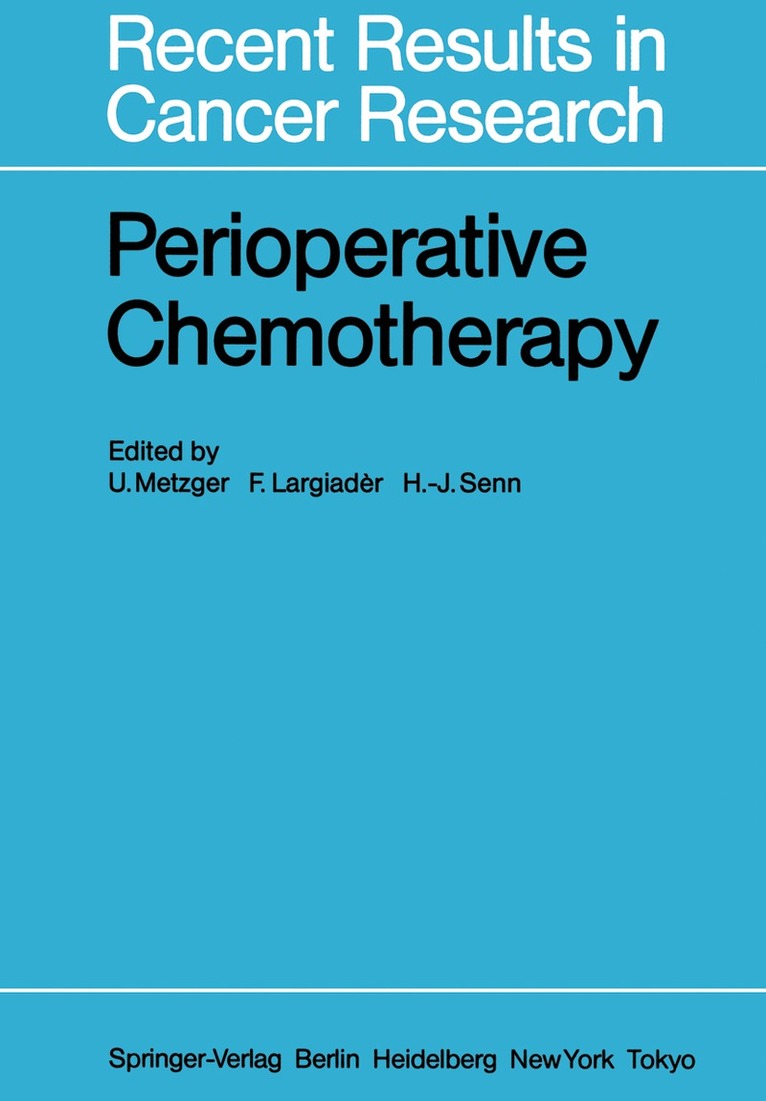
One reason for failure to cure solid tumors by surgery appears to be the impossibility of controlling metastases that are present but latent at the time of operation. This failure is a common clinical experience with aggressive neoplasms. but it is not always appreciated in tumors with longer survival times. e. g .• breast and colon cancer. In addition. recent evidence indicates that after resection of a primary tumor micrometas tases from it might be enhanced by suppression of immune and reticu loendothelial functions of the host. Other factors, such as increase of coagulability and stress in the perioperative period, can also promote tumor growth. The development of new metastases might be facilitated by cells forced into the circulation during operative manipulations. Such events could be important for the outcome of treatment and it is suggested that preventive measures should be directed to this systemic component of solid tumors. Radical surgery can reduce the number of tumor cells to a subclinical 3 6 stage (10 to 10 cells) in which chemotherapy might be more effective than in advanced stages. Chemotherapy, on the other hand, might aggravate the surgical morbidity by influencing the wound healing pro cess, by decreasing the immune response, and/or by toxicity to the bone marrow and to the gastrointestinal tract, for example.