H. Just - Böcker
Visar alla böcker från författaren H. Just. Handla med fri frakt och snabb leverans.
10 produkter
10 produkter
567 kr
Skickas inom 10-15 vardagar
Die Pharmakotherapie des HerzversageI). s gleich welcher Ursache wird heute in immer weite- rem M~e den pathophysiologischen Mechanismen der zugrunde liegenden FunktionsstOrun- gen des Herzens angep~t. Drei Einflu~gro~en sind bekannt, tiber die die Kontraktions- und Fi:irderleistung des Herzens beeinflu~t werden kann: 1. der inotrope Zustand des Myokards oder die Kontraktilitat, 2. die prasystolische Faserspannung oder die Vorbelastung (Frank-Straub-Starling-Mechan- mus) und 3. die Nachbelastung. In der Pharmakotherapie der HerzinsuffIzienz und des Schocks werden aIle 3 Mechanismen therapeutisch genutzt. Hierbei hat sich das Konzept der adrenergen Receptoren als besonders fruchtbar erwiesen. 1st doch hierdurch eine bedeutsame Entwicklung im Verstandnis der phar- makologischen Wirkungen am Herzen und an der Kreislaufperipherie eingeleitet worden. 1m- mer mehr spezifisch wirkende, stimulierende oder blockierende Substanzen wurden entwickelt und therapeutisch eingesetzt.Hierbei ist sehr deutlich eine Tendenz zur Entwicklung solcher Substanzen zu erkennen, die mi:iglichst isolierte kardiale oder peripher vasculare Wirkungen be- sitzen, die sich auf einen oder wenige Receptortypen richten lassen, so da~ eine gezielte Beein- flussung von kardiovascularen FunktionsstOrungen mi:iglich wird. Dabei werden heute zuneh- mend positiv-inotrope, d. h. ~l-Receptorenstimulierende Substanzen in Kombination mit peri- pher gefaf~erweiternden, also Q-blockierenden Medikamenten in Kombination verwendet. FUr die Steuerung des veni:isen Zustroms zum Herzen werden venendilatierende oder den Venen- tonus beeinflussende Medikamente verwendet. Unter bestimmten Bedingungen werden auch a-Receptoren-stimulierende, also den Arteriolentonus erhi:ihende Medikamente zusammen mit positiv-inotrop wirkenden Substanzen benutzt, je nach Ausgangslage der kardiovascuHiren Funktionssti:irung.
Heart rate as a determinant of cardiac function
Basic mechanisms and clinical significance
Häftad, Engelska, 2012
1 095 kr
Skickas inom 10-15 vardagar
In a variety of cardiac diseases the influence of heart rate on cardiac function is altered and both heart rate and heart rate variability are of great relevance for the prognosis of cardiac patients. This book provides a summary of the current knowledge on the influence of heart rate on myocardial function and hemodynamics in non-failing and failing animal and human hearts. The subcellular and molecular alterations underlying the altered heart rate response in heart failure are discussed in detail. In addition, studies related to the impact of heart rate and heart rate variability on arrhythmogenesis and prognosis in patients with cardiac diseases are critically reviewed. Finally, the relevance of heart rate control by therapeutic interventions is also discussed. The book contains 19 different chapters written by well-known experts in this novel and clinically important field.
1 095 kr
Skickas inom 10-15 vardagar
From molecule to man: Medical research has indeed taken this direction, and major improvements of our understanding of the pathophysiology and epidemiology of disease have been achieved. The molecular basis of the congenital cardiovascular disorders has been extended from relatively few congenital malformations into everyday illnesses such as diabetes mellitus, hyperlipoproteinaemea, and arterial hypertension. The monogenic and, more difficult, polygenic basis for a vast majority of cardiovascular disorders are being defined more precisely from year to year. This book gives an overview of what has been achieved so far and defines the current position.
1 095 kr
Skickas inom 10-15 vardagar
The therapeutic principle of pharmacological vasodilation in congestive heart failure is based upon established physiological and pathophysiological mechanisms and has been proved to be effective and useful. In acute heart failure this method of treatment has assumed importance as the first measure to be taken. In chronic heart failure a sizeable increase in cardiac output can be achieved with a number of vasodilating drugs. This effect can be maintained over several weeks or months. The adjustments of the heart and the circulation to the arteriolar and/or venous unloading effect of vasodilatation in the situation of acute and chronic heart failure are well understood. However, long-term adaptations of the organism to the vasodilat- ing intervention have not yet fully been described. In many instances of chronic ad- ministration of vasodilators, attenuation of the response has been observed. The mech- anisms responsible have not been fully elucidated, nor has there been a satisfactory demonstration of improved exercise performance or of life expectancy under this mode of treatment in the patient with chronic heart failure.In an attempt better to understand the pathophysiological mechanisms of chronic congestive heart failure as they apply to long-term treatment with vasodilators, the working group on vasodilator therapy of the Deutsche Gesellschaft fUr Herz- und Kreis- laufforschung has assembled a group of physiologists, pharmacologists, and clinicians. The Proceedings of their Symposium held in Hinterzarten in June 1981 are presented here.
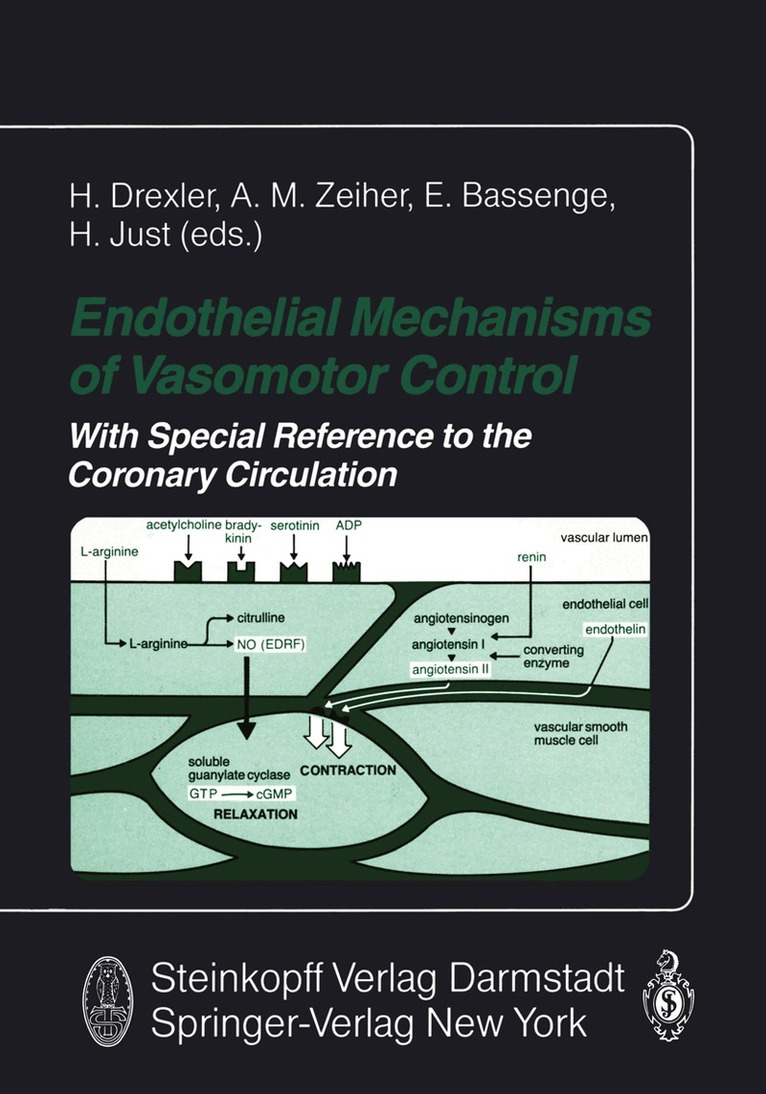
Endothelial Mechanisms of Vasomotor Control
With special Reference to the Coronary Circulation
Häftad, Engelska, 2012
1 095 kr
Skickas inom 10-15 vardagar
In recent years, we have witnessed a rapid expansion of our knowledge regarding the role of the endothelium in the control of vascular tone (and organ perfusion) in health and disease. Physiology, pharmacology, and molecular biology have uncovered a wealth of information on structure and function of this heretofore largely neglected "organ". Clinical medicine is now called upon to define the clinical significance of these observa tions that imply the mechanisms of blood coagulation, e.g., the interaction of throm bocytes with the endothelium, vasomotor control, and specifically, the regulation of smooth muscle tone with consequences for vascular resistance and conductance and organ blood flow. Finally, metabolism of lipids with the everlasting problem of athero sclerosis is an important aspect. In a second step, implications regarding the improvement of current therapeutic con cepts, as well as the development of new modalities of pharmacotherapy will have to be discussed. The topic addressed by the 1990 Gargellen Conference: Endothelial Mechanisms of Vasomotor Control, clearly is of interest for both basic scientists and clinicians. It has been the aim of the organizers, the Society for Cooperation in Medical Science (SCMS) with this and the previous symposia to foster and support both basic science and clinical research. Research in medicine today shows two major directions of development: on the one hand, increasing involvement of the basic sciences and their methodology. On the other hand, statistical validation of concepts and therapeutic strategies in large scale population-and multicenter-studies.
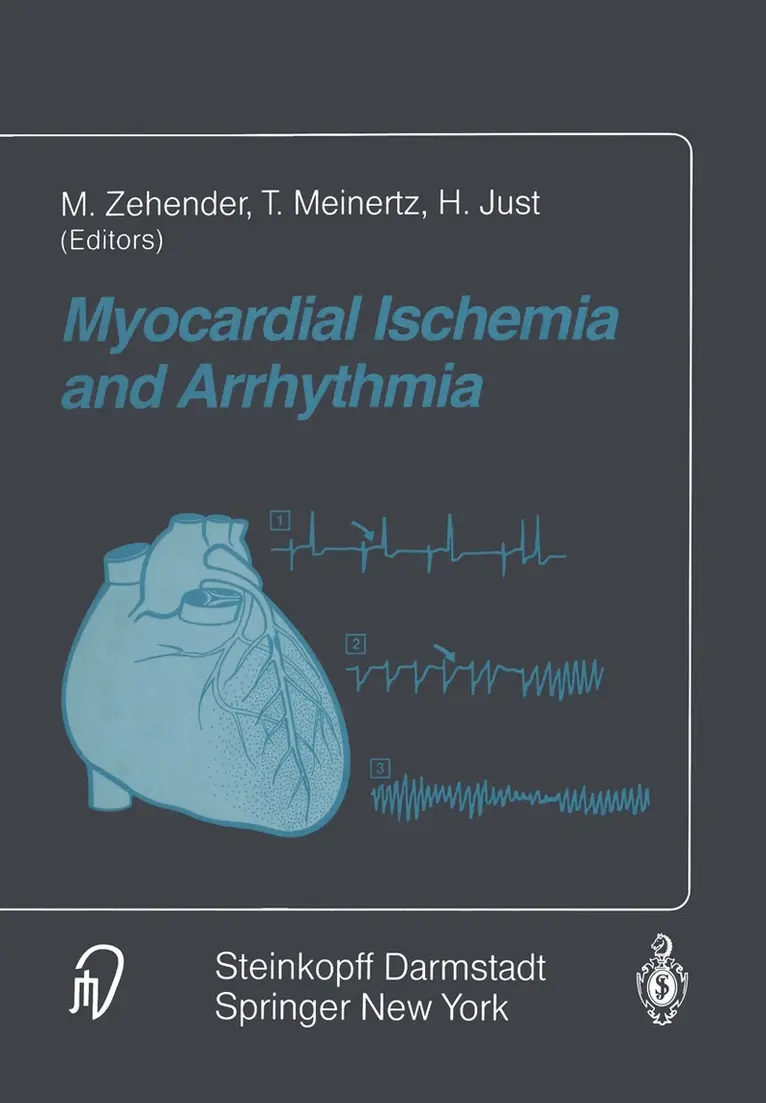
Myocardial Ischemia and Arrhythmia
Under the auspices of the Society of Cooperation in Medicine and Science (SCMS), Freiburg, Germany
Häftad, Engelska, 2011
1 095 kr
Skickas inom 10-15 vardagar
During recent years, it has become evident that ventricular arrhythmias may arise from myocardial ischemia and that they may be harbingers of sudden cardiac death. On the other hand, ventricular arrhythmias may occur without any prognostic significance and sudden cardiac arrhythmic death may strike without any warning arrhythmia. The role of ischemia in the genesis of ventricular arrhythmias and of sudden cardiac death has been observed beyond doubt. However, the mechanism by which ischemia leads to the appearance of ventricular arrhythmias and/or sudden cardiac death has remained rather poorly understood, inspite of rather remarkable research efforts on the one hand, and the magnitude of the problem on the other hand. We have therefore set out to assemble scientists from around the world in order to define the current state of our knowledge on myocardial ischemia and arrhythmia. Well in line with the tradition of the Gargellen Conferences, we assembled clinicians and basic scientists for the 7th Gargellen Conference. This book presents the proceed- ings of the Symposium in the attempt to define the current status of our understand- ing of this significant problem.The Symposium was organized by the Society for Cooperation in Medicine and Science (SCMS) and was generously sponsored by Astra Chemicals, Wedel; Bayer AG, Leverkusen; Boehringer-Mannheim; CPI-Lilly, Giessen; Janssen GmbH, Neuss; Minden Pharma, Minden; Rahm Pharma, Weiter- stadt; Schering AG, Berlin, and Siemens AG, Erlangen.
1 095 kr
Skickas inom 10-15 vardagar
A vast literature has been concerned with arteriosclerosis and yet, many aspects of pathogenesis and of the mechanism of development of the arteriosclerotic vascular lesion remain only poorly understood. In recent years, our knowledge of the earliest stages of arteriosclerosis have greatly improved. By now, we have learned to relate morphologic changes to disturbances in function. It has been of particular impor tance that components of the arterial wall could be analyzed in regard to dysfunction, for example, in the endothelium or the vascular smooth muscle. The interaction of the different morphological components of the vascular wall could thus be much bet ter understood. Likewise, the interaction between the arterial wall and the flowing blood could be much better described, including the intimate relationship between platelets and the endothelium, the coagulation system and the endothelium, the granulocytes and the endothelial cell layer, as well as processes of migration of blood cells into the subendothelial space. The recognition of functional and morphological disturbance has attained clinical significance not only because the arteriosclerotic diseases have quantitatively reached the dimensions of an epidemic, that is, of a magnitude never been witnessed. It is also because of the development of new drugs that interfere with the atherogenic process and thereby prevent the development of the disease or halt its progression. It is also becoming increasingly possible to inhibit the occurrence of complications in existing arteriosclerotic lesions in manifest disease, i. e.
551 kr
Skickas inom 10-15 vardagar
Angiocardiography has undergone tremendous development. It currently repre- sents the imaging system offering the highest resolution and greatest detail information. A widely applicable, complex technique able to meet high standards was required by the increasing number of coronary bypass interventions as well as by the advent of interventional catheter techniques, such as transluminal per- cutaneous catheter balloon dilatation, recanalization techniques, and intracoro- nary thrombolytic procedures. At the same time, improved image resolution began to furnish information on intracoronary flow dynamics and anatomy, thereby opening a new avenue of acquiring prognostically and therapeutically important pathophysiologic information. In spite of rapid improvements in the equipment, there are still demands for improved resolution, image quality, and methods of image processing. In this situation, the need was felt to describe the current status of equipment, angiocardiographic systems, image intensifiers, photographic materials, and processing techniques.Furthermore, the attempt was made to describe evalua- tion techniques using manual or computer-assisted semi- or fully automated procedures to estimate left ventricular volumes, ventricular mass, cardiac func- tion, anatomy, and flow dynamics of the coronary arterial system. This book assembles original work presented at a symposium held by the European Soci- ety of Cardiology, the Deutsche Gesellschaft fur Herz-und Kreisiaufforschung, and the Deutsche Gesellschaft fUr Biomedizinische Technik. It was the aim of the symposium to outline the current state of the art and to define a process for further improvement.
551 kr
Skickas inom 10-15 vardagar
Inotropic stimulation of the myocardium, as well as vasodilation and diuresis as essential principles in the treatment of congestive heart failure have recently met with considerable criticism and reevaluation. It is generally agreed that unloading of the heart, either through vasodilation and/or diuresis, improves the working conditions of the dilated, failing heart. It reduces myocar dial oxygen consumption through reduction of chamber radius and, thereby, wall tension as the major determinants of myocardial oxygen consumption. Inotropic stimulation, quite in contrast, does not conserve oxygen. It rather consumes energy and that may be disadvantageous in situations of compromised oxygen supply and energy metabolism of the working myocardium. However, under conditions of suf ficient oxygen supply and metabolic support inotropic stimulation may bring about in creased pumping and subsequent improvement of myocardial failure. In recent years it could convincingly be demonstrated that vasodilation leads to symp tomatic improvement of congestive heart failure, improvement of exercise tolerance, and it prolongs life - especially in the case of ACE-inhibitors and the combination of hydra lazine with long-acting nitrates. Quite in contrast, equally beneficial effects could not be demonstrated for inotropic agents in congestive heart failure. Only for the cardiac glyco sides has it been shown that beneficial effects can be achieved, especially if atrial fibril lation with absolute arrhythmia is present. The influence of the cardiac glycosides on the latter represents an effect which is independent of the inotropic action.
1 095 kr
Skickas inom 10-15 vardagar
From molecule to man: Medical research has indeed taken this direction, and major improvements of our understanding of the pathophysiology and epidemiology of disease have been achieved. The molecular basis of the congenital cardiovascular disorders has been extended from relatively few congenital malformations into everyday illnesses such as diabetes mellitus, hyperlipoproteinaemea, and arterial hypertension. The monogenic and, more difficult, polygenic basis for a vast majority of cardiovascular disorders are being defined more precisely from year to year. This book gives an overview of what has been achieved so far and defines the current position.