H van Mook – författare
Visar alla böcker från författaren H van Mook. Handla med fri frakt och snabb leverans.
3 produkter
3 produkter
2 176 kr
Skickas inom 10-15 vardagar
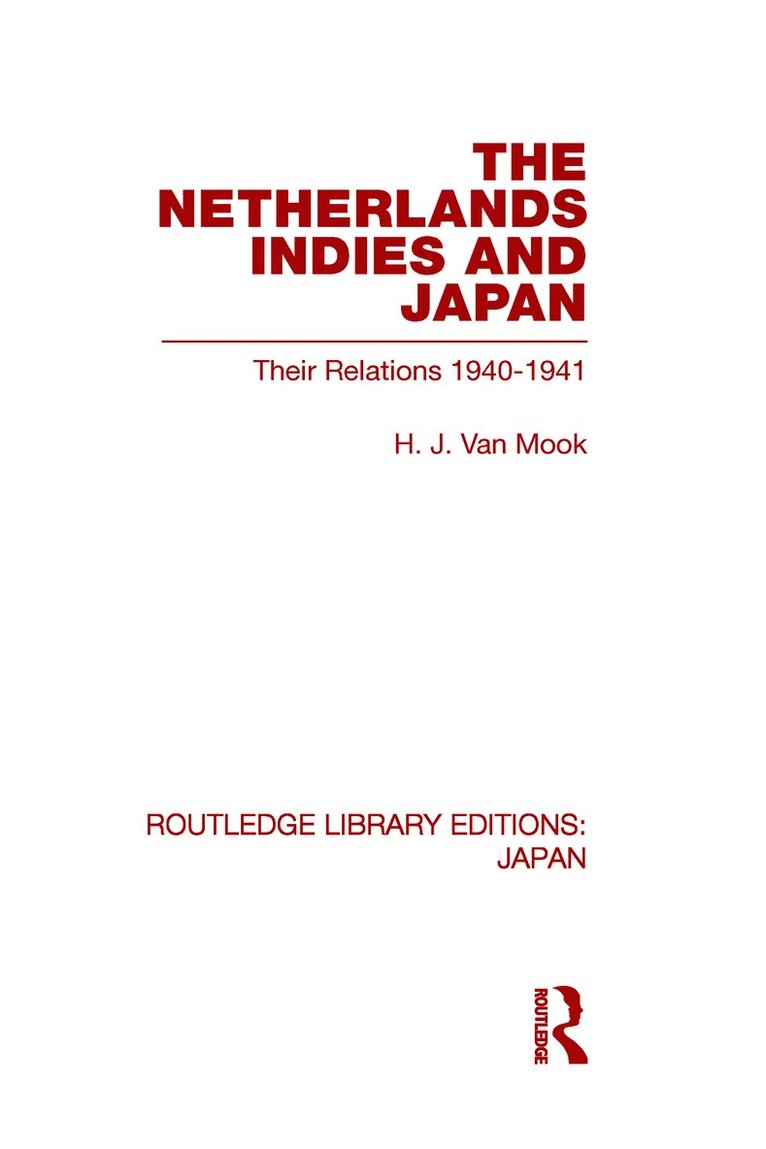
This volume chronicles the facts concerning the relations between the Netherlands in Asia and Japan during the last two years before the outbreak of war in the Pacific and concentrates on political and economic affairs.
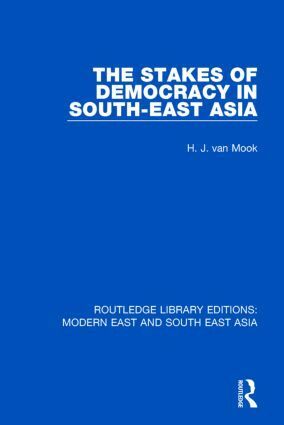
Stakes of Democracy in South-East Asia (RLE Modern East and South East Asia)
Inbunden, Engelska, 2015
2 246 kr
Skickas inom 10-15 vardagar
Will national independence bring to the peoples of South East Asia liberty and democracy? Or will it mean corrupt government, factional strife and insolvency? Or will it mean eventual absorption by totalitarian communism? In this book, first published in 1950, the author analyses these questions, using the case history of Indonesia since 1940, in which he played a leading role, to illustrate his points. He gives an outline of the history of South East Asia, its domination by the West and its convulsion by war and nationalism. The seven nations of South East Asia – Ceylon, Burma, Siam, Indo-China, Malaya, Indonesia and the Philippines – have a great deal in common: except for Siam, they are all struggling through the formative years of nationhood; except for Ceylon, they were all occupied and pillaged by Japan during the War. They are of great value to other nations as a source of raw materials and foodstuffs. Their political and economic structure is of vital importance, both to themselves and to us and unless their new nationalism can be strengthened, the free world may lose a valuable asset to its economy and an ally against totalitarianism in Asia.
567 kr
Skickas inom 10-15 vardagar
Will national independence bring to the peoples of South East Asia liberty and democracy? Or will it mean corrupt government, factional strife and insolvency? Or will it mean eventual absorption by totalitarian communism? In this book, first published in 1950, the author analyses these questions, using the case history of Indonesia since 1940, in which he played a leading role, to illustrate his points. He gives an outline of the history of South East Asia, its domination by the West and its convulsion by war and nationalism. The seven nations of South East Asia – Ceylon, Burma, Siam, Indo-China, Malaya, Indonesia and the Philippines – have a great deal in common: except for Siam, they are all struggling through the formative years of nationhood; except for Ceylon, they were all occupied and pillaged by Japan during the War. They are of great value to other nations as a source of raw materials and foodstuffs. Their political and economic structure is of vital importance, both to themselves and to us and unless their new nationalism can be strengthened, the free world may lose a valuable asset to its economy and an ally against totalitarianism in Asia.