Haggai Erlich – författare
Visar alla böcker från författaren Haggai Erlich. Handla med fri frakt och snabb leverans.
4 produkter
4 produkter
Häftad, Engelska, 1997
336 kr
Skickas inom 5-8 vardagar
Häftad, Engelska, 2024
268 kr
Skickas inom 7-10 vardagar
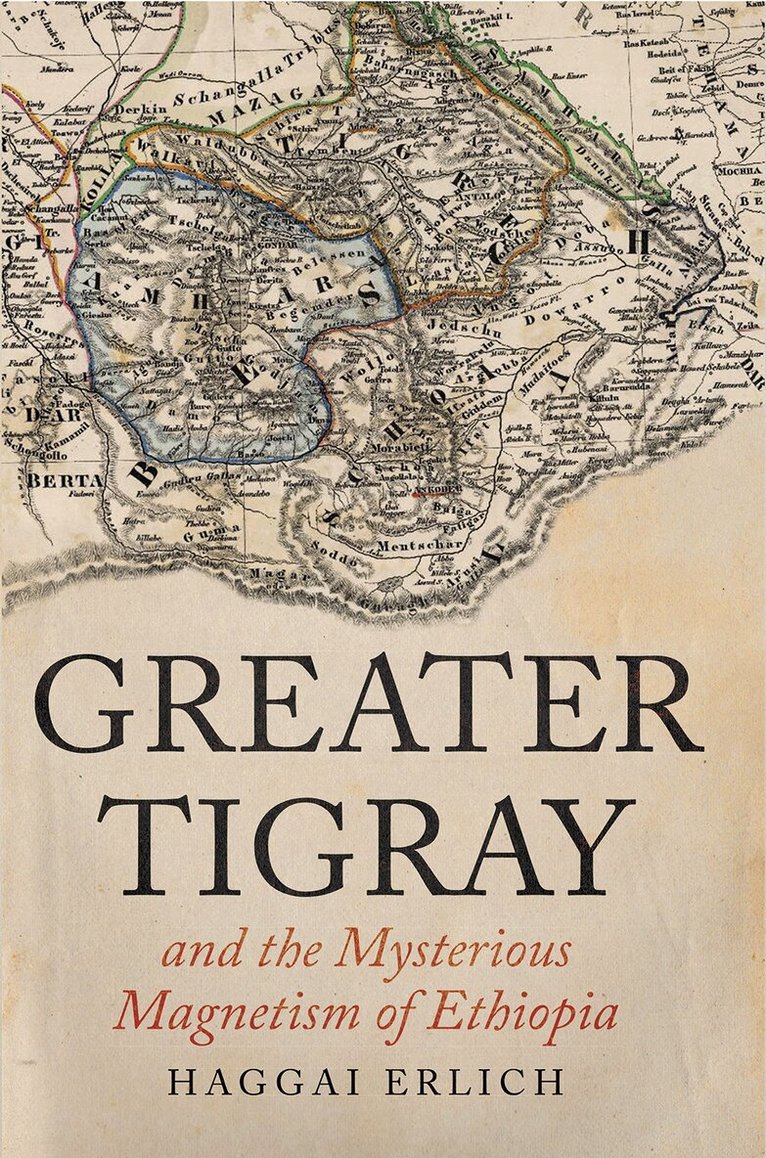
This is an analytical history of the role Tigrinya-speakers have played and are still playing in the history of Ethiopia and Eritrea, from Tigray's very ancient incipience to the origins of today's tragically fratricidal war. Drawing from his huge corpus of publications on the Horn of Africa, Haggai Erlich sheds new light on major turning-points, as well as patterns of continuity. His history revolves around one key question: what was 'the mysterious magnetism' that held (and still holds) Ethiopia together? Erlich argues that there is an 'Amhara thesis' competing with a 'Tigrayan thesis' on what Ethiopia's political and administrative system should be, and that the region's history has often rotated around the axis of struggle between these two visions. The Tigrayans, though a minority, have had their periods of domination, the last ending in 2018. In between these eras, Tigrayans have been marginalised and weakened, including as the victims of their own internal rivalries, which culminated in the deep and bitter split between 'core' Tigrayans and Tigrayan Eritreans. In the context of today's war, Erlich's insightful book offers an extremely timely introduction to Tigrayan history, and an indispensable key to understanding the roots of Ethiopia's present crisis.

Inbunden, Engelska, 2024
1 336 kr
Skickas inom 10-15 vardagar
This volume is a comprehensive historical exploration of the Red Sea, a vital maritime route that connects the Mediterranean and the Indian Ocean.
Inbunden, Engelska, 2023
591 kr
Tillfälligt slut
This is an analytical history of the role Tigrinya-speakers have played and are still playing in the history of Ethiopia and Eritrea, from Tigray's very ancient incipience to the origins of today's tragically fratricidal war. Drawing from his huge corpus of publications on the Horn of Africa, Haggai Erlich sheds new light on major turning-points, as well as patterns of continuity. His history revolves around one key question: what was 'the mysterious magnetism' that held (and still holds) Ethiopia together? Erlich argues that there is an 'Amhara thesis' competing with a 'Tigrayan thesis' on what Ethiopia's political and administrative system should be, and that the region's history has often rotated around the axis of struggle between these two visions. The Tigrayans, though a minority, have had their periods of domination, the last ending in 2018. In between these eras, Tigrayans have been marginalised and weakened, including as the victims of their own internal rivalries, which culminated in the deep and bitter split between 'core' Tigrayans and Tigrayan Eritreans. In the context of today's war, Erlich's insightful book offers an extremely timely introduction to Tigrayan history, and an indispensable key to understanding the roots of Ethiopia's present crisis.