Hallie Preskill - Böcker
2 699 kr
Skickas inom 3-6 vardagar
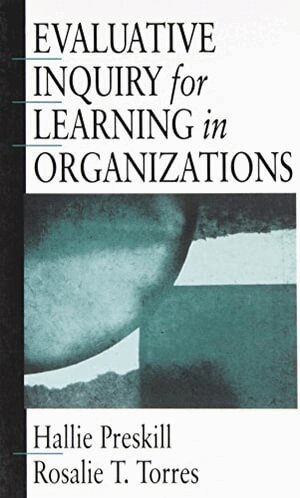
How does evaluative inquiry contribute to your organizational learning? How do you practice evaluative inquiry to maximize individual and team learning? Offering you a way of thinking about and conducting evaluative inquiry in every kind of organization, Evaluative Inquiry for Learning in Organizations provides a data-based approach to organizational learning and change. By focusing on the use of evaluative inquiry processes within organizations rather than across large-scale, multisite programs, authors Hallie Preskill and Rosalie T. Torres are able to bridge the gap between what research "says" about individual, team, and organizational learning and what it "says" about evaluation. The authors lay the foundation and context for evaluative inquiry by including:
- How organizations are changing.
- What it means to learn at the individual, team, and organizational levels.
- The four learning processes that facilitate evaluative inquiry.
Through the use of an illustrative case, the authors guide you through the three phases of evaluative inquiry - from focusing the inquiry to developing action plans. Also included are interviews from four different organizations: Land O'Lakes, Colorado Department of Education, Ford Motor Company, and Presbyterian Hospital and Healthcare Services. These interviews allow you to "hear" how participants perceived and experienced these procedures. This exciting volume concludes with additional considerations when practicing evaluative inquiry, including an exploration of the evaluator's role and challenges to implementing evaluative inquiry in today's organizations.
Written for evaluators, managers, consultants, and trainers, Evaluative Inquiry for Learning in Organizations shows you how to integrate evaluative inquiry into your organization's work processes so that its members are better able to make their organizations successful.
Evaluation Strategies for Communicating and Reporting
Enhancing Learning in Organizations
2 304 kr
Skickas inom 3-6 vardagar
"Rosalie Torres, Hallie Preskill and Mary Piontek have furnished a text that is not only thorough, but also easily accessible to both the beginner and the experienced practitioner alike. Not only are they masters at writing with jargon-free clarity, what they have to say demonstrates their apparent underlying methodological grasp of the field. They have succeeded in practicing what they preach."—John Scougall, Western Australia Institute for Sustainable Technology and Policy at Murdoch University
"[This is] a book that addresses some of the overlooked, taken-for-granted aspects involved with the planning, conducting, and reporting of good evaluation. This book helps evaluators improve the utilization of evaluation results by using an ongoing, integrative collaborative learning approach with project stakeholders. Through the use of collaborative techniques and emphasis on various communicating and reporting formats, evaluators gain knowledge and skills that will assist them in helping organizations learn, grow, and improve." —Steven R. Aragon, Human Resource Education, University of Illinois at Urbana-Champaign
"This is among the most thorough and practically applicable texts written about communicating and reporting evaluation findings. The additions of the new sections in this edition reflect the changing nature of work-related communication in general, of which evaluators need to be aware and take advantage. This is a significant contribution to our practice."—Jennifer Martineau, Center for Creative Leadership
Do your communicating and reporting strategies seem outdated? Are you looking for ways to communicate more effectively? The Second Edition of Evaluation Strategies for Communicating and Reporting: Enhancing Learning in Organizations helps full-time evaluators and those with evaluation responsibilities successfully plan, conduct, communicate, and report the findings of evaluations using creative techniques. This comprehensive book is designed to help evaluators facilitate understanding, learning, and evaluation use among individuals, groups, and organizations by communicating and reporting more effectively. It guides the reader through the phases of an evaluation, from early planning stages through the final reporting and follow-up.
Evaluation Strategies for Communicating and Reporting has been thoroughly revised and updated creating 75% new material and 34 new case examples. The Second Edition provides worksheets and instructions for creating a detailed communicating and reporting plan based on audience needs and characteristics. Authors Rosalie T. Torres, Hallie Preskill, and Mary E. Piontek cover advances in technology including Web site communications, Web and videoconferencing, and Internet chat rooms. Also mentioned are several additional topics for consideration, including communicating and reporting for diverse audiences and for multi-site evaluations.
This book is intended for graduate program evaluation students in departments of education, public policy, and organizational studies. Managers, researchers, practitioners and anyone responsible for designing, conducting, or managing evaluations will find this book invaluable.
New to this Edition:
New creative coverage of communicating and reporting techniques by way of photography, cartoons, poetry, and drama in formative evaluations New coverage of how to communicate evaluation processes and interim findings to stakeholders during the evaluation New coverage of the use of technology in communicating and reporting evaluations, illustrated with examples, and complimented by guidelines, tips, and cautions for using these high-tech formats Actual examples from well-known evaluators that illustrate various communicating and reporting techniques A recap of how the latest information on learning processes mediates the way that readers and stakeholders assimilate and use information1 265 kr
Skickas inom 3-6 vardagar
"I am delighted that the authors have taken AI and found new uses for this approach. They provide concrete examples of the many ways evaluators have successfully used the AI approach in a wide variety of program and geographic settings. Combining theory and practice, this book is an important contribution to the evaluation field." —Gail Johnson, The Evergreen State College
—Gail Johnson,Reframing Evaluation Through Appreciative Inquiry is the first book to introduce the application of Appreciative Inquiry (AI), an approach for organizational development and change, to the practice of evaluation. Authors Hallie Preskill and Tessie Tzavaras Catsambas lay out the theoretical foundation of AI and build a bridge between the theory and practice of applying AI to evaluation. Key Features:
Provides a step-by-step guide: Written in a clear, accessible style, the text explains the way this particular approach has been used to frame, design, and conduct evaluations in various sectors worldwide. Reflects specific real-world applications of AI to evaluation practice: Numerous U.S.-based and international case examples enhance readers' ability to see the nuances of applying AI to evaluation in a wide variety of international and multicultural, organizational, community, and population contexts. Offers a whole-systems approach: This text provides a whole systems approach which enables evaluation to deal with complex and dynamically changing programs.Intended Audience: This book will appeal to a broad audience that includes evaluators, management and organization development consultants, program staff, and researchers in a wide variety of organizational and community settings. It is an ideal supplemental text for graduate courses that require students to practice evaluation.
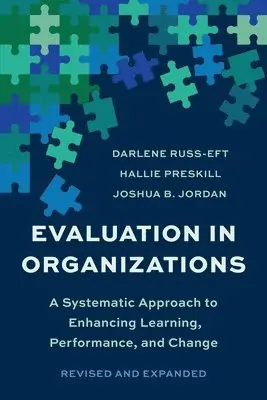
Evaluation In Organizations
A Systematic Approach To Enhancing Learning, Performance, and Change
557 kr
Skickas inom 7-10 vardagar