Hans Dieter Schaal – författare
Visar alla böcker från författaren Hans Dieter Schaal. Handla med fri frakt och snabb leverans.
8 produkter
8 produkter
401 kr
Skickas inom 11-20 vardagar
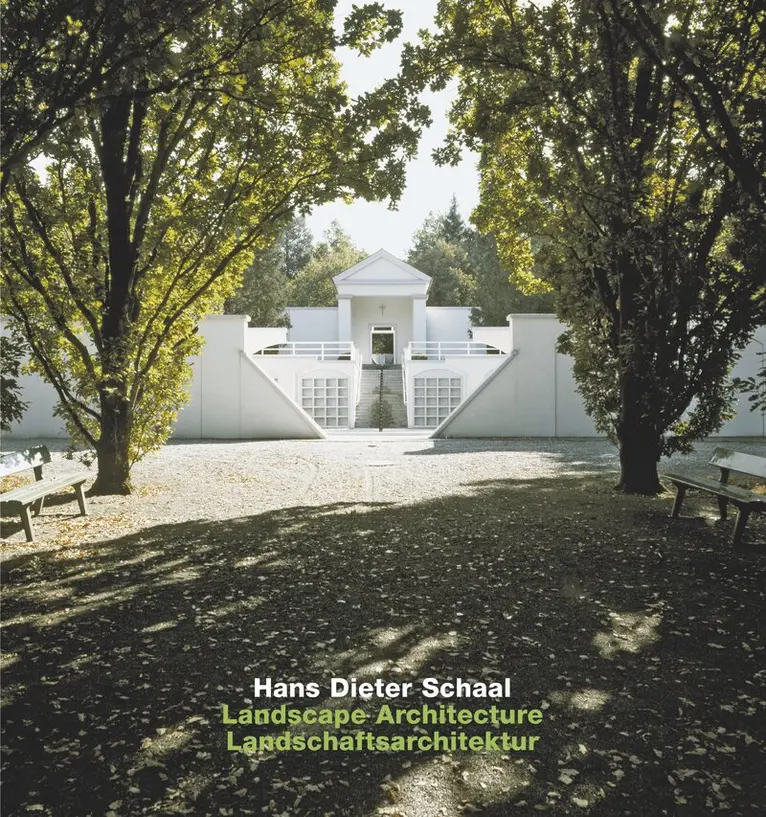
If there is a plateau that continuously unites Hans Dieter Schaals numerous artistic fields of activity, a kind of fundamental level, then it is surely that of landscape architecture. Landscape motifs are as convincingly present in his stage sets as they are in his installations, his exhibition architectures, his texts, and, naturally, also his park and garden designs. Schaal has been on the track of the fascination of landscapes since the 1960s. For him, encountering the parterre or 'carpet patterns' of the baroque Herrenhäuser Gärten in Hannover was a key experience. This was followed by an intensive study of the early landscape gardens of Great Britain, the park complexes of the Romantics and the Enlightenment in Weimar, Wörlitz, and Muskau, and by studies of the garden-art ideas and philosophical implications that underpinned each of them. As a twice-over 'artist-in-residence' at the Villa Massimo in Rome, Schaal was also able to absorb the whole cosmos of Italian garden and park planning, from the Renaissance to the present day. In 1978 Schaal published his first book, Wege und Wegräume (Paths and Passages), today considered a classic. Wege und Wegräume has become required reading and an artistic leitmotif for generations of landscape designers and architects. In 1994, a further key work appeared, entitled Neue Landschaftsarchitektur/New Landscape Architecture. It proved to be among the late-20th centurys most comprehensive studies of the topic of 'landscape' in the wider sense. Above all, it prompts an existential subjective excursus into all those spheres that are inscribed into landscape beyond the professional mainstream. Schaal was subsequently able to build a large number of spectacular 'follies' and installations in gardens and parks. From 1998 to 2014 he was finally able to actually realise a whole city park, complete with artistic installations: the Wielandpark in Biberach. The complex architectonic and artistic layout of this park embodies, as it were, the distilled essence of decades of working with the bridle paths at the boundaries of landscape. Frank R. Werner studied painting, architecture and architectural history in Mainz, Hanover and Stuttgart. From 1990 to 1994 he was professor of history and theory of architecture at the Staatliche Akademie der Bildenden Künste Stuttgart, from 1994 until his retirement in 2011 he was director of the Institut für Architekturgeschichte und Architekturtheorie at the Bergische Universität in Wuppertal. Peter C. Horn studied architecture in Munich. After working for several years in his original profession in South America, he runs a studio for architectural photography in Stuttgart since 1985.
438 kr
Skickas inom 11-20 vardagar
In his note to the edition of Neue Landschafts-architektur/New Landscape Architecture published 1994 in England as Landscape as Inspiration, Geoffrey Jellicoe compares my drawing considerations with the works of Paul Klee. What at first sounds a bit highfalutin is correct insofar as I do not move exclusively in the banal everyday and functional space in everything I draw, design and realize, but always reflect second and third surrealities as well. Art does not reproduce the visible, but makes visible", how Paul Klee formulated the process. Every viewer and reader could rightly ask the question: What do such expressions of art have to do with every-day architecture? I think: a great deal. And that is because all architectural problems and their solutions are multi-layered. Just like pure works of art. Every building summarizes and redefines its architectural, urban, village and landscape surroundings. Intentionally or unintentionally, exaggerated or restrained, each building can look like a meteorite or bomb strike, an inconspicuous remark or a beautification attack. I am interested in the past, the present and the future of an urban or landscape site. My view wants to integrate archaeological working methods just as much as functional fulfilments and imaginative-surreal, sometimes utopian efflorescence. I would never go so far as to formulate: Architecture is the necessary, and art is the unnecessary. Of course, every artist-architect who embarks on this complicated-complex path will have difficulties with the banal, seemingly superficial everyday reality in nature, the landscape and the city. It is therefore not surprising that I have only been able to realize a few architectural and visual productions and that, in the course of the last decades, I have been increasingly pushed into the areas of stage design and other design areas. At the moment, thanks to the ecological movement, hardly anyone is interested in the connection between art and architecture. More important are sustainability and zeroenergy houses in which the windows can hardly be opened. Could it be that building culture, indeed the whole of culture, will soon sink into green primeval forests and huge wetland biotopes? Or will foreign, warlike peoples destroy or occupy our cities and landscapes and cultivate them anew?
699 kr
Skickas inom 11-20 vardagar
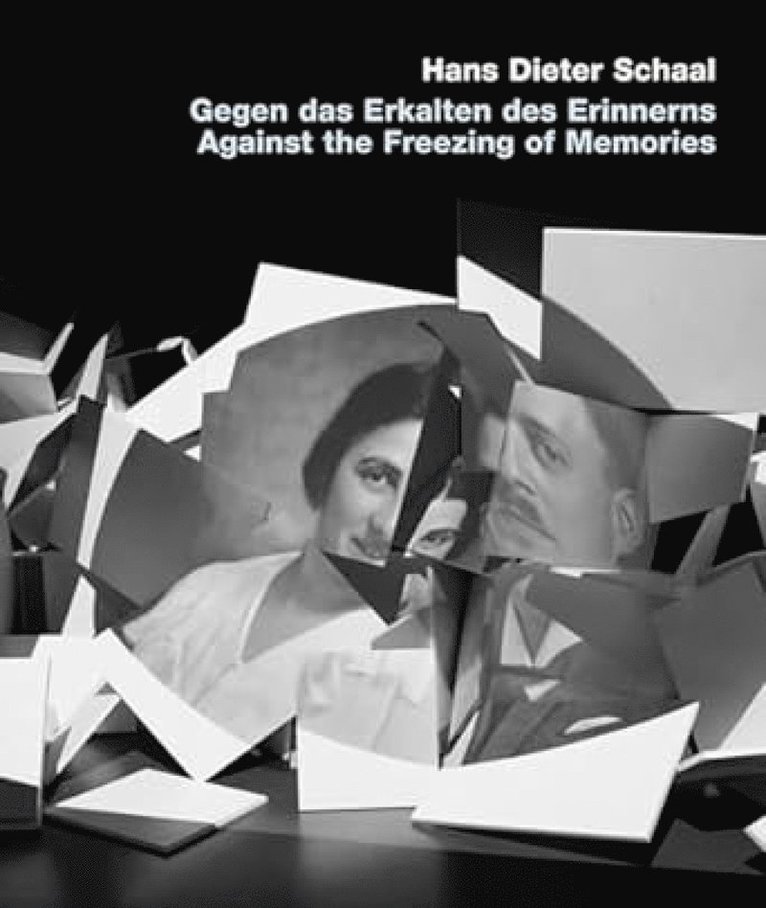
Europe, indeed the whole world, is littered with concentration-camp memorials, information centres, memorial plaques, and other signs that have been set up as a reminder of the atrocities committed by the National Socialists and their numerous willing helpers. In the United States alone, there are around 100 Holocaust memorials. In Germany, there are over 500 of all kinds of memorial facilities commemorating the Nazi victims (without the uncounted "Stolpersteine" by Gunter Demnig installed in memory of individual Nazi victims). Perhaps without these facilities, the deeds of that time would have long since been forgotten. Nevertheless, the memories of what happened are fading everywhere. Almost all of those once affected, victims and perpetrators, have now passed away, and many of us today would rather not be bothered by it.How should we deal with this? Remembrance can only be present and have an effect in the future if those dealing with the subject succeed in touching us emotionally in such a way that what we hear, read and see causes us to begin to deal intensively with what happened and and ask questions: How could so many of our ancestors be so merciless, so inhuman? How could these monstrosities happen? How was this possible, especially in Germany, against the backdrop of the Enlightenment, German Humanism, German Classicism, German Romanticism and the highly developed German culture in general? And as the present unfortunately shows, much of this has since been repeated – even in places where one would no longer have expected it.The author has visited over 60 memorial sites himself in the last 40 years and has been personally involved in many of them as an architect, designer and artist. The book presents his views on the design of Nazi memorials and information centres with numerous examples of his own, illustrated with photographs and drawings. For the author, the creative confrontation with the Nazi past is a means of naming and visualising the suffering and cruelty of which people are capable, using all the artistic means at his disposal.
453 kr
Skickas inom 3-6 vardagar
115 kr
Skickas inom 11-20 vardagar
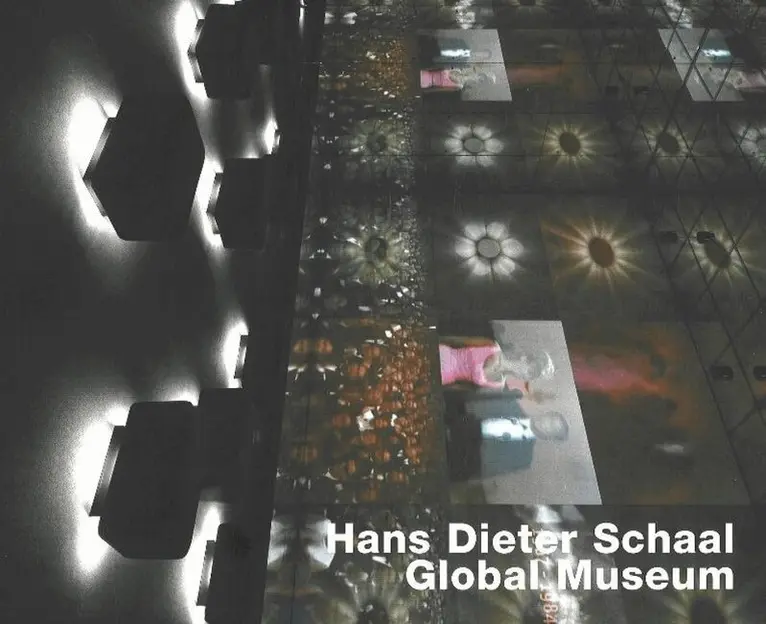
All the world's knowledge is stored and collected here. The place serves as an assembly point and information centre and is all things in one: laboratory, workshop, building site, university, theatre, opera house and museum. The shape of the building should be like a sphere with a silver-grey surface gleaming in the sunlight. It stands in a shallow pool of water. Broad walkways lead to the entrance. Extensive gardens in gentle geometric patterns invite visitors to rest, play, chat and look.
146 kr
Skickas inom 11-20 vardagar
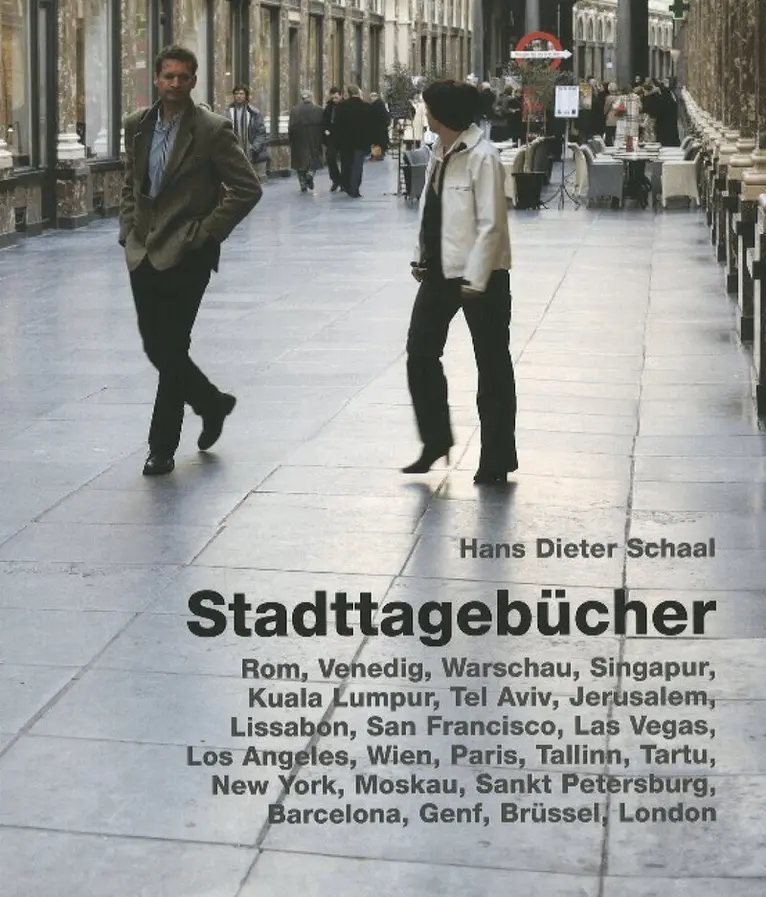
Text in German. What runs through our minds when somebody says the names of the following cities: Rome, Venice, Warsaw, Singapore, Tel Aviv, Jerusalem, Lisbon, San Francisco, Los Angeles, Las Vegas, Vienna, Paris, Tartu, Tallinn, New York, Moscow, Saint Petersburg, Barcelona, Geneva, Brussels, London? Each name's aura of associations is so powerful that no-one will be able to give an answer that applies for everybody. When asked this question, almost everyone's answer will be triggered by their own biography, by any personal experience of the city in question they might have. One person might remember a dishonest taxi driver who drove them from the airport into the city. Another might remember a successful or unsuccessful business deal, while yet another might remember a terrible or excellent hotel, a project that he or she completed in that city or people met there. Some people will have met the love of their lives there -- or quarrelled with them for the final time. Some will have spent their honeymoons there, while other will have been divorced there. Some of those asked will certainly have had a bad accident in one city or the other, or been robbed there. They might say any of the following things: "It's a beautiful city!", "It's one of the ugliest and most dangerous cities I've ever been to!", "You see nothing but rubbish and chaos in that city!", "You can forget the passage of time in that city -- it's so wonderfully old-fashioned that it makes me cry!", "This city is so lively and colourful and loud that it was where I finally found out what life can be like!", "That city is so sensible, neat and well-controlled that it made me even more introverted and depressed than I am usually!", "You should only judge a city by its dogs!", "A good city for shopping!" Although the houses, alleys, streets and city squares really do exist, every city is created mostly from stories, beliefs, prejudices, clichés, scraps of knowledge, observations, personal experiences, first-hand or second-hand impressions, dreams, hopes and fears. The architect Hans Dieter Schaal, who has designed scenery for almost every major theatre and opera house in the world, often spent many days in the same city. He began to research the cities, to get the feel of them and to travel them on foot like a wanderer. Alongside these subjective impressions, the author presents plenty of facts, making this book an accurate picture of an age dominated by cities.
210 kr
Skickas inom 11-20 vardagar
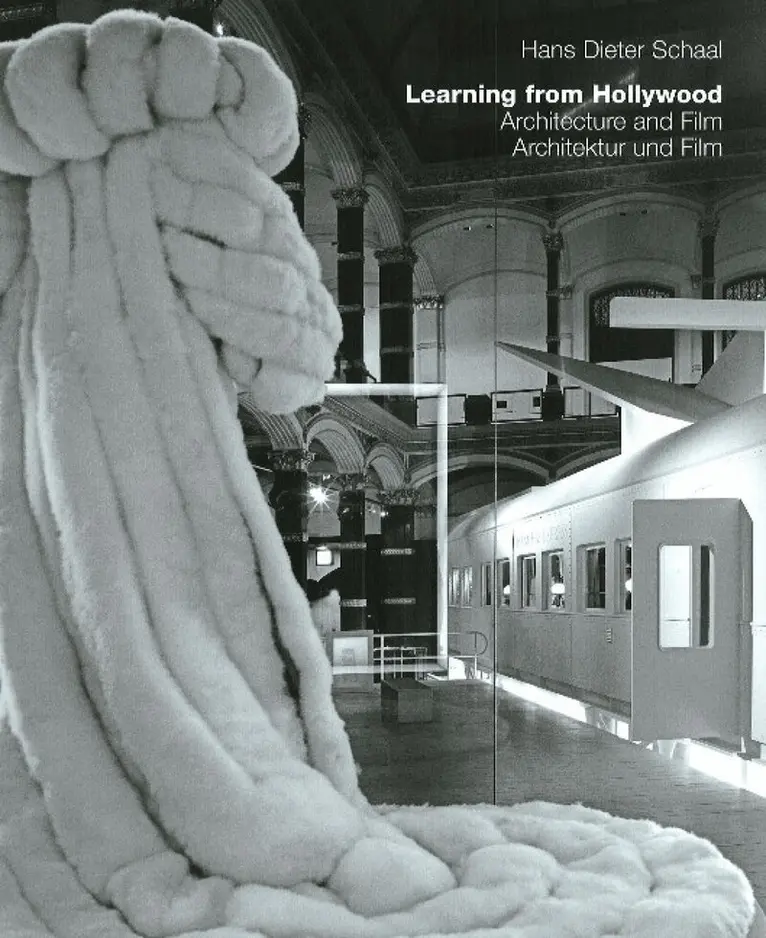
Text in English & German. Hollywood is not only the secret world capital of dreams and the fictions of the subconscious, but also the capital of architecture. Hollywood is the Rome and the Versailles of the 20th and 21st centuries. A new awareness of space spanning the entire world was created here. These backgrounds, stage sets and filmic spaces are indelibly fixed in every spectator's mind. It may be in the cinema that the first time you saw the desert, the Rocky Mountain cliffs, Greenland's glacier mountains and California's sandy beaches. You saw here the Western saloons and Al Capone's dark rooms, the poor Mexicans' huts and the Kennedys' penthouse apartments; you saw here also the jazz clubs of New Orleans and the dream houses in Los Angeles. There was and is scarcely a corner of the earth that the Hollywood film has not dreamed its way into. Every cinema-goer in the world sees the same plot, the same images, the same faces, the same rooms, buildings, towns and streets. Film's power to bring people together can scarcely be overestimated. Film architecture is world architecture. All other architecture -- your own town, your own street, your own house, your own flat -- remains small and parochial in the face of this, restricted to affecting a very tiny sphere. The architecture of the future will develop in the field of tension between these two aspects -- small and parochial, large and spanning the entire world. The real architecture of houses and cities could be enriched in its language by including film architecture, and real architecture could be jolted out of its banality by including the studio world. Films and their images can teach us that the architecture of houses, streets and towns is not just a problem of order, function and economic viability, but that psychology, atmosphere and images are being built here as well.
184 kr
Skickas inom 11-20 vardagar
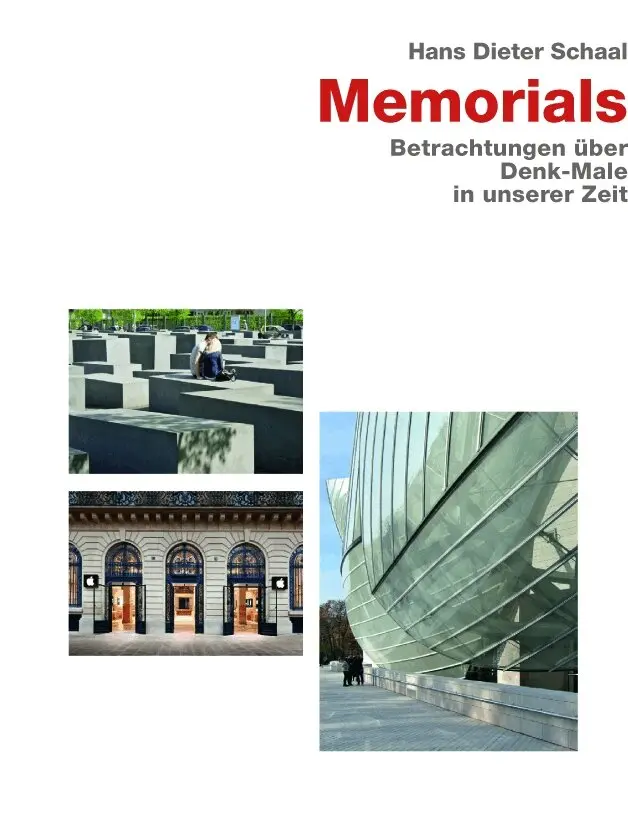
Text in English & German. The topic of this book is memory. What do we remember? We like to recall joyful events and wish we could relive them again and again. On the other hand wars, genocides, flight, destruction and epidemics are events remembered with horror, and sometimes their memory is even repressed. Eventually times change, and we begin to forget everything that happened. Our vision of the world is in danger of vanishing. Monuments counteract forgetting. Up to the beginning of the 20th century these were marble busts, figures of horsemen, bronze sculptures, columns, gateways and tombs that were erected in public urban spaces and in parks. This was a way to honour heroes and their military, political and cultural feats and to keep their memory alive. Their goal was to educate and admonish people. Their function was thus to provide models, but also to make viewers feel submissive. Today, in our democratic, pluralistic society, when modern means of communication accelerate all developments, the definition of the monument as a solemn, massive sign of remembrance that brings to mind historic moments has become obsolete. Daily the mass media inundate us with a plethora of images of the past and the present. Thus millions of people can participate in past and present events. There is an almost infinite number of collective experiences and just as many signs of remembrance. This being so, is there anything that can still be called a monument? It is this and similar questions regarding monuments that preoccupy the author in this book; he presents his profound insights into all aspects of the history of architecture and art, of philosophy and the new media. The book is a godsend for readers who are looking for ideas and information that go beyond the mainstream.