
HansjA¶rg Herr – författare
849 kr
Läs direkt efter köp
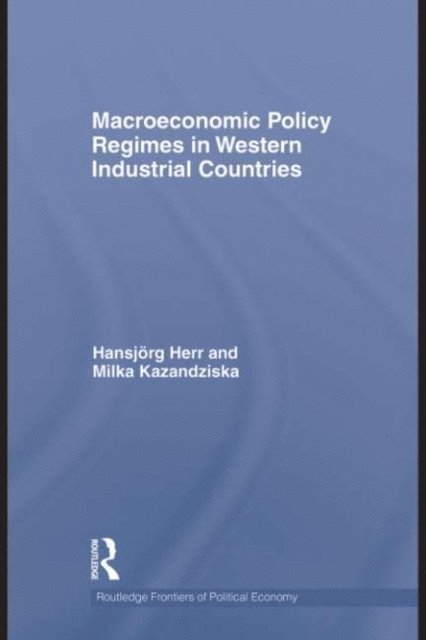
This book analyses how the economic crisis in the 1970s led to the erosion of the regulated type of capitalism that came to be in place after World War II, and paved the way to a Neoliberal Globalisation. Deep structural institutional changes especially in the field of financial markets, labour markets and the international economy became the basis for a liberal type of capitalism which included financial markets in a dominant role. The new neoliberal model fundamentally changed the conditions for all macroeconomic policies. In this book, these macroeconomic policy regimes are discussed on a theoretical level.
Macroeconomic Policy Regimes in Western Industrial Countries explains how certain countries have created a more liberal and market-based type of capitalism. The emphasis throughout is on how understanding macroeconomic policies, and the institutional framework in which they operate, is vital to understanding the long-run dynamics of a capitalist economy. The policy regimes that are examined consist of changes in the financial system, monetary policy, fiscal policy, wage policy, and changes in distribution and foreign economic policy. The argument emerges that this deregulated type of capitalism is unacceptably unstable and is only preferable to a minority.
Moving on from the finance-driven development of recent decades, the authors take a look at the need for fundamental reforms, including institutional reforms in the areas of national and international financial and labour markets. Case studies from the United States, the United Kingdom, Germany and Japan dating from the 1970s up to today provide the reader with clear examples and analysis of the development in question. This book will be of interest to postgraduates and researchers of economics and political science.
849 kr
Läs direkt efter köp
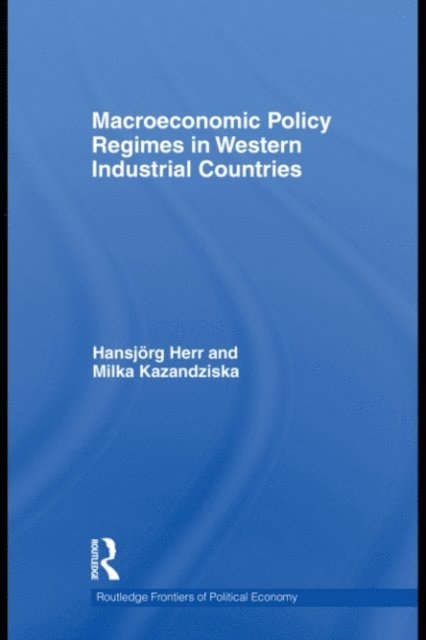
This book analyses how the economic crisis in the 1970s led to the erosion of the regulated type of capitalism that came to be in place after World War II, and paved the way to a Neoliberal Globalisation. Deep structural institutional changes especially in the field of financial markets, labour markets and the international economy became the basis for a liberal type of capitalism which included financial markets in a dominant role. The new neoliberal model fundamentally changed the conditions for all macroeconomic policies. In this book, these macroeconomic policy regimes are discussed on a theoretical level.
Macroeconomic Policy Regimes in Western Industrial Countries explains how certain countries have created a more liberal and market-based type of capitalism. The emphasis throughout is on how understanding macroeconomic policies, and the institutional framework in which they operate, is vital to understanding the long-run dynamics of a capitalist economy. The policy regimes that are examined consist of changes in the financial system, monetary policy, fiscal policy, wage policy, and changes in distribution and foreign economic policy. The argument emerges that this deregulated type of capitalism is unacceptably unstable and is only preferable to a minority.
Moving on from the finance-driven development of recent decades, the authors take a look at the need for fundamental reforms, including institutional reforms in the areas of national and international financial and labour markets. Case studies from the United States, the United Kingdom, Germany and Japan dating from the 1970s up to today provide the reader with clear examples and analysis of the development in question. This book will be of interest to postgraduates and researchers of economics and political science.
624 kr
Läs direkt efter köp
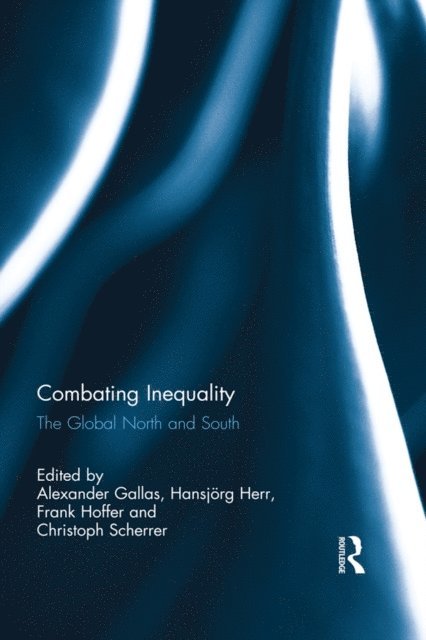
Economic inequality has recently gained considerable academic attention. However, two important aspects of inequality have not been discussed systematically: its multidimensional nature and the question of what can be done to reverse it. This book offers insights from scholars representing the Global Labour University, which operates in Brazil, Germany, India, South Africa and the US. They analyse the various drivers of inequality, assess policy responses, and discuss counterstrategies.
The main findings of this book are that rising levels of inequality cannot be addressed only with the standard policies responses, namely education, redistribution and ‘green growth’. In addition, the way markets currently function needs to be corrected. The chapters in this volume focus on specific fields of contemporary capitalism where important drivers of inequality are located, for example, the labour market; the financial system; the tax system; multi-national corporations; and gender relations. Other chapters discuss in detail where political opportunities for change lie. They critically assess existing countermeasures; the idea of a ‘green economy’ and its implications for inequality; and existing campaigns by trade unions and new social movements against inequality. In line with the global nature of the problem, this book contains case studies on countries both from the north and south with considerable economic and political weight.
This book provides academics, political practitioners and civil society activists with a range of ideas on how to drive back inequality. It will be of interest to those who study political economy, development economy and labour economics.
602 kr
Läs direkt efter köp
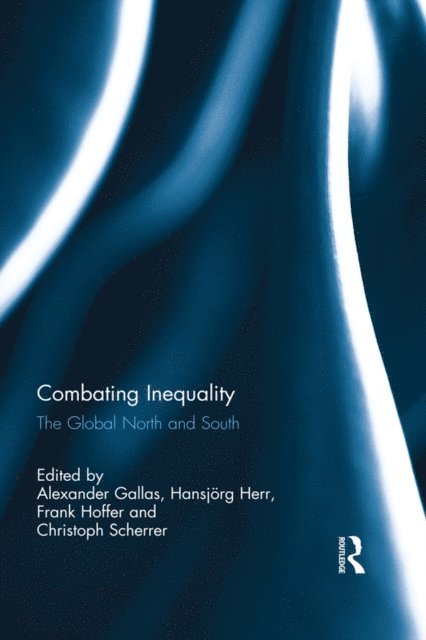
Economic inequality has recently gained considerable academic attention. However, two important aspects of inequality have not been discussed systematically: its multidimensional nature and the question of what can be done to reverse it. This book offers insights from scholars representing the Global Labour University, which operates in Brazil, Germany, India, South Africa and the US. They analyse the various drivers of inequality, assess policy responses, and discuss counterstrategies.
The main findings of this book are that rising levels of inequality cannot be addressed only with the standard policies responses, namely education, redistribution and ‘green growth’. In addition, the way markets currently function needs to be corrected. The chapters in this volume focus on specific fields of contemporary capitalism where important drivers of inequality are located, for example, the labour market; the financial system; the tax system; multi-national corporations; and gender relations. Other chapters discuss in detail where political opportunities for change lie. They critically assess existing countermeasures; the idea of a ‘green economy’ and its implications for inequality; and existing campaigns by trade unions and new social movements against inequality. In line with the global nature of the problem, this book contains case studies on countries both from the north and south with considerable economic and political weight.
This book provides academics, political practitioners and civil society activists with a range of ideas on how to drive back inequality. It will be of interest to those who study political economy, development economy and labour economics.