

Hanumantha – författare
3 708 kr
Läs direkt efter köp
Management of forests need to be widely discussed and better understood. This simple and comprehensive book on Forest Management presents an interaction of different aspects of forestry towards management. Forest management is nothing but overall administrative, economic, legal, and social aspects, as well as scientific and technical aspects, such as silviculture, protection, and forest regulation Management can be based on conservation, economics, or a mixture of the two. Techniques include timber extraction, planting and re-planting of various species, cutting roads and pathways through forests, and preventing fire. There has been increased public awareness of natural resource policy, including forest management. Public concern regarding forest management may have shifted from the extraction of timber for earning money for the economy to the preservation of additional forest resources, including wildlife and old growth forest, protecting biodiversity, watershed management and recreation. Increased environmental awareness may contribute to an increased public mistrust of forest management professional. But it can also lead to greater understanding about what professionals do for forests for nature conservation and ecological services. This book deals with into some of the basic principles and practices of forest management. The book has been written with a view to cover the broad syllabus prescribed on the subject in various forestry colleges, Forestry training institutes, and Agricultural Universities in India. This will serve as a valuable source of information for the academicians in forestry colleges and institutes and also, for the undergraduate and post graduate students for the preparation of competitive examinations in forestry discipline.
3 708 kr
Läs direkt efter köp
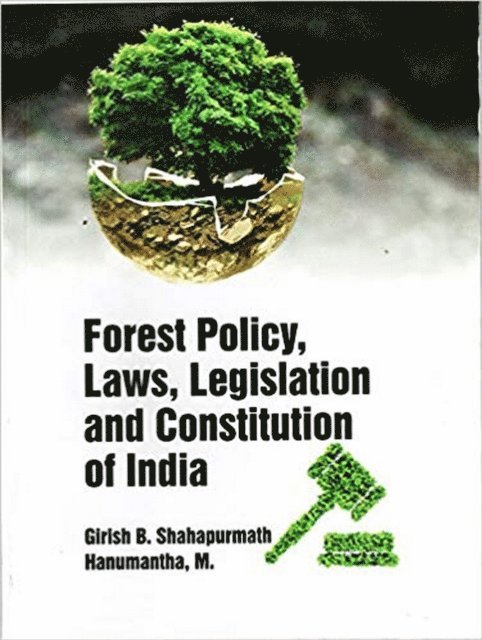
A policy is intended to guide and determine present and future decisions and actions. It usually comprises two elements: a set of aspirations, goals or objectives an outline of a course of action to achieve them. A national forest policy is considered to be a negotiated agreement between government and stakeholders on the orientations and principles of actions they adopt, in harmony with national socio-economic and environmental policies, to guide and determine decisions on the sustainable use and conservation of forest and tree resources for the benefit of society. Forest policies, thus, not only have to cover issues under the competence of the forestry administration and its agencies, but also they need to contribute to overarching policies, including those responsible for national development or economic and poverty strategies. They also need to be consistent with policies issued by other government authorities. Thus, a forest policy is a policy for people, not for the forestry administration. Being an agreement among government and stakeholders, a national forest policy is endorsed by government and implemented through legal, economic and informational instruments, and by other stakeholders with their respective means. This book deals with some of the basic aspects of forest policies, laws, legislation and constitution of India. The book has been written with a view to cover the broad syllabus prescribed on the subject in various forestry colleges, forestry training institutes and Agricultural Universities in India. This will serve as a valuable source of information for the academicians in forestry colleges and institutes and also for the undergraduate and post graduate students for the preparation of competitive examinations in forestry discipline.