Harriet E. H. Earle – Författare
Visar alla böcker från författaren Harriet E. H. Earle. Handla med fri frakt och snabb leverans.
3 produkter
3 produkter
344 kr
Skickas inom 10-15 vardagar
In Silence in the Quagmire Harriet E. H. Earle uses silence to construct a narrative of the Vietnam War via U.S. comics. Unlike the vast majority of cultural artifacts and scholarly works about the war, which typically focus on white, working-class American servicemen and their experiences of combat, Earle’s work centers less-visible players: the Vietnamese on both sides of the conflict, women and girls, and returning veterans.Earle interrogates the ways this conflict is represented in American comic books, with special focus on these missing groups. She discusses how-and more critically why-these groups are represented as they are, if they’re represented at all, and the ways these representations have affected views of the war, during and since. Using Michel Foucault’s understanding of silence as discourse, Earle considers how both silence and silencing are mobilized in the creation of the U.S.-centric war narrative. Innovative in its structure and theoretical scaffolding, Silence in the Quagmire deepens our understanding of how comic books have represented the violence and trauma of conflict.
1 278 kr
Skickas inom 7-10 vardagar
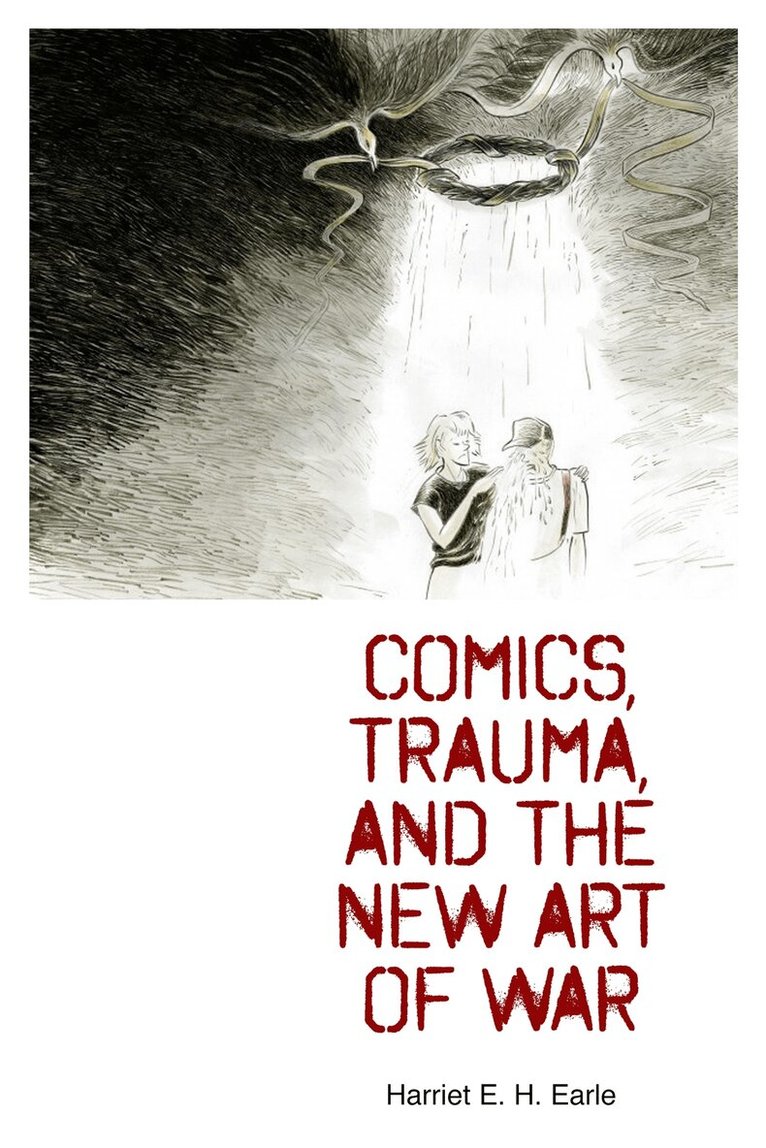
Conflict and trauma remain among the most prevalent themes in film and literature. Comics has never avoided such narratives, and comics artists are writing them in waysthat are both different from and complementary to literature and film. In Comics, Trauma, and the New Art of War, Harriet E. H. Earle brings together two distinct areas of research—trauma studies and comics studies—to provide a new interpretation of a long-standing theme. Focusing on representations of conflict in post–Vietnam War American comics, Earle claims that the comics form is uniquely able to show traumatic experience by representing events as viscerally as possible.Using texts from across the form and placing mainstream superhero comics alongside alternative and art comics, Earle suggests that comics are the ideal artistic representation of trauma.Because comics bridge the gap between the visual and the written, they represent such complicated narratives as loss and trauma in unique ways, particularly through the manipulation of time and experience. Comics can fold time and confront traumatic events, be they personal or shared, through a myriad of both literary andvisual devices. As a result, comics can represent trauma in ways that are unavailable to other narrative and artistic forms.With themes such as dreams and mourning, Earle concentrates on trauma in American comics after the Vietnam War. These works include Alissa Torres’s American Widow, Doug Murray’s The’Nam, and Art Spiegelman’s much lauded Maus. These works pair with ideas from a wide range of thinkers, including Sigmund Freud, Mikhail Bakhtin, and Fredric Jameson, as well as contemporary trauma theory and clinical psychology. Through these examples and others, Comics, Trauma, and the New Art of War proves that comics open up new avenues to explore personal and public trauma in extraordinary, necessary ways.
409 kr
Skickas inom 7-10 vardagar
Conflict and trauma remain among the most prevalent themes in film and literature. Comics has never avoided such narratives, and comics artists are writing them in ways that are both different from and complementary to literature and film. Harriet E. H. Earle brings together two distinct areas of research—trauma studies and comics studies—to provide a new interpretation of a long-standing theme. Focusing on representations of conflict in American comics after the Vietnam War, Earle claims that the comics form is uniquely able to show traumatic experience by representing events as viscerally as possible. Using texts from across the form and placing mainstream superhero comics alongside alternative and art comics, Earle suggests that comics are the ideal artistic representation of trauma. Because comics bridge the gap between the visual and the written, they represent such complicated narratives as loss and trauma in unique ways, particularly through the manipulation of time and experience. Comics can fold time and confront traumatic events, be they personal or shared, through a myriad of both literary and visual devices. As a result, comics can represent trauma in ways that are unavailable to other narrative and artistic forms.With themes such as dreams and mourning, Earle concentrates on trauma in American comics after the Vietnam War. Examples include Alissa Torres’s American Widow, Doug Murray’s The ’Nam, and Art Spiegelman’s much-lauded Maus. These works pair with ideas from a wide range of thinkers, including Sigmund Freud, Mikhail Bakhtin, and Fredric Jameson, as well as contemporary trauma theory and clinical psychology. Through these examples and others, Comics, Trauma, and the New Art of War proves that comics open up new avenues to explore personal and public trauma in extraordinary, necessary ways.