Heiner Maier – författare
Visar alla böcker från författaren Heiner Maier. Handla med fri frakt och snabb leverans.
4 produkter
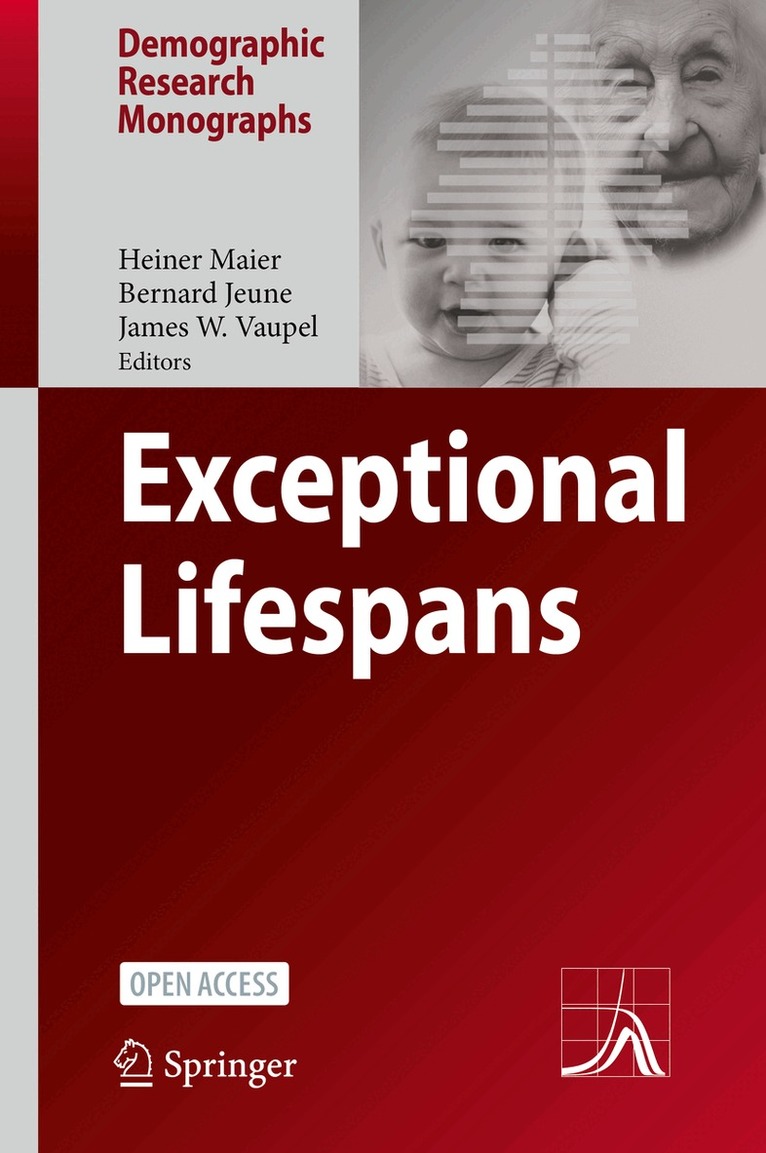
Exceptional Lifespans
Av Heiner Maier, Bernard Jeune m. fl.
Inbunden, 2020
568 kr
Lägg i varukorg
How long can humans live? This open access book documents, verifies and brings to life the advance of the frontier of human survival. It carefully validates data on supercentenarians, aged 110+, and semi-supercentenarians, aged 105-109, stored in the International Database on Longevity (IDL). The …
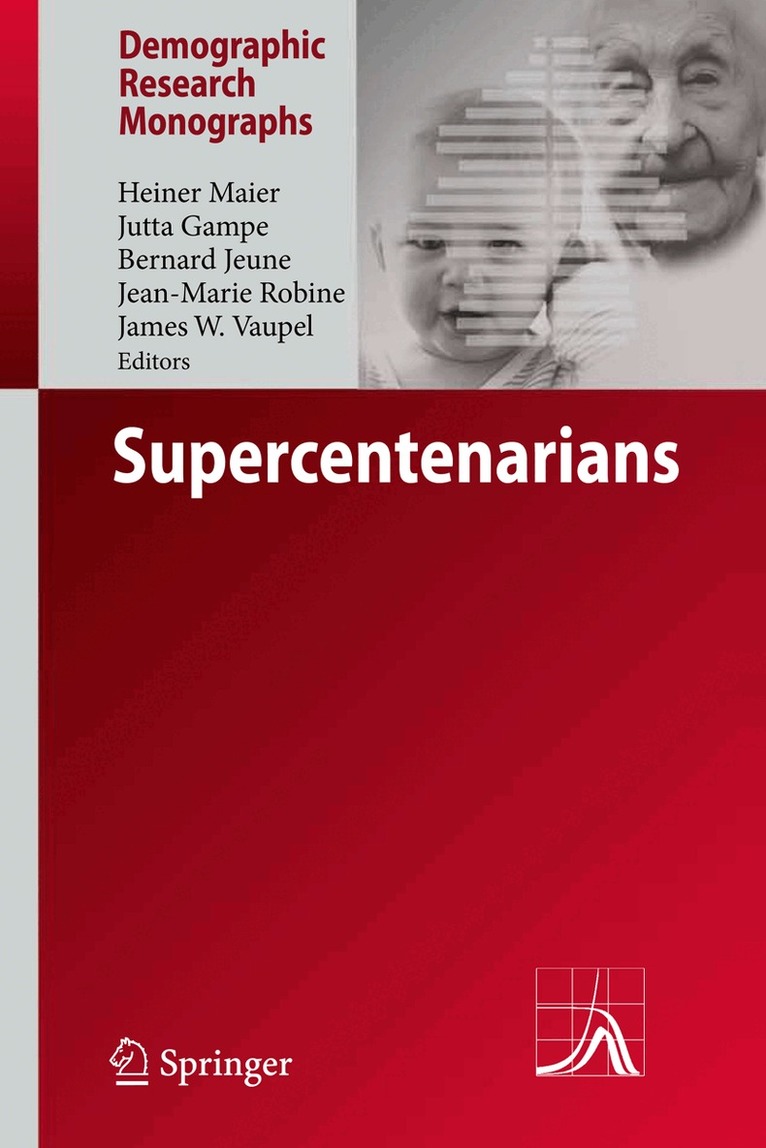
Supercentenarians
Av Heiner Maier, Jutta Gampe m. fl.
Inbunden, 2010
1095 kr
Lägg i varukorg
Does human mortality after age 110 continue to rise, level off, or start to decline? This book describes a concerted, international research effort undertaken with the goal of establishing a database that allows the best possible description of the mortality trajectory beyond the age of 110. The …
Supercentenarians
Av Jean-Marie Robine, James W. Vaupel m. fl.
E-bok, 2010
1427 kr
Lägg i varukorg
Does human mortality after age 110 continue to rise, level off, or start to decline? This book describes a concerted, international research effort undertaken with the goal of establishing a database that allows the best possible description of the mortality trajectory beyond the age of 110. The …
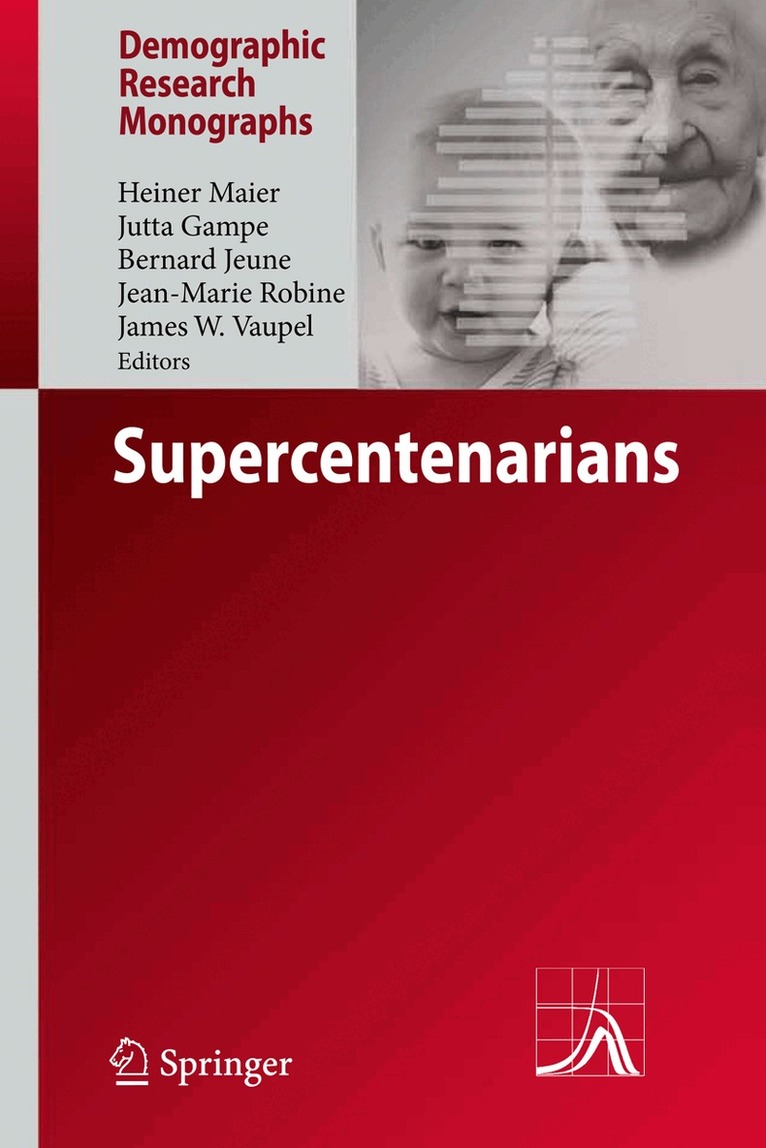
Supercentenarians
Av Heiner Maier, Jutta Gampe m. fl.
Häftad, 2012
1095 kr
Lägg i varukorg
Does human mortality after age 110 continue to rise, level off, or start to decline? This book describes a concerted, international research effort undertaken with the goal of establishing a database that allows the best possible description of the mortality trajectory beyond the age of 110. The …