Heinz Mack - Böcker
Visar alla böcker från författaren Heinz Mack. Handla med fri frakt och snabb leverans.
3 produkter
3 produkter
Chemisch-technische Grundlage der Aufbereitung von kunststoffhaltigem Altpapier
Teil A und B
Häftad, Tyska, 1964
550 kr
Skickas inom 10-15 vardagar
548 kr
Skickas inom 7-10 vardagar
The ZERO Art Movement from A to Z Challenging traditional concepts of art, for the ZERO avant-garde, the atelier became the exhibition space, books were a way to disseminate art; they made friends with the representatives of Concrete Poetry. A diagram visualizes who they thought to be part of the movement: those who were open to experimentation, who were not afraid to work with fire; even in the galleries, few of which were willing to pay homage to the avant-garde. International thinking united the young artists of the 1950s and 60s, whose network extended from Düsseldorf to Milan, Brussels, Paris, and Zagreb. Kinetics and light replaced brush and canvas, and new music played in the background. They tried to get closer to nature with the concept of the Open Artwork. In The ABCs of ZERO, writers, scholars, and authors from the fields of art, music, sociology and theater tell the story of this art movement—from A for atelier to Z for ZERO. Featuring a wealth of photos and documents from an era just emerging from the ruins, but facing the future with optimism, this book recalls a moment in time of peaceful utopia in Europe.
370 kr
Skickas
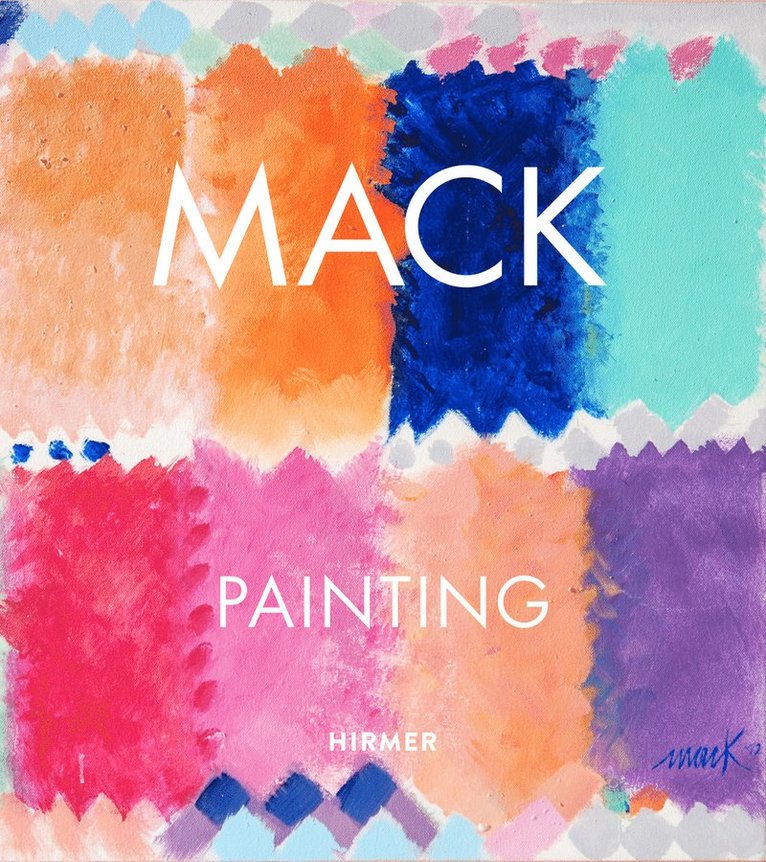
“There is no substitute for the happiness which colours give me.” After a long break, Heinz Mack has been focusing intensively on painting again for over thirty years. A cross-section of his "Chromatische Konstellationen" from 1991 until the present day shows how he translates the greatest possible purity of colour, light and immateriality into a broad spectrum of colour sequences and structures. Texts by Heinz Mack and Robert Fleck illuminate the essence of these colour worlds. Colour as light and light as colour – this represents, as it were, the nucleus of Mack’s painting. Within this premise he offers us a wide variety: chapters on, for example, the primacy of colour, atmosphere and nature, space, movement and geometric forms show the fascinating bandwidth of his work. The volume closes with an unusual undertaking: in a personal juxtaposition with works from art history from Duccio to Barnett Newman, the artist grants us an insight into his collective pictorial memory.