Helene Combes – författare
Visar alla böcker från författaren Helene Combes. Handla med fri frakt och snabb leverans.
7 produkter
7 produkter
E-bok
Engelska, 2015824 kr
Läs direkt efter köp
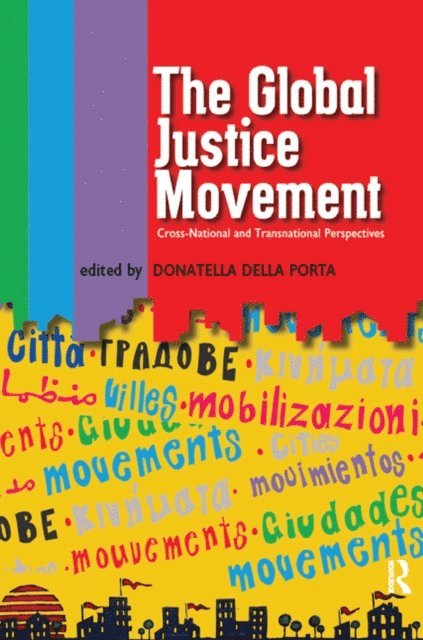
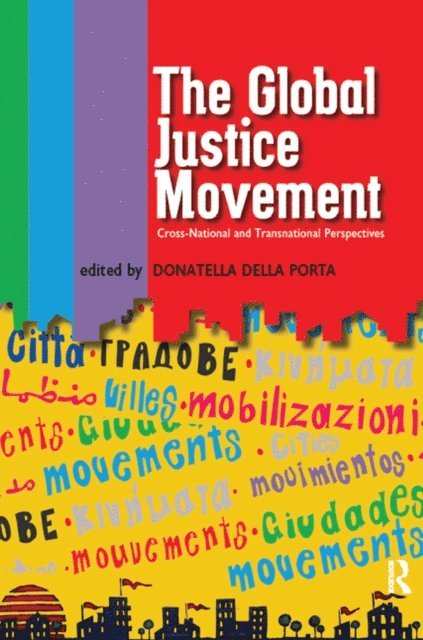
"Della Porta has assembled a distinguished group of scholars who have made great strides in illuminating the early phases of the movement. The book includes especially keen analyses of the movement against global capitalism, particularly in its European manifestations." John D. McCarthy, Pennsylvania State University "Della Porta has skillfully coordinated a comparative study in six European countries and the US. Renowned scholars give testimony of the movement in their countries. [This is] the first attempt to document a genuine transnational movement." Bert Klandermans, Vrije Universiteit, Amsterdam You G-8, we 6 billion!" So went the chant at the international parade leading into the summit in Genoa, Italy. The global justice movement has led to a new wave of protest, building up transnational networks, inventing new strategies of action, constructing new images of democracy, and boldly asserting that "another world is possible". This book examines all this and more with case studies drawn from seven different countries, covering transnational networks and making cross-national comparisons. Leading European and American scholars analyze more than 300 organizations and 5,000 activists, looking at mobilizations that bridge old and new movements and bring politics back to the street. Contributors include: Massimiliano Andretta, Angel Calle, Helene Combes, Donatella della Porta, Nina Eggert, Marco Giugni, Jennifer Hadden, Manuel Jimenez, Raffaele Marchetti, Lorenzo Mosca, Mario Pianta, Herbert Reiter, Christopher Rootes, Dieter Rucht, Clare Saunders, Isabelle Sommier, Sidney Tarrow, Simon Teune, Mundo Yang.
E-bok
PDF, Engelska, 2015824 kr
Läs direkt efter köp
"Della Porta has assembled a distinguished group of scholars who have made great strides in illuminating the early phases of the movement. The book includes especially keen analyses of the movement against global capitalism, particularly in its European manifestations." John D. McCarthy, Pennsylvania State University "Della Porta has skillfully coordinated a comparative study in six European countries and the US. Renowned scholars give testimony of the movement in their countries. [This is] the first attempt to document a genuine transnational movement." Bert Klandermans, Vrije Universiteit, Amsterdam You G-8, we 6 billion!" So went the chant at the international parade leading into the summit in Genoa, Italy. The global justice movement has led to a new wave of protest, building up transnational networks, inventing new strategies of action, constructing new images of democracy, and boldly asserting that "another world is possible". This book examines all this and more with case studies drawn from seven different countries, covering transnational networks and making cross-national comparisons. Leading European and American scholars analyze more than 300 organizations and 5,000 activists, looking at mobilizations that bridge old and new movements and bring politics back to the street. Contributors include: Massimiliano Andretta, Angel Calle, Helene Combes, Donatella della Porta, Nina Eggert, Marco Giugni, Jennifer Hadden, Manuel Jimenez, Raffaele Marchetti, Lorenzo Mosca, Mario Pianta, Herbert Reiter, Christopher Rootes, Dieter Rucht, Clare Saunders, Isabelle Sommier, Sidney Tarrow, Simon Teune, Mundo Yang.
Inbunden, Engelska, 2006
2 395 kr
Skickas inom 10-15 vardagar
"Della Porta has assembled a distinguished group of scholars who have made great strides in illuminating the early phases of the movement. The book includes especially keen analyses of the movement against global capitalism, particularly in its European manifestations." John D. McCarthy, Pennsylvania State University "Della Porta has skillfully coordinated a comparative study in six European countries and the US. Renowned scholars give testimony of the movement in their countries. [This is] the first attempt to document a genuine transnational movement." Bert Klandermans, Vrije Universiteit, Amsterdam You G-8, we 6 billion!" So went the chant at the international parade leading into the summit in Genoa, Italy. The global justice movement has led to a new wave of protest, building up transnational networks, inventing new strategies of action, constructing new images of democracy, and boldly asserting that "another world is possible". This book examines all this and more with case studies drawn from seven different countries, covering transnational networks and making cross-national comparisons. Leading European and American scholars analyze more than 300 organizations and 5,000 activists, looking at mobilizations that bridge old and new movements and bring politics back to the street. Contributors include: Massimiliano Andretta, Angel Calle, Helene Combes, Donatella della Porta, Nina Eggert, Marco Giugni, Jennifer Hadden, Manuel Jimenez, Raffaele Marchetti, Lorenzo Mosca, Mario Pianta, Herbert Reiter, Christopher Rootes, Dieter Rucht, Clare Saunders, Isabelle Sommier, Sidney Tarrow, Simon Teune, Mundo Yang.
Häftad, Engelska, 2007
695 kr
Skickas inom 10-15 vardagar
"Della Porta has assembled a distinguished group of scholars who have made great strides in illuminating the early phases of the movement. The book includes especially keen analyses of the movement against global capitalism, particularly in its European manifestations." John D. McCarthy, Pennsylvania State University "Della Porta has skillfully coordinated a comparative study in six European countries and the US. Renowned scholars give testimony of the movement in their countries. [This is] the first attempt to document a genuine transnational movement." Bert Klandermans, Vrije Universiteit, Amsterdam You G-8, we 6 billion!" So went the chant at the international parade leading into the summit in Genoa, Italy. The global justice movement has led to a new wave of protest, building up transnational networks, inventing new strategies of action, constructing new images of democracy, and boldly asserting that "another world is possible". This book examines all this and more with case studies drawn from seven different countries, covering transnational networks and making cross-national comparisons. Leading European and American scholars analyze more than 300 organizations and 5,000 activists, looking at mobilizations that bridge old and new movements and bring politics back to the street. Contributors include: Massimiliano Andretta, Angel Calle, Helene Combes, Donatella della Porta, Nina Eggert, Marco Giugni, Jennifer Hadden, Manuel Jimenez, Raffaele Marchetti, Lorenzo Mosca, Mario Pianta, Herbert Reiter, Christopher Rootes, Dieter Rucht, Clare Saunders, Isabelle Sommier, Sidney Tarrow, Simon Teune, Mundo Yang.
E-bok
Franska, 2011320 kr
Läs direkt efter köp
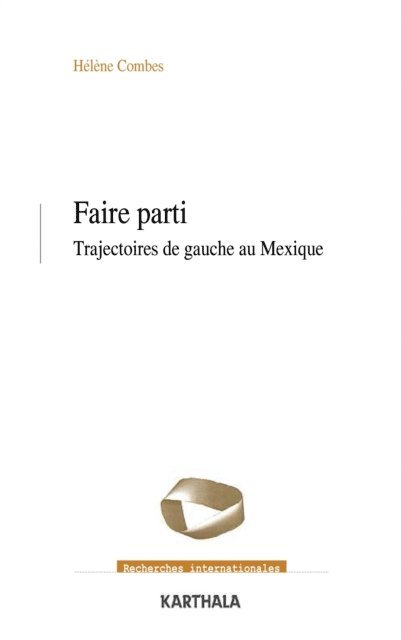
Comment construit-on un parti politique ? D’où viennent les militants et les cadres qui participent à sa fondation ? En quoi leur héritage, leur militantisme passé influent-ils sur sa forme, sur ses débats internes, sur son organisation? Quels sont les mécanismes concrets qui permettent l’implantation d’une nouvelle machine partisane sur un territoire national ?A travers le cas du Parti de la révolution démocratique (PRD), parti de centre gauche fondé en 1989 et qui gouverne Mexico – l’une des plus grandes villes du monde – depuis 1997, cet ouvrage éclaire les mécanismes de la fabrique partisane.Il met l’accent sur la relation entre parti et mouvements sociaux, question particulièrement débattue en Amérique latine, en s’intéressant à des dirigeants qui, souvent passés par la guérilla, le militantisme paysan ou la lutte pour les mal-logés, choisissent au tournant des années 1980 de s’investir dans le PRD.Et ce, au moment où le Mexique connaît une importante ouverture politique. Cet épisode fondateur est analysé à l’aune des vagues de mouvements sociaux qui se sont succédé depuis les années 1960.Récits de réunions militantes dans les quartiers populaires de Mexico, entretiens avec les figures de proue du parti, analyse fouillée des activités de ses instances dirigeantes : l’auteur dévoile les rouages quotidiens du PRD et permet ainsi de découvrir la richesse de la contestation au Mexique, au-delà du cas emblématique des zapatistes. Simultanément, elle délivre une belle leçon de sociologie politique des partis qui contribue à renouveler ce genre dans lequel la recherche française a longtemps excellé. Hélène Combes est chargée de recherche au CNRS (SciencesPo-CERI). Auparavant rattachée au Centre européen de sociologie et de science politique de la Sorbonne (CESPP-équipe CRPS), à l’Université Paris 1 Panthéon-Sorbonne, elle a publié dans de nombreux ouvrages collectifs et dans diverses revues françaises ou étrangères. Elle a enseigné dans plusieurs pays latino-américains et à SciencesPo-Paris. Elle coordonne le Groupe d’études sur les organisations et les partis politiques (GEOPP) de l’Association française de science politique. Elle est l’une des meilleures représentantes du renouveau français des études latino-américaines et de la sociologie politique des partis.
Inbunden, Engelska, 2026
1 509 kr
Skickas inom 10-15 vardagar
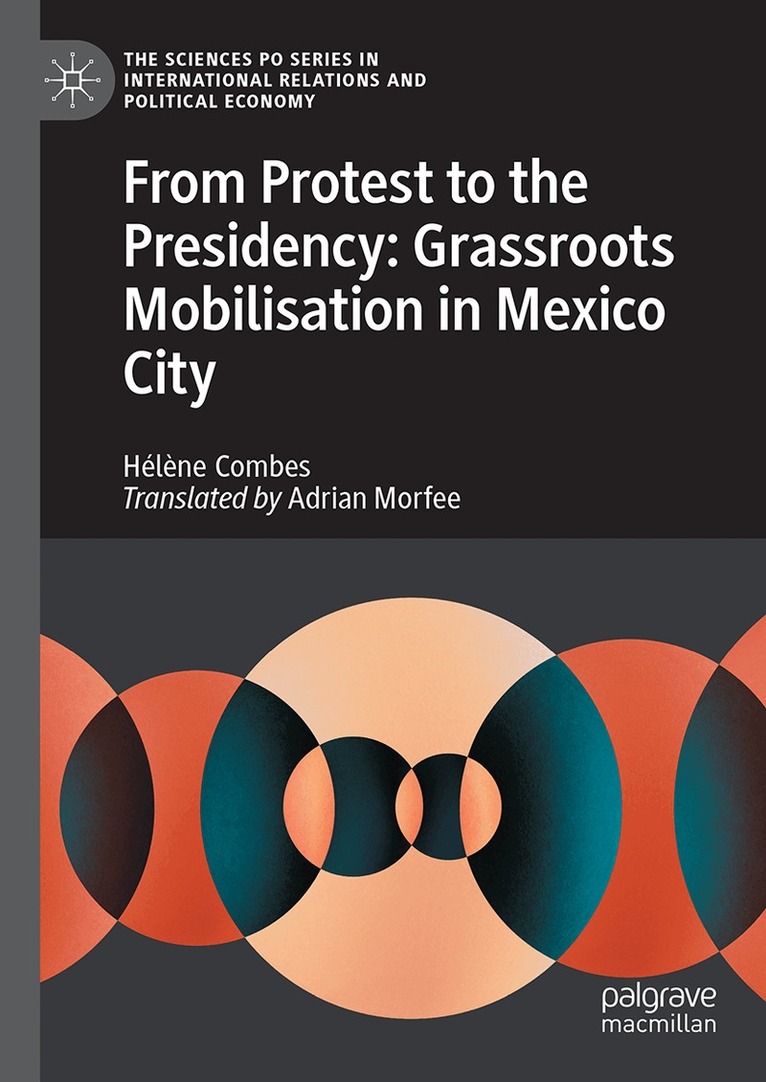
How does an occupation movement become a political force capable of taking power?This book explores Mexico’s 2006 mass encampment in Mexico City—an unprecedented 48-day protest sparked by a contested presidential election. From this occupation emerged new mobilisations against privatisation and inequality, reshaping the Mexican left and paving the way for electoral victories in 2018 and 2024. Drawing on long-term fieldwork, the book traces activist networks, grassroots organising, and innovative repertoires of action, offering insights into how movements transform into enduring political parties. Through the stories of key figures, including Claudia Sheinbaum and Andrés Manuel López Obrador, it provides a human and sociological account of political commitment, revitalising debates on occupations and social movements worldwide
E-bok
Spanska, 201991 kr
Läs direkt efter köp
La palabra "clientelismo" evoca de inmediato imágenes negativas, a tal punto que el discurso político y mediático la ha convertido en símbolo de uno de los principales males que la democracia moderna debe erradicar. Sin embargo, como muestra este libro, se trata de un fenómeno político y social de larga data, complejo y heterogéneo, un concepto indispensable para comprender cómo juegan las relaciones interpersonales en las diferentes escalas de poder.Conscientes del peso de ese término, que funciona como categoría analítica y como etiqueta de descalificación moral, Gabriel Vommaro y Hélène Combes elaboran una imprescindible obra de síntesis para desbrozar el camino. Cuestionando y matizando con maestría las visiones dominantes –que entienden el fenómeno exclusivamente como la manipulación de los sectores populares por parte de las élites–, trazan el recorrido histórico y geográfico del concepto y describen a los actores de esas relaciones en que intervienen formas de reciprocidad e intercambio. Explican, además, su sentido y su alcance en Europa y en América Latina, y exponen la reconfiguración del clientelismo a partir del activismo de organismos internacionales que bregan por erradicarlo en pos de una declamada transparencia de lo social.Más allá de los prejuicios estigmatizadores, los autores revelan la variedad de los vínculos políticos y ofrecen claves para futuras indagaciones, que incluyan a otras clases sociales y abran el enfoque a las evaluaciones de los propios actores. Así, desde una perspectiva crítica y comparativa, cumplen con el desafío de devolverle densidad y riqueza a una categoría que, tanto en el debate público como en el mundo académico, suele quedar reducida a la "compra de votos", el cálculo racional o la necesidad.