Helmut Kuzmics – författare
Visar alla böcker från författaren Helmut Kuzmics. Handla med fri frakt och snabb leverans.
10 produkter
10 produkter
Inbunden, Engelska, 2007
613 kr
Skickas inom 10-15 vardagar
This book presents a cross-disciplinary and methodologically innovative study, combining historical macro-sociology and a sociology of emotions with historical anthropology and cultural studies. Drawing on the concepts and theories of Norbert Elias on the Civilizing Process, it sets out to pin down and compare qualities that are simultaneously instantly recognisable and highly elusive, that is a kind of typical 'Englishness' and of 'Austrianness' that developed contemporaneously in the period up to the First World War. The authors chart the development of political authority structures in their varied historical manifestations, as well as their affective sedimentation as collective habitus ( national character ), comparing England and Austria from 1700 to 1900 as a case study. Their argument is based on an analysis of literary sources, mainly novels and plays, applying a sociology of literature approach. Axtmann and Kuzmics argue that the very different national characters formed in England and Austria during this time are related to differences in the affective experience of power and powerlessness, in short, of authority. They show that the formation of national character is determined partly by the different mixture of authoritative external constraints and milder self-restraint, and partly by the affective experience of human beings in uneven power balances. Specifically, they show how the formation of the bureaucratic state with strong patrimonial features in Austria, and of a self-organizing civil society with strong bourgeois-liberal features in England resulted both in different institutional structures of authority, and in different modes of the affective experience of this authority. Employing empirical detail of individual cases and texts to analyse and illuminate broad processes, the authors reach a clearer and deeper understanding of seemingly intangible and irrational aspects of national identity.
Häftad, Engelska, 2016
395 kr
Skickas inom 10-15 vardagar
This book presents a cross-disciplinary and methodologically innovative study, combining historical macro-sociology and a sociology of emotions with historical anthropology and cultural studies. Drawing on the concepts and theories of Norbert Elias on the Civilizing Process, it sets out to pin down and compare qualities that are simultaneously instantly recognisable and highly elusive, that is a kind of typical 'Englishness' and of 'Austrianness' that developed contemporaneously in the period up to the First World War. The authors chart the development of political authority structures in their varied historical manifestations, as well as their affective sedimentation as collective habitus ( national character ), comparing England and Austria from 1700 to 1900 as a case study. Their argument is based on an analysis of literary sources, mainly novels and plays, applying a sociology of literature approach. Axtmann and Kuzmics argue that the very different national characters formed in England and Austria during this time are related to differences in the affective experience of power and powerlessness, in short, of authority. They show that the formation of national character is determined partly by the different mixture of authoritative external constraints and milder self-restraint, and partly by the affective experience of human beings in uneven power balances. Specifically, they show how the formation of the bureaucratic state with strong patrimonial features in Austria, and of a self-organizing civil society with strong bourgeois-liberal features in England resulted both in different institutional structures of authority, and in different modes of the affective experience of this authority. Employing empirical detail of individual cases and texts to analyse and illuminate broad processes, the authors reach a clearer and deeper understanding of seemingly intangible and irrational aspects of national identity.
E-bok
Engelska, 2017411 kr
Läs direkt efter köp
This book presents a cross-disciplinary and methodologically innovative study, combining historical macro-sociology and a sociology of emotions with historical anthropology and cultural studies. Drawing on the concepts and theories of Norbert Elias on the Civilizing Process, it sets out to pin down and compare qualities that are simultaneously instantly recognisable and highly elusive, that is a kind of typical ''Englishness'' and of ''Austrianness'' that developed contemporaneously in the period up to the First World War. The authors chart the development of political authority structures in their varied historical manifestations, as well as their affective sedimentation as collective habitus ( national character ), comparing England and Austria from 1700 to 1900 as a case study. Their argument is based on an analysis of literary sources, mainly novels and plays, applying a sociology of literature approach. Axtmann and Kuzmics argue that the very different national characters formed in England and Austria during this time are related to differences in the affective experience of power and powerlessness, in short, of authority. They show that the formation of national character is determined partly by the different mixture of authoritative external constraints and milder self-restraint, and partly by the affective experience of human beings in uneven power balances. Specifically, they show how the formation of the bureaucratic state with strong patrimonial features in Austria, and of a self-organizing civil society with strong bourgeois-liberal features in England resulted both in different institutional structures of authority, and in different modes of the affective experience of this authority. Employing empirical detail of individual cases and texts to analyse and illuminate broad processes, the authors reach a clearer and deeper understanding of seemingly intangible and irrational aspects of national identity.
E-bok
PDF, Engelska, 2017411 kr
Läs direkt efter köp
This book presents a cross-disciplinary and methodologically innovative study, combining historical macro-sociology and a sociology of emotions with historical anthropology and cultural studies. Drawing on the concepts and theories of Norbert Elias on the Civilizing Process, it sets out to pin down and compare qualities that are simultaneously instantly recognisable and highly elusive, that is a kind of typical ''Englishness'' and of ''Austrianness'' that developed contemporaneously in the period up to the First World War. The authors chart the development of political authority structures in their varied historical manifestations, as well as their affective sedimentation as collective habitus ( national character ), comparing England and Austria from 1700 to 1900 as a case study. Their argument is based on an analysis of literary sources, mainly novels and plays, applying a sociology of literature approach. Axtmann and Kuzmics argue that the very different national characters formed in England and Austria during this time are related to differences in the affective experience of power and powerlessness, in short, of authority. They show that the formation of national character is determined partly by the different mixture of authoritative external constraints and milder self-restraint, and partly by the affective experience of human beings in uneven power balances. Specifically, they show how the formation of the bureaucratic state with strong patrimonial features in Austria, and of a self-organizing civil society with strong bourgeois-liberal features in England resulted both in different institutional structures of authority, and in different modes of the affective experience of this authority. Employing empirical detail of individual cases and texts to analyse and illuminate broad processes, the authors reach a clearer and deeper understanding of seemingly intangible and irrational aspects of national identity.
E-bok
PDF, Tyska, 2013433 kr
Läs direkt efter köp
E-bok
PDF, Tyska, 2013550 kr
Läs direkt efter köp
Del 1 - Figurationen. Schriften zur Zivilisations- und Prozesstheorie
Zivilisationstheorie in der Bilanz
Beiträge zum 100. Geburtstag von Norbert Elias
Häftad, Tyska, 2000
581 kr
Skickas inom 10-15 vardagar
Der Band ist anläßlich des 100. Geburtstag des Soziologen Norbert Elias entstanden. Er enthält Beiträge, die sich ergänzend, kritisch oder vergleichend mit Leben und Werk von Elias beschäftigen. Aufgrund der späten "Entdeckung" von Norbert Elias Ende der 60er Jahre mußte zunächst sein Werk gesichtet und gesichert werden. Diese erste Phase der Rezeption dauert an, wie die Neuausgabe des Zivilisationsbuches dokumentiert. Mittlerweile hat jedoch die zweite Phase der Rezeption eingesetzt. Sie ist durch Bilanzierungen, kritische Aufarbeitungen und Weiterentwicklungen gekennzeichnet. Das Buch umfaßt neue Aspekte der Eliasschen Biographie, grundsätzliche Probleme der "Architektur" seiner Theorie, Vergleiche mit anderen Theoretikern, und es gibt den Forschungsstand zu klassischen wie aktuellen Anwendungsbereichen der Zivilisationstheorie wieder.
Häftad, Tyska, 2000
615 kr
Skickas inom 10-15 vardagar
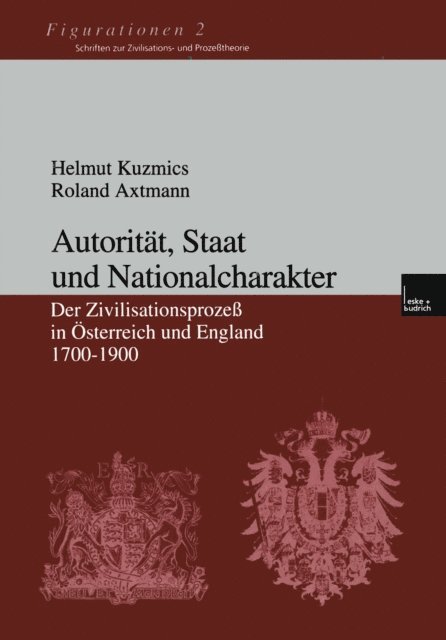
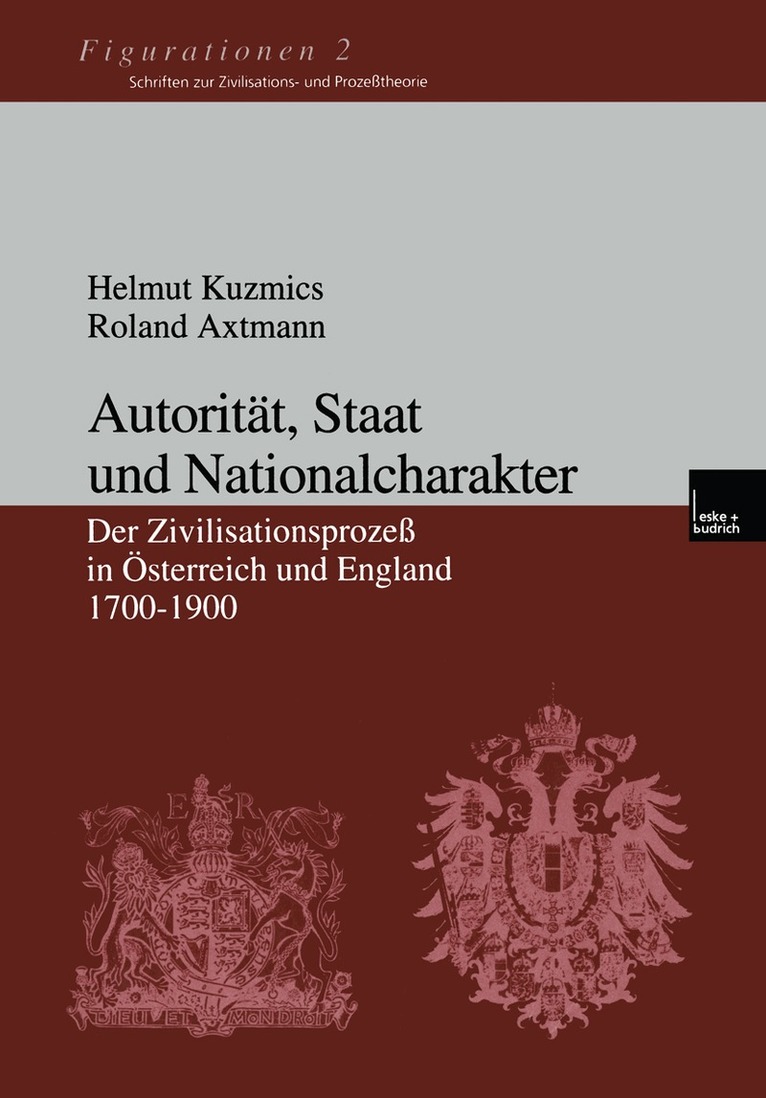
Einübung, Ausübung und Duldung von Macht können von Gesellschaft zu Gesellschaft sehr verschieden sein. Wie kommt es, daß Gentlemen und Puritaner Englands Charakter entscheident geprägt haben, Beamte und Höflinge jedoch die Kultur des alten Österreich?Das vorliegende Buch liefert einen originären Beitrag zur historischen Soziologie der Staatsbildung zwischen 1700 und 1900.Die Autoren ergänzen die Makroperspektive und eine empirisch und theoretisch informierte Soziologie der Emotionen. Sie stellen "Autorität" in ihren historischen Ausprägungen in einen direkten Bezug zu Gefühlen und zum Gefühlsmanagement des einzelnen.
E-bok
PDF, Tyska, 20131 035 kr
Läs direkt efter köp
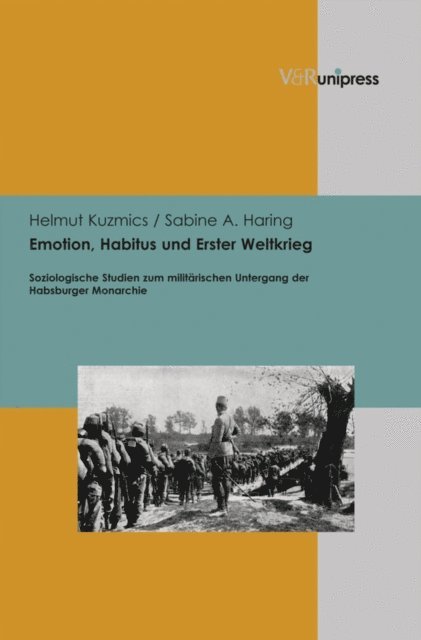
1918 zerbrachen in Europa alte Reiche mit Folgen, die bis heute andauern und soziologisch permanent unterschätzt werden. Ihr Schicksal war in die Hände von Soldaten und Offizieren gelegt worden, deren Gefühle und habituelle Prägungen für Erfolg und Misserfolg oft nicht weniger mitbestimmend waren als ihre Waffen. Dieses Buch verbindet Analysen zur Entwicklung von Staat und Militär der Habsburger Monarchie in der europäischen Staatenkonkurrenz ab dem 18. Jahrhundert mit exemplarischen emotionssoziologischen Interpretationen von autobiographischen Daten zu Gefühl und Habitus der Kriegsteilnehmer im Ersten Weltkrieg. Die Themen des Buches reichen von der Selektivität der mitteleuropäischen Erinnerungskultur nach dem Krieg, der Beschreibung von Genese und Wirken eines »habsburgischen Militärhabitus« vor 1914 und im Weltkrieg über die Analyse von Feind- und Wir-Gefühlen im Vielvölkerheer bis zur emotionssoziologischen Beschäftigung mit Angst und Heldentum sowie der »Entzivilisierung « im Krieg.The year 1918 saw the downfall of ancient European empires. Its aftermath has haunted us until today, although largely ignored by mainstream sociology. The war 1914–18 had placed the fate of these empires in the hands of soldiers and officers whose feelings and social habitus had a definite influence on it - with success or failure not only resulting from arms and material resources but also from emotions. This book tries to sketch the development of the Habsburg Monarchy''s army and its role in the European state-competition from the 18th century onwards and to link this path to emotions and habitus of Austro-Hungarian soldiers and officers during the First World War. The topics scrutinized here include the culture of remembrance as it developed after the war in Central Europe in a very selective way, the emergence and way of functioning of a "Habsburg military habitus" before 1914 and during the war, and the analysis of we-feelings and feelings of hostility as they were experienced by various members of the multinational army. Finally, the soldier''s fear and "heroism" are analyzed in a sociology-of-emotion perspective and the question how "de-civilized" the soldiers had become is debated.
Häftad, Engelska, 2009
456 kr
Tillfälligt slut
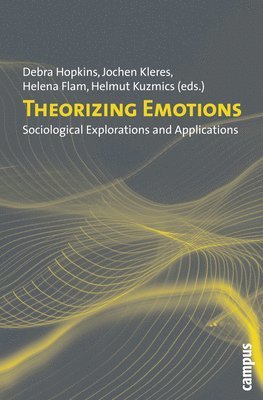
"Theorizing Emotions" reflects the recent turn to emotions in academia - not just in sociology but also in psychology, evolutionary biology, and neuroscience. Drawing on the classic studies of Max Weber, Erving Goffman, and Norbert Elias, several leading scholars present their findings on the role of emotions in various facets of society, from the laboratory to the office to the media. Among the topics discussed are the tensions between feelings and feeling rules, the conscious and unconscious emotions of scientists, emotions and social disorder, the effect of the emotional turn as an element of advancing modernity, romantic love in U.S. and Israeli codes of conduct, and the role of mass media in generating massive public emotions.