Henry M. Rinder – författare
Visar alla böcker från författaren Henry M. Rinder. Handla med fri frakt och snabb leverans.
2 produkter
2 produkter
E-bok
Engelska, 20101 393 kr
Läs direkt efter köp
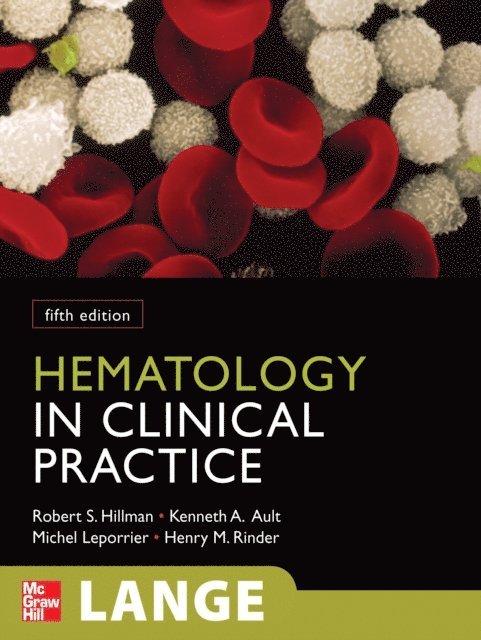
The most practical and efficient guide to the diagnosis and management of blood disorders – now in full color
200 full-color illustrations!
Hematology in Clinical Practice is a succinct, cutting-edge guide to the diagnosis and treatment of disorders of red blood cells, white blood cells, and hemostasis, and the use of blood components for transfusion. Each disease state is discussed in detail, incorporating the pathophysiology, clinical features, up-to-date laboratory testing, and current management strategies into a comprehensive and practical approach to hematologic disorders.
Features:
New full-color presentation includes over 200 superb illustrations and classic images of blood morphology, tissue pathology, and clinical findingsNew Case Histories introduce and continue through relevant chapters, highlighting critical clinical points for diagnosis and managementNew end-of-chapter Points to Remember encapsulate key clinical informationNew chapters include Anemia in the Elderly and expanded and updated coverage of Transplantation and treatment of hematologic malignanciesOutstanding collection of tables, charts, and illustrations that translate basic science into valuable clinical contextStrong focus on practical clinical management and supportive careCoverage of state-of-the-art drugs and chemotherapies and the latest advances in genetic testing and molecular pathwaysConveniently organized into sections on Red Cells, White Cells, Hemostasis, and Transfusion MedicineInbunden, Engelska, 2009
787 kr
Skickas inom 10-15 vardagar
The understanding of hemostasis physiology has been considerably advanced by models of kinetics and by the complicated interplay of cells and soluble coagulation factors. How this physiology is currently, or will eventually, be reflected in clinical laboratory testing is the subject of this monograph; this information is key for laboratorians to implement physiologic concepts into practical data and for clinicians to understand the basis of and therefore correctly treat hemostatic disease. Many thousands of patients present with bleeding disorders or bleeding complications of other diseases, and millions of individuals suffer the morbidity and mortality of thromboembolic complications. How laboratory testing confronts the challenge of predicting different hemostatic risks and guiding therapy is the critical subtext of the chapters in this monograph. New developments in hemostasis physiology have identified thrombin as an important, if not central, coordinator of hemostatic function and thus a target for measurement to assess hemostatic function and risk. Whether such measurements as endogenous thrombin potential or thromboelastography will accurately predict and/or quantitate global hemostatic function is an important question. Modeling the clinical risks of bleeding or thromboembolism currently uses the laboratory presence or absence of particular risk factors, but our clinical understanding of risk appears to more closely approximate a dynamic model, even within individual patients. Therefore, testing for platelet dysfunction or comprehending the functional implications of a lupus anticoagulant may rely on our evolving comprehension of hemostasis phyisology and perhaps require more sophisticated interpretation of clinical predictors of hemostatic risk. This monograph aims to shed some light in these areas and promote investigation of such key hemostasis issues.