Henry Maher – författare
Visar alla böcker från författaren Henry Maher. Handla med fri frakt och snabb leverans.
1 produkt
1 produkt
Inbunden, Engelska, 2026
1 487 kr
Kommande
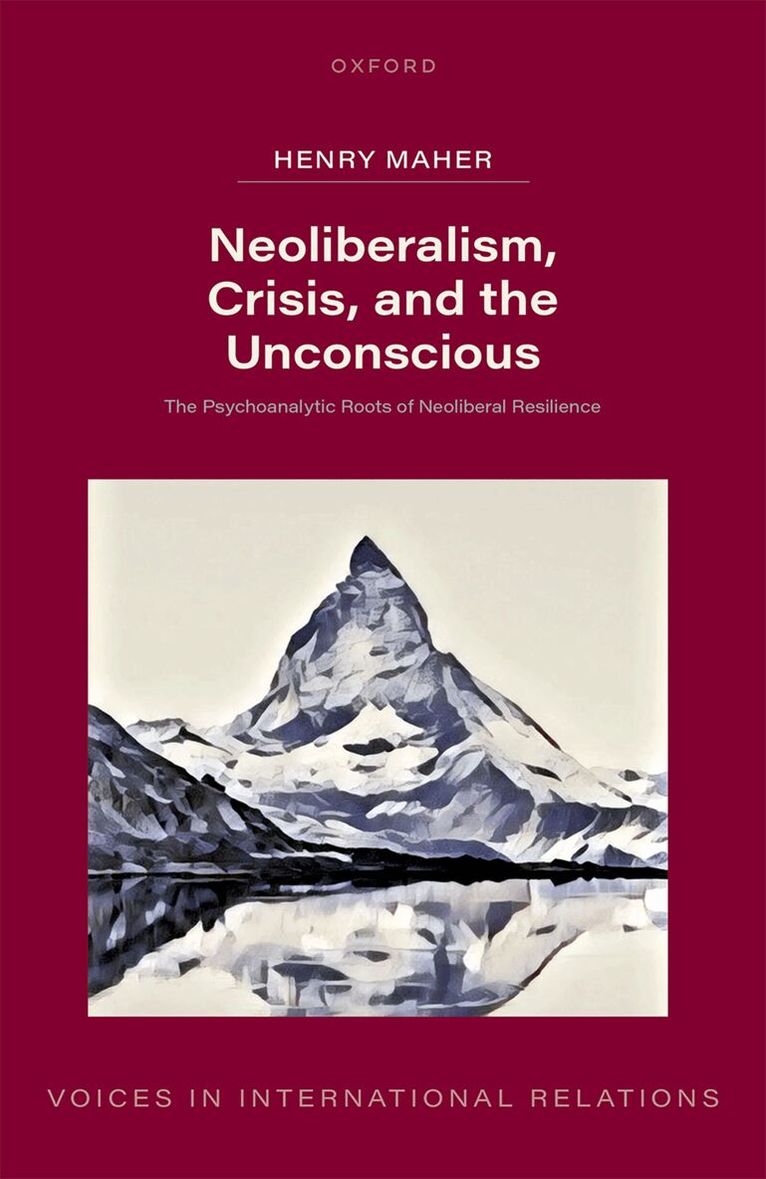
How does neoliberalism persist despite the constant crises it seems to create? To theorise the enduring appeal of neoliberalism, Neoliberalism, Crisis, and the Unconscious uses a framework influenced by French psychoanalyst Jacques Lacan, arguing that a Lacanian psychoanalytic approach to neoliberalism offers unique insights into the affective potency of neoliberalism. Though the surface content of neoliberalism might appear contradictory, crisis prone, and increasingly discredited, the fact that neoliberalism continues to hegemonise much of our social space suggests a deeper, constitutive, and psychoanalytic understanding of neoliberalism is required. A psychoanalytic approach to neoliberalism looks beyond the surface level of neoliberal economic structures and public discourse to instead foreground the unconscious content of neoliberalism, meaning the affective role of neoliberalism, in creating and regulating desire for neoliberal subjects.To elucidate the unconscious content embedded in neoliberal discursive structures, the book is structured around three different crises: the Great Depression, from which the discourse of neoliberalism emerged; the stagflation crisis of the 1970s, the period in which neoliberalism rose to dominance; and the Global Financial Crisis, in which neoliberalism confounded predications of its demise to remain hegemonic. Combining a close reading of historical neoliberal thinkers with empirical analysis of political and media discourse during times of crisis, Henry Maher develops a compelling account of the endogenous sources of neoliberal legitimacy, and the reasons for the repeated failure of progressive alternatives. By unravelling the sources of neoliberal affect and insisting on the possibility of alternatives, a psychoanalytic reading of neoliberalism offers the means to craft new constructions of the political and economic that can finally transcend the narrow neoliberal preoccupation with market freedom.ABOUT THE SERIES: Voices in International Relations, published under the auspices of the European International Studies Association (EISA), furthers the development of research at the frontiers of International Relations (IR). It expands the remit of the field by including innovative scholarship that broadens key debates in the discipline, but it is more interested in reconfiguring such debates by approaching them from inside and outside the conventional core. Thematically, we aim to publish research that pushes the limits of IR conventionally defined from within and connects it to debates developing outside the discipline. We are committed to furthering diversity and inclusion in terms of authorship, location, topics and approaches from both inside and outside Europe. We have an inclusive approach to neighbouring disciplines, be it sociology, history, anthropology, geography, economics, political theory or law. Series editors: Debbie Lisle, Tanja Aalberts, Anna Leander, and Laura Sjoberg.