
Herbert Han Ping Fang - Böcker
Visar alla böcker från författaren Herbert Han Ping Fang. Handla med fri frakt och snabb leverans.
2 produkter
2 produkter
2 307 kr
Skickas inom 5-8 vardagar
Environmental protection and resource recovery are two crucial issues facing our society in the 21st century. Anaerobic biotechnology has become widely accepted by the wastewater industry as the better alternative to the more conventional but costly aerobic process and tens of thousands of full-scale facilities using this technology have been installed worldwide in the past two decades. Anaerobic Biotechnology is the sequel to the well-received Environmental Anaerobic Technology: Applications and New Developments (2010) and compiles developments over the past five years. This volume contains contributions from 48 renowned experts from across the world, including Gatze Lettinga, laureate of the 2007 Tyler Prize and the 2009 Lee Kuan Yew Water Prize, and Perry McCarty, whose pioneering work laid the foundations for today's anaerobic biotechnology. This book is ideal for engineers and scientists working in the field, as well as decision-makers on energy and environmental policies.
2 272 kr
Skickas inom 5-8 vardagar
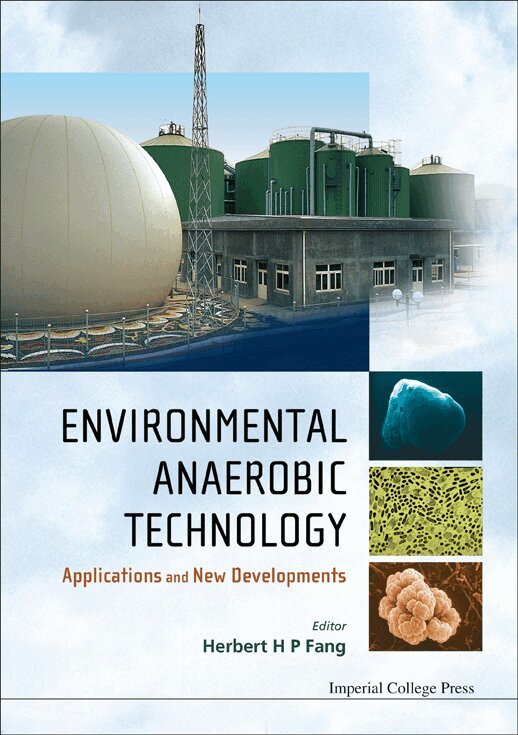
Anaerobic technology has become widely accepted by the environmental industry as a cost-effective alternative to the conventional aerobic process. In addition, with the intrinsic advantages of energy saving, reduced sludge yield, and production of biofuel, anaerobic process will be the favored green treatment technology for sustainable environment in years to come.Written by 40 renowned experts from 13 countries/regions, this book consists of 18 chapters compiling state-of-the-art information on new developments in various aspects of anaerobic technology. These include development of new types of reactors, uses of molecular techniques for microbial studies and mathematical modeling, productions of bio-hydrogen by fermentation and microbial electrolysis cell, as well as broadening applications to the treatment of municipal wastewater, effluents from chemical industry and agricultural wastes with high lignocellulose content.