Herbert R. Lottman – författare
Visar alla böcker från författaren Herbert R. Lottman. Handla med fri frakt och snabb leverans.
4 produkter
4 produkter
Häftad, Engelska, 1998
264 kr
Skickas inom 5-8 vardagar
This story begins in the Paris of the 1930s, when artists and writers stood at the centre of the world stage. In the decade that saw the rise of the Nazis, much of the thinking world sought guidance from this group of intellectuals. Herbert Lottman's chronicle follows the influential players - Gide, Malraux, Sartre, de Beauvoir, Koestler, Camus - and their pro-Fascist counterparts, through the German occupation, Liberation, and into the Cold War, when the struggle between superpowers all but drowned out their voices.
E-bok
PDF, Engelska, 2003779 kr
Läs direkt efter köp
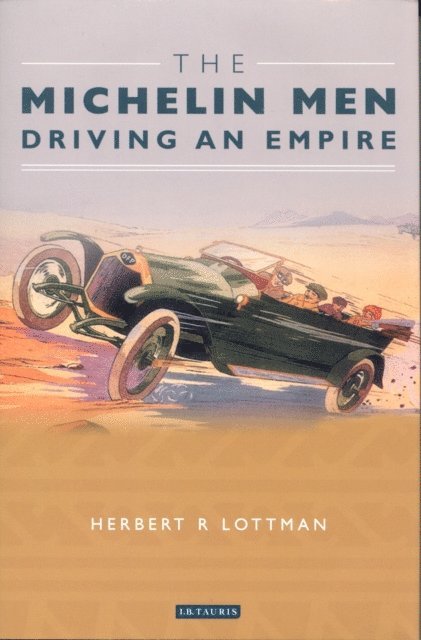
This is the remarkable story of how two brothers - Edouard and Andre Michelin - turned a sleepy, family tyre firm in the heart of rural France into one of the most innovative and successful industrial empires in the world. Edouard, a landscape painter at the Ecole des Beaux Arts, displayed an engineering genius for tyre-making and product innovation, whilst Andre, trained as an engineer, displayed a creative genius for advertising and marketing. Together they kick-started the world motor industry and created a tourist industry around the motor car and their now legendary "Michelin Guides". The Michelin history, as described here by Herbert Lottman, reveals insights into the development of this remarkable business.
Häftad, Engelska, 2002
350 kr
Skickas inom 3-6 vardagar
E-bok
Engelska, 2013268 kr
Läs direkt efter köp
When Albert Camus died in a car crash in January 1960 he was only 46 years old — already a winner of the Nobel Prize for Literature and a world figure — author of the enigmatic The Stranger, the fable called The Plague, but also of the combative The Rebel — which attacked the ‘politically correct’ among his con-temporaries.Thanks to his early literary achievement, his work for the under-ground newspaper Combat and his editorship of that daily in its Post-Liberation incarnation, Camus’ voice seemed the conscience of postwar France. But it was a very personal voice that rejected the conventional wisdom, rejected ideologies that called for killing in the cause of justice. His call for personal responsibility will seem equally applicable today, when Camus’ voice is silent and has not been replaced. The secrecy which surrounded Algerian-born Camus’ own life, public and private — a function of illness and psychological self-defense in a Paris in which he still felt himself a stranger — seemed to make the biographer’s job impossible.Lottman’s Albert Camus was the first and remains the definitive biography — even in France. On publication it was hailed by New York Times reviewer John Leonard: “What emerges from Mr. Lottman’s tireless devotions is a portrait of the artist, the outsider, the humanist and skeptic, that breaks the heart.” In The New York Times Book Review British critic John Sturrock said: “Herbert Lottman’s life (of Camus) is the first to be written, either in French or English, and it is exhaustive, a labor of love and of wonderful industry.” When the book appeared in London Christopher Hitchens in New Statesman told British readers: “Lottman has written a brilliant and absorbing book... The detail and the care are extra-ordinary... Now at last we have a clear voice about the importance of liberty and the importance of being concrete.”The new edition by Gingko Press includes a specially written preface by the author revealing the challenges of a biographer, of some of the problems that had to be dealt with while writing the book and after it appeared.