Hilary H. Birks – författare
Visar alla böcker från författaren Hilary H. Birks. Handla med fri frakt och snabb leverans.
3 produkter
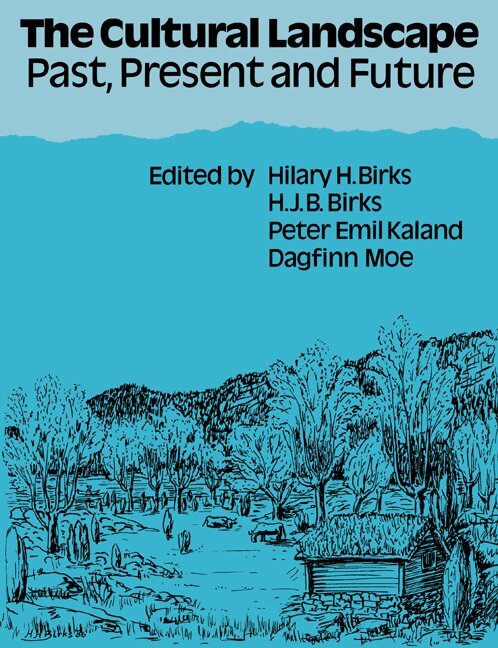
The Cultural Landscape
Past, Present and Future
Av Hilary H. Birks, H. J. B. Birks m. fl.
Häftad, 2004
1644 kr
Lägg i varukorg
The Cultural Landscape - Past, Present and Future considers different aspects of man's intervention with natural vegetation and the landscape resulting from a long equilibrium of co-existence. These landscapes are not stable, and the recent and ever accelerating changes in technology and life-style …
Seeds and Fruits of Aquatic Plants of Northern Europe - A Handbook
Av Hilary H. Birks, Carl D. Sayer m. fl.
Inbunden, 2026
2024 kr
Lägg i varukorg
This handbook is a practical guide to the identification and interpretation of aquatic plant remains recovered from sediments. These remains, or macrofossils, can be seeds or fruits or other plant organs such as leaves or stems. The main body of the handbook is made up of a series of fact sheets …
Seeds and Fruits of Aquatic Plants of Northern Europe - A Handbook
Av Richard E. Walton, Carl D. Sayer m. fl.
E-bok, 2026
2677 kr
Lägg i varukorg
This handbook is a practical guide to the identification and interpretation of aquatic plant remains recovered from sediments. These remains, or macrofossils, can be seeds or fruits or other plant organs such as leaves or stems. The main body of the handbook is made up of a series of fact sheets …