Holger Hoock – författare
Visar alla böcker från författaren Holger Hoock. Handla med fri frakt och snabb leverans.
6 produkter
6 produkter
Del 8 - British Academy Occasional Papers
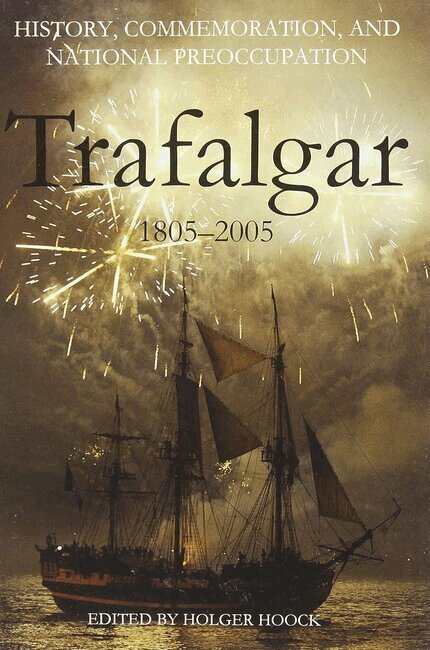
History, Commemoration and National Preoccupation
Trafalgar 1805-2005
Häftad, Engelska, 2007
309 kr
Skickas inom 5-8 vardagar
This volume explores the commemoration of the Battle of Trafalgar and Admiral Lord Nelson's death over the past two centuries. It includes the extraordinary celebrations of 2005, which saw hundreds of official, commercial, and popular events celebrating and commemorating the bicentenary of Trafalgar and the death of Nelson. Leading historians of Britain and France, reflect critically on the complex notions of remembrance, celebration, honouring, and commemoration. Taking historical snapshots of the commemoration of Nelson at his death, in 1905, and in contemporary Britain, the contributors ask: who drives the commemoration of historical anniversaries and to what ends? Which Nelson, or Nelsons, have had a role in national memory over the past two centuries? And who identifies with Nelson today? Focusing on Britain, but looking also at imperial and French contexts, the papers consider how memoirs, history writing, visual and modern media and museums, and official and unofficial interests, contribute to keeping and shaping memory. As the changing manner of memorializing key moments in national history allows historians to study cultural meanings and interpretations of national identity, the contributors assembled in this volume exhort the wider profession to engage critically with 'public history'.This innovative work in the history of memory and commemoration will be of interest not only to the specialist scholar but also to those with general interests in naval, maritime, cultural and public history.
Inbunden, Engelska, 2003
2 624 kr
Skickas inom 5-8 vardagar
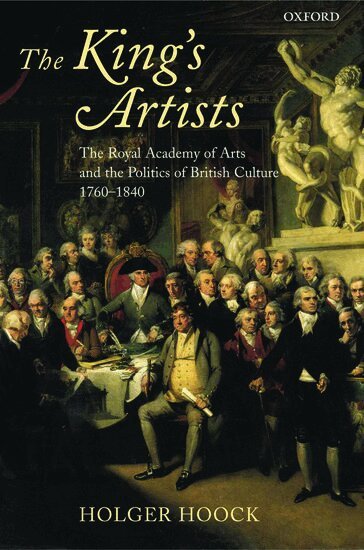
This is the story of the forging of a national cultural institution in late eighteenth- and early nineteenth-century Britain. The Royal Academy of Arts was the dominant art school and exhibition society in London and a model for art societies across the British Isles and North America. This is the first study of its early years, re-evaluating the Academy's significance in national cultural life and its profile in an international context. Holger Hoock reassesses royal and state patronage of the arts and explores the concepts and practices of cultural patriotism and the politicization of art during the American and French Revolutions. By demonstrating how the Academy shaped the notions of an English and British school of art and influenced the emergence of the British cultural state, he illuminates the politics of national culture and the character of British public life in an age of war, revolution, and reform.
Häftad, Engelska, 2005
1 025 kr
Skickas inom 7-10 vardagar
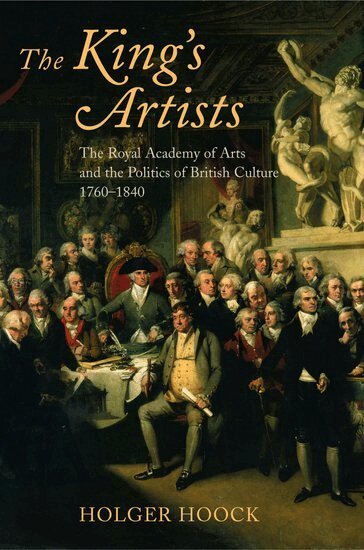
This is the story of the forging of a national cultural institution in late eighteenth- and early nineteenth-century Britain. The Royal Academy of Arts was the dominant art school and exhibition society in London and a model for art societies across the British Isles and North America. This is the first study of its early years, re-evaluating the Academy's significance in national cultural life and its profile in an international context. Holger Hoock reassesses royal and state patronage of the arts and explores the concepts and practices of cultural patriotism and the politicization of art during the American and French Revolutions. By demonstrating how the Academy shaped the notions of an English and British school of art and influenced the emergence of the British cultural state, he illuminates the politics of national culture and the character of British public life in an age of war, revolution, and reform.
E-bok
Engelska, 2017126 kr
Läs direkt efter köp
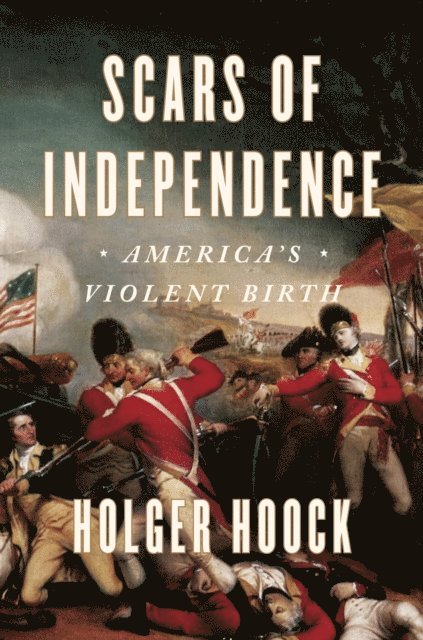
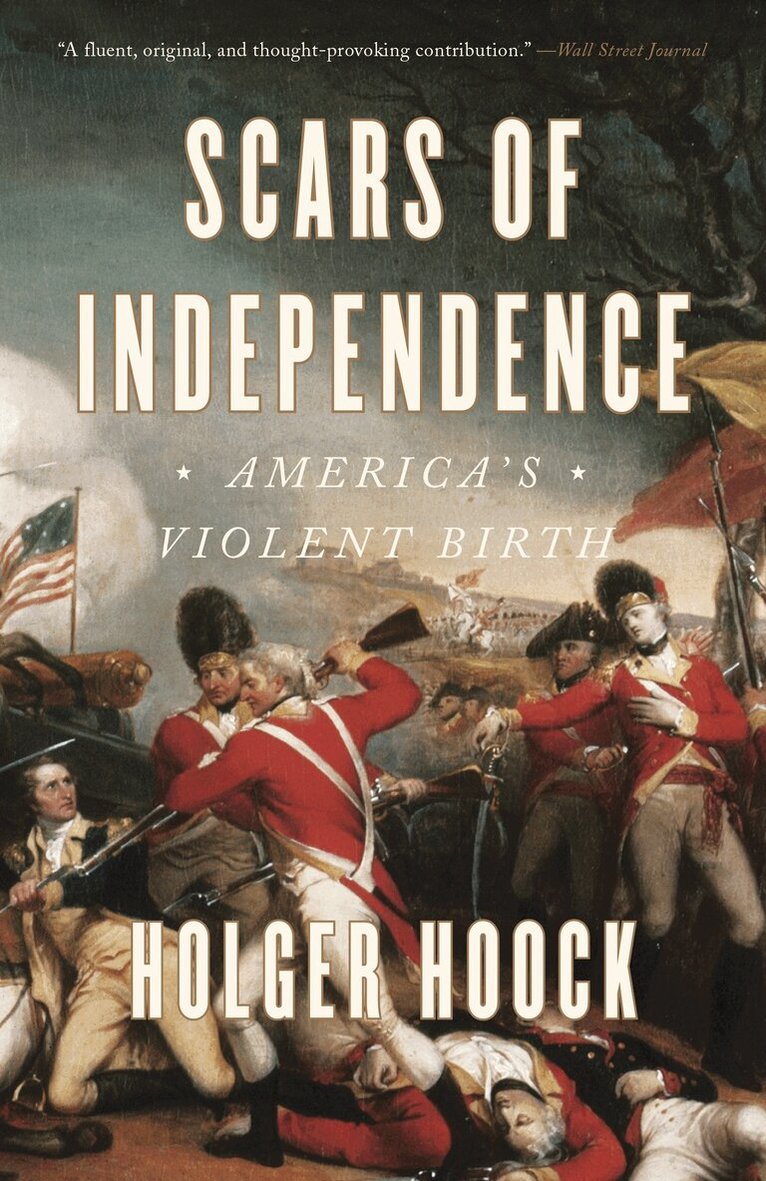
A magisterial new work that rewrites the story of America’s founding When we think of the American Revolution, we think of brave patriots coming together to resist a tyrannical ruler in defense of noble ideals. It’s a stirring narrative, and one the founders did their best to encourage after the war. But as historian Holger Hoock argues, the truth is far more complex: the Revolution was not only a high-minded battle over principles, but also a profoundly violent civil war—one that shaped the nation in ways we have only begun to understand.In Scars of Independence, Hoock writes the violence back into the story. American Patriots tortured Loyalists and imprisoned them in Connecticut mines; British troops massacred enemy soldiers, raped colonial women, and crowded half-starving prisoners on disease-ridden ships; both sides conscripted African-Americans, who suffered disproportionately as soldiers and slaves; and Washington’s army waged a genocidal campaign against the Iroquois nations. In vivid, authoritative prose, Hoock also examines the moral dilemmas posed by this all-pervasive violence, as the British found themselves torn between unlimited war and restraint toward fellow subjects, while the Patriots ingeniously documented war crimes in an effort to unify the fledgling nation, ultimately erasing the trauma of the Loyalists in their midst.For centuries we have whitewashed this history of the Revolution. Scars of Independence forces a more honest appraisal, and in so doing pre-sents a new origins story that will spark debate for years to come. Elegantly written and meticulously researched, it is history that is both relevant and necessary—an important reminder that forging a nation is rarely bloodless.From the Hardcover edition.
Häftad, Engelska, 2018
250 kr
Skickas inom 5-8 vardagar
E-bok
Engelska, 2010275 kr
Läs direkt efter köp
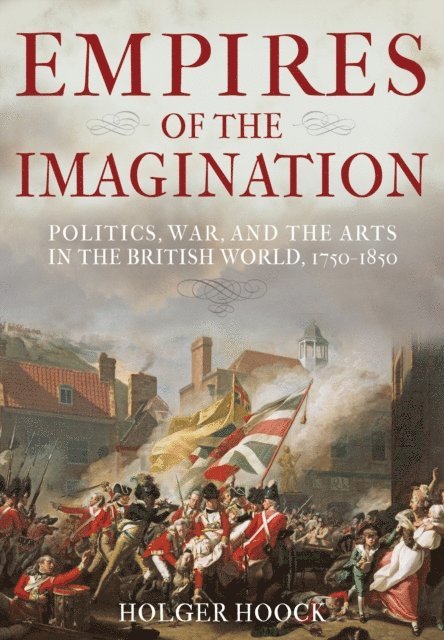
Between the mid-18th and mid-19th centuries, Britain evolved from a substantial international power yet relative artistic backwater into a global superpower and a leading cultural force in Europe. In this original and wide-ranging book, Hoock illuminates the manifold ways in which the culture of power and the power of culture were interwoven in this period of dramatic change. Britons invested artistic and imaginative effort to come to terms with the loss of the American colonies; to sustain the generation-long fight against Revolutionary and Napoleonic France; and to assert and legitimate their growing empire in India. Demonstrating how Britain fought international culture wars over prize antiquities from the Mediterranean and Near East, the book explores how Britons appropriated ancient cultures from the Mediterranean, the Near East, and India, and casts a fresh eye on iconic objects such as the Rosetta Stone and the Parthenon Marbles.