Hollin - Böcker
Visar alla böcker från författaren Hollin. Handla med fri frakt och snabb leverans.
3 produkter
3 produkter
727 kr
Skickas inom 7-10 vardagar
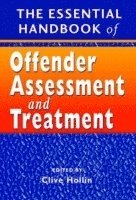
This "Essential Handbook" provides the critical elements from its companion volume, the successful Handbook of Offender Assessment and Treatment. A comprehensive review of assessment and treatment, it covers the major offender groups: sex offenders, violent offenders, offenders with mental and personality disorders, and property offenders. A range of treatment approaches are also included, incorporating behavioural, cognitive, skills-based, anger management, school programs, and family-based approaches. Whilst retaining its international, high quality appeal, The Essential Handbook of Offender Assessment and Treatment is a concise, portable edition for all clinicians, academics and researchers working with offenders across a range of settings.
Del 8 - Wiley Series in Clinical Approaches to Criminal Behavior
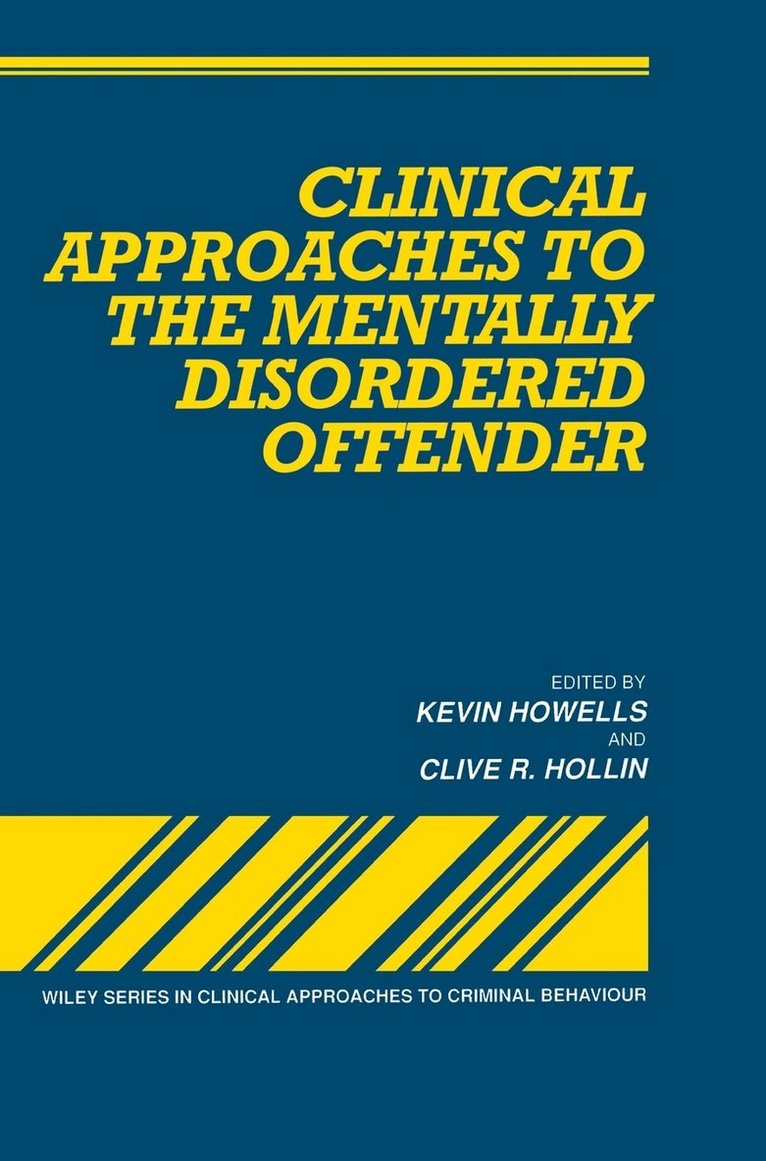
Clinical Approaches to the Mentally Disordered Offender
Inbunden, Engelska, 1993
3 470 kr
Skickas inom 7-10 vardagar
For psychologists and psychiatrists working with offenders, this book examines the problems of criminal behavior as linked with mental disorder, including psychopathy, mental illness and mental handicap. Clinical assessment and clinical intervention for these three main groups will be explored, looking at details of practice, the programs themselves and their success rates. The volume further deals with conceptual issues and legal classification.
Del 10 - Wiley Series in Clinical Approaches to Criminal Behavior
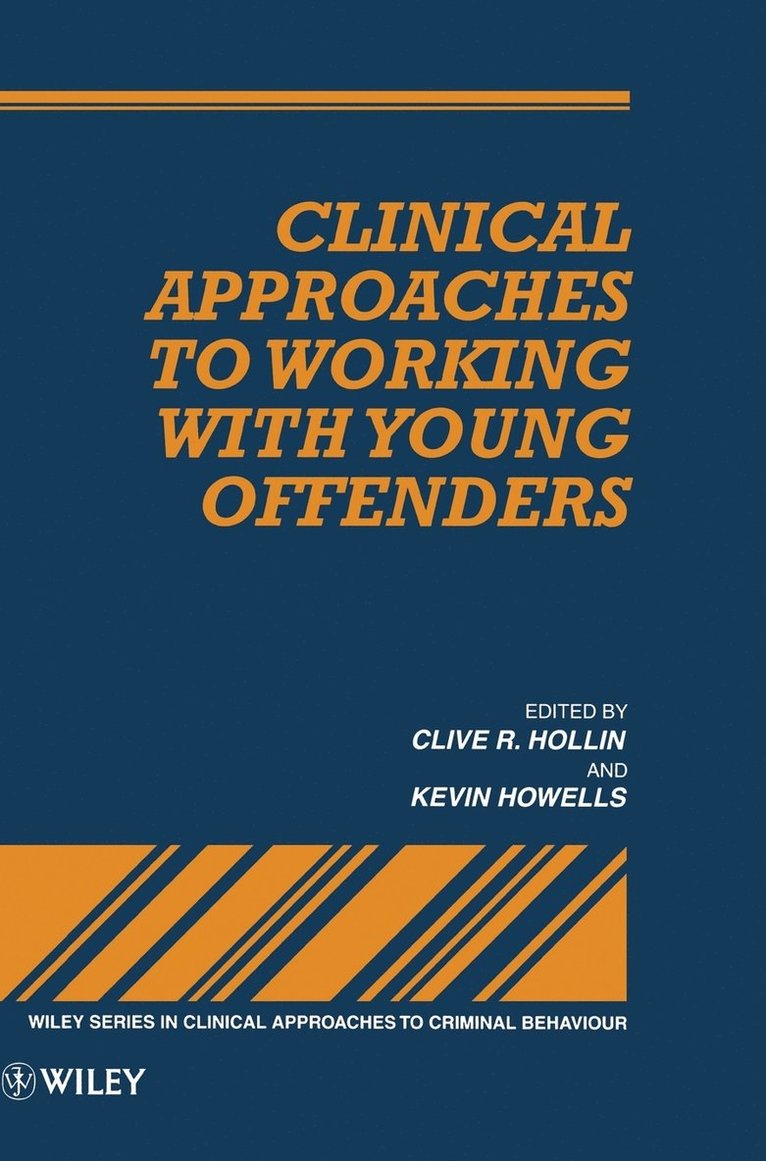
Clinical Approaches to Working with Young Offenders
Inbunden, Engelska, 1996
2 276 kr
Skickas inom 7-10 vardagar
Clinical psychologists, psychiatrists, social workers and nurses working with young offenders will welcome this collection of original chapters which represent the state of the art in this field. Although it is increasingly recognized that the treatment of offenders has an important role in the rehabilitation process, a clinical approach to working with offenders has to be grounded in sound theory, good supporting research evidence and solid experience. This volume continues the tradition of this important series by placing the discussion of best practice with offenders within both a rigorous scientific context and its institutional and social environment. The first part of the book examines the conceptual basis of a clinical approach to working with young offenders, together with research on the developmental aspects of delinquency, as well as the empirical evidence of work to reduce reoffending. The second section deals with the institutional context of treatment and interventions designed to divert young offenders away from the criminal justice system. The third and fourth parts, the core of the book, present reviews of important approaches to treating young offenders, alongside accounts of work with specific types of offence, including substance abuse and sex offences. Throughout the book the concern is to demonstrate the link between empirical evidence and research and the growth of good theory and practice. The overall message is that a clinical approach can pay real dividends in working constructively with even the most demanding of young people who commit serious crimes.