Hollywood 360 – författare
642 kr
Lyssna direkt efter köp
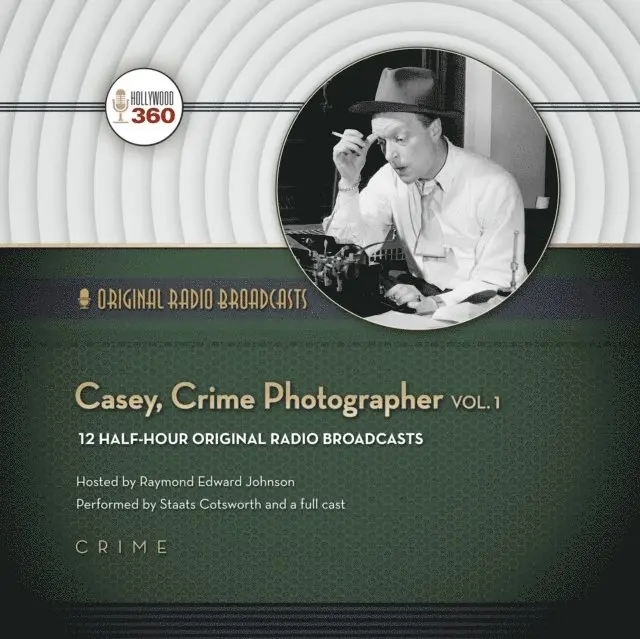
In the March 1934 issue of the legendary pulp magazine Black Mask, Jack "Flashgun" Casey, crime photographer, made his debut. His creator was former newspaper and advertising executive George Harmon Coxe Jr., who wrote more than sixty crime fiction novels in his lifetime. Casey''s keen eye for detail served him well on the job, helping him to solve the crimes he was assigned to photograph for the newspapers. These "Flashgun Casey" stories were an instant success with Black Mask readers and soon made the leap to both radio and the silver screen.
Voiced by Staats Cotsworth for more than a decade, Casey was aided in his amateur detecting by fellow reporter Ann Williams, who, like Casey, worked for the Morning Express. When not at work, they frequented the Blue Note Caf├®, a late night lounge where the bartender, Ethelbert, provided both a sounding board and levity for Casey and Ann as they awaited their next job. Casey, Crime Photographer aired on radio from 1943 until 1955 and made the transition to television in 1951.
Episodes include "The Grey Kitten," "The Twenty-Minute Alibi," "The Mysterious Lodger," "The Demon Miner," "Box of Death," "The Gentle Strangler," "The Laughing Killer," "Pickup," "Self-Made Hero," "Photo of the Dead," "Bright New Star," and "The Chivalrous Gunman."
241 kr
Lyssna direkt efter köp
In the March 1934 issue of the legendary pulp magazine Black Mask, Jack "Flashgun" Casey, crime photographer, made his debut. His creator was former newspaper and advertising executive George Harmon Coxe Jr., who wrote more than sixty crime fiction novels in his lifetime. Casey''s keen eye for detail served him well on the job, helping him to solve the crimes he was assigned to photograph for the newspapers. These "Flashgun Casey" stories were an instant success with Black Mask readers and soon made the leap to both radio and the silver screen.
Voiced by Staats Cotsworth for more than a decade, Casey was aided in his amateur detecting by fellow reporter Ann Williams, who, like Casey, worked for the Morning Express. When not at work, they frequented the Blue Note Caf├®, a late night lounge where the bartender, Ethelbert, provided both a sounding board and levity for Casey and Ann as they awaited their next job. Casey, Crime Photographer aired on radio from 1943 until 1955 and made the transition to television in 1951.
Episodes include "The Grey Kitten," "The Twenty-Minute Alibi," "The Mysterious Lodger," "The Demon Miner," "Box of Death," "The Gentle Strangler," "The Laughing Killer," "Pickup," "Self-Made Hero," "Photo of the Dead," "Bright New Star," and "The Chivalrous Gunman."
642 kr
Lyssna direkt efter köp
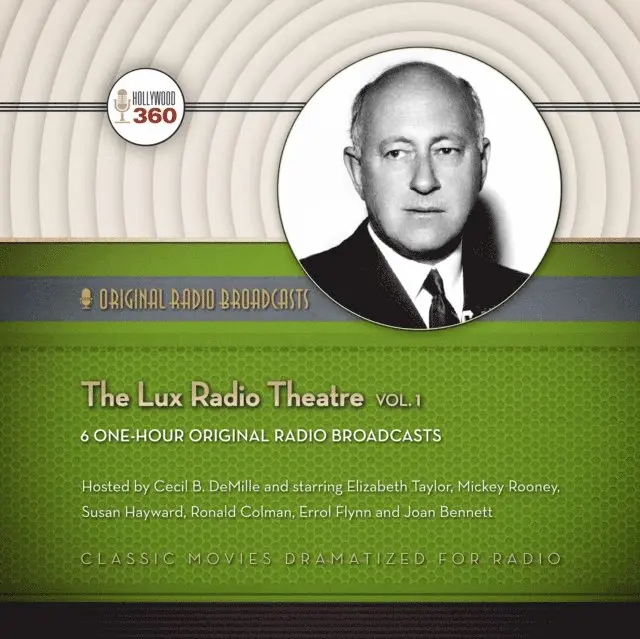
Hosted by Cecil B. DeMille and starring numerous icons of the screen, this collection of old-time radio classics includes six episodes of The Lux Radio Theatre—one of the longest running, most extravagant shows from radio''s golden age. The show featured the greatest stars in Hollywood appearing in hour-long radio adaptations of their biggest motion pictures, making this lavish production a veritable checklist of many of Hollywood''s best films from the mid-1930s through the mid-1950s. The stars of the movie usually appeared in their audio counterparts, though sometimes contracts or schedules got in the way. The productions were live, with a full orchestra, and many Hollywood legends were not used to performing in public without the benefit of retakes. Just some of the stars that appeared on The Lux Radio Theatre include Elizabeth Taylor, Ronald Colman, Errol Flynn, Robert Young, Mickey Rooney, Humphrey Bogart, Barbara Stanwyck, Cary Grant, Clark Gable, Frank Sinatra, John Wayne, James Stewart, and Loretta Young. Sponsored by Lever Brothers, the makers of Lux Soap, The Lux Radio Theatre came to radio in 1934 and lasted until 1955 for a total of 926 hour-long broadcasts. It transitioned to television in thirty-minute weekly installments in 1950, with James Mason as host.
Episodes include
"Kid Galahad," starring Edward G. Robinson, Joan Bennett, and Wayne Morris, with special guest Jack Dempsey"The Perfect Specimen," starring Errol Flynn and Joan Blondell"The Devil and Miss Jones," starring Frank "Wizard of Oz" Morgan and Linda Darnell"Only Yesterday," starring Ida Lupino and Robert Young"The Petrified Forest," starring Ronald Colman and Susan Hayward"National Velvet," starring Elizabeth Taylor, Mickey Rooney, and Donald Crisp243 kr
Lyssna direkt efter köp
Hosted by Cecil B. DeMille and starring numerous icons of the screen, this collection of old-time radio classics includes six episodes of The Lux Radio Theatre—one of the longest running, most extravagant shows from radio''s golden age. The show featured the greatest stars in Hollywood appearing in hour-long radio adaptations of their biggest motion pictures, making this lavish production a veritable checklist of many of Hollywood''s best films from the mid-1930s through the mid-1950s. The stars of the movie usually appeared in their audio counterparts, though sometimes contracts or schedules got in the way. The productions were live, with a full orchestra, and many Hollywood legends were not used to performing in public without the benefit of retakes. Just some of the stars that appeared on The Lux Radio Theatre include Elizabeth Taylor, Ronald Colman, Errol Flynn, Robert Young, Mickey Rooney, Humphrey Bogart, Barbara Stanwyck, Cary Grant, Clark Gable, Frank Sinatra, John Wayne, James Stewart, and Loretta Young. Sponsored by Lever Brothers, the makers of Lux Soap, The Lux Radio Theatre came to radio in 1934 and lasted until 1955 for a total of 926 hour-long broadcasts. It transitioned to television in thirty-minute weekly installments in 1950, with James Mason as host.
Episodes include
"Kid Galahad," starring Edward G. Robinson, Joan Bennett, and Wayne Morris, with special guest Jack Dempsey"The Perfect Specimen," starring Errol Flynn and Joan Blondell"The Devil and Miss Jones," starring Frank "Wizard of Oz" Morgan and Linda Darnell"Only Yesterday," starring Ida Lupino and Robert Young"The Petrified Forest," starring Ronald Colman and Susan Hayward"National Velvet," starring Elizabeth Taylor, Mickey Rooney, and Donald Crisp642 kr
Lyssna direkt efter köp
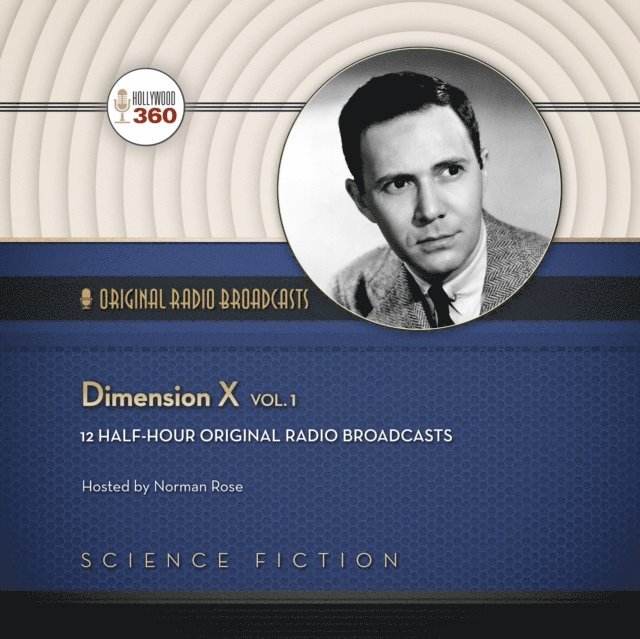
Dimension X was one of old-time radio''s first adult science fiction shows. Though it only ran for a short time, the show made its mark by adapting short stories written by some of the best known masters of the genre—Isaac Asimov, Ray Bradbury, Robert Heinlein, Kurt Vonnegut, and others. Writers Ernest Kinoy and George Lefferts adapted the stories, occasionally contributing original scripts of their own.
The show, promising "adventures in time and space, told in future tense," transported listeners from their everyday existence to new worlds and foreign landscapes, where alien encounters and rocket ship adventures were no more unusual than a stroll through a park.
Episodes include
"With Folded Hands" by Jack Williamson, starring Peter Capell and Philip Bourneuf "The Report on the Barnhouse Effect" by Kurt Vonnegut, starring Santos Ortega and Bob Hastings "No Contact" by George Lefferts and Ernest Kinoy, starring Wendell Holmes and Lawson Zerbe "Knock" by Fredric Brown, starring Arnold Moss and Luis van Rooten "Almost Human" by Robert Bloch, starring Santos Ortega and Rita Lynn "The Embassy" by Donald Wollheim, starring Joseph Julian and Berry Kroeger "The Green Hills of Earth" by Robert Heinlein, starring Ken Williams and Nelson Olmsted "Beyond Infinity" by Villiers Gerson, starring Les Damon and Lotte Stavisky "Hello Tomorrow" by George Lefferts, starring Nancy Olson and Santos Ortega "Time and Time Again" by H. Beam Piper, starring Peter Capell and Joe De Santis "Universe" by Robert Heinlein, starring Mason Adams and Peter Capell "Nightfall" by Isaac Asimov, starring John McGovern and Staats Cotsworth
241 kr
Lyssna direkt efter köp
Dimension X was one of old-time radio''s first adult science fiction shows. Though it only ran for a short time, the show made its mark by adapting short stories written by some of the best known masters of the genre—Isaac Asimov, Ray Bradbury, Robert Heinlein, Kurt Vonnegut, and others. Writers Ernest Kinoy and George Lefferts adapted the stories, occasionally contributing original scripts of their own.
The show, promising "adventures in time and space, told in future tense," transported listeners from their everyday existence to new worlds and foreign landscapes, where alien encounters and rocket ship adventures were no more unusual than a stroll through a park.
Episodes include
"With Folded Hands" by Jack Williamson, starring Peter Capell and Philip Bourneuf "The Report on the Barnhouse Effect" by Kurt Vonnegut, starring Santos Ortega and Bob Hastings "No Contact" by George Lefferts and Ernest Kinoy, starring Wendell Holmes and Lawson Zerbe "Knock" by Fredric Brown, starring Arnold Moss and Luis van Rooten "Almost Human" by Robert Bloch, starring Santos Ortega and Rita Lynn "The Embassy" by Donald Wollheim, starring Joseph Julian and Berry Kroeger "The Green Hills of Earth" by Robert Heinlein, starring Ken Williams and Nelson Olmsted "Beyond Infinity" by Villiers Gerson, starring Les Damon and Lotte Stavisky "Hello Tomorrow" by George Lefferts, starring Nancy Olson and Santos Ortega "Time and Time Again" by H. Beam Piper, starring Peter Capell and Joe De Santis "Universe" by Robert Heinlein, starring Mason Adams and Peter Capell "Nightfall" by Isaac Asimov, starring John McGovern and Staats Cotsworth
642 kr
Lyssna direkt efter köp
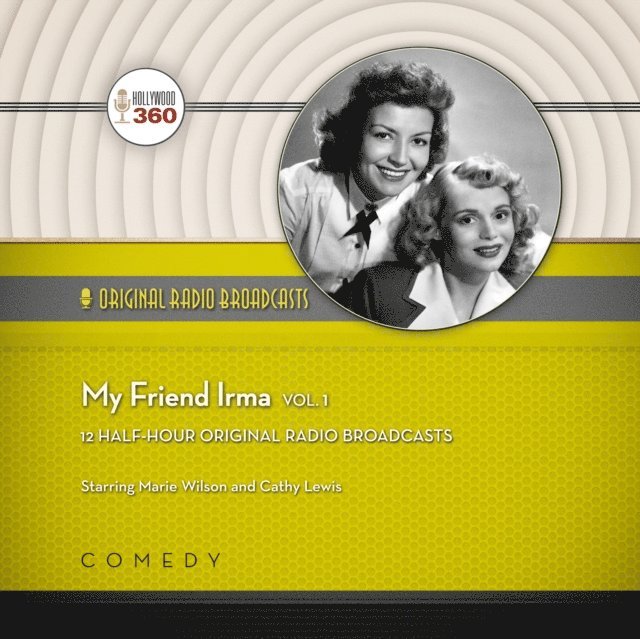
Some might remember My Friend Irma as the movie that served as the launching pad for Dean Martin and Jerry Lewis. Others recall a television show of the same name. But My Friend Irma actually originated as a radio sitcom that aired on CBS from 1947 to 1954. The show chronicled the daily high jinks of an extremely dim-witted blonde stenographer named Irma Peterson and her screwball friends. One of Irma''s best friends was her logical and very dependable roommate, and narrator of the show, Jane Stacy. Irma dated Al, a deadbeat, barely on the right side of the law, who hadn''t held a job in years. Jane dated her millionaire boss, Richard Rhinelander, and dreamed of one day marrying him. Created by Cy Howard, My Friend Irma was a top-rated radio comedy that escalated to film, television, and even a comic strip.
Episodes include:
"The Reward" "The Eyes Have It" "Dancing Fools" "Double Surprise" "The Professor''s Concerto" "It''s All Relative" "Fortune Raised" "Double Troubles" "Buy or Sell" "Election Connection" "Dinner Date" "Manhattan Magazine"
241 kr
Lyssna direkt efter köp
Some might remember My Friend Irma as the movie that served as the launching pad for Dean Martin and Jerry Lewis. Others recall a television show of the same name. But My Friend Irma actually originated as a radio sitcom that aired on CBS from 1947 to 1954. The show chronicled the daily high jinks of an extremely dim-witted blonde stenographer named Irma Peterson and her screwball friends. One of Irma''s best friends was her logical and very dependable roommate, and narrator of the show, Jane Stacy. Irma dated Al, a deadbeat, barely on the right side of the law, who hadn''t held a job in years. Jane dated her millionaire boss, Richard Rhinelander, and dreamed of one day marrying him. Created by Cy Howard, My Friend Irma was a top-rated radio comedy that escalated to film, television, and even a comic strip.
Episodes include:
"The Reward" "The Eyes Have It" "Dancing Fools" "Double Surprise" "The Professor''s Concerto" "It''s All Relative" "Fortune Raised" "Double Troubles" "Buy or Sell" "Election Connection" "Dinner Date" "Manhattan Magazine"
648 kr
Lyssna direkt efter köp
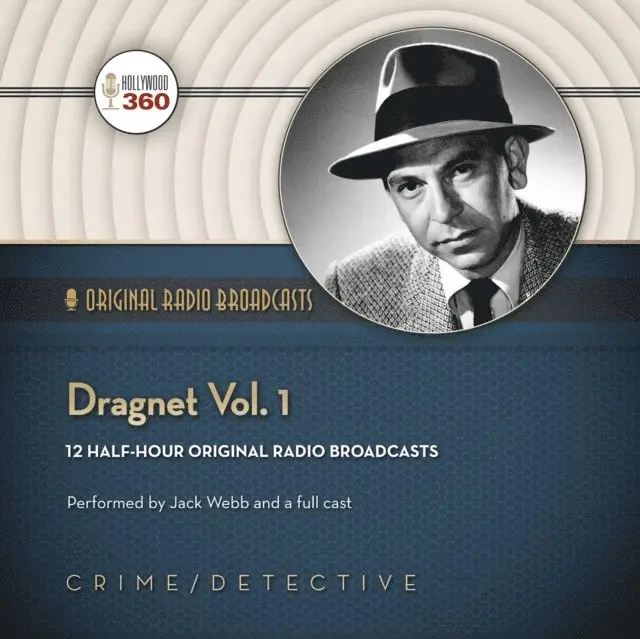
Set in Los Angeles, and starring Jack Webb as the stoic Sergeant Joe Friday, Dragnet is perhaps the most famous and influential police procedural drama of all time, having made extensive runs on both radio and television. Webb, also the producer of the show, took the series to new highs, insisting on realism in every facet of the program. The dialogue was clipped and sparse, taking its cue from hard-boiled crime fiction +á la Raymond Chandler and Dashiell Hammett. The stories were fast-paced but thorough, making sure to chronicle every step of the police work from start to finish. As a result, Dragnet draws listeners deeply in to its world of gritty crime and dedicated cops, guaranteeing an exhilarating audio experience.
Episodes include
"Who Killed Helen Corday?" "The City Hall Bombing" "A Mad Killer at Large" "Sixteen Days of Jewel Thefts" "The Blitz Bandits" "The Mother-in-Law Murder" "The Spring Street Gang" "The Jade Thumb Rings" "The Big Gangster, Part 1" "The Big Gangster, Part 2" "The Big Smut Press""The Big Payoff"
241 kr
Lyssna direkt efter köp
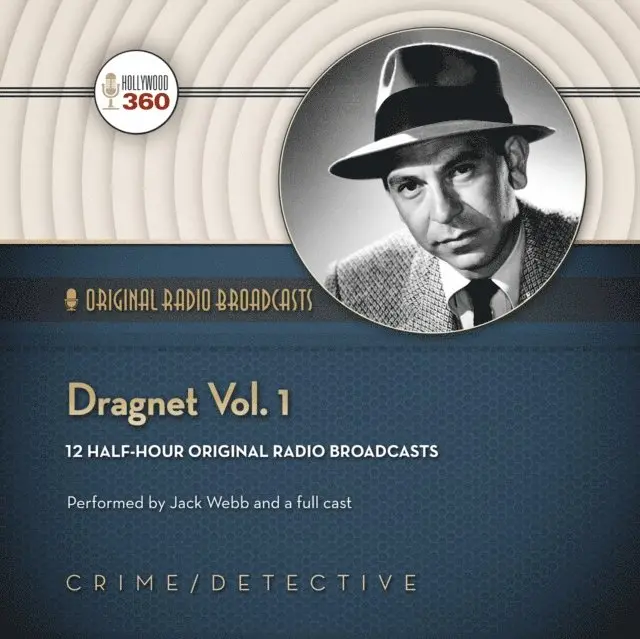
Set in Los Angeles, and starring Jack Webb as the stoic Sergeant Joe Friday, Dragnet is perhaps the most famous and influential police procedural drama of all time, having made extensive runs on both radio and television. Webb, also the producer of the show, took the series to new highs, insisting on realism in every facet of the program. The dialogue was clipped and sparse, taking its cue from hard-boiled crime fiction +á la Raymond Chandler and Dashiell Hammett. The stories were fast-paced but thorough, making sure to chronicle every step of the police work from start to finish. As a result, Dragnet draws listeners deeply in to its world of gritty crime and dedicated cops, guaranteeing an exhilarating audio experience.
Episodes include
"Who Killed Helen Corday?" "The City Hall Bombing" "A Mad Killer at Large" "Sixteen Days of Jewel Thefts" "The Blitz Bandits" "The Mother-in-Law Murder" "The Spring Street Gang" "The Jade Thumb Rings" "The Big Gangster, Part 1" "The Big Gangster, Part 2" "The Big Smut Press""The Big Payoff"
642 kr
Lyssna direkt efter köp
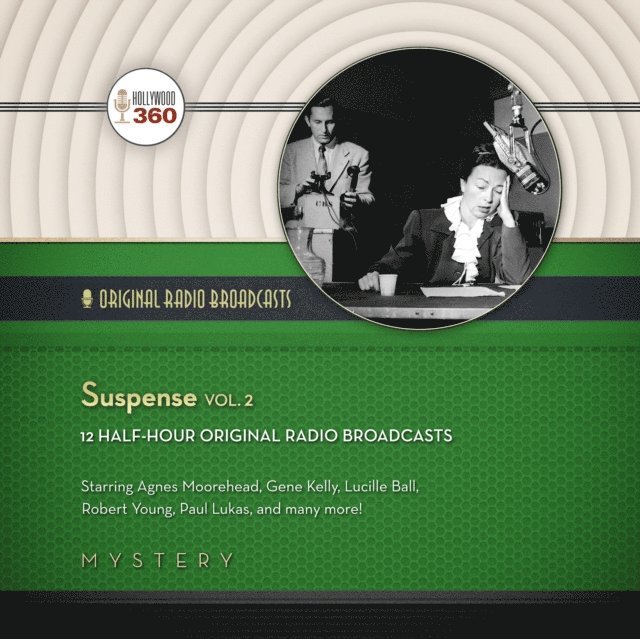
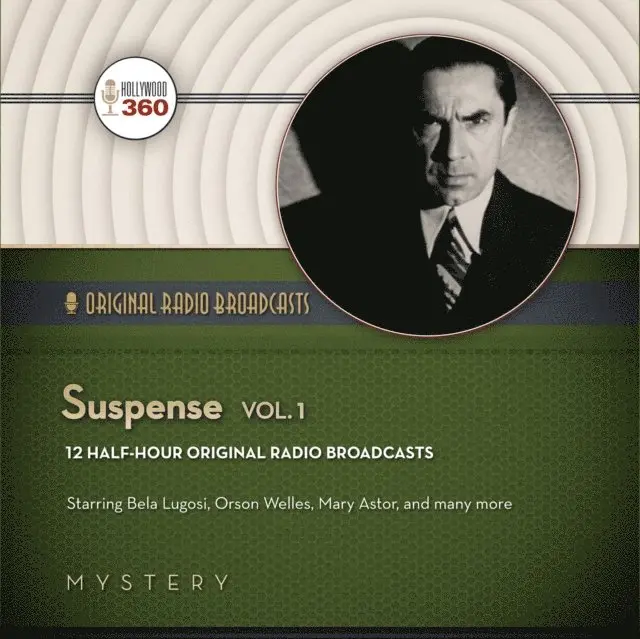
Conceived as a potential radio vehicle for Alfred Hitchcock to direct, Suspense was a radio series of epic proportion. It aired on CBS from 1942 to 1962 and is considered by many to be the best mystery drama series of the golden age. Often referred to as "Radio''s Outstanding Theater of Thrills," it focused on suspenseful thrillers starring the biggest names in Hollywood. Early in the run, the episodes were hosted by the "Man in Black" who, from an omniscient perch, narrated stories of people thrown into dangerous or bizarre situations with plots that usually had an unseen twist or two at the very end. Hollywood''s finest actors jumped at the chance to appear on Suspense, including Cary Grant, Jimmy Stewart, Alan Ladd, Henry Fonda, Humphrey Bogart, Bette Davis, and Orson Welles. Scripts were written by John Dickson Carr, Lucille Fletcher, James Poe, Ray Bradbury, and many others. Running more than twenty years, Suspense aired nearly one thousand radio broadcasts. It made the transition to television in 1949, but it was on radio that Suspense enjoyed its glory days.
Included are the following episodes:
"The Man without a Body," starring George Zucco"A Friend to Alexander," starring Robert Young"The King''s Birthday," starring Dolores Costello"Marry for Murder," starring Lillian Gish"Statement of Employee Henry Wilson," starring Gene Lockhart"Thieves Fall Out," starring Gene Kelly"Dime a Dance," starring Lucille Ball"A World of Darkness," starring Paul Lukas"Sorry, Wrong Number," starring Agnes Moorehead"Portrait without a Face," starring George Coulouris"The Visitor," starring Eddie Bracken"The Ten Grand," starring Lucille Ball243 kr
Lyssna direkt efter köp
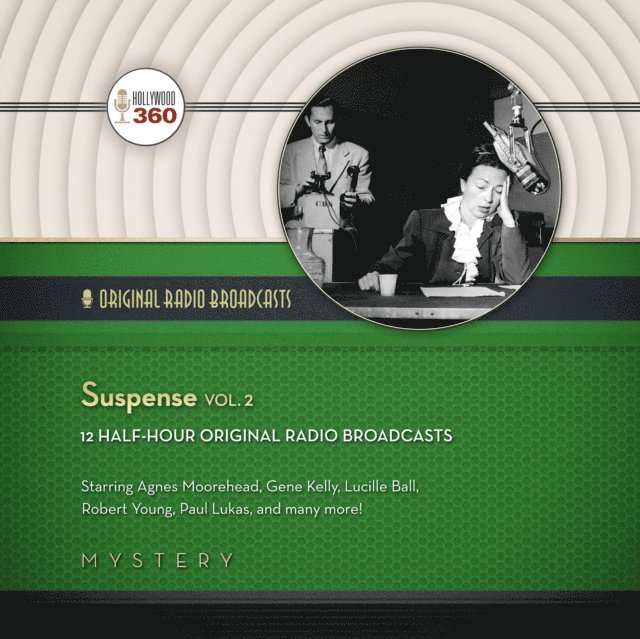
Conceived as a potential radio vehicle for Alfred Hitchcock to direct, Suspense was a radio series of epic proportion. It aired on CBS from 1942 to 1962 and is considered by many to be the best mystery drama series of the golden age. Often referred to as "Radio''s Outstanding Theater of Thrills," it focused on suspenseful thrillers starring the biggest names in Hollywood. Early in the run, the episodes were hosted by the "Man in Black" who, from an omniscient perch, narrated stories of people thrown into dangerous or bizarre situations with plots that usually had an unseen twist or two at the very end. Hollywood''s finest actors jumped at the chance to appear on Suspense, including Cary Grant, Jimmy Stewart, Alan Ladd, Henry Fonda, Humphrey Bogart, Bette Davis, and Orson Welles. Scripts were written by John Dickson Carr, Lucille Fletcher, James Poe, Ray Bradbury, and many others. Running more than twenty years, Suspense aired nearly one thousand radio broadcasts. It made the transition to television in 1949, but it was on radio that Suspense enjoyed its glory days.
Included are the following episodes:
"The Man without a Body," starring George Zucco"A Friend to Alexander," starring Robert Young"The King''s Birthday," starring Dolores Costello"Marry for Murder," starring Lillian Gish"Statement of Employee Henry Wilson," starring Gene Lockhart"Thieves Fall Out," starring Gene Kelly"Dime a Dance," starring Lucille Ball"A World of Darkness," starring Paul Lukas"Sorry, Wrong Number," starring Agnes Moorehead"Portrait without a Face," starring George Coulouris"The Visitor," starring Eddie Bracken"The Ten Grand," starring Lucille Ball642 kr
Lyssna direkt efter köp
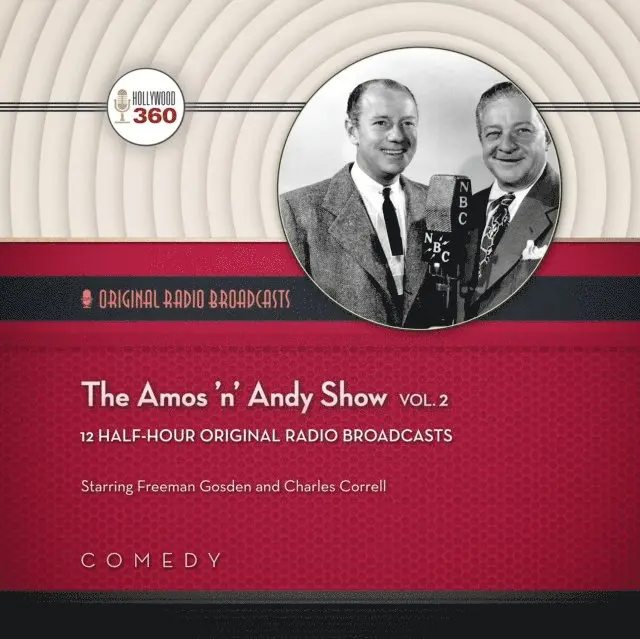
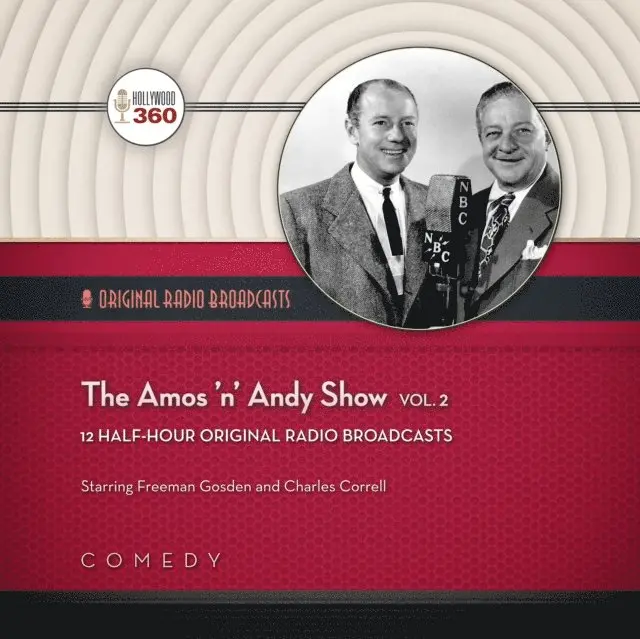
Freeman Gosden and Charles Correll made their radio debut January 12, 1926, as the comedic, blackface characters Sam ''n'' Henry. On March 19, 1928, they introduced Amos ''n'' Andy, which went on to become one of the most popular and longest-running programs in radio history. During the height of the show''s popularity, almost the entire country listened to the fifteen-minute adventures of Amos and Andy that aired Monday through Friday. Department stores open in the evening piped in the broadcasts so shoppers wouldn''t miss an episode; movie theaters scheduled their features to end just prior to the start of Amos ''n'' Andy so they, too, could pipe it in.
The characters were members of the Mystic Knights of the Sea Lodge, of which George Stevens was the "Kingfish." Amos and Andy ran the Fresh-Air Taxi Company, with the more stable, married Amos doing most of the work while Andy chased girls. In 1943, after 4,091 quarter-hour episodes, it switched to a half-hour weekly comedy. While the five-a-week show often had a quiet, easygoing feeling, the new version was a brassy Hollywood-style production, complete with a studio audience, a full cast of supporting actors, and a full orchestra. Many of the half-hour programs were written by Joe Connelly and Bob Mosher, later the writing team for Leave It to Beaver and The Munsters. In the new version, Amos became a minor character to the more dominant Andy and Kingfish duo. The new Amos ''n'' Andy show lasted for the next twelve years as one of radio''s most popular weekly programs.
Episodes include:
"Violets""Culture""Diamond Ring""Sunday, Monday or Always""Madam Queen, Part 1""Madam Queen, Part 2""Insurance, Part 1""Insurance, Part 2""Amnesia""Get Acquainted""Chauffeur""Secretary"241 kr
Lyssna direkt efter köp
Freeman Gosden and Charles Correll made their radio debut January 12, 1926, as the comedic, blackface characters Sam ''n'' Henry. On March 19, 1928, they introduced Amos ''n'' Andy, which went on to become one of the most popular and longest-running programs in radio history. During the height of the show''s popularity, almost the entire country listened to the fifteen-minute adventures of Amos and Andy that aired Monday through Friday. Department stores open in the evening piped in the broadcasts so shoppers wouldn''t miss an episode; movie theaters scheduled their features to end just prior to the start of Amos ''n'' Andy so they, too, could pipe it in.
The characters were members of the Mystic Knights of the Sea Lodge, of which George Stevens was the "Kingfish." Amos and Andy ran the Fresh-Air Taxi Company, with the more stable, married Amos doing most of the work while Andy chased girls. In 1943, after 4,091 quarter-hour episodes, it switched to a half-hour weekly comedy. While the five-a-week show often had a quiet, easygoing feeling, the new version was a brassy Hollywood-style production, complete with a studio audience, a full cast of supporting actors, and a full orchestra. Many of the half-hour programs were written by Joe Connelly and Bob Mosher, later the writing team for Leave It to Beaver and The Munsters. In the new version, Amos became a minor character to the more dominant Andy and Kingfish duo. The new Amos ''n'' Andy show lasted for the next twelve years as one of radio''s most popular weekly programs.
Episodes include:
"Violets""Culture""Diamond Ring""Sunday, Monday or Always""Madam Queen, Part 1""Madam Queen, Part 2""Insurance, Part 1""Insurance, Part 2""Amnesia""Get Acquainted""Chauffeur""Secretary"642 kr
Lyssna direkt efter köp
"Texas, more than 260,000 square miles! And fifty men who make up the oldest and most famous law enforcement body in North America!"
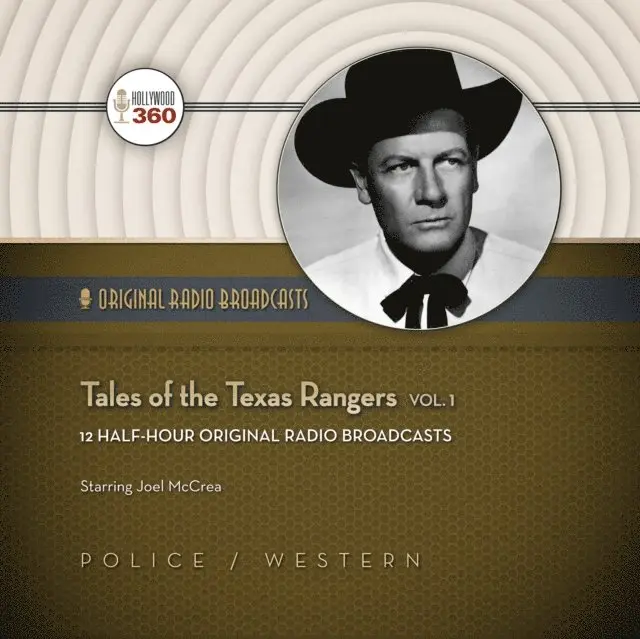
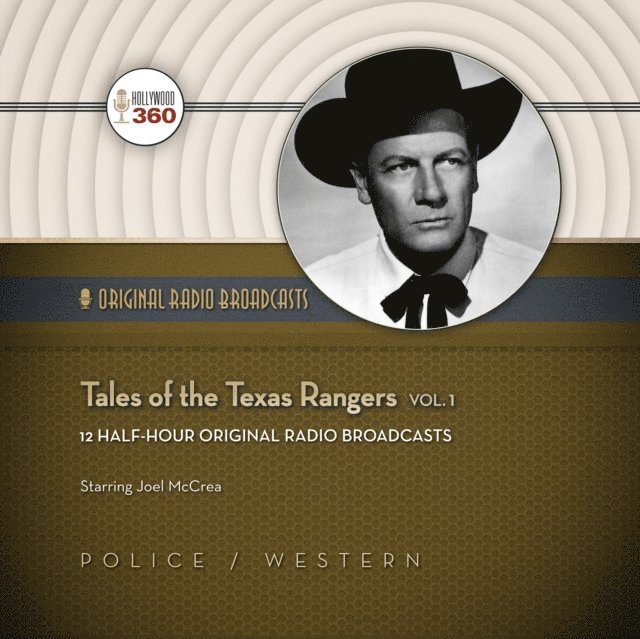
Like its predecessor, Dragnet, Tales of the Texas Rangers adapted actual police cases for its broadcasts. Leading each week''s investigation was Texas Ranger Jayce Pearson, portrayed by movie star Joel McCrea. Because the stories were set in the present, Pearson used the latest scientific techniques to identify criminals. Unlike Joe Friday, Pearson didn''t have a regular partner, typically working with the local sheriff instead. Working environments would range from big cities to isolated wilderness areas that could only be reached on horseback. Produced and directed by Stacy Keach Sr., Tales of the Texas Rangers ran from 1950 to 1952 and featured radio''s top supporting actors. Its popularity spawned a 1955 Saturday morning television series starring Willard Parker and Harry Lauter broadcast on CBS until 1958.
Included are the following episodes:
"Apache Peak""The Trigger Men""Play for Keeps""Dead or Alive""The Hatchet""Sweet Revenge""Death Plant""Pick-Up""Last Stop""Cover-Up""Three Victims""Misplaced Person"241 kr
Lyssna direkt efter köp
"Texas, more than 260,000 square miles! And fifty men who make up the oldest and most famous law enforcement body in North America!"
Like its predecessor, Dragnet, Tales of the Texas Rangers adapted actual police cases for its broadcasts. Leading each week''s investigation was Texas Ranger Jayce Pearson, portrayed by movie star Joel McCrea. Because the stories were set in the present, Pearson used the latest scientific techniques to identify criminals. Unlike Joe Friday, Pearson didn''t have a regular partner, typically working with the local sheriff instead. Working environments would range from big cities to isolated wilderness areas that could only be reached on horseback. Produced and directed by Stacy Keach Sr., Tales of the Texas Rangers ran from 1950 to 1952 and featured radio''s top supporting actors. Its popularity spawned a 1955 Saturday morning television series starring Willard Parker and Harry Lauter broadcast on CBS until 1958.
Included are the following episodes:
"Apache Peak""The Trigger Men""Play for Keeps""Dead or Alive""The Hatchet""Sweet Revenge""Death Plant""Pick-Up""Last Stop""Cover-Up""Three Victims""Misplaced Person"642 kr
Lyssna direkt efter köp
"Around Dodge City and in the territory out West, there''s just one way to handle the killers and the spoilers, and that''s with a US marshal and the smell of … Gunsmoke!"
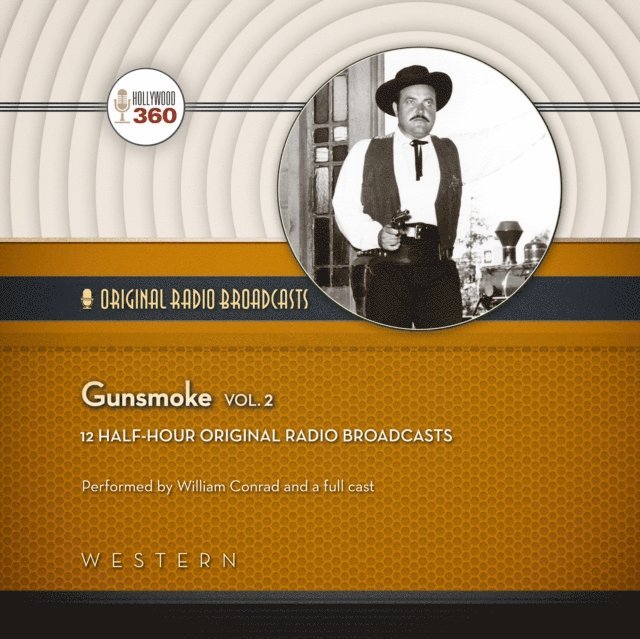
Radio Westerns were strictly for kids until 1952, when Gunsmoke hit the radio airwaves. The stories were grim, the deaths brutal, and life on the plains was harsh. Radio audiences had never heard anything like Gunsmoke, and they made it the number one Western on the radio. It soon made a successful transition to television, becoming the longest-running dramatic series in television history. Join William Conrad (Marshal Matt Dillon), Parley Baer (Deputy Chester Proudfoot), Georgia Ellis (Kitty Russell), and Howard McNear (Doc Adams) in the continuing "story of the violence that moved west with young America and the story of a man who moved with it," Matt Dillon, United States marshal.
Episodes include:
"Cain""The Round-Up""Meshougah""Trojan War""Absalom""Cyclone""Pussy Cats""Quarter-Horse""Jayhawkers""Gonif""Bum''s Rush""Tacetta"243 kr
Lyssna direkt efter köp
"Around Dodge City and in the territory out West, there''s just one way to handle the killers and the spoilers, and that''s with a US marshal and the smell of … Gunsmoke!"
Radio Westerns were strictly for kids until 1952, when Gunsmoke hit the radio airwaves. The stories were grim, the deaths brutal, and life on the plains was harsh. Radio audiences had never heard anything like Gunsmoke, and they made it the number one Western on the radio. It soon made a successful transition to television, becoming the longest-running dramatic series in television history. Join William Conrad (Marshal Matt Dillon), Parley Baer (Deputy Chester Proudfoot), Georgia Ellis (Kitty Russell), and Howard McNear (Doc Adams) in the continuing "story of the violence that moved west with young America and the story of a man who moved with it," Matt Dillon, United States marshal.
Episodes include:
"Cain""The Round-Up""Meshougah""Trojan War""Absalom""Cyclone""Pussy Cats""Quarter-Horse""Jayhawkers""Gonif""Bum''s Rush""Tacetta"642 kr
Lyssna direkt efter köp
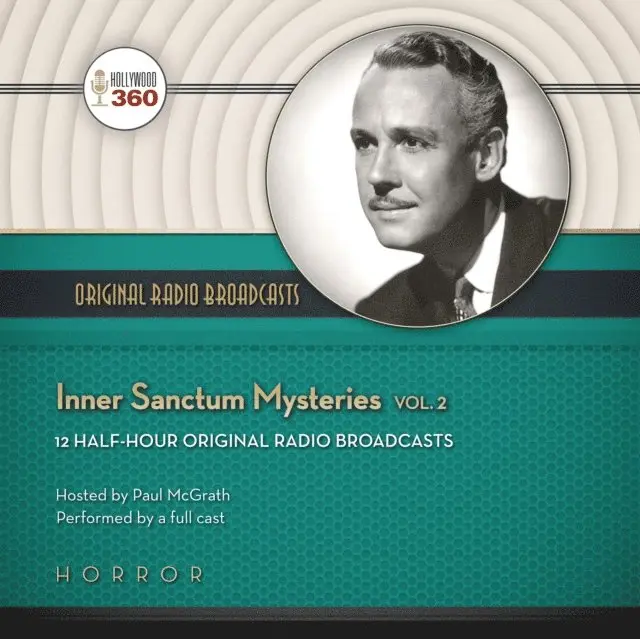
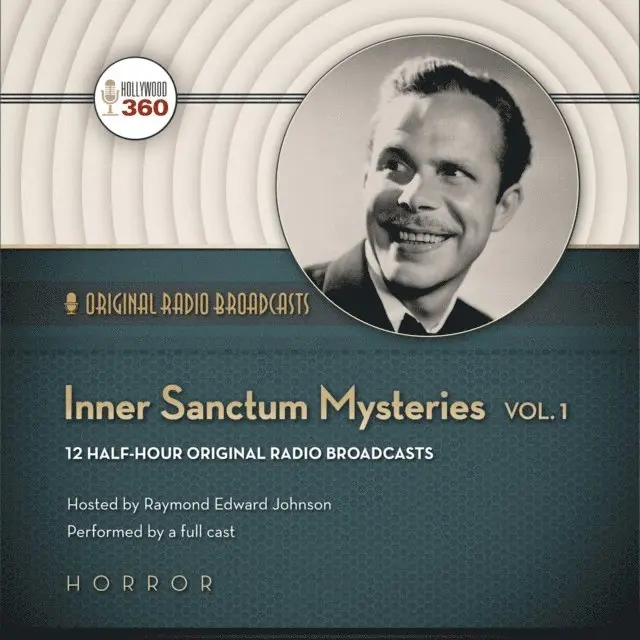
Taking its name from a popular series of mystery novels, Inner Sanctum Mysteries debuted over NBC''s Blue Network in January 1941. It featured one of the most memorable and atmospheric openings in radio history: an organist hit a dissonant chord, a doorknob turned, and the famous "creaking door" slowly began to open. Every week, Inner Sanctum Mysteries told stories of ghosts, murderers, and lunatics. Produced in New York, the cast usually consisted of veteran radio actors, with occasional guest appearances by such Hollywood stars Boris Karloff, Peter Lorre, and Claude Rains. What made Inner Sanctum Mysteries unique among radio horror shows was its host, a slightly sinister sounding fellow originally known as "Raymond." The host had a droll sense of humor and an appetite for ghoulish puns, and his influence can be seen among horror hosts everywhere, from the Crypt-Keeper to Elvira. Raymond Edward Johnson was the show''s host until 1945; Paul McGrath took over as host until the show left the air in 1952. Producer Hiram Brown would utilize the creaking door again in the 1970s, when he produced and directed The CBS Radio Mystery Theater.
Episodes include
"Blood of Cain""Skeleton Bay""The Man Who Couldn''t Die""I Walk in the Night""Death Is a Double-Crosser""Strands of Death""Lady with a Plan""Make Ready My Grave""You Could Die Laughing""Detour to Terror""Eight Steps to Murder""I Want to Report a Murder"241 kr
Lyssna direkt efter köp
Taking its name from a popular series of mystery novels, Inner Sanctum Mysteries debuted over NBC''s Blue Network in January 1941. It featured one of the most memorable and atmospheric openings in radio history: an organist hit a dissonant chord, a doorknob turned, and the famous "creaking door" slowly began to open. Every week, Inner Sanctum Mysteries told stories of ghosts, murderers, and lunatics. Produced in New York, the cast usually consisted of veteran radio actors, with occasional guest appearances by such Hollywood stars Boris Karloff, Peter Lorre, and Claude Rains. What made Inner Sanctum Mysteries unique among radio horror shows was its host, a slightly sinister sounding fellow originally known as "Raymond." The host had a droll sense of humor and an appetite for ghoulish puns, and his influence can be seen among horror hosts everywhere, from the Crypt-Keeper to Elvira. Raymond Edward Johnson was the show''s host until 1945; Paul McGrath took over as host until the show left the air in 1952. Producer Hiram Brown would utilize the creaking door again in the 1970s, when he produced and directed The CBS Radio Mystery Theater.
Episodes include
"Blood of Cain""Skeleton Bay""The Man Who Couldn''t Die""I Walk in the Night""Death Is a Double-Crosser""Strands of Death""Lady with a Plan""Make Ready My Grave""You Could Die Laughing""Detour to Terror""Eight Steps to Murder""I Want to Report a Murder"234 kr
Lyssna direkt efter köp
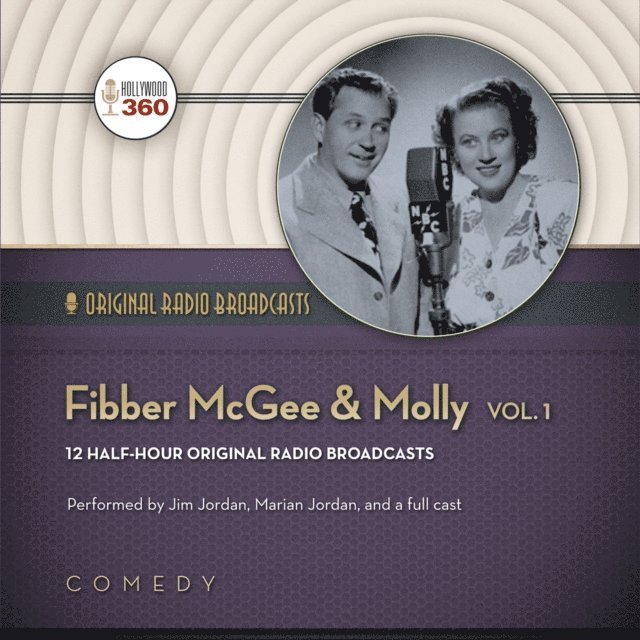
A hilarious collection of episodes from the beloved radio show Fibber McGee & Molly
Excitable and loose-lipped Fibber means well enough, but it''s not always easy for even-tempered Molly to keep him in check and out of trouble. Of course, the long suffering Mrs. McGee''s penchant for patience makes it all the funnier when she''s finally pushed to the point of exasperation. What both McGees have in common is that they''re fabulously friendly, opening their door at seventy-nine Wistful Vista to welcome all sorts of interesting guests, including Mayor LaTrivia, Doc Gamble, and neighborly nemesis Throckmorton P. Gildersleeve.
Jim and Marian Jordan star in this radio comedy classic, in which warm-heartedness usually wins out over hot-headedness. A safe bet for laughs—as long as you don''t go too close to the closet.
Episodes include: "McGee''s Fish Fry," "Fifteenth Wedding Anniversary," "Fibber''s Gossip Column," "Fibber Is Too Sick for Housework," "Killer Canova''s Autograph," "The Rummage Sale," "Raking Leaves," "Halloween Party at Gildersleeve''s House," "The Wistful Vista Auto Show," "Hiawatha," "Traffic Ticket," and "The Overdue Library Book."
241 kr
Lyssna direkt efter köp
Taking its name from a popular series of mystery novels, Inner Sanctum Mysteries debuted over NBC''s Blue Network in January 1941. It featured one of the most memorable and atmospheric openings in radio history: an organist hit a dissonant chord, a doorknob turned, and the famous "creaking door" slowly began to open. Every week, Inner Sanctum Mysteries told stories of ghosts, murderers, and lunatics. Produced in New York, the cast usually consisted of veteran radio actors, with occasional guest appearances by such Hollywood stars Boris Karloff, Peter Lorre, and Claude Rains. What made Inner Sanctum Mysteries unique among radio horror shows was its host, a slightly sinister sounding fellow originally known as "Raymond." The host had a droll sense of humor and an appetite for ghoulish puns, and his influence can be seen among horror hosts everywhere, from the Crypt-Keeper to Elvira. Raymond Edward Johnson was the show''s host until 1945; Paul McGrath took over as host until the show left the air in 1952. Producer Hiram Brown would utilize the creaking door again in the 1970s, when he produced and directed The CBS Radio Mystery Theater.
Episodes include:
The Voice on the Wire, starring Lesley Woods
Trapped on an island, a voice on the telephone warns a woman that she has only four hours to live. Originally aired November 29, 1944.
Desert Death, starring Horace Braham
Two men driving across the desert pick up three hitchhikers who turn out to be escaped Nazi prisoners. Originally aired January 9, 1945.
Death Is an Artist, starring Lee Bowman
Four dead cats and a man are found in an apartment—all with their throats slit or their heads cut off. Originally aired January 23, 1945
Death in the Depths, starring Santos Ortega
A deep-sea diver meets some old friends down in a shipwreck. Originally aired February 6, 1945.
No Coffin for the Dead, starring Les Tremayne
Who killed Peter Frame? The killer may be an insane person who is unable to walk. Originally aired February 20, 1945.
The Bog Oak Necklace, starring Miriam Hopkins
The discovery of a necklace around a skeleton is the key to a forty-year-old murder. Originally aired April 10, 1945.
The Black Art, starring Simone Simone
A murderer about to be hanged is rescued by a woman with strange powers. Originally aired May 15, 1945.
Dead to Rights, starring Elspeth Eric
An inept couple murders for profit and then flees when the net closes in on them. Originally aired May 22, 1945.
Death across the Board, starring Raymond Massey
A murdering madman is battling the police as a chess game—with dead bodies galore! Originally aired June 5, 1945.
Portrait of Death, starring Lesley Woods
A cursed painting invariably kills its owner. Originally aired June 12, 1945.
Dead Man''s Deal, starring Larry Haines
A poker game has murder as the stakes. Originally aired August 28, 1945.
The Murder Prophet, starring Wendy Barrie
Who killed Claudia''s first husband … and her second … and the man who loved her? Originally aired September 4, 1945.

642 kr
Lyssna direkt efter köp
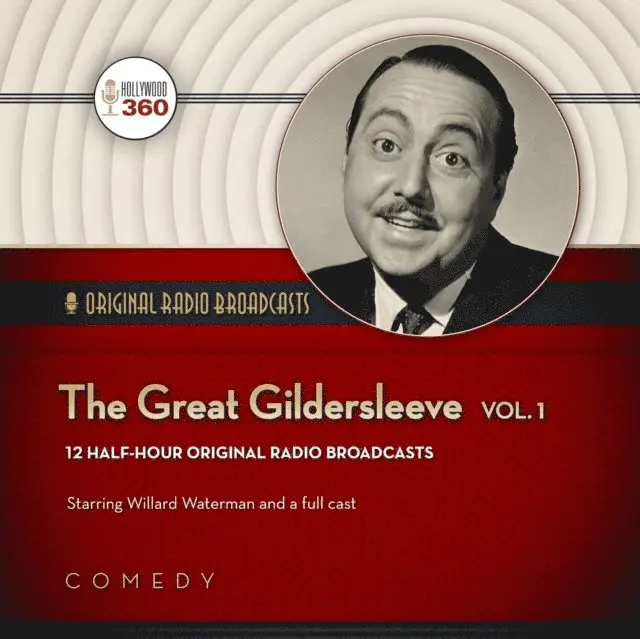
A hilarious collection of episodes from the beloved radio show The Great Gildersleeve
Throckmorton P. Gildersleeve was a popular character, appearing each week on the Fibber McGee & Molly radio show. On August 31, 1941, Gildersleeve landed his own situation comedy show, The Great Gildersleeve, which was radio''s first spin-off. Gildersleeve moved from the town of Wistful Vista to Summerfield, where he oversaw his late brother-in-law''s estate and took on the rearing of his orphaned niece and nephew, Marjorie (originally played by Lurene Tuttle and followed by Louise Erickson and Mary Lee Robb) and Leroy Forrester (Walter Tetley). The household also included a cook named Birdie.
The Great Gildersleeve was the first show to be centered on a single parent balancing raising children, work, and a social life, accomplished with taste and genuine wit, often at the expense of Gildersleeve''s slightly understated pomposity. Radio veteran Hal Peary originated the role of Gildersleeve but left the series at the height of its popularity in 1950, giving way to well-known character actor Willard Waterman. Waterman continued in the radio role until 1957 and also played Gildersleeve in a television version syndicated in 1955.
Episodes include:
In "Leroy''s Old Car," it''s finally time to teach Leroy how to drive. In "Friendly to Bullard," it''s time for the county fair. Gildersleeve goes to war with Mr. Bullard once again.In "Meets Paula Winthrop," it''s school time, and Gildy seems to be falling in love with Mr. Bullard''s sister. In "Marjorie as Secretary," Marjorie gets a job in the water commissioner''s office after taking care of the twins becomes too much for her. In "Jolly Boys Speak Candidly," Gildersleeve''s re-election as president of the Jolly Boys is delayed by a session of self-criticism.In "Leroy Stays with Judge Hooker," Leroy spends a few days at Judge Hooker''s house, and it become too quiet at the Gildersleeves''s.In "Anniversary of First Date," Bronco almost forgets about the date he had with Marjorie.In "Babs Frustrates Romance," Gildersleeve takes Mrs. Winthrop and her daughter Babs on a picnic. In "Lost Boy on Halloween," Gildersleeve can''t decide to spend the evening with the Jolly Boys or with a date on Halloween, when a little lost ghost settles the question. In "Couple Buying a Lot," Bronco and Marjorie buy a lot for their home of the future.In "Oak Tree Problem," will the old oak tree remain standing or not? Only Gildersleeve and Mr. Bullard know for sure!In "Inviting Guests for Thanksgiving," who should be invited for Thanksgiving dinner at the Gildersleeve house?241 kr
Lyssna direkt efter köp
A hilarious collection of episodes from the beloved radio show The Great Gildersleeve
Throckmorton P. Gildersleeve was a popular character, appearing each week on the Fibber McGee & Molly radio show. On August 31, 1941, Gildersleeve landed his own situation comedy show, The Great Gildersleeve, which was radio''s first spin-off. Gildersleeve moved from the town of Wistful Vista to Summerfield, where he oversaw his late brother-in-law''s estate and took on the rearing of his orphaned niece and nephew, Marjorie (originally played by Lurene Tuttle and followed by Louise Erickson and Mary Lee Robb) and Leroy Forrester (Walter Tetley). The household also included a cook named Birdie.
The Great Gildersleeve was the first show to be centered on a single parent balancing raising children, work, and a social life, accomplished with taste and genuine wit, often at the expense of Gildersleeve''s slightly understated pomposity. Radio veteran Hal Peary originated the role of Gildersleeve but left the series at the height of its popularity in 1950, giving way to well-known character actor Willard Waterman. Waterman continued in the radio role until 1957 and also played Gildersleeve in a television version syndicated in 1955.
Episodes include:
In "Leroy''s Old Car," it''s finally time to teach Leroy how to drive. In "Friendly to Bullard," it''s time for the county fair. Gildersleeve goes to war with Mr. Bullard once again.In "Meets Paula Winthrop," it''s school time, and Gildy seems to be falling in love with Mr. Bullard''s sister. In "Marjorie as Secretary," Marjorie gets a job in the water commissioner''s office after taking care of the twins becomes too much for her. In "Jolly Boys Speak Candidly," Gildersleeve''s re-election as president of the Jolly Boys is delayed by a session of self-criticism.In "Leroy Stays with Judge Hooker," Leroy spends a few days at Judge Hooker''s house, and it become too quiet at the Gildersleeves''s.In "Anniversary of First Date," Bronco almost forgets about the date he had with Marjorie.In "Babs Frustrates Romance," Gildersleeve takes Mrs. Winthrop and her daughter Babs on a picnic. In "Lost Boy on Halloween," Gildersleeve can''t decide to spend the evening with the Jolly Boys or with a date on Halloween, when a little lost ghost settles the question. In "Couple Buying a Lot," Bronco and Marjorie buy a lot for their home of the future.In "Oak Tree Problem," will the old oak tree remain standing or not? Only Gildersleeve and Mr. Bullard know for sure!In "Inviting Guests for Thanksgiving," who should be invited for Thanksgiving dinner at the Gildersleeve house?642 kr
Lyssna direkt efter köp
A thrilling collection of episodes from the classic radio show Suspense
Conceived as a potential radio vehicle for Alfred Hitchcock to direct, Suspense was a radio series of epic proportion. It aired on CBS from 1942 to 1962 and is considered by many to be the best mystery drama series of the golden age. Often referred to as "Radio''s Outstanding Theater of Thrills," the show focused on suspenseful thrillers starring the biggest names in Hollywood. Early in the run, the episodes were hosted by the "Man in Black" who, from an omniscient perch, narrated stories of people thrown into dangerous or bizarre situations with plots that usually had an unseen twist or two at the very end. Hollywood''s finest actors jumped at the chance to appear on Suspense, including Cary Grant, Jimmy Stewart, Alan Ladd, Henry Fonda, Humphrey Bogart, Bette Davis, and Orson Welles. Scripts were by John Dickson Carr, Lucille Fletcher, James Poe, Ray Bradbury, and many others.
Episodes include:
In "The Cave of Ali Baba," Lord Whimsey infiltrates a secret crime society, only to be caught; can they eliminate Lord Whimsey without destroying the society? In "The Hitchhiker," a cross-country motorist sees the very same hitch-hiker all along his way! In "The Kettler Method," Dr. Kettler has been in an asylum since his "Kettler Method" killed his last patient; then Kettler finds a visiting girl with a headache a prime candidate for brain surgery. In "A Passage to Benares," the strange death of a recent bride in a Hindu temple prompts Henry Pajoli to investigate. In "One Hundred in the Dark," a group of men in a writer''s club discuss the mystery story and how it is more compelling in the creation than in the resolution. In "The Lord of the Witch Doctors," the Germans seize control of parts of Africa by having one of their own pose as a witch doctor, frightening the natives into submission.In "Will You Make a Bet with Death?," a man matches his life against his evil stepfather for $25,000.In "Menace in Wax," a reporter discovers Nazi spies are using playing cards in the hands of wax dummies in Madame Trousseau''s Wax Museum to relate coded messages.In "The Body Snatchers," a pair of "resurrection men" are paid by a doctor for a fresh corpse; when the attempted body snatching goes wrong, the grave robbers and an accomplice decide to make their own corpse. In "The Doctor Prescribed Death," a psychologist goes to extreme lengths to prove his theory that a suicidal individual can easily be convinced to commit murder instead.In "In Fear and Trembling," a hypochondriac is sure that her husband and his lover want to kill her, so she decides to act first.In "Fire Burn and Cauldron Bubble," a famous actress is killed by a long blade through her eye while watching Macbeth.261 kr
Lyssna direkt efter köp
A thrilling collection of episodes from the classic radio show Suspense
Conceived as a potential radio vehicle for Alfred Hitchcock to direct, Suspense was a radio series of epic proportion. It aired on CBS from 1942 to 1962 and is considered by many to be the best mystery drama series of the golden age. Often referred to as "Radio''s Outstanding Theater of Thrills," the show focused on suspenseful thrillers starring the biggest names in Hollywood. Early in the run, the episodes were hosted by the "Man in Black" who, from an omniscient perch, narrated stories of people thrown into dangerous or bizarre situations with plots that usually had an unseen twist or two at the very end. Hollywood''s finest actors jumped at the chance to appear on Suspense, including Cary Grant, Jimmy Stewart, Alan Ladd, Henry Fonda, Humphrey Bogart, Bette Davis, and Orson Welles. Scripts were by John Dickson Carr, Lucille Fletcher, James Poe, Ray Bradbury, and many others.
Episodes include:
In "The Cave of Ali Baba," Lord Whimsey infiltrates a secret crime society, only to be caught; can they eliminate Lord Whimsey without destroying the society? In "The Hitchhiker," a cross-country motorist sees the very same hitch-hiker all along his way! In "The Kettler Method," Dr. Kettler has been in an asylum since his "Kettler Method" killed his last patient; then Kettler finds a visiting girl with a headache a prime candidate for brain surgery. In "A Passage to Benares," the strange death of a recent bride in a Hindu temple prompts Henry Pajoli to investigate. In "One Hundred in the Dark," a group of men in a writer''s club discuss the mystery story and how it is more compelling in the creation than in the resolution. In "The Lord of the Witch Doctors," the Germans seize control of parts of Africa by having one of their own pose as a witch doctor, frightening the natives into submission.In "Will You Make a Bet with Death?," a man matches his life against his evil stepfather for $25,000.In "Menace in Wax," a reporter discovers Nazi spies are using playing cards in the hands of wax dummies in Madame Trousseau''s Wax Museum to relate coded messages.In "The Body Snatchers," a pair of "resurrection men" are paid by a doctor for a fresh corpse; when the attempted body snatching goes wrong, the grave robbers and an accomplice decide to make their own corpse. In "The Doctor Prescribed Death," a psychologist goes to extreme lengths to prove his theory that a suicidal individual can easily be convinced to commit murder instead.In "In Fear and Trembling," a hypochondriac is sure that her husband and his lover want to kill her, so she decides to act first.In "Fire Burn and Cauldron Bubble," a famous actress is killed by a long blade through her eye while watching Macbeth.614 kr
Lyssna direkt efter köp
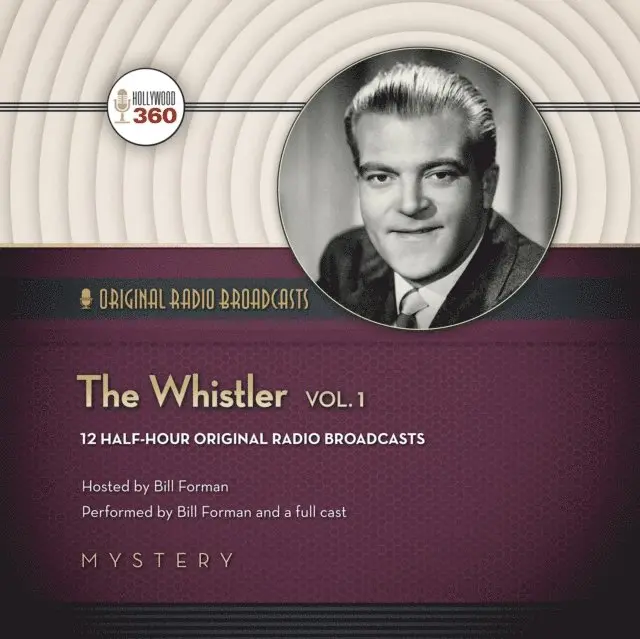
The Whistler was one of radio''s top mystery programs airing from May 16, 1942 until September 22, 1955. The Whistler was an ominous narrator who opened each episode with, "I am the Whistler, and I know many things, for I walk by night. I know many strange tales, many secrets hidden in the hearts of men and women who have stepped into the shadows. I know the nameless terrors of which they dare not speak." The opening dialog was heard over the echo of footsteps and Wilbur Hatch''s haunting signature thirteen-note theme, whistled each week by Dorothy Roberts. The stories followed an effective formula in which a person''s criminal acts were typically undone by their own missteps. The Whistler narrated, often commenting directly on the action in the manner of a Greek chorus, taunting the criminal from an omniscient perspective.
One of the show''s trademarks was the ironic twist endings that helped serve as a payoff for the listener. Bill Forman had the title role of host and narrator the longest. Others who portrayed the Whistler included Gale Gordon, Lucille Ball''s future television costar; Joseph Kearns, Mr. Wilson on the television series Dennis the Menace; Marvin Miller, soon to be television''s Michael Anthony on The Millionaire; Bill Johnstone, the Shadow on radio from 1938–1943; and Everett Clarke.
Episodes include "Night Final," "Undertow," "Money Is the Root of All Evil," "Quiet Suicide," "Return Engagement," "The Human Catalyst," "The Dark Room," "Bird of Prey," "The Silent City," "Tough Guy," "Chain Reaction," and "Stranger in the House."
307 kr
Lyssna direkt efter köp
The Whistler was one of radio''s top mystery programs airing from May 16, 1942 until September 22, 1955. The Whistler was an ominous narrator who opened each episode with, "I am the Whistler, and I know many things, for I walk by night. I know many strange tales, many secrets hidden in the hearts of men and women who have stepped into the shadows. I know the nameless terrors of which they dare not speak." The opening dialog was heard over the echo of footsteps and Wilbur Hatch''s haunting signature thirteen-note theme, whistled each week by Dorothy Roberts. The stories followed an effective formula in which a person''s criminal acts were typically undone by their own missteps. The Whistler narrated, often commenting directly on the action in the manner of a Greek chorus, taunting the criminal from an omniscient perspective.
One of the show''s trademarks was the ironic twist endings that helped serve as a payoff for the listener. Bill Forman had the title role of host and narrator the longest. Others who portrayed the Whistler included Gale Gordon, Lucille Ball''s future television costar; Joseph Kearns, Mr. Wilson on the television series Dennis the Menace; Marvin Miller, soon to be television''s Michael Anthony on The Millionaire; Bill Johnstone, the Shadow on radio from 1938–1943; and Everett Clarke.
Episodes include "Night Final," "Undertow," "Money Is the Root of All Evil," "Quiet Suicide," "Return Engagement," "The Human Catalyst," "The Dark Room," "Bird of Prey," "The Silent City," "Tough Guy," "Chain Reaction," and "Stranger in the House."
614 kr
Lyssna direkt efter köp
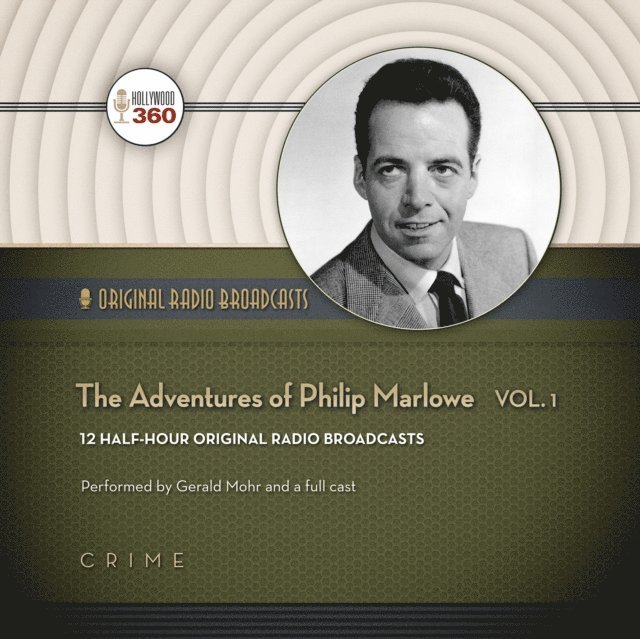
Raymond Chandler''s celebrated hard-boiled private eye, Philip Marlowe, made his radio debut in 1945 on the Lux Radio Theatre with "Murder, My Sweet," starring Dick Powell. Two years later, NBC brought the character to the air in his own weekly series starring Van Heflin, The New Adventures of Philip Marlowe. A summer replacement for The Bob Hope Show, the series was short-lived, ending September 9, 1947. CBS revived it in 1948 with The Adventures of Philip Marlowe, starring Gerald Mohr. With producer/director Norman MacDonnell at the helm, the series captured the largest audience in radio by 1949. Scripts were by Gene Levitt, Robert Mitchell, Mel Dinelli, and Kathleen Hite. While Chandler''s distinctive similes were largely lacking, the strong, dry, sarcastic narration was there, and the way Mohr delivered his lines made you forget they weren''t written by Chandler. Supporting Mohr were radio''s best, including Howard McNear, Parley Baer, Lawrence Dobkin, Virginia Gregg, and Lou Krugman. One of the best detective shows on the air at the time, it lasted until 1951.
Episodes include:
"Red Wind" (aired September 26, 1948): In the first show in the CBS series, Marlowe finds himself dealing with dames, bullets, and a double cross.
"The Persian Slippers" (aired October 3, 1948): Marlowe tries to find a woman who has left her husband and disappeared.
"The Panama Hat" (aired October 10, 1948): Marlowe becomes involved with a gambling debt, an attempted murder, a kidnapping, a redheaded Dragon Lady, and the mysterious man in the Panama hat.
"The Heart of Gold" (aired October 24, 1948): A $50 bill in advance and a heart-shaped locket lead to an apparent suicide and an old secret.
"The Hard Way Out" (aired November 28, 1948): Murder at the Quigg & Slater Construction Company, and a surprising amount of luxury on $175 a week!
"The Restless Day" (aired January 8, 1949): An inventor killed in an explosion aboard his yacht hires Marlowe to find his killer!
"The Black Halo" (aired January 15, 1949): Marlowe is hired to find the missing Julia Perry. Murder and a suicide complicate the case and add a surprise ending.
"The Orange Dog" (aired January 22, 1949): Multiple murders and a strange Chinese statuette lead Marlowe down a trail of violence and counterfeiter''s plates.
"The Easy Mark" (aired January 29, 1949): Marlowe is hired to find a blackmailer but must soon solve a murder.
"The Long Rope" (aired February 5, 1949): Marlowe gets involved with a man with a bad heart, a cash register receipt, a corpse, and $30,000!
"The Green Flame" (aired March 26, 1949): Marlowe must solve a murder in Hollywood and thwart a blackmailer.
"Mexican Boat Ride" (aired July 30, 1949): A girl who hated the water took a boat ride to old Mexico.
283 kr
Lyssna direkt efter köp
Raymond Chandler''s celebrated hard-boiled private eye, Philip Marlowe, made his radio debut in 1945 on the Lux Radio Theatre with "Murder, My Sweet," starring Dick Powell. Two years later, NBC brought the character to the air in his own weekly series starring Van Heflin, The New Adventures of Philip Marlowe. A summer replacement for The Bob Hope Show, the series was short-lived, ending September 9, 1947. CBS revived it in 1948 with The Adventures of Philip Marlowe, starring Gerald Mohr. With producer/director Norman MacDonnell at the helm, the series captured the largest audience in radio by 1949. Scripts were by Gene Levitt, Robert Mitchell, Mel Dinelli, and Kathleen Hite. While Chandler''s distinctive similes were largely lacking, the strong, dry, sarcastic narration was there, and the way Mohr delivered his lines made you forget they weren''t written by Chandler. Supporting Mohr were radio''s best, including Howard McNear, Parley Baer, Lawrence Dobkin, Virginia Gregg, and Lou Krugman. One of the best detective shows on the air at the time, it lasted until 1951.
Episodes include:
"Red Wind" (aired September 26, 1948): In the first show in the CBS series, Marlowe finds himself dealing with dames, bullets, and a double cross.
"The Persian Slippers" (aired October 3, 1948): Marlowe tries to find a woman who has left her husband and disappeared.
"The Panama Hat" (aired October 10, 1948): Marlowe becomes involved with a gambling debt, an attempted murder, a kidnapping, a redheaded Dragon Lady, and the mysterious man in the Panama hat.
"The Heart of Gold" (aired October 24, 1948): A $50 bill in advance and a heart-shaped locket lead to an apparent suicide and an old secret.
"The Hard Way Out" (aired November 28, 1948): Murder at the Quigg & Slater Construction Company, and a surprising amount of luxury on $175 a week!
"The Restless Day" (aired January 8, 1949): An inventor killed in an explosion aboard his yacht hires Marlowe to find his killer!
"The Black Halo" (aired January 15, 1949): Marlowe is hired to find the missing Julia Perry. Murder and a suicide complicate the case and add a surprise ending.
"The Orange Dog" (aired January 22, 1949): Multiple murders and a strange Chinese statuette lead Marlowe down a trail of violence and counterfeiter''s plates.
"The Easy Mark" (aired January 29, 1949): Marlowe is hired to find a blackmailer but must soon solve a murder.
"The Long Rope" (aired February 5, 1949): Marlowe gets involved with a man with a bad heart, a cash register receipt, a corpse, and $30,000!
"The Green Flame" (aired March 26, 1949): Marlowe must solve a murder in Hollywood and thwart a blackmailer.
"Mexican Boat Ride" (aired July 30, 1949): A girl who hated the water took a boat ride to old Mexico.