Howard E. Covington Jr. – författare
Visar alla böcker från författaren Howard E. Covington Jr.. Handla med fri frakt och snabb leverans.
11 produkter
11 produkter
Inbunden, Engelska, 2006
369 kr
Skickas inom 3-6 vardagar
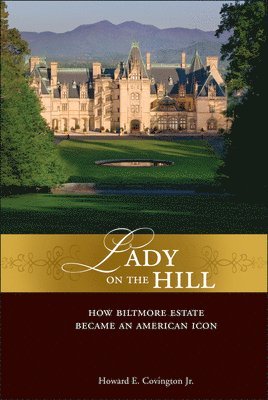
Lady on the Hill: How Biltmore Estate Became an American IconIt is the epitome of Gilded Age splendor: the largest private home ever built in the United States, a French château graced with more than 50,000 priceless furnishings and objets d'art, set in an enchanting rural paradise, designed by America's foremost nineteenth-century landscape architect. A National Historic Landmark, George Vanderbilt's dream home welcomes visitors to experience its glorious past as well as its exciting future. Once described by David Rockefeller as a "white elephant," what makes Biltmore Estate as popular a destination as Monticello, Mount Vernon, and Colonial Williamsburg?Lady on the Hill tells the inspiring story of the thirty-five-year effort to restore this fading beauty to her former glory—all without a penny of government funding or outside foundation grants. Central to this true-life tale of rebirth against the odds is George Vanderbilt's grandson William A. V. Cecil, a well-mannered, highly educated man who, when caught up in an idea, becomes a whirling dervish, generating enough energy and enthusiasm to motivate everyone around him. And, according to author Howard Covington Jr., Cecil gets a week's worth of ideas before he's done with his Monday morning shave.In the late 1950s, attorneys, financial managers, and tax accountants were united in advising Cecil and his brother, George, to sell off the estate's 12,000 acres in order to create a suburban subdivision. Cecil quietly ignored this advice and came up with a better idea: over the next four decades, he would turn this down-at-the-heels mansion that was a drain on the family business into the most successful, privately preserved historic site in the United States, perhaps even the world.Cecil succeeded beyond even his wildest dreams. Not only did he raise the money needed to begin and continue a painstaking, decades-long restoration of the house itself, but he also achieved a goal that even his grandfather had found elusive. He made Biltmore Estate a self-sustaining, working enterprise that included a vibrant tourist destination, a working winery and vineyard, and a farming operation; employed hundreds of people; and attracted hundreds of millions of dollars to the local economy every year.Lady on the Hill tells a lively tale of eccentric, upper-crust characters, seemingly insurmountable obstacles, and one man's determination, innovation, loyalty, and stubborn persistence to succeed against the odds. It also provides a brilliant, if unorthodox, model for anyone involved with the preservation and restoration of a historic home."What William Cecil has accomplished at Biltmore Estate is one of the great preservation success stories of all time. He has set a high standard for what all historic house museums strive for: magnificently preserved buildings and grounds, engaging interpretation, and--perhaps most challenging of all--economic self-sufficiency. It is no surprise that Biltmore Estate is widely recognized as one of America's finest places to visit."—Richard Moe, President of the National Trust for Historic Preservation"Biltmore is a glorious national historic landmark that, through creative vision and entrepreneurial management, preserves and provides insight into a way of life in the early 1900s. Bill is the imaginative and multifaceted leader who has built this great monument to enrich his community. George and I admire his dedication and success."—George and Abby Rockefeller O'Neill"Bill Cecil and his team at Biltmore Estate have sure proved that they know how to build a successful business. They did it the old-fashioned way: embrace a bold idea that others said could not be done and--through commitment, determination, and hard work--bring it to life. Their achievement against the odds is inspiring, and their vision and perseverance are valuable lessons to us all."—Don Logan, Chairman, Media & Communications Group, Time Warner"If George Vanderbilt did nothing more than engage the two most prominent and storied designers of their time, architect Richard Morris Hunt and landscape architect Frederick Law Olmsted, to carry out his vision of a European estate in the southern Appalachians, he would have created an American icon. The beauty of the method by which the estate was executed and, even today, the meticulous attention to detail, in the presentation and care of the estate by William Cecil, have brought history to life."—Gary J. Walters, Chief Usher, The White House
Inbunden, Engelska, 2010
402 kr
Skickas inom 5-8 vardagar
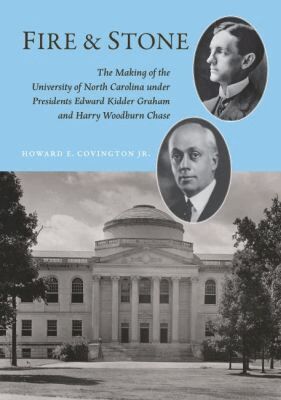
The Good Government Man captures the life of Albert Coates (1896-1989), the founder and first director of the Institute of Government at the University of North Carolina, and an exciting, transformative era in the history of UNC. Inspired by visionary President Edward Kidder Graham--whose death during the influenza pandemic of 1918 devastated the campus--Coates adopted as his life mission his hero's dream of the university in service to the state. With raw determination, stubborn independence, and sheer audacity, Coates created the Institute of Government, now School of Government, to prepare elected officials, government employees, and private citizens for public service. Covington's clear-eyed account presents Coates in all his guises. Passionate and persuasive on the stump, he tirelessly recruited anyone who would listen to his cause including state and university leaders who would prove essential to the ultimate success of the Institute. To admirers, he was a genius of striking originality. Like many with a strong sense of mission, he could also be exasperatingly insistent on getting his way in all matters, great or small. His story, however, is unarguably an important one, and the value of the institute he founded, the first program of its type in the nation, is inestimable. | The Good Government Man captures the life of Albert Coates (1896-1989), the founder and first director of the Institute of Government at the University of North Carolina, and an exciting, transformative era in the history of UNC.
Häftad, Engelska, 2011
665 kr
Skickas inom 10-15 vardagar
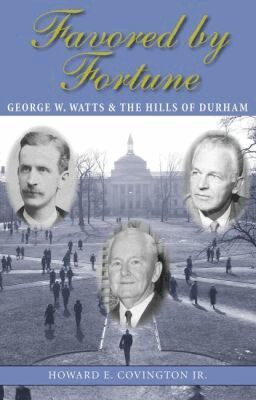
In this collective biography spanning four generations, Howard Covington explores how one prestigious family shaped the development of Piedmont North Carolina, particularly the city of Durham. Covington examines the lives and legacies of George Washington Watts; his son-in-law, John Sprunt Hill; and Hill's son, George Watts Hill, and grandson, George Watts Hill Jr., analyzing the personalities, beliefs, relationships, and life forces that propelled these four men to become leading figures of their generations.Perhaps best known for such family businesses as Central Carolina Bank, the Carolina Inn, and Watts Hospital, and for their partnership in the American Tobacco Company, Watts and the Hills were also advocates for education, fair banking, credit unions, and health insurance. Active in both local and statewide politics, they worked for major infrastructure changes, including a better highway system and the development of Research Triangle Park, and all left lasting legacies.
Inbunden, Engelska, 2017
459 kr
Skickas inom 5-8 vardagar
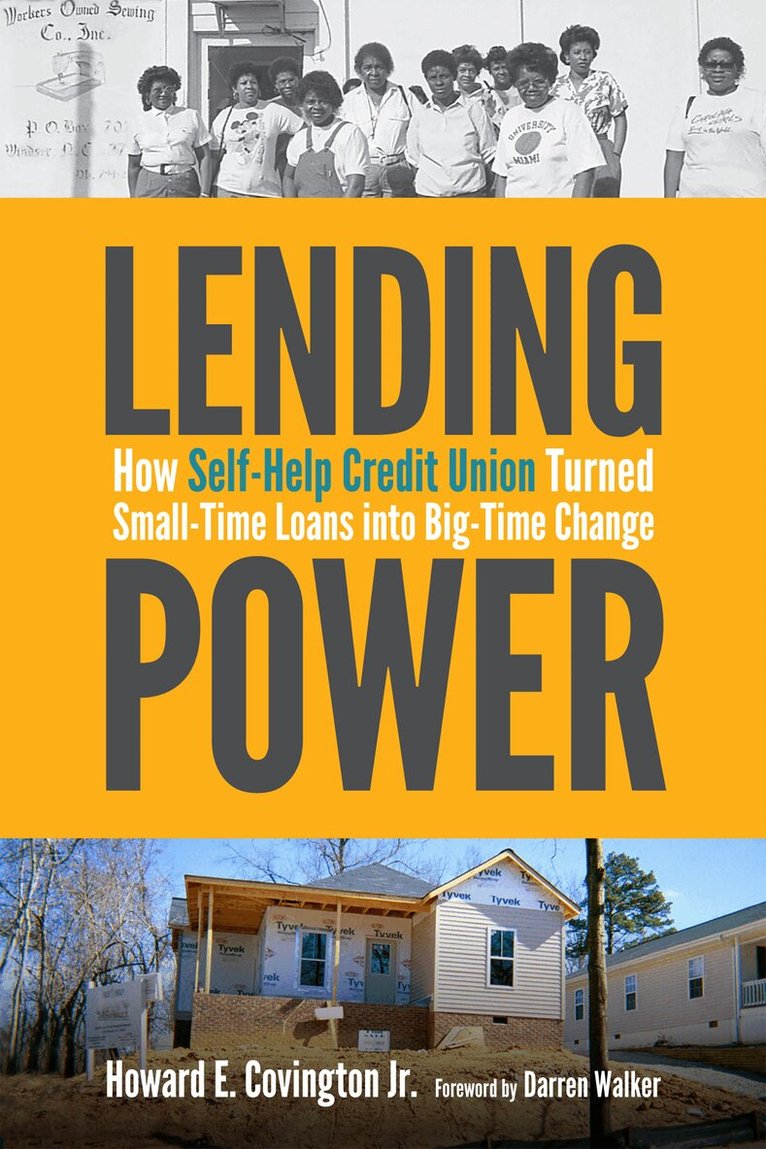
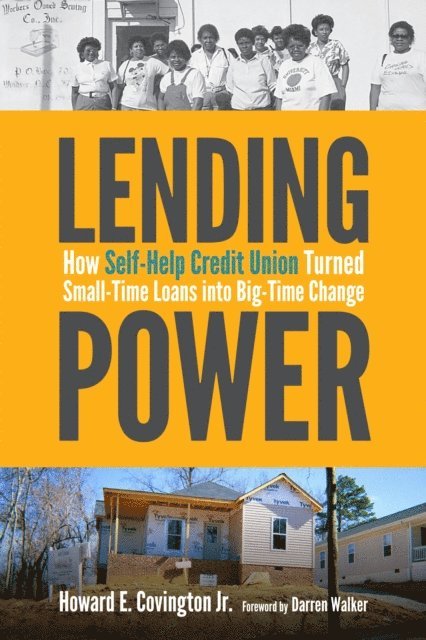
Established by Martin Eakes and Bonnie Wright in North Carolina in 1980, the nonprofit Center for Community Self-Help has grown from an innovative financial institution dedicated to civil rights into the nation's largest home lender to low- and moderate-income borrowers. Self-Help's first capital campaign-a bake sale that raised a meager seventy-seven dollars for a credit union-may not have done much to fulfill the organization's early goals of promoting worker-owned businesses, but it was a crucial first step toward wielding inclusive lending as a weapon for economic justice.In Lending Power journalist and historian Howard E. Covington Jr. narrates the compelling story of Self-Help's founders and coworkers as they built a progressive and community-oriented financial institution. First established to assist workers displaced by closed furniture and textile mills, Self-Help created a credit union that expanded into providing home loans for those on the margins of the financial market, especially people of color and single mothers.Using its own lending record, Self-Help convinced commercial banks to follow suit, extending its influence well beyond North Carolina. In 1999 its efforts led to the first state law against predatory lending. A decade later, as the Great Recession ravaged the nation's economy, its legislative victories helped influence the Dodd-Frank Wall Street Reform and Consumer Protection Act and the formation of the Consumer Financial Protection Bureau. Self-Help also created a federally chartered credit union to expand to California and later to Illinois and Florida, where it assisted ailing community-based credit unions and financial institutions. Throughout its history, Self-Help has never wavered from its mission to use Dr. Martin Luther King Jr.'s vision of justice to extend economic opportunity to the nation's unbanked and underserved citizens. With nearly two billion dollars in assets, Self-Help also shows that such a model for nonprofits can be financially successful while serving the greater good. At a time when calls for economic justice are growing ever louder, Lending Power shows how hard-working and dedicated people can help improve their communities.
E-bok
PDF, Engelska, 2017651 kr
Läs direkt efter köp
Established by Martin Eakes and Bonnie Wright in North Carolina in 1980, the nonprofit Center for Community Self-Help has grown from an innovative financial institution dedicated to civil rights into the nation''s largest home lender to low- and moderate-income borrowers. Self-Help''s first capital campaign—a bake sale that raised a meager seventy-seven dollars for a credit union—may not have done much to fulfill the organization''s early goals of promoting worker-owned businesses, but it was a crucial first step toward wielding inclusive lending as a weapon for economic justice.In Lending Power journalist and historian Howard E. Covington Jr. narrates the compelling story of Self-Help''s founders and coworkers as they built a progressive and community-oriented financial institution. First established to assist workers displaced by closed furniture and textile mills, Self-Help created a credit union that expanded into providing home loans for those on the margins of the financial market, especially people of color and single mothers.Using its own lending record, Self-Help convinced commercial banks to follow suit, extending its influence well beyond North Carolina. In 1999 its efforts led to the first state law against predatory lending. A decade later, as the Great Recession ravaged the nation''s economy, its legislative victories helped influence the Dodd-Frank Wall Street Reform and Consumer Protection Act and the formation of the Consumer Financial Protection Bureau. Self-Help also created a federally chartered credit union to expand to California and later to Illinois and Florida, where it assisted ailing community-based credit unions and financial institutions. Throughout its history, Self-Help has never wavered from its mission to use Dr. Martin Luther King Jr.''s vision of justice to extend economic opportunity to the nation''s unbanked and underserved citizens. With nearly two billion dollars in assets, Self-Help also shows that such a model for nonprofits can be financially successful while serving the greater good. At a time when calls for economic justice are growing ever louder, Lending Power shows how hard-working and dedicated people can help improve their communities.
E-bok
PDF, Engelska, 1999839 kr
Läs direkt efter köp
Terry Sanford (1917–1998) was one of the most important public figures of the postwar South. First as North Carolina’s governor and later as president of Duke University, he demonstrated a dynamic style of progressive leadership marked by compassion and creativity. This book tells the story of Sanford’s beginnings, his political aspirations, his experiences in office, and, of course, his numerous accomplishments in the context of a period of revolutionary change in the South.After defeating a segregationist campaign in 1960 to win the governorship, Sanford used his years in office to boost public education and advance race relations. A decade later, at the height of tumult on American campuses, Sanford assumed the presidency of Duke University and led it to its position as one of the top universities in the nation. During his more than fifty years as a public servant he was associated with presidents John F. Kennedy, Lyndon B. Johnson, Richard Nixon, and Jimmy Carter. Sanford was a presidential candidate himself in 1972 and 1976, and he won election to the United States Senate in 1986 where his international commission produced an economic recovery plan for Central America. As one of the last New Deal Democrats in the Senate, he remained passionate about the opportunity for leaders to use government to improve people’s lives.Terry Sanford draws on Sanford’s considerable private and public archive as well as on the recollections of Sanford himself and his family, colleagues, and friends. This biography offers a unique perspective on North Carolina life, politics, political personalities, and the shifting public allegiances of the second half of the twentieth century that transformed life both in North Carolina and throughout the American South.
Inbunden, Engelska, 2027
335 kr
Kommande
Inbunden, Engelska, 2014
351 kr
Skickas inom 5-8 vardagar
E-bok
Engelska, 201453 kr
Läs direkt efter köp
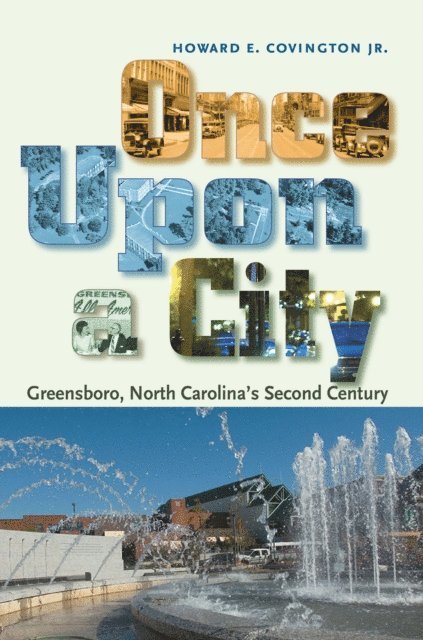
If you love Greensboro, this book is for you. It is a twentieth-century history of our city that was researched and written over a five-year period by Howard Covington Jr., who is a splendid storyteller who makes our leaders, our crises, our successes, our disappointments, our accomplishments all come alive.Joseph B. Mullin, Pastor EmeritusFirst Presbyterian Church Greensboro, North Carolina
Häftad, Engelska, 2014
246 kr
Skickas inom 5-8 vardagar
E-bok
PDF, Engelska, 2018501 kr
Läs direkt efter köp
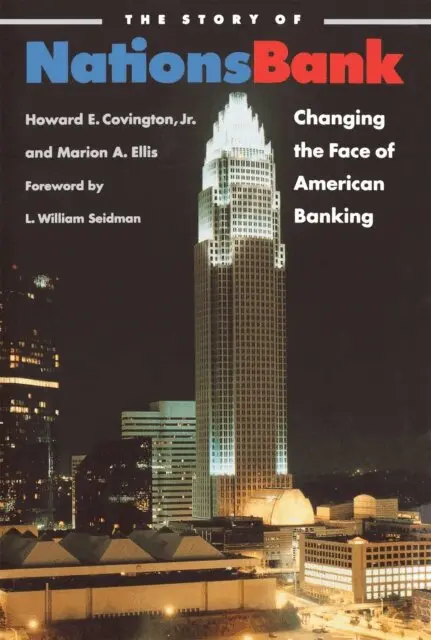
Charlotte-based NationsBank, formerly named NCNB, became one of the nation’s leading financial powers following its acquisition in 1988 of First Republic Bank of Texas and its merger in 1991 with Atlanta-based C&S/Sovran. The authors provide a corporate history of this maverick financial institution.