Inbunden, Engelska, 1989
1 083 kr
Skickas inom 10-15 vardagar
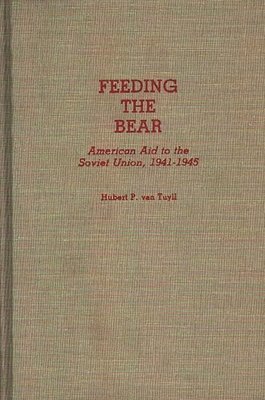
When the German army invaded Russia in June 1941, the United States' Lend-Lease system was already in place to aid friendly powers at war and thereby promote the defense of the U.S. Enacted so that the U.S. could lend war material to Britain, the system allowed the transfer of weapons, machinery, agricultural products, and other defense items. Although politically and practically difficult, Lend-Lease was also extended to the Soviets, and in Feeding the Bear, van Tuyll studies the rarely scrutinized subject of the military impact of Lend-Lease on Russian efforts to repel the Nazi invaders. In the post-war period, many histories, memoirs, scholarly studies, and polemics on the Eastern Front by German, American, and Soviet authors have appeared but no comprehensive American official history of the Lend-Lease program was ever published. Van Tuyll uses a wealth of data from many sources including some from the substantial Military Mission files, declassified as recently as 1983, to assess the long-neglected issue of the actual impact of Lend-Lease aid on Soviet victory on the Eastern Front. By synthesizing the many types of technical information, economic data, and statistics, van Tuyll is able to formulate challenging conclusions regarding the program's impact. The difficulty in making this assessment was compounded not only by an almost fifty-year perspective, but also because Soviet information on its military situation, army, or internal economic conditions was scarce and often dismissive of foreign aid. The Germans viewed their failure as due to weather, numbers, Hitler's errors, inadequate intelligence, or lack of gasoline and not to Soviet expertise in the immense offensives of 1943-1945.Among the ten chapters there are considerations of the complicated Soviet view of Lend-Lease, analyses of the technical aspects, and explorations not only of the overall impact but also of the effect on decisive battles such as Stalingrad and Berlin. The introduction provides a thorough grounding in the background of the Lend-Lease program and surveys other treatments of the subject. The appendix contains over 45 valuable tables that provide data on every aspect of Lend-Lease, including exports by region, value of U.S. shipments to the Soviet Union, deliveries of food, clothing, and medicine, and estimated Soviet production capacity, among others. This is truly a landmark volume that will be consulted and read avidly by students and scholars of European and American History, and World War II in particular, as well as those involved with Military History, Soviet Studies, Soviet Economic History, and U.S.-Soviet Relations.