Hubertus Büschel – författare
Visar alla böcker från författaren Hubertus Büschel. Handla med fri frakt och snabb leverans.
5 produkter
5 produkter
Inbunden, Engelska, 2024
1 247 kr
Skickas inom 5-8 vardagar
Psychiatric Contours investigates new histories of psychiatry, derangement, and agitated subjectivities in colonial and decolonizing Africa. The volume lets the multivalent term madness broaden perception, well beyond the psychiatric. Many chapters detect the mad or the psychiatric in unhinged persons, frantic collectives, and distressing situations. Others investigate individuals suffering from miscategorization. A key Foucauldian word, vivacity, illuminates how madness aligns with pathology, creativity, turbulence, and psychopolitics. The archives, patient-authored or not, speak to furies and fantasies inside asylums, colonial institutions, decolonizing missions, and slave ships. The frayed edges of politicized deliria open up the senses and optics of psychiatry’s history in Africa far beyond clinical spaces and classification. The volume also proposes fresh concepts, notably the vernacular, to suggest how to work with emic clues in a granular fashion and telescope the psychiatric within histories of madness. With chapters stretching across much of ex-British and ex-French colonial Africa, Psychiatric Contours attends to the words, autobiographies, and hallucinations of the stigmatized and afflicted as well as of the powerful. Expatriate psychiatrists with cameras, prying authorities, fearful missionaries, and colonial anthropologists enter these readings beside patients, asylums, and boarding schools via research on possession “hysteria” and schizophrenia. In brief, this book demonstrates novel ways of writing not only medical history but all subaltern and global histories.Contributors. Hubertus BÜschel, RaphaËl Gallien, Matthew M. Heaton, Richard HÖlzl, Nancy Rose Hunt, Richard C. Keller, Sloan Mahone, Nana Osei Quarshie, Jonathan Sadowsky, Romain Tiquet
Häftad, Engelska, 2024
331 kr
Skickas inom 5-8 vardagar
Psychiatric Contours investigates new histories of psychiatry, derangement, and agitated subjectivities in colonial and decolonizing Africa. The volume lets the multivalent term madness broaden perception, well beyond the psychiatric. Many chapters detect the mad or the psychiatric in unhinged persons, frantic collectives, and distressing situations. Others investigate individuals suffering from miscategorization. A key Foucauldian word, vivacity, illuminates how madness aligns with pathology, creativity, turbulence, and psychopolitics. The archives, patient-authored or not, speak to furies and fantasies inside asylums, colonial institutions, decolonizing missions, and slave ships. The frayed edges of politicized deliria open up the senses and optics of psychiatry’s history in Africa far beyond clinical spaces and classification. The volume also proposes fresh concepts, notably the vernacular, to suggest how to work with emic clues in a granular fashion and telescope the psychiatric within histories of madness. With chapters stretching across much of ex-British and ex-French colonial Africa, Psychiatric Contours attends to the words, autobiographies, and hallucinations of the stigmatized and afflicted as well as of the powerful. Expatriate psychiatrists with cameras, prying authorities, fearful missionaries, and colonial anthropologists enter these readings beside patients, asylums, and boarding schools via research on possession “hysteria” and schizophrenia. In brief, this book demonstrates novel ways of writing not only medical history but all subaltern and global histories.Contributors. Hubertus BÜschel, RaphaËl Gallien, Matthew M. Heaton, Richard HÖlzl, Nancy Rose Hunt, Richard C. Keller, Sloan Mahone, Nana Osei Quarshie, Jonathan Sadowsky, Romain Tiquet
E-bok
PDF, Engelska, 2024488 kr
Läs direkt efter köp
Psychiatric Contours investigates new histories of psychiatry, derangement, and agitated subjectivities in colonial and decolonizing Africa. The volume lets the multivalent term madness broaden perception, well beyond the psychiatric. Many chapters detect the mad or the psychiatric in unhinged persons, frantic collectives, and distressing situations. Others investigate individuals suffering from miscategorization. A key Foucauldian word, vivacity, illuminates how madness aligns with pathology, creativity, turbulence, and psychopolitics. The archives, patient-authored or not, speak to furies and fantasies inside asylums, colonial institutions, decolonizing missions, and slave ships. The frayed edges of politicized deliria open up the senses and optics of psychiatry’s history in Africa far beyond clinical spaces and classification. The volume also proposes fresh concepts, notably the vernacular, to suggest how to work with emic clues in a granular fashion and telescope the psychiatric within histories of madness. With chapters stretching across much of ex-British and ex-French colonial Africa, Psychiatric Contours attends to the words, autobiographies, and hallucinations of the stigmatized and afflicted as well as of the powerful. Expatriate psychiatrists with cameras, prying authorities, fearful missionaries, and colonial anthropologists enter these readings beside patients, asylums, and boarding schools via research on possession “hysteria” and schizophrenia. In brief, this book demonstrates novel ways of writing not only medical history but all subaltern and global histories.Contributors. Hubertus Büschel, Raphaël Gallien, Matthew M. Heaton, Richard Hölzl, Nancy Rose Hunt, Richard C. Keller, Sloan Mahone, Nana Osei Quarshie, Jonathan Sadowsky, Romain Tiquet
Inbunden, Tyska, 2016
297 kr
Skickas inom 3-6 vardagar
170 kr
Läs direkt efter köp
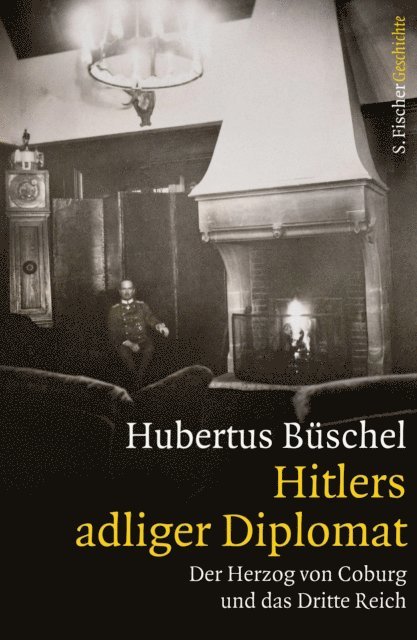
In seinem neuen Buch ›Hitlers adliger Diplomat. Der Herzog von Coburg und das Dritte Reich‹ erzählt der renommierte Historiker Hubertus Büschel auf Grundlage neuer Quellen aus dem Familienarchiv packend und fundiert, wie ein britischer Prinz in Deutschland zum glühenden Verehrer Hitlers wurde.Carl Eduard war ein Enkel der britischen Königin Victoria und wurde 1905 Regent in Coburg. Bereits 1927 lud er Adolf Hitler zur Trauerfeier für Houston Stuart Chamberlain nach Coburg ein. Nicht zuletzt dank Carl Eduards Einfluss wurde Coburg zur ersten nationalsozialistisch regierten Stadt Deutschlands. Zur Reichstagswahl 1932 veröffentlichte der Herzog einen Wahlaufruf für Hitler.Als Repräsentant des »Dritten Reichs« ließ er nach der Machtergreifung seine internationalen Verbindungen spielen, um den Nationalsozialismus salonfähig zu machen, und leugnete schließlich als Präsident des Deutschen Roten Kreuzes die Gräuel der Konzentrationslager.Die Unterstützung für den Nationalsozialismus durch den deutschen und den europäischen Hochadel wurde lange unterschätzt. Die Biographie des Coburger Herzogs zeigt exemplarisch, wie Adlige im Bestreben, ihre eigene Macht wiederherzustellen, einen Pakt mit den Nationalsozialisten eingingen.