Hugo Williams – författare
Visar alla böcker från författaren Hugo Williams. Handla med fri frakt och snabb leverans.
22 produkter
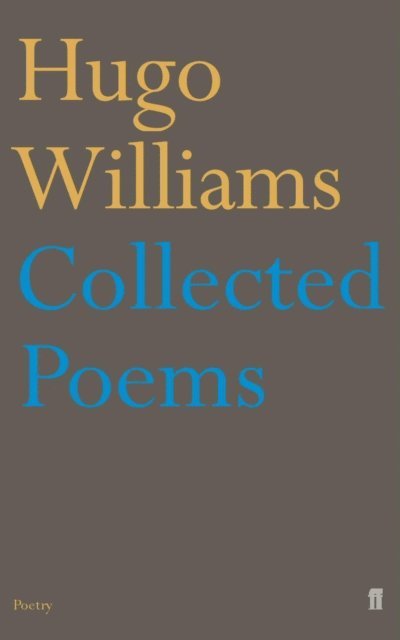
Collected Poems
Häftad, 2005
239 kr
Lägg i varukorg
In gathering four decades of work, Hugo Williams's Collected Poems brings back into print a vast body of material long since unavailable - from his 1965 debut Symptoms of Loss to Self-Portrait with a Slide (1990) and including Writing Home (1985), described by Mick Imlah in the Independent on …
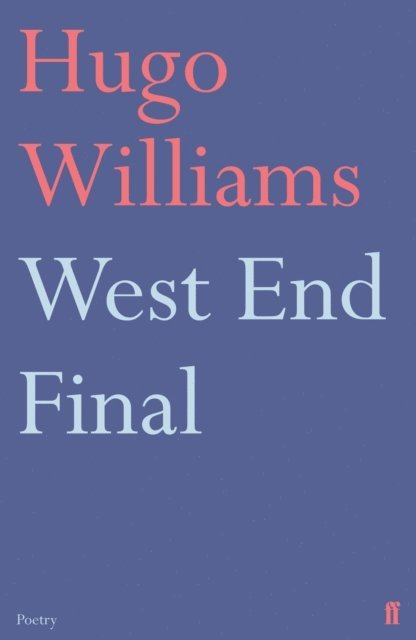
West End Final
Häftad, 2009
161 kr
Lägg i varukorg
Hugo Williams's new collection summons the poet's past selves in order of appearance, as in an autobiography, showing in poems as clear as rock pools that the plain truth is only as plain as the props and make-up needed to stage it. Childhood and school time offer up the amateur theatricals of …
Fast Music
Häftad, 2024
166 kr
Lägg i varukorg
'He's a poet of such intimate charm, such grace and cunning, and such ordinary comic sadness, that he wins your affection and admiration.' Hermione Lee, GuardianFast Music refers as much to the fast dance music that caused Williams to run round the room on the furniture aged three as to the speed …
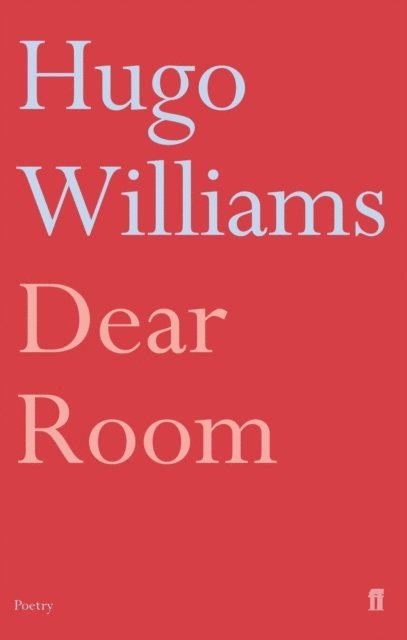
Dear Room
Häftad, 2006
163 kr
Lägg i varukorg
Dear Room is a worthy successor to Billy's Rain (1999), whose preoccupations and occasions it continues and ramifies, charting the 'angles, signals, orders, murmurs, sighs' of love, separation and loss. With grave good humour, ruefully exact timing and a scruple reminiscent of Thomas Hardy, these …
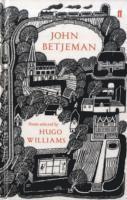
John Betjeman
Av John Betjeman, Hugo Williams
Inbunden, 2009
166 kr
Lägg i varukorg
Sir John Betjeman (1906-84) was born in Highgate, the son of a manufacturer of Dutch descent. His poetry enjoyed immense popularity, as did his personality, and his knighthood in 1969 and appointment as Poet Laureate in 1972 were universally welcomed.Other volumes in this series: Auden, Eliot, …
Collected Poems
E-bok, 2010
213 kr
Lägg i varukorg
In gathering four decades of work, Hugo Williams's Collected Poems brings back into print a vast body of material long since unavailable - from his 1965 debut Symptoms of Loss to Self-Portrait with a Slide (1990) and including Writing Home (1985), described by Mick Imlah in the Independent on …
Dear Room
E-bok, 2010
129 kr
Lägg i varukorg
Dear Room is a worthy successor to Billy's Rain (1999), whose preoccupations and occasions it continues and ramifies, charting the 'angles, signals, orders, murmurs, sighs' of love, separation and loss. With grave good humour, ruefully exact timing and a scruple reminiscent of Thomas Hardy, these …
West End Final
E-bok, 2010
148 kr
Lägg i varukorg
Hugo Williams's new collection summons the poet's past selves in order of appearance, as in an autobiography, showing in poems as clear as rock pools that the plain truth is only as plain as the props and make-up needed to stage it. Childhood and school time offer up the amateur theatricals of …
Dock Leaves
E-bok, 2010
115 kr
Lägg i varukorg
In these poems, Hugo Williams's subjects include the stings inflicted by school, family and love-life, and the exquisite (if qualified) solace afforded by their contemplation.
Billy's Rain
E-bok, 2010
115 kr
Lägg i varukorg
The fifty poems in Billy's Rain chart the course of a love affair, now ended. Its complications, obsessions, evasions, secret joys and emotional pitfalls are explored with all the subtlety and irony of which Hugo Williams, among contemporary poets, is the acknowledged master. These are brilliant, …
Curtain Call
101 Portraits in Verse
E-bok, 2010
115 kr
Lägg i varukorg
The art of portraiture in poetry is traceable from the Latin poets and Chaucer via Goldsmith, Wordsworth and Browning, to the modern era of Rimbaud, Cavafy, Auden, Lowell and Hofmann. Poetry is an art form which encourages introspection, so it is a welcome break to find these poets looking outward, …
All the Time in the World
Häftad, 2012
275 kr
Lägg i varukorg
'I believe I shall be writing home about this trip for the rest of my life... years from now, still recollecting, like an old white hunter, shadowy images to an empty fireplace, far into the night...'All the Time in the World, a first work of prose by the poet Hugo Williams, was originally …
All the Time in the World
E-bok, 2012
167 kr
Lägg i varukorg
'I believe I shall be writing home about this trip for the rest of my life... years from now, still recollecting, like an old white hunter, shadowy images to an empty fireplace, far into the night...'All the Time in the World, a first work of prose by the poet Hugo Williams, was originally …
No Particular Place to Go
Häftad, 2012
227 kr
Lägg i varukorg
'A hilarious book of bad times, bedtimes and benders. It is a kind of cool parody of On the Road.' New StatesmanNo Particular Place to Go (first published in 1981) relates Hugo Williams's journey across the USA on a three-month poetry-reading tour wherein he also hoped to discover some of the …
No Particular Place to Go
E-bok, 2012
137 kr
Lägg i varukorg
'A hilarious book of bad times, bedtimes and benders. It is a kind of cool parody of On the Road.' New StatesmanNo Particular Place to Go (first published in 1981) relates Hugo Williams's journey across the USA on a three-month poetry-reading tour wherein he also hoped to discover some of the …
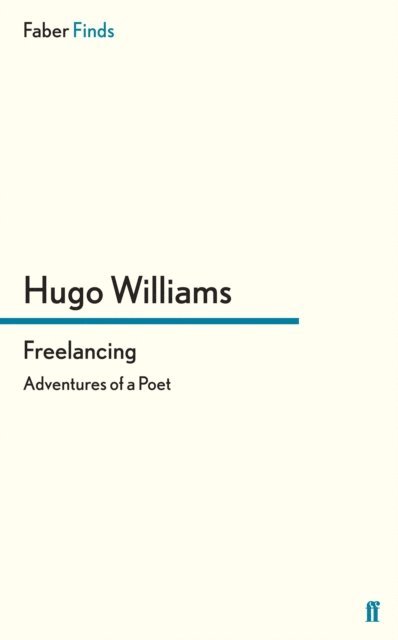
Freelancing
Adventures of a Poet
Häftad, 2012
275 kr
Lägg i varukorg
In 1988 Hugo Williams began to pen his 'Freelance' column for the Times Literary Supplement: a window that allowed him to exhibit the full panoply of his gifts as travel writer, literary portraitist, working poet, and all-round chronicler of the curious existence of the contemporary writer. …
Freelancing
Adventures of a Poet
E-bok, 2012
167 kr
Lägg i varukorg
In 1988 Hugo Williams began to pen his 'Freelance' column for the Times Literary Supplement: a window that allowed him to exhibit the full panoply of his gifts as travel writer, literary portraitist, working poet, and all-round chronicler of the curious existence of the contemporary writer. …
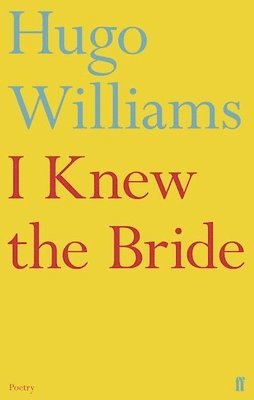
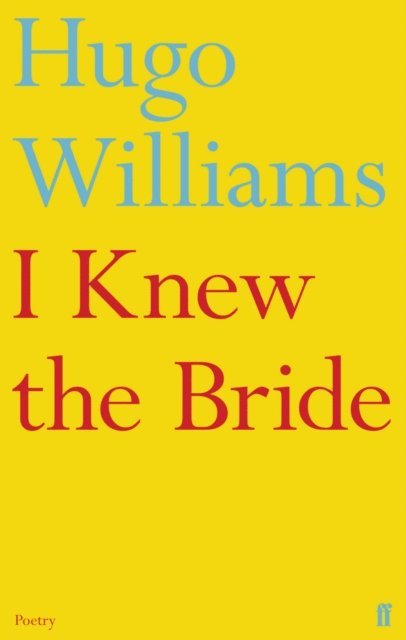
I Knew the Bride
Häftad, 2015
151 kr
Lägg i varukorg
Hugo Williams is rightly cherished for his inimitable fusion of autobiography and irony, and a technical glide that allows his writing to 'slip back to the past as effortlessly as a dreamer' (The Times). I Knew the Bride is Williams' eleventh collection of poems, and his first since West End Final …
I Knew the Bride
E-bok, 2014
148 kr
Lägg i varukorg
Hugo Williams is rightly cherished for his inimitable fusion of autobiography and irony, and a technical glide that allows his writing to 'slip back to the past as effortlessly as a dreamer' (The Times). I Knew the Bride is Williams' eleventh collection of poems, and his first since West End Final …
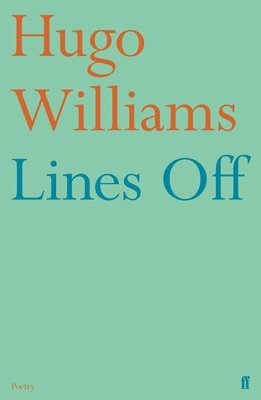
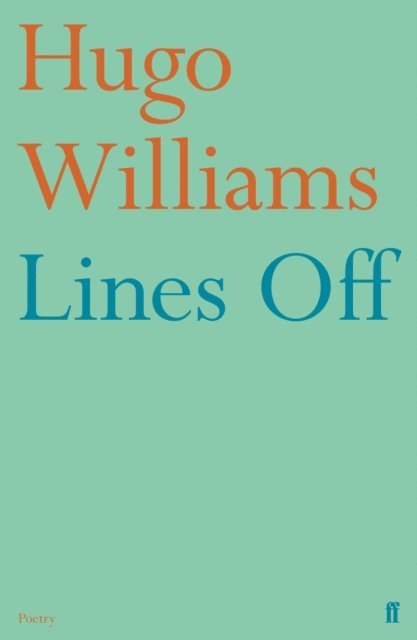
Lines Off
Häftad, 2022
142 kr
Lägg i varukorg
'Lines off' is a term used for lines spoken from the wings of a theatre, or off-camera in a film. It was while Hugo Williams was out of circulation following transplant surgery that he wrote the poems for this new collection - the first since I Knew the Bride (2014), shortlisted for the Forward and …
Lines Off
E-bok, 2019
181 kr
Lägg i varukorg
Catching a sudden look of defiance from his granddaughter inspires Hugo Williams to take up his pen and write this deeply moving new collection of poetry - the first since I Knew the Bride (2014), shortlisted for the Forward and T. S. Eliot prizes. He navigates assuredly from thoughtful …
Off the Beaten Track
A Year in Haiku
Av Christopher Herold, Éireann Lorsung m. fl.
Häftad, 2016
173 kr
Lägg i varukorg
Off the Beaten Track presents new work by twelve writers taking part in a unique collaborative project: each of them was invited to compose one haiku per day for a month, thus contributing towards the total of 365 haiku for a full calendar year. Half of the authors are widely published writers of …