Huiyun Feng – författare
Visar alla böcker från författaren Huiyun Feng. Handla med fri frakt och snabb leverans.
38 produkter
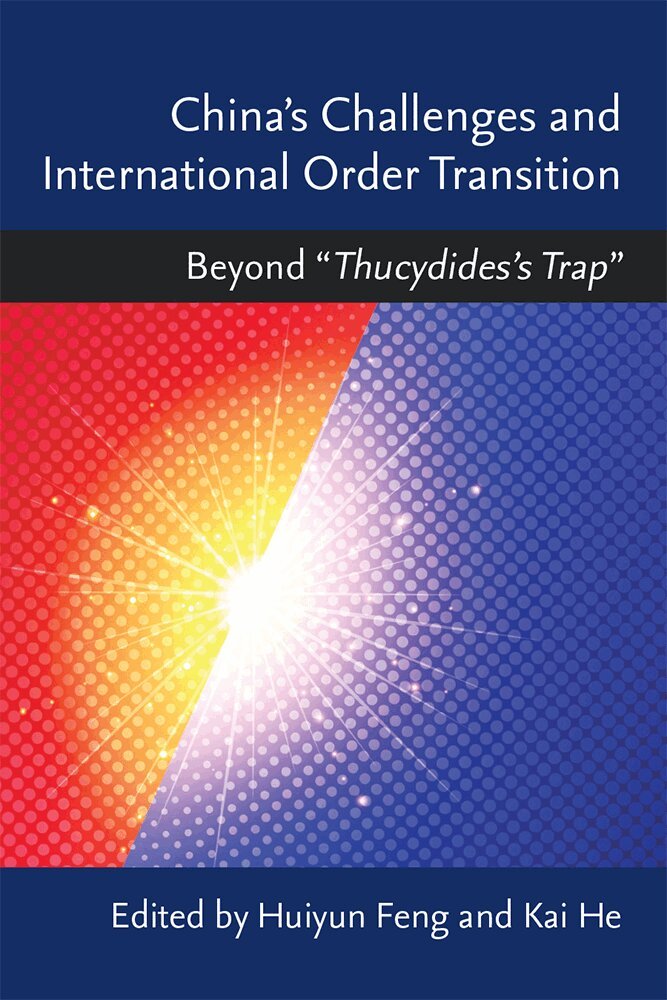
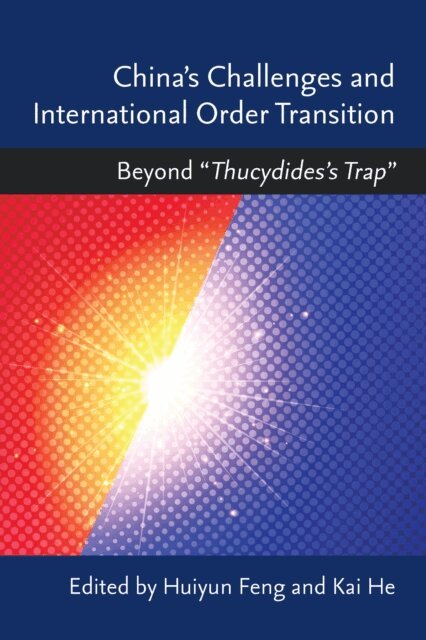
China’s Challenges and International Order Transition
Beyond “Thucydides's Trap”
Av Huiyun Feng, Kai He
Inbunden, 2020
1099 kr
Lägg i varukorg
China’s Challenges and International Order Transition introduces an integrated conceptual framework of “international order” categorized by three levels (power, rules, and norms) and three issue-areas (security, political, and economic). Each contributor engages one or more of these analytical …
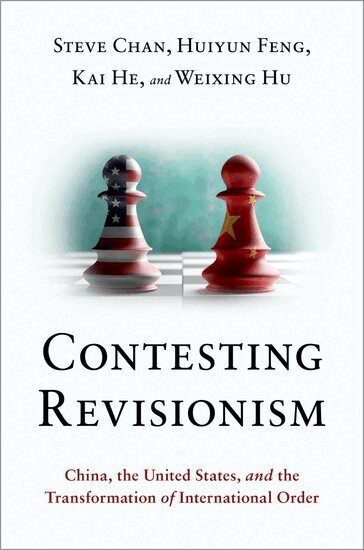
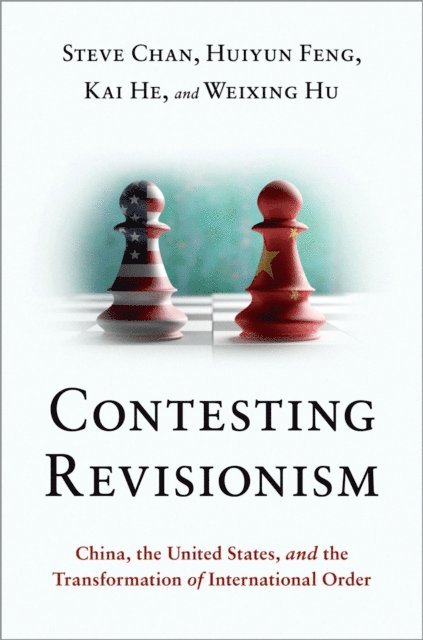
Contesting Revisionism
China, the United States, and the Transformation of International Order
Av Steve Chan, Huiyun Feng m. fl.
Inbunden, 2021
1333 kr
Lägg i varukorg
How can we know a country, such as the United States or China, is revisionist, that is, whether it intends to upset the international order?What motivates states to act the way they do? Contesting Revisionism focuses on a particular kind of motivation inclining a state to challenge the existing …
Contesting Revisionism
China, the United States, and the Transformation of International Order
Av Steve Chan, Huiyun Feng m. fl.
Häftad, 2021
378 kr
Lägg i varukorg
How can we know a country, such as the United States or China, is revisionist, that is, whether it intends to upset the international order?What motivates states to act the way they do? Contesting Revisionism focuses on a particular kind of motivation inclining a state to challenge the existing …
Contesting Revisionism
China, the United States, and the Transformation of International Order
Av Weixing Hu, Kai He m. fl.
E-bok, 2021
310 kr
Lägg i varukorg
How can we know a country, such as the United States or China, is revisionist, that is, whether it intends to upset the international order? What motivates states to act the way they do? Contesting Revisionism focuses on a particular kind of motivation inclining a state to challenge the existing …
Contesting Revisionism
China, the United States, and the Transformation of International Order
Av Weixing Hu, Kai He m. fl.
E-bok, 2021
310 kr
Lägg i varukorg
How can we know a country, such as the United States or China, is revisionist, that is, whether it intends to upset the international order? What motivates states to act the way they do? Contesting Revisionism focuses on a particular kind of motivation inclining a state to challenge the existing …
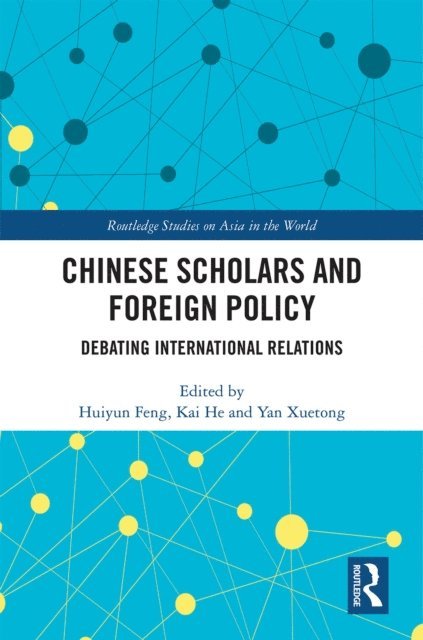
Chinese Scholars and Foreign Policy
Debating International Relations
Av Huiyun Feng, Kai He m. fl.
Inbunden, 2019
2512 kr
Lägg i varukorg
How does China see the rest of the world? One way to answer this question is to look at the work of China’s scholars in the field of International Relations (IR). This leads to a second question – to what extent do Chinese IR scholars influence Beijing’s foreign policy and outlook? The contributors …
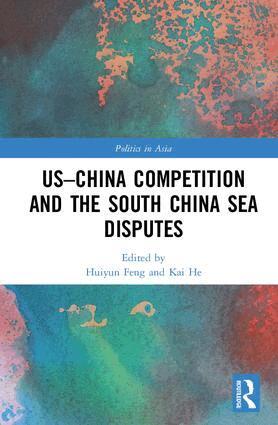
US-China Competition and the South China Sea Disputes
Av Huiyun Feng, Kai He
Häftad, 2020
689 kr
Lägg i varukorg
Traditionally, the South China Sea (SCS) issue was not on the negotiation table between the United States and China. However, the tensions between the United States and China over the SCS have gradually simmered up to a strategic level. Why and how did the SCS become a flashpoint between the United …
Chinese Scholars and Foreign Policy
Debating International Relations
Av Huiyun Feng, Kai He m. fl.
Häftad, 2020
718 kr
Lägg i varukorg
How does China see the rest of the world? One way to answer this question is to look at the work of China’s scholars in the field of International Relations (IR). This leads to a second question – to what extent do Chinese IR scholars influence Beijing’s foreign policy and outlook? The contributors …
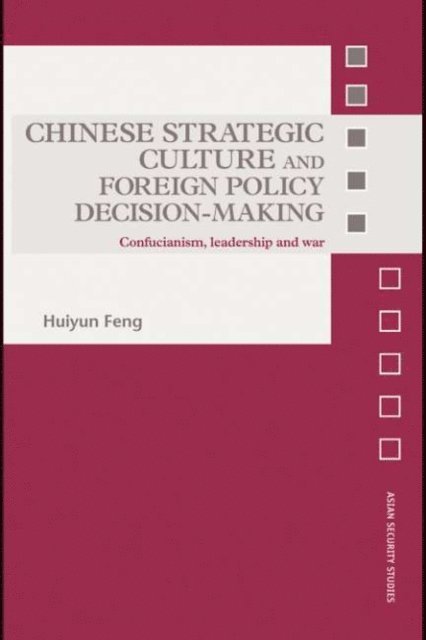
Chinese Strategic Culture and Foreign Policy Decision-Making
Confucianism, Leadership and War
Av Huiyun Feng
Inbunden, 2007
2586 kr
Lägg i varukorg
Examining the major academic and policy debates over China’s rise and related policy issues, this book looks into the motivations and intentions of a rising China. Most of the scholarly works on China’s rise approach the question at a structural level by looking at the international system and the …
Chinese Strategic Culture and Foreign Policy Decision-Making
Confucianism, Leadership and War
Av Huiyun Feng
Häftad, 2009
770 kr
Lägg i varukorg
Examining the major academic and policy debates over China’s rise and related policy issues, this book looks into the motivations and intentions of a rising China. Most of the scholarly works on China’s rise approach the question at a structural level by looking at the international system and the …
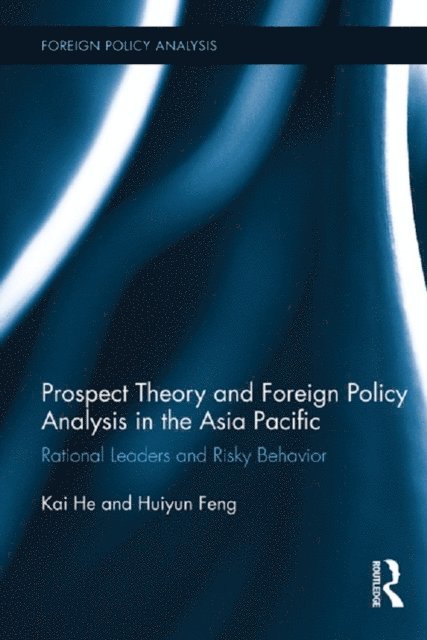
Prospect Theory and Foreign Policy Analysis in the Asia Pacific
Rational Leaders and Risky Behavior
Av Kai He, Huiyun Feng
Inbunden, 2012
2433 kr
Lägg i varukorg
Why does North Korea behave erratically in pursuing its nuclear weapons program? Why did the United States prefer bilateral alliances to multilateral ones in Asia after World War II? Why did China become "nice"—no more military coercion—in dealing with the pro-independence Taiwan President Chen …
Chinese Scholars and Foreign Policy
Debating International Relations
Av Yan Xuetong, Kai He m. fl.
E-bok, 2019
849 kr
Lägg i varukorg
How does China see the rest of the world? One way to answer this question is to look at the work of China’s scholars in the field of International Relations (IR). This leads to a second question – to what extent do Chinese IR scholars influence Beijing’s foreign policy and outlook? The contributors …
Chinese Scholars and Foreign Policy
Debating International Relations
Av Yan Xuetong, Kai He m. fl.
E-bok, 2019
830 kr
Lägg i varukorg
How does China see the rest of the world? One way to answer this question is to look at the work of China’s scholars in the field of International Relations (IR). This leads to a second question – to what extent do Chinese IR scholars influence Beijing’s foreign policy and outlook? The contributors …
China's Challenges and International Order Transition
Beyond “Thucydides''s Trap”
Av Kai He, Huiyun Feng
E-bok, 2020
1325 kr
Lägg i varukorg
China’s Challenges and International Order Transition introduces an integrated conceptual framework of “international order” categorized by three levels (power, rules, and norms) and three issue-areas (security, political, and economic). Each contributor engages one or more of these analytical …
US-China Competition and the South China Sea Disputes
Av Huiyun Feng, Kai He
Inbunden, 2018
2504 kr
Lägg i varukorg
Traditionally, the South China Sea (SCS) issue was not on the negotiation table between the United States and China. However, the tensions between the United States and China over the SCS have gradually simmered up to a strategic level. Why and how did the SCS become a flashpoint between the United …
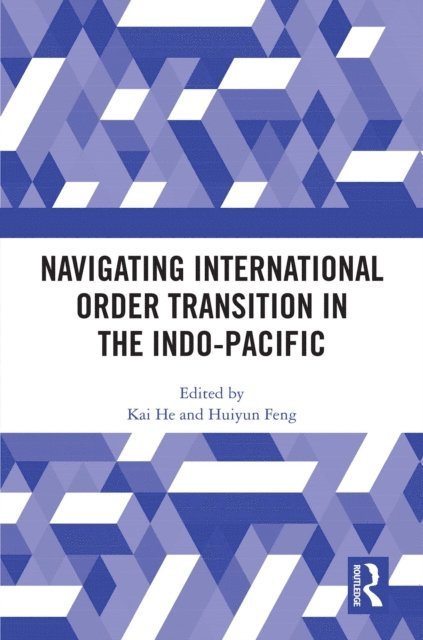
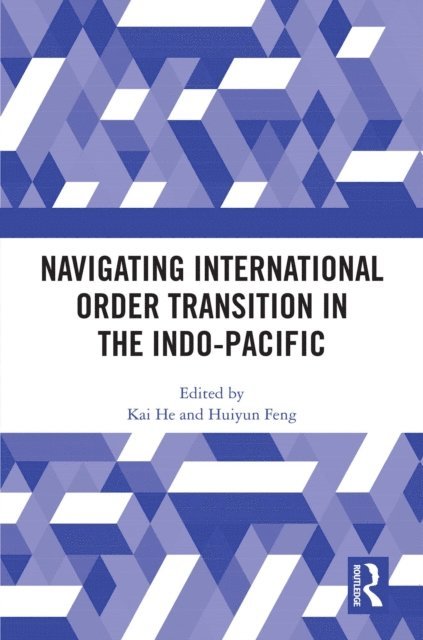
Navigating International Order Transition in the Indo-Pacific
Av Huiyun Feng, Kai He
E-bok, 2023
762 kr
Lägg i varukorg
This book examines how major powers in the Indo-Pacific region cope with and respond to the potential order transition against the background of the strategic competition between the US and China. The world is in a crisis and the liberal international order is at stake with the Covid pandemic and …
Navigating International Order Transition in the Indo-Pacific
Av Huiyun Feng, Kai He
E-bok, 2023
746 kr
Lägg i varukorg
This book examines how major powers in the Indo-Pacific region cope with and respond to the potential order transition against the background of the strategic competition between the US and China. The world is in a crisis and the liberal international order is at stake with the Covid pandemic and …
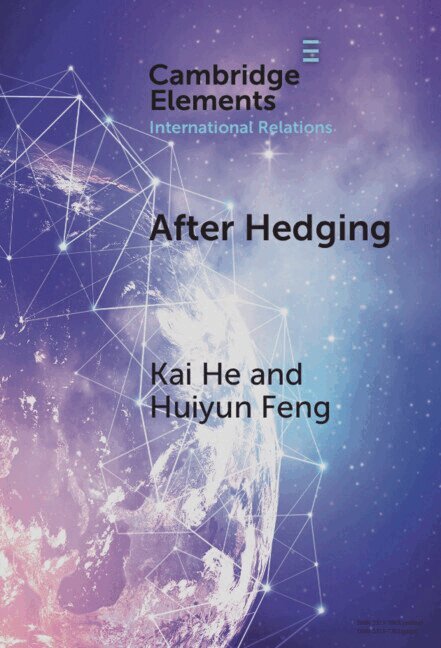
After Hedging
Hard Choices for the Indo-Pacific States Between the US and China
Av Kai He, Huiyun Feng
Häftad, 2023
418 kr
Lägg i varukorg
The strategic rivalry between the United States and China has heightened since COVID-19. Secondary states face increasing difficulties maintaining a 'hedging' strategy between the United States and China. This Element introduces a preference-for-change model to explain the policy variations of …
After Hedging
Hard Choices for the Indo-Pacific States Between the US and China
Av Huiyun Feng, Kai He
E-bok, 2023
303 kr
Lägg i varukorg
After Hedging
Hard Choices for the Indo-Pacific States Between the US and China
Av Huiyun Feng, Kai He
E-bok, 2023
303 kr
Lägg i varukorg
After Hedging
Hard Choices for the Indo-Pacific States Between the US and China
Av Kai He, Huiyun Feng
Inbunden, 2023
1238 kr
Lägg i varukorg
The strategic rivalry between the United States and China has heightened since COVID-19. Secondary states face increasing difficulties maintaining a 'hedging' strategy between the United States and China. This Element introduces a preference-for-change model to explain the policy variations of …
Upside of US-Chinese Strategic Competition
Institutional Balancing and Order Transition in the Asia Pacific
Av Huiyun Feng, Kai He
E-bok, 2025
440 kr
Lägg i varukorg
Upside of US-Chinese Strategic Competition
Institutional Balancing and Order Transition in the Asia Pacific
Av Huiyun Feng, Kai He
E-bok, 2025
440 kr
Lägg i varukorg
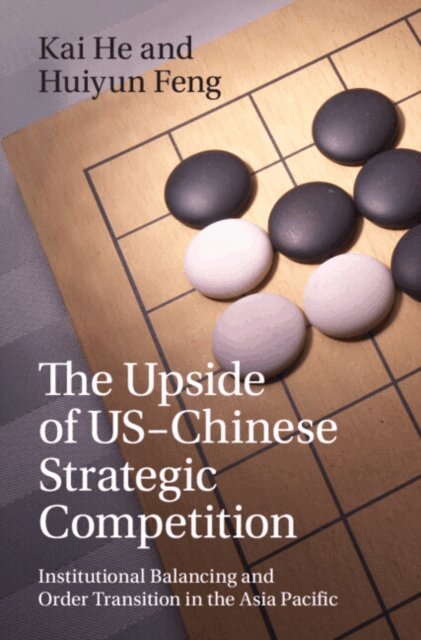
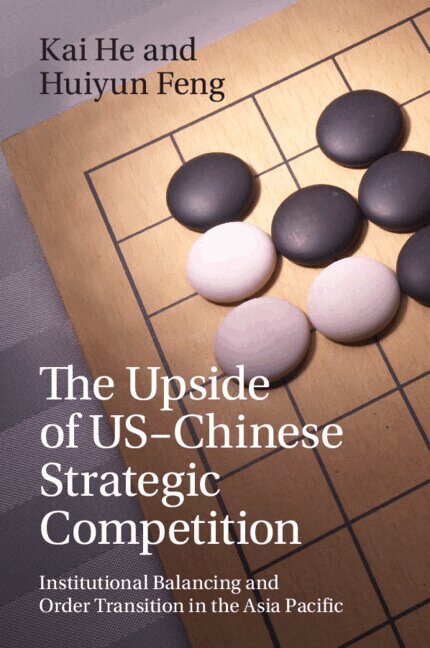
The Upside of US-Chinese Strategic Competition
Institutional Balancing and Order Transition in the Asia Pacific
Av Kai He, Huiyun Feng
Inbunden, 2025
1400 kr
Lägg i varukorg
US-Chinese strategic competition is a defining factor in world politics. The prevailing narrative on US-China relations predicts inevitable conflicts between these two giants, potentially leading to a self-fulfilling prophecy. While fully acknowledging the inherent dangers of potential wars or …
The Upside of US-Chinese Strategic Competition
Institutional Balancing and Order Transition in the Asia Pacific
Av Kai He, Huiyun Feng
Häftad, 2025
455 kr
Lägg i varukorg
US-Chinese strategic competition is a defining factor in world politics. The prevailing narrative on US-China relations predicts inevitable conflicts between these two giants, potentially leading to a self-fulfilling prophecy. While fully acknowledging the inherent dangers of potential wars or …
Navigating International Order Transition in the Indo-Pacific
Av Kai He, Huiyun Feng
Inbunden, 2023
2504 kr
Lägg i varukorg
This book examines how major powers in the Indo-Pacific region cope with and respond to the potential order transition against the background of the strategic competition between the US and China.The world is in a crisis and the liberal international order is at stake with the Covid pandemic and …
Navigating International Order Transition in the Indo-Pacific
Av Kai He, Huiyun Feng
Häftad, 2024
646 kr
Lägg i varukorg
This book examines how major powers in the Indo-Pacific region cope with and respond to the potential order transition against the background of the strategic competition between the US and China.The world is in a crisis and the liberal international order is at stake with the Covid pandemic and …
Chinese Strategic Culture and Foreign Policy Decision-Making
Confucianism, Leadership and War
Av Huiyun Feng
E-bok, 2007
855 kr
Lägg i varukorg
Examining the major academic and policy debates over China’s rise and related policy issues, this book looks into the motivations and intentions of a rising China. Most of the scholarly works on China’s rise approach the question at a structural level by looking at the international system and the …
Chinese Strategic Culture and Foreign Policy Decision-Making
Confucianism, Leadership and War
Av Huiyun Feng
E-bok, 2007
883 kr
Lägg i varukorg
Examining the major academic and policy debates over China’s rise and related policy issues, this book looks into the motivations and intentions of a rising China. Most of the scholarly works on China’s rise approach the question at a structural level by looking at the international system and the …
Prospect Theory and Foreign Policy Analysis in the Asia Pacific
Rational Leaders and Risky Behavior
Av Huiyun Feng, Kai He
E-bok, 2013
840 kr
Lägg i varukorg
Why does North Korea behave erratically in pursuing its nuclear weapons program? Why did the United States prefer bilateral alliances to multilateral ones in Asia after World War II? Why did China become "nice"—no more military coercion—in dealing with the pro-independence Taiwan President Chen …