Humberto Cantú Rivera - Böcker
Visar alla böcker från författaren Humberto Cantú Rivera. Handla med fri frakt och snabb leverans.
4 produkter
4 produkter
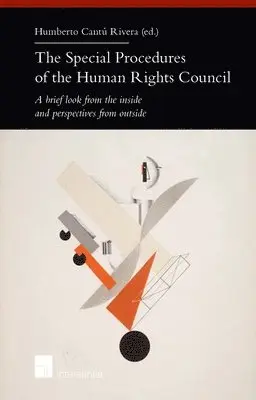
Special Procedures of the Human Rights Council
A brief look from the inside and perspectives from outside
Häftad, Engelska, 2015
669 kr
Skickas inom 5-8 vardagar
The UN Commission on Human Rights began establishing the Special Procedures in the late 1960s. Since then, the UN mechanisms have developed and become veritable tools of human rights protection and monitoring.This book endeavours to capture the evolution of the human rights activity carried out by the Special Procedures and evaluate their importance and impact. It provides a thorough and up-to-date insight of the institutional history of the Special Procedures, analyzes their legal dimension, puts forward a conceptual definition of them, elucidates their evolution and assesses their effectiveness.This book makes an important and unique contribution to the study of UN human rights monitoring mechanisms by providing a systematic analysis and conceptualization of the Special Procedures. Also by singling out indicators to evaluate the impact of the Procedures' practice, this study brings innovative elements to the academic debate on the measurement of human rights bodies' activity.
1 548 kr
Skickas inom 10-15 vardagar
This book addresses one of the core challenges in the corporate social responsibility (or business and human rights) debate: how to ensure adequate access to remedy for victims of corporate abuses that infringe upon their human rights. However, ensuring access to remedy depends on a series of normative and judicial elements that become highly complex when disputes are transnational. In such cases, courts need to consider and apply different laws that relate to company governance, to determine the competent forum, to define which bodies of law to apply, and to ensure the adequate execution of judgments. The book also discusses how alternative methods of dispute settlement can relate to this topic, and the important role that private international law plays in access to remedy for corporate-related human rights abuses.This collection comprises 20 national reports from jurisdictions in Europe, North America, Latin America and Asia, addressing the private international law aspects of corporate social responsibility. They provide an overview of the legal differences between geographical areas, and offer numerous examples of how states and their courts have resolved disputes involving private international law elements. The book draws two preliminary conclusions: that there is a need for a better understanding of the role that private international law plays in cases involving transnational elements, in order to better design transnational solutions to the issues posed by economic globalisation; and that the treaty negotiations on business and human rights in the United Nations could offer a forum to clarify and unify several of the elements that underpin transnational disputes involving corporate human rights abuses, which could also help to identify and bridge the existing gaps that limit effective access to remedy. Adopting a comparative approach, this book appeals to academics, lawyers, judges and legislators concerned with the issue of access to remedy andreparation for corporate abuses under the prism of private international law.
1 548 kr
Skickas inom 10-15 vardagar
This book addresses one of the core challenges in the corporate social responsibility (or business and human rights) debate: how to ensure adequate access to remedy for victims of corporate abuses that infringe upon their human rights. However, ensuring access to remedy depends on a series of normative and judicial elements that become highly complex when disputes are transnational. In such cases, courts need to consider and apply different laws that relate to company governance, to determine the competent forum, to define which bodies of law to apply, and to ensure the adequate execution of judgments. The book also discusses how alternative methods of dispute settlement can relate to this topic, and the important role that private international law plays in access to remedy for corporate-related human rights abuses.This collection comprises 20 national reports from jurisdictions in Europe, North America, Latin America and Asia, addressing the private international law aspects of corporate social responsibility. They provide an overview of the legal differences between geographical areas, and offer numerous examples of how states and their courts have resolved disputes involving private international law elements. The book draws two preliminary conclusions: that there is a need for a better understanding of the role that private international law plays in cases involving transnational elements, in order to better design transnational solutions to the issues posed by economic globalisation; and that the treaty negotiations on business and human rights in the United Nations could offer a forum to clarify and unify several of the elements that underpin transnational disputes involving corporate human rights abuses, which could also help to identify and bridge the existing gaps that limit effective access to remedy. Adopting a comparative approach, this book appeals to academics, lawyers, judges and legislators concerned with the issue of access to remedy andreparation for corporate abuses under the prism of private international law.
3 650 kr
Skickas inom 5-8 vardagar
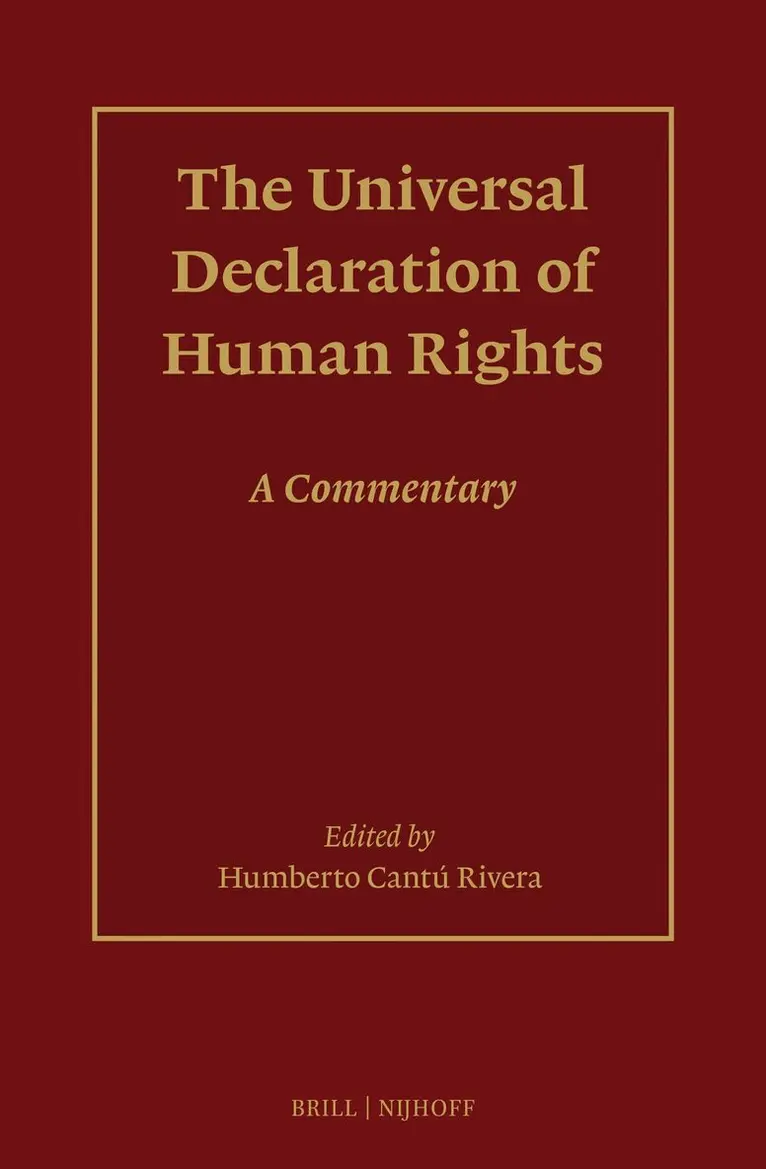
The adoption of the Universal Declaration of Human Rights (UDHR) on 10 December 1948 by the United Nations General Assembly marked a groundbreaking moment in the field of international law. Not only would it start to move away from its original conception as an exclusively State-centered domain: it would also mark the progressive transformation of international law into a law for humankind. This instrument started a codification and institution-building process that would slowly evolve into a complex framework of treaties, bodies and procedures revolving around the protection of the human being against the actions – or omissions – of the State. This commentary provides a specific article-by-article analysis and reflection of the negotiation history and evolution over time of each one of the rights enshrined therein.