Huub Dijstelbloem – författare
Visar alla böcker från författaren Huub Dijstelbloem. Handla med fri frakt och snabb leverans.
10 produkter
10 produkter
E-bok
Engelska, 2021669 kr
Läs direkt efter köp
Häftad, Engelska, 2020
505 kr
Skickas inom 5-8 vardagar
Inbunden, Engelska, 2020
566 kr
Skickas inom 5-8 vardagar
Häftad, Engelska, 2020
549 kr
Skickas inom 5-8 vardagar
Inbunden, Engelska, 2020
615 kr
Skickas inom 5-8 vardagar
Inbunden, Engelska, 2020
505 kr
Skickas inom 10-15 vardagar
This Open Access book offers a novel view on the benefits of a lasting variation between the member states in the EU. In order to bring together thirty very different European states and their citizens, the EU will have to offer more scope for variation. Unlike the existing differentiation by means of opt-outs and deviations, variation is not a concession intended to resolve impasses in negotiations; it is, rather, a different structuring principle. It takes differences in needs and in democratically supported convictions seriously. A common core remains necessary, specifically concerning the basic principles of democracy, rule of law, fundamental rights and freedoms, and the common market. By taking this approach, the authors remove the pressure to embrace uniformity from the debate about the EU’s future. The book discusses forms of variation that fall both within and outside the current framework of European Union Treaties. The scope for these variations is mapped out inthree domains: the internal market; the euro; and asylum, migration and border control.
Häftad, Engelska, 2020
505 kr
Skickas inom 10-15 vardagar
This Open Access book offers a novel view on the benefits of a lasting variation between the member states in the EU. In order to bring together thirty very different European states and their citizens, the EU will have to offer more scope for variation. Unlike the existing differentiation by means of opt-outs and deviations, variation is not a concession intended to resolve impasses in negotiations; it is, rather, a different structuring principle. It takes differences in needs and in democratically supported convictions seriously. A common core remains necessary, specifically concerning the basic principles of democracy, rule of law, fundamental rights and freedoms, and the common market. By taking this approach, the authors remove the pressure to embrace uniformity from the debate about the EU’s future. The book discusses forms of variation that fall both within and outside the current framework of European Union Treaties. The scope for these variations is mapped out inthree domains: the internal market; the euro; and asylum, migration and border control.
Inbunden, Engelska, 2020
549 kr
Skickas inom 10-15 vardagar
This open access book follows the idea that security policy must be based on strategic analysis. Defence policy and the role of the armed forces can subsequently be determined on the grounds of said analysis. More than ever, internal and external security, and developments both in the Netherlands and abroad are interconnected. The world order is shifting, the cooperation within NATO and the EU is under pressure and the Dutch armed forces are gasping for breath. What is the task of Dutch security and the defence policy? There have been growing calls in the last few years to end the devastating cuts in the defence budget and to invest more in security. The acute threats and conflicts in which the Netherlands are involved have served as a wake-up call. The shooting down of Flight MH17 over Ukraine, the streams of refugees from Syria and other countries, the conflict with Da’esh in Syria and Iraq, and terrorist threats reveal how events in many of the world’s flash-points have a direct or indirect impact on the Netherlands. Conflicts in other countries have a spill-over effect in The Netherlands. This is illustrated by tensions between population groups and the clashes over the Gülen schools after the failed putsch in Turkey on 15 July 2016 and over the constitutional referendum in that country. How do we ensure that any additional funds are not divided amongst the branches of the armed forces without any sense of strategic direction? What should a future-proof security policy that plots the course of defence policy entail? What strategic analyses should lie behind the political choices that are made? This book answers these questions and offers a comprehensive framework addressing among other things human security, national security and flow security.
Häftad, Engelska, 2020
549 kr
Skickas inom 10-15 vardagar
This open access book follows the idea that security policy must be based on strategic analysis. Defence policy and the role of the armed forces can subsequently be determined on the grounds of said analysis. More than ever, internal and external security, and developments both in the Netherlands and abroad are interconnected. The world order is shifting, the cooperation within NATO and the EU is under pressure and the Dutch armed forces are gasping for breath. What is the task of Dutch security and the defence policy? There have been growing calls in the last few years to end the devastating cuts in the defence budget and to invest more in security. The acute threats and conflicts in which the Netherlands are involved have served as a wake-up call. The shooting down of Flight MH17 over Ukraine, the streams of refugees from Syria and other countries, the conflict with Da’esh in Syria and Iraq, and terrorist threats reveal how events in many of the world’s flash-points have a direct or indirect impact on the Netherlands. Conflicts in other countries have a spill-over effect in The Netherlands. This is illustrated by tensions between population groups and the clashes over the Gülen schools after the failed putsch in Turkey on 15 July 2016 and over the constitutional referendum in that country. How do we ensure that any additional funds are not divided amongst the branches of the armed forces without any sense of strategic direction? What should a future-proof security policy that plots the course of defence policy entail? What strategic analyses should lie behind the political choices that are made? This book answers these questions and offers a comprehensive framework addressing among other things human security, national security and flow security.
Häftad, Engelska, 2026
484 kr
Skickas inom 10-15 vardagar
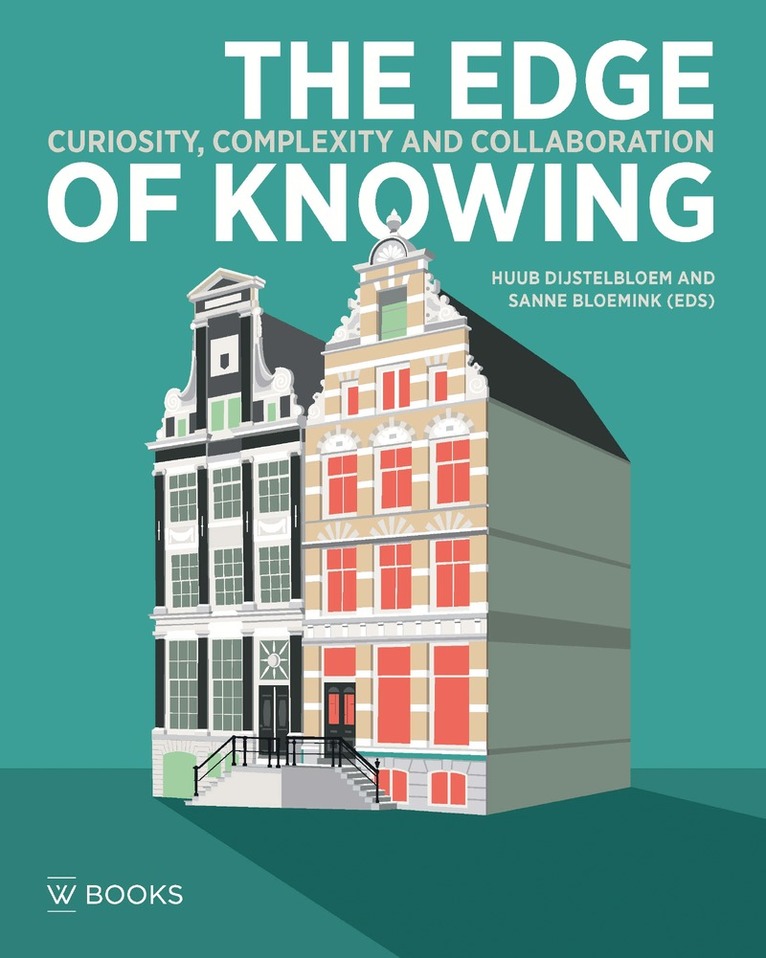
How do new ideas emerge, and how can collaboration across disciplines transform our understanding of the world? The Edge of Knowing provides an insight into the Institute for Advanced Study (IAS) at the University of Amsterdam – an environment where curiosity, complexity and collaboration converge.The IAS brings together researchers from a variety of disciplines to address the defining challenges of our time, such as climate change, health, technology, governance, and the evolving nature of knowledge itself. Through a rich collection of essays and interviews, this book explores what ‘advancement’ in research truly means, examining how it unfolds, what it requires, how it generates impact and how it can be sustained within and beyond institutional boundaries.By tracing the experiences and reflections of scholars working at the intersection of disciplines, The Edge of Knowing explores the conditions that enable innovation and the collective pursuit of understanding. It is both a portrait of a unique institute and a broader inquiry into how research evolves in the face of complexity.