Iain S. McLean – författare
Visar alla böcker från författaren Iain S. McLean. Handla med fri frakt och snabb leverans.
6 produkter
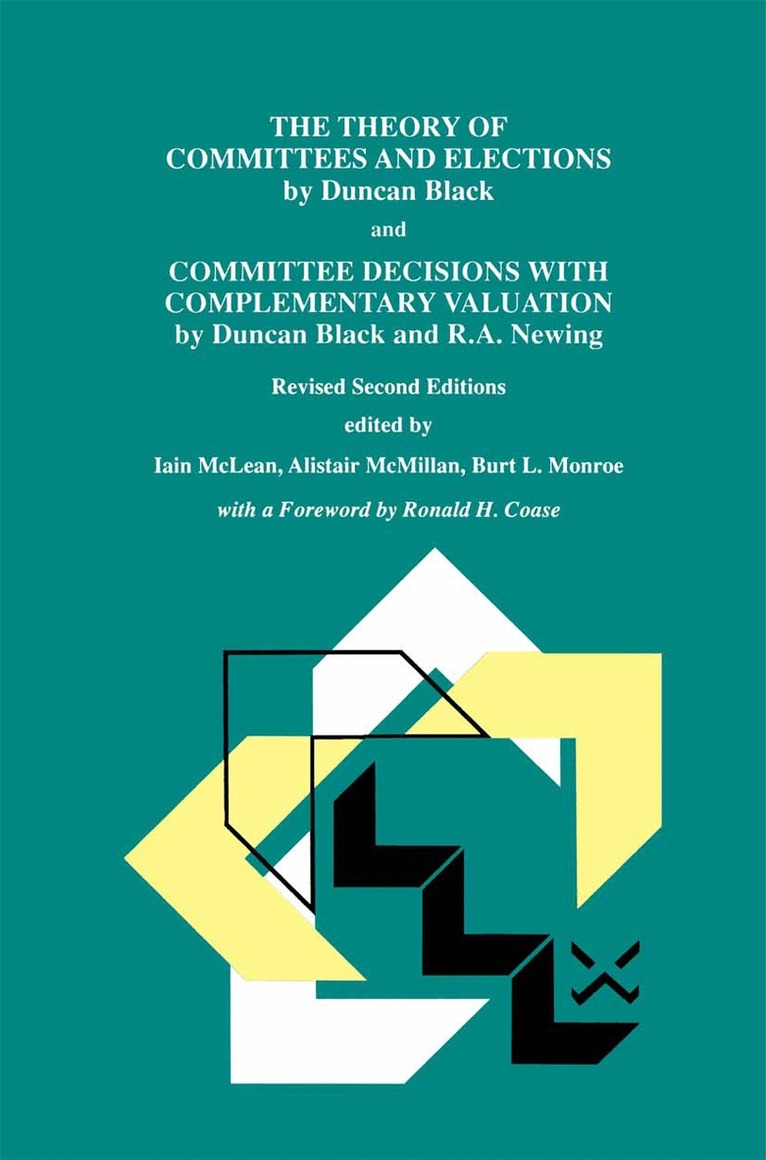
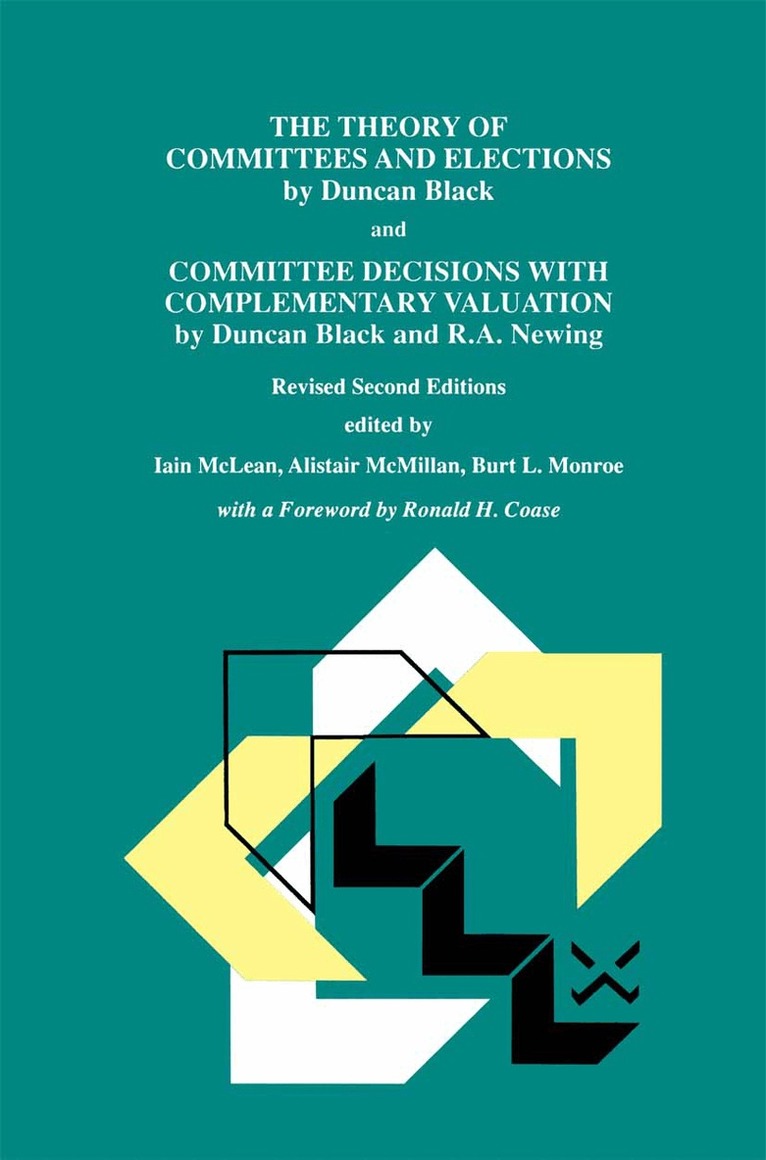
Theory of Committees and Elections by Duncan Black and Committee Decisions with Complementary Valuation by Duncan Black and R.A. Newing
Av Iain S. McLean, Alistair McMillan m. fl.
Inbunden, 1998
2127 kr
Lägg i varukorg
This volume brings together and updates the classic work of the late Scottish political economist Duncan Black. It contains a revision of both "The Theory of Committees" and "Elections", and "Committee Decisions with Complementary Valuation" (with R.A. Newing) based on the notes and annotations of …
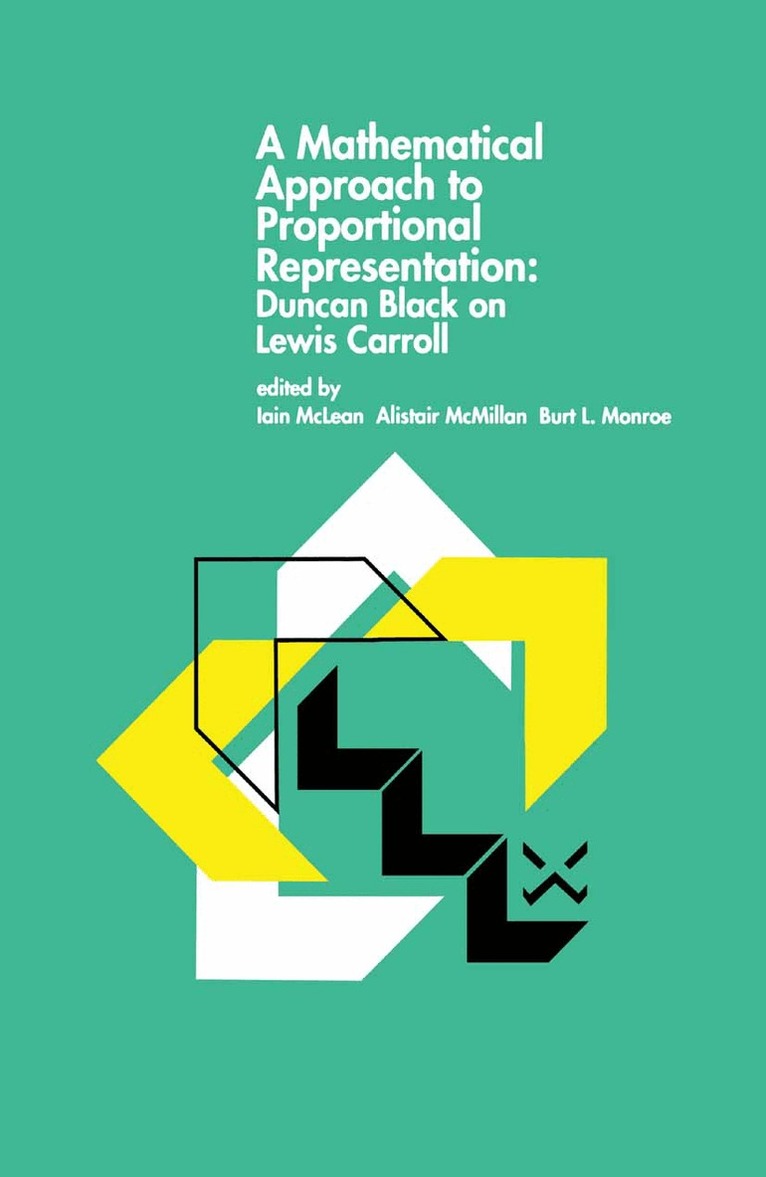
Mathematical Approach to Proportional Representation: Duncan Black on Lewis Carroll
Av Duncan Black, Charles Lutwidge Dodgson m. fl.
Inbunden, 1996
1098 kr
Lägg i varukorg
This book has been edited from the manuscripts of the late Scottish economist, Duncan Black. Shortly after the publication of "The Theory of Committees and Elections", Black started to collect material for papers and a book on Lewis Carroll's theory of proportional representation. Black's chapter …
Mathematical Approach to Proportional Representation: Duncan Black on Lewis Carroll
Av Burt L. Monroe, Alistair McMillan m. fl.
E-bok, 2012
1459 kr
Lägg i varukorg
` This is a book about a well-known writer, Lewis Carroll, and about a little-known subject, the theory of voting '' (from the Editors'' Introduction). This book has been edited from the manuscripts of the late Scottish economist Duncan Black. Shortly after the publication of The Theory of …
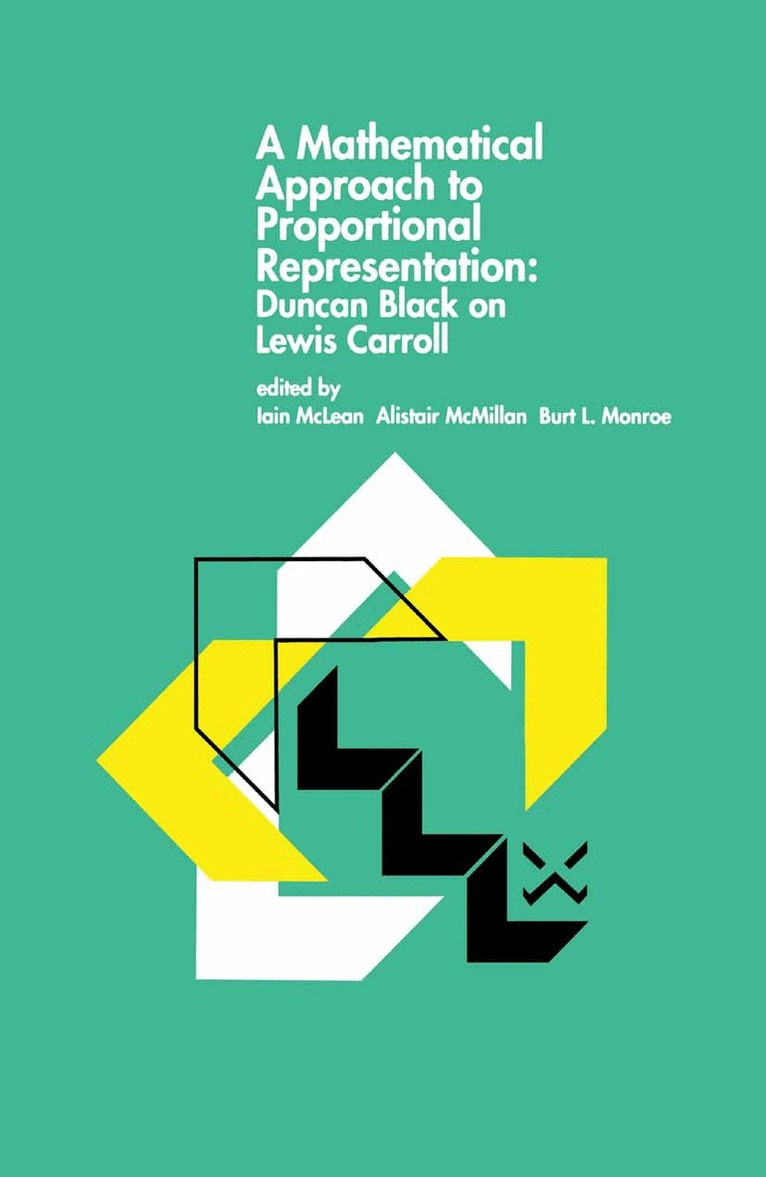
Mathematical Approach to Proportional Representation: Duncan Black on Lewis Carroll
Av Iain S. McLean, Alistair McMillan m. fl.
Häftad, 2012
1098 kr
Lägg i varukorg
`This is a book about a well-known writer, Lewis Carroll, and about a little-known subject, the theory of voting' (from the Editors' Introduction). This book has been edited from the manuscripts of the late Scottish economist Duncan Black. Shortly after the publication of The Theory of Committees …
Theory of Committees and Elections by Duncan Black and Committee Decisions with Complementary Valuation by Duncan Black and R.A. Newing
Av Iain S. McLean, Alistair McMillan m. fl.
Häftad, 2012
2407 kr
Lägg i varukorg
R. H. Coase Duncan Black was a close and dear friend. A man of great simplicity, un worldly, modest, diffident, with no pretensions, he was devoted to scholarship. In his single-minded search for the truth, he is an example to us all. Black's first degree at the University of Glasgow was in …
Theory of Committees and Elections by Duncan Black and Committee Decisions with Complementary Valuation by Duncan Black and R.A. Newing
Av Burt L. Monroe, Alistair McMillan m. fl.
E-bok, 2013
3251 kr
Lägg i varukorg
R. H. Coase Duncan Black was a close and dear friend. A man of great simplicity, un worldly, modest, diffident, with no pretensions, he was devoted to scholarship. In his single-minded search for the truth, he is an example to us all. Black''s first degree at the University of Glasgow was in …