Ian Baxter – författare
Visar alla böcker från författaren Ian Baxter. Handla med fri frakt och snabb leverans.
110 produkter
110 produkter
Häftad, Engelska, 2021
160 kr
Skickas
The Nazis' vast concentration camp network and, later, the 'Final Solution' programme made heavy demands on the SS whose responsibility it was. The use of 'overseers' minimised costs and enabled the camps to run with fewer SS personnel. As this well researched book describes, there were three principal groups of 'helpers': Sonderkommandos, Kapos and Trawniki.The Sonderkommandos' duties included unloading Jews from trains, collecting their possessions and allocating work details. Under SS supervision, they also ran the gas chambers and crematoria.The Kapos oversaw the Sonderkommandos. Many were originally prisoner functionaries recruited from violent criminal gangs and had a well-deserved reputation for brutality.The third group, known as Trawniki or Trawnikimanner, were Central and Eastern European collaborators recruited from Russian POW camps. While some served in a military capacity, others played an instrumental role in the Holocaust programme, rounding up and transporting Jews from the ghettos to the concentration camps.The graphic images and text of this Images of War series work demonstrate that the 'overseer' system was extensive and effective as its members competed without scruple to maintain the favour of their SS masters while pitting victim against victim.
Häftad, Engelska, 2023
262 kr
Skickas
The Vistula-Oder offensive was a massive Soviet Army operation on the Eastern Front which was launched on 12 January 1945 and paved the way for the Battle of Berlin. Its main objective was a major advance from the River Vistula to the River Oder, bringing Soviet forces within fifty miles of the gates of Berlin. The offensive faced a German defensive line east of Warsaw. These 450,000 German troops were outmatched three to one by the Soviet forces. The Red Army assault began what would be a devastating three weeks for the German forces of Army Group A.German attempts to hold their lines and avoid being sucked into a maelstrom of destruction were unsuccessful. Army Group A would collapse almost all the way back to Berlin, ending the Third Reich’s desperate efforts to cling onto land captured in Poland five years earlier, and stem enemy forces spilling over into Germany and threatening Berlin. The battle saw some 295,000 soldiers killed and 147,000 captured, as well as thousands of tanks, artillery, and machine guns destroyed. Within two months of the offensive the battle of Berlin was launched.This fully illustrated book relates this story of defeat and survival, offering a detailed visual record of Nazi Germany’s demise between two main rivers in Poland and Germany.
Häftad, Engelska, 2025
262 kr
Skickas
By October 1943, the German 17th Army had been forced to retreat from the Kuban bridgehead across the Kerch Strait to Crimea. During the following months, the Red Army pushed back the German forces in the southern Ukraine. In November 1943, they eventually cut off the land-based connection of 17th Army through the Perekop Isthmus. Hitler prohibited a sea evacuation of 17th Army because he thought the Red Army could use the Crimean Peninsula to launch air attacks against Romanian oil refineries.In November 1943, the Russian launched a massive amphibious assault at two locations on the eastern coast of the Crimea, but its units were unable to prevent an Axis counterattack that collapsed the southern bridgehead. The Red Army held the bridgehead at Yenikale, from which they launched further offensive operations, culminating in a huge offensive in April 1944. Although the 17th Army bitterly contested every bit of ground, it was unable to stop the advance. Soviet forces reached Kerch on April 11, forcing the 17th Army to retreat towards Sevastopol. The remaining Axis forces in the Crimea were concentrating around the city by the end of the third week of April.The Germans intended to hold Sevastopol as a fortress, as the Russians had done between 1941 and 1942. However, the fortifications of the city had not been restored and the city fell on 9 May. From mid-April, Romanian and German ships undertook a huge and complex evacuation operation. The last phase of the evacuation, following the fall of Sevastopol, saw 37,000 troops transported under constant attacks from Soviet aircraft and shore artillery. Overall around 57,000 men were lost during the evacuation.Fully illustrated with rare and unpublished photos, this is a detailed account of the dogged attempt to retake the Crimea in 1943–44.
Häftad, Engelska, 2020
213 kr
Skickas
Bagration was the code word that the Soviet Army gave for their summer offensive in 1944. This massive offensive led to the destruction of the German Army Group Center and was the greatest military defeat ever experienced by the German Army during World War Two. This book provides an absorbing insight into the German defeat and the Russian offensive using a wide variety of rare and previously unpublished photographs. With detailed captions and text together with 20 artist profiles and maps, the book shows the compelling story of how German Army Group Center tried to counter the overwhelming might of the Soviet Army as it poured thousands of men, weapons and armor across the German lines, smashing its way through. What ensued was a swift and bloody battle of attrition as the German Army tried to contain the might of its unstoppable enemy. In the days and weeks that followed German units fought and gradually retreated under the constant hammer blows of Russian ground and aerial bombardments, and endless armored and infantry attacks. Many German units fighting to the grim death were duty-bound not to withdraw, and what followed was a disaster of a colossal magnitude. As the Soviet might punched a massive hole in the German lines it sent huge shock waves through Army Group Center forcing them to retreat or face total annihilation. However, the Russian offensive was so quick that many of the German units with their precious panzer and infantry divisions quickly became encircled and destroyed - its remnants retreating west in order to save itself. By the end of the battle this cataclysm was bigger than that experienced at Stalingrad. It saw the German Army being pushed out of Russia towards Poland with the loss of over 300,000 men and most of its weaponry lost. The story of the destruction of Army Group Center during the summer of 1944 has been completely overshadowed by the D-Day campaign in Normandy three weeks earlier. Yet, the battle in which the German forces endured on the Eastern Front that fateful summer was more catastrophic than that experienced by the Allies on the Western Front, but little is known of the operation. This book reveals the lesser-known battle in the East and shows how the German forces fought and lost against overwhelming odds.
Häftad, Engelska, 2022
302 kr
Skickas
This is a compelling account of the German defense of the Baltic States of Estonia, Latvia and Lithuania. Against overwhelming Soviet forces the book shows how the German Army Group North was driven across the Baltics from Leningrad and fought a number isolated battles including the defense of Narva, Memel and the Kurland pocket. The book outlines in dramatic detail how Hitler forbade his troops to withdraw, ordering them to follow his Halt Order Decree and fight to the death. However, exhausted and demoralized by continuous Soviet assaults, Army Group North became cut-off and isolated, fighting fanatically to hold the capital cities of Tallin, Vilnius and Riga. What followed were German forces fighting to the death in the last few small pockets of land surrounding three ports: Libau in Kurland, Pillau in East Prussia and Danzig at the mouth of the River Vistula. In the Kurland, German divisions became surrounded and fought a vicious defense until May 1945. Drawing on a host of rare and unpublished photographs accompanied by in-depth captions and text, the book provides an absorbing read of the Red Army's conquering of the Baltics.
Häftad, Engelska, 2025
181 kr
Skickas
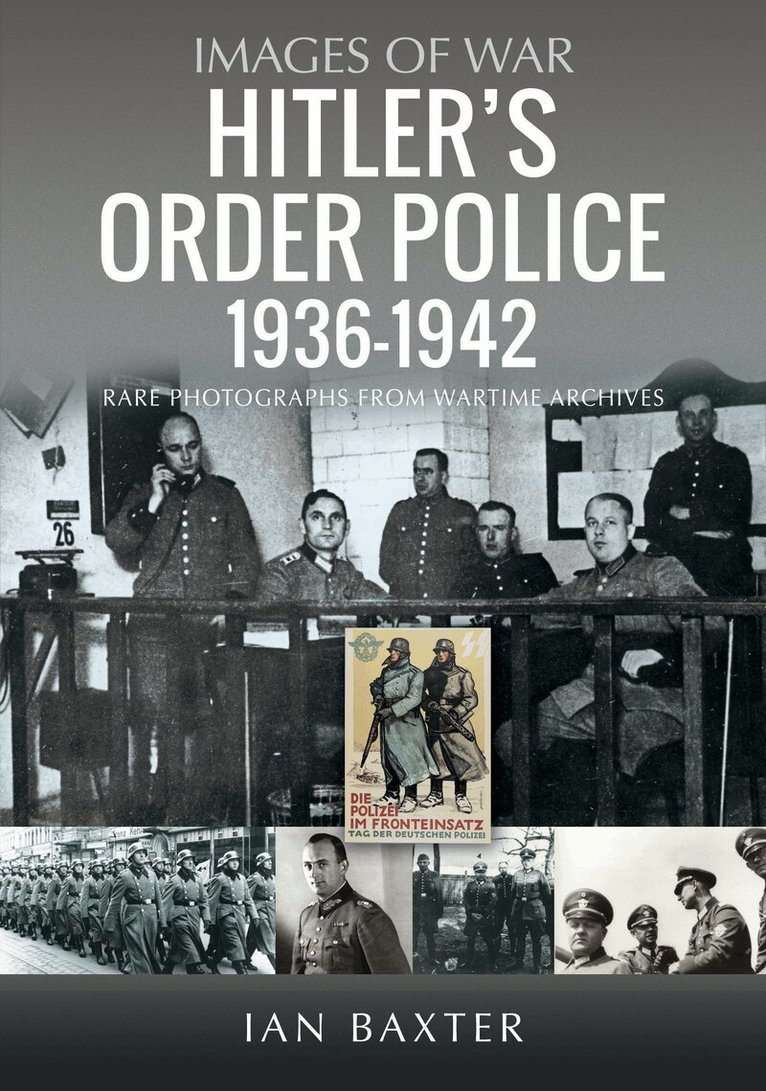
The Ordnungspolizei or Order Police was one of the main apparatus for the security of Nazi Germany. During the 1930s, Heinrich Himmler, Head of the SS, along with the Commander-in-Chief of the Order Police, Kurt Daluege, totally reconstructed the police force of the Weimar Republic into a number of strong militarized formations. Those that served in this new police force were more than ready to carry out any order that the Nazi's required of them including persecution of Jews and anyone deemed inferior to the regime. In fact, in 1938, police units participated in the annexation of Austria and the occupation of Czechoslovakia. A year later when Germany invaded Poland, the role of the police changed forever. Police units were deployed alongside the German military including the special murder squads of the Einsatzgruppen. In Poland, Order Police were transformed into militarized police battalions and participated in combat operations which included carrying out security duties behind enemy lines. These duties were often sinister and alongside some Wehrmacht, Waffen-SS and Einsatzgruppen, the police battalions engaged in the systematic murder and annihilation of Poles and Jews.Following the conquest of Poland the Nazi leadership created a massive recruitment drive conscripting more than 95,000 men in their thirties. Another 26,000 younger men were also recruited and indoctrinated into Nazi ideology and trained for combat. These new recruits would now take part not only in military operations but would be an integral part of the Holocaust, responsible for mass murders and guarding some of the Jewish ghettos. They would also assist in the destruction of the ghettos and helping in the transport of Jews to concentration camps. During the summer of 1941 these Police units were involved in mass killings of Babi Yar, Rumbula and Stanislaviv. Yet after the war, many of the Order Policemen claimed never to have been involved in Nazi crimes.
Häftad, Engelska, 2021
160 kr
Skickas
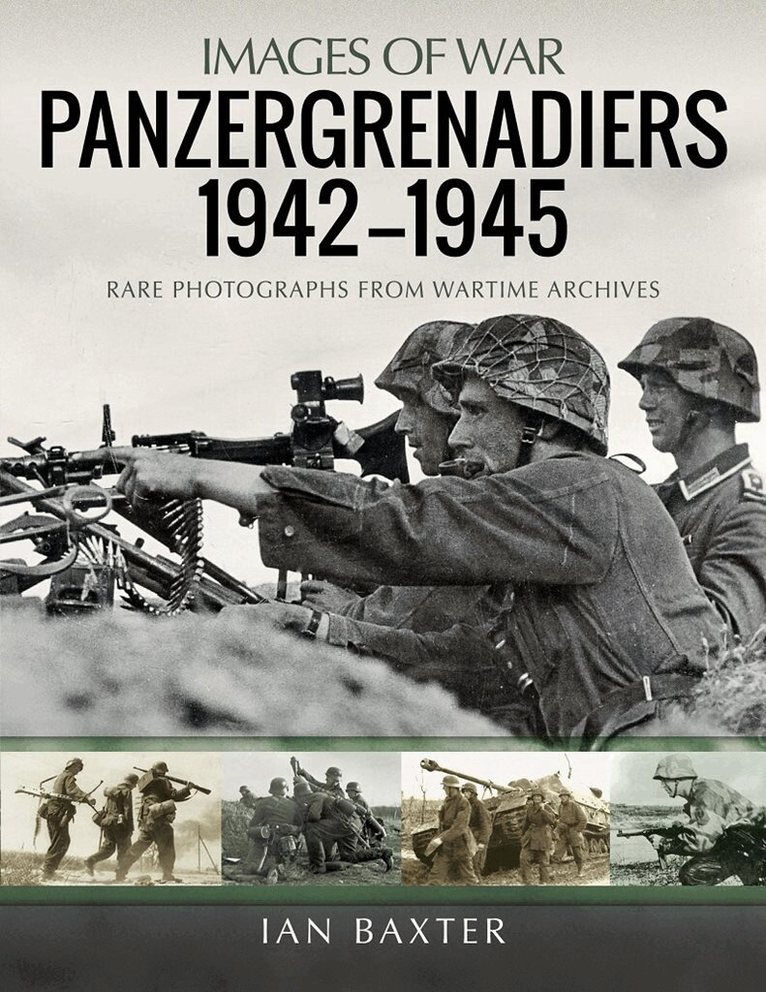
The term Panzergrenadier was introduced in 1942 and applied equally to the infantry component of Wehrmacht, Luftwaffe and later Waffen-SS Panzergrenadiere divisions.As this classic new Images of War book describes, these elite divisions fought as mechanized infantry and escort for and in close cooperation with panzers and other armoured fighting vehicles. Trained to fight both mounted and on foot, their priority was to maintain the fast momentum of armoured troops on the battlefield.Using a wealth of rare, often unpublished, photographs with detailed captions and text, the author charts the fighting record of the Wehrmacht and Luftwaffe Panzergrenadiertruppe units.This includes their initial successes on the Eastern Front. But as defeat approached, they were forced on the defensive on all fronts including the bitter fighting in Italy and the Western Front. As well as describing their many actions, the book details the vehicles and weapons used and main personalities.
Häftad, Engelska, 2020
184 kr
Skickas
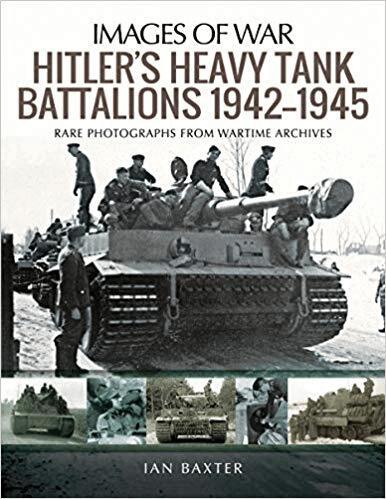
With rare, often unpublished photographs and full captions Hitler's Heavy Tank Battalions provides a superb record of the Wehrmacht's Schwere Panzerableilung on operations between 1942 and 1945.In addition to the Tiger I and successor Tiger II heavy tanks, these battalions were equipped with Pz.Kpfw III's, Flakpanzer IV, Sd. Kfz 7/1 self-propelled anti-aircraft guns, Sd.Kfz 9 and 10 halftracks, Sd.Kfz 2 and Kettenkrad gun tractors. The Tigers required substantial maintenance and the Berge Panther armoured recovery vehicle played a key role.Heavy tank battalions saw action on the Eastern Front, in Italy and North West Europe before being pushed back to Berlin for the final defensive battles and there are graphic photographs and descriptions of vehicles on operations in all these theatres.While feared by the Allies in the early years, these units suffered increasing attrition from anti-tank artillery, ground attack aircraft and mechanical issues.Modellers and equipment buffs in particular will find this latest Images of War book extremely useful and fascinating.
Häftad, Engelska, 2020
160 kr
Skickas
From July 1943 to the Nazis' final defeat in May 1945 the Panther main battle tank and its variants were the mainstay of Germany's armoured forces. This superbly engineered fighting vehicle offered a lethal combination of firepower, mobility and protection.As this classic Images of War series title reveals, the Panther saw non-stop fighting on the Eastern, Western and Italian fronts. Using rare and often unpublished contemporary photographs with full captions and authoritative text, it provides a comprehensive coverage of elite Panther battalions in action.The book traces the development of the Panther, for example into tank hunter (Panzerjager), and also covers the other supporting vehicles that formed part of the Panther battalions' establishment. These included armoured recovery, Bergepanther, halftracks, Sd.kfz.2 Kettenrad, gun tractors and communications vehicles.
Häftad, Engelska, 2021
150 kr
Skickas
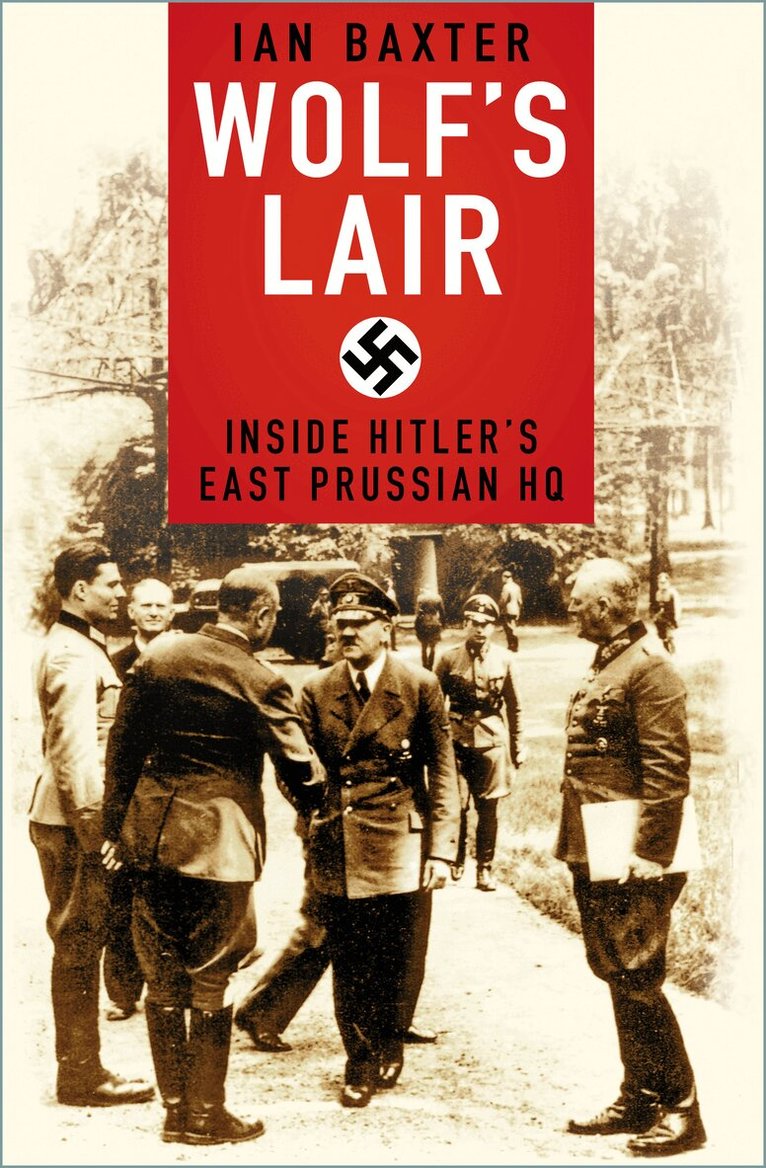
The Wolf's Lair was the most important German command post building during the Second World War. Orders sent from these secret headquarters would play a massive part in the outcome of the War.Ian Baxter looks in to the inner workings of Hitler's headquarters, highlighting the decisions that were made and analysing how they came about. Baxter not only utilises published works, unpublished records, military documents and archives on the subject, but also digs deep into the contemporary writings of Hitler's closest personal staff, seeking to disentangle the truth through letters written by wives, friends, adjutants, private secretaries, physicians, and of course his military staff.Baxter extensively examines life within the Fuhrerhauptquartiere, where from behind closed doors, inside the claustrophobic atmosphere of the bunkers Hitler planned and gossiped with his associates. However, as defeat loomed, Hitler surrounded himself not with his intimate circle of friends, but what he considered were illiterate soldiers. Baxter shows how Hitler's contempt for his war staff grew. It describes, during the onset of the traumatic German military reverses in Russia, how Hitler stood unbowed in the face of the enemy, and how he tried to infuse determination into his generals and friends, despite his rapid deterioration in health.
Häftad, Engelska, 2024
160 kr
Skickas
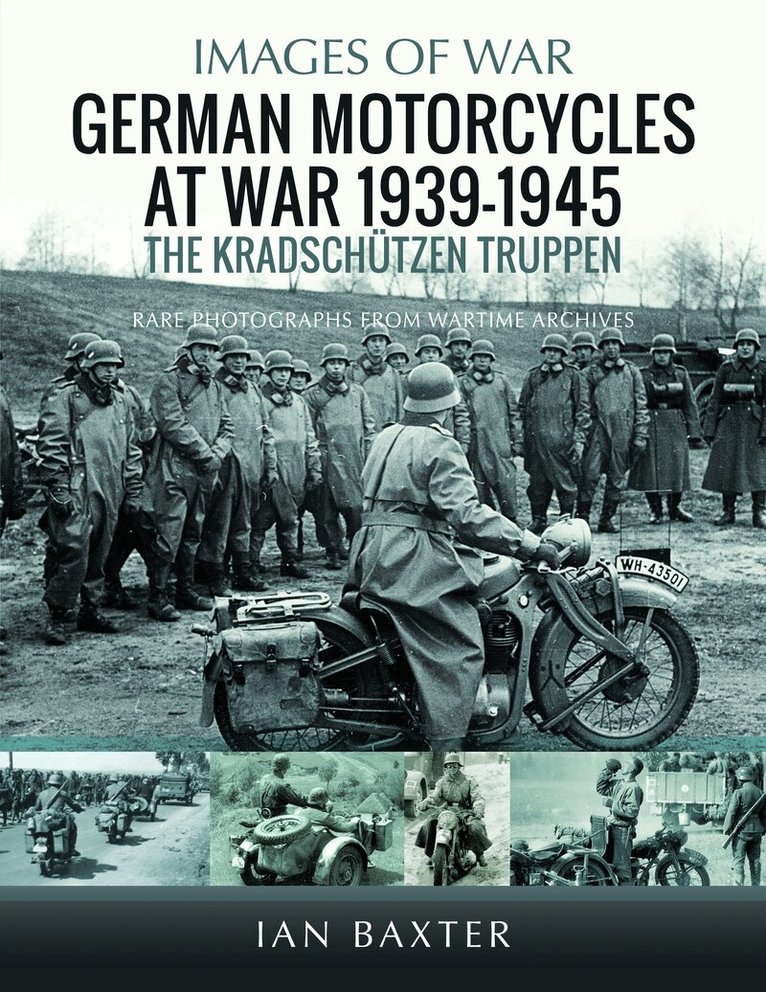
The success of fast-moving Blitzkrieg tactics by the Nazi war machine depended on high mobility. With their on- and off-road capabilities, motorcycles became an important component of the Nazi war machine’s arsenal making a particularly significant impact in French and Russian campaigns.The motorcycles were used in a variety of roles including patrolling, intelligence gathering, and police duties in occupied Europe. Motorcyclists could be found in every unit of an infantry and Panzer division including headquarters which had a motorcycle messenger platoon. Their versatility also enabled them to survey enemy positions until coming under fire before reporting back with vital intelligence relating to enemy locations and strengths.The German industry produced wide range of motor-bikes for military use. By 1938 some 200,000 motorcycles were produced in Germany and occupied territories. The principal makes included BMW, DKW, NSU, Triumph, Victoria, and Zundapp. Sidecar combinations, often mounted with an MG34/42 machine gun, also made the bike a very effective weapon.By describing in words and contemporary images the role of the German motorcycle and motorcyclists during the Second World War, this Images of War book fills an overlooked gap in coverage of Nazi military capability. It emphasizes that the German military perfected the use of motorcycles and employed them more widely than any other army.
Häftad, Engelska, 2025
160 kr
Skickas
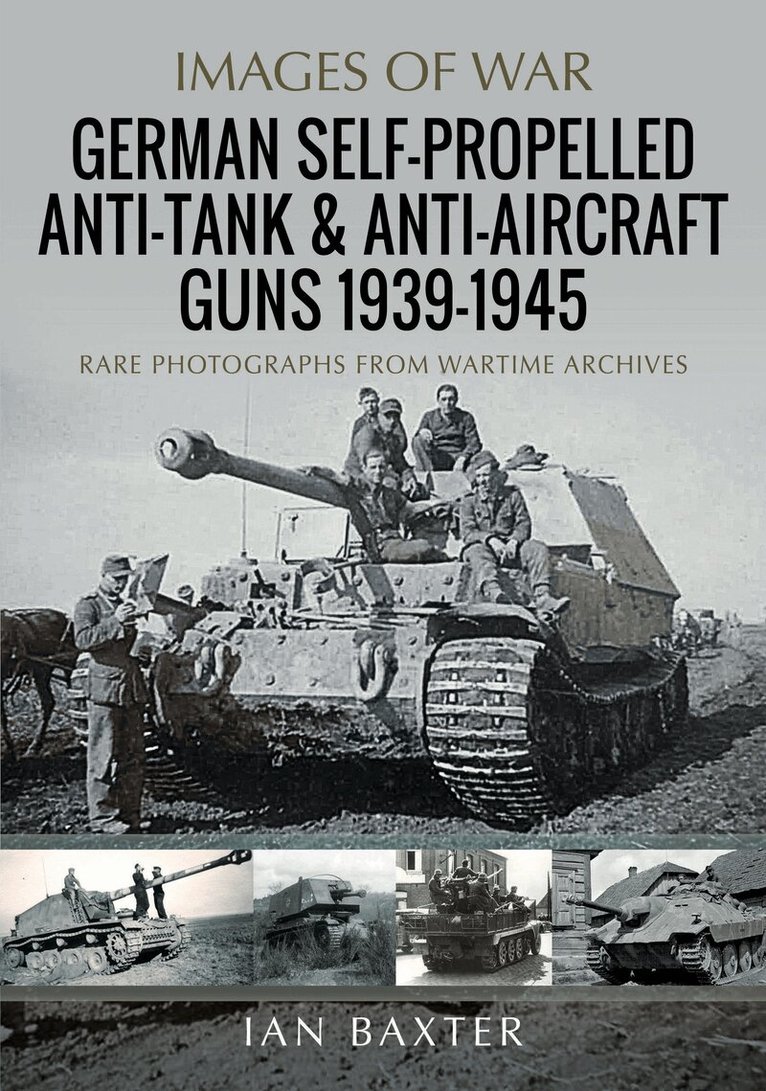
Self-propelled anti-tank and anti-aircraft vehicles were a key element of the Nazi Army during the Second World War. Anti-tank weapons assumed great importance from the outbreak of war as combatants developed ever more effective armoured vehicles and tactics. Some were little more than stopgap solutions, such as mounting the weapons on a tracked vehicle to give enhanced mobility, while others were more sophisticated designs. Examples of the development of tank destroyer technology throughout the war are the Marders, Jagdpanzer 38, and Nashorn. In order to provide much needed fire power, vehicles like the 5-ton Sd.Kfz.6 halftrack mounted Soviet 76.2mm field guns. The Marder series played a key role supporting armoured operations with their anti-tank guns.Anti-aircraft firepower was vital to give protection to troops from increasingly potent Allied ground-attack. The Germans also mounted anti-aircraft guns onboard halftracks such as the Sd.Kfz.10/5 and 10/4 armed with 2cm Flak guns, the medium Sd.Kfz.7/1 halftrack mounting 2cm flak guns, including quadruple flak guns on certain modified vehicles. Later in the war there was the Flakpanzer 38 (t) with a 2cm flak gun, an Sd.Kfz.6/2 Flak halftrack, and the Flakpanzer IV `Wirbelwind` with a rotating flak gun turret armed with quadruple 2cm flak guns.In true Images of War style the authoritative text is superbly supported by well captioned contemporary images.
Häftad, Engelska, 2025
160 kr
Skickas
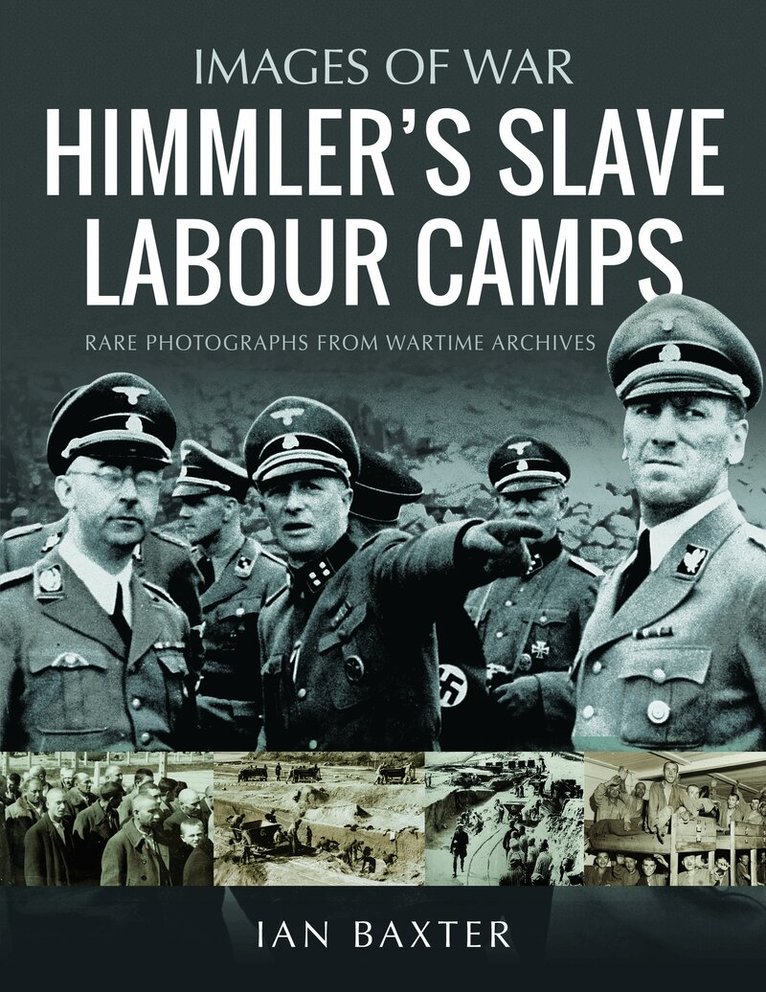
Shortly after their rise to power, the Nazis established specific Arbeitslager (labour camps) which housed Ostarbeiter (eastern workers), Fremdarbeiter (foreign workers) and other forced labourers who were rounded up and brought in from the east. These were distinct from the SS-run concentration camps.The use of forced labour grew significantly in 1937 due to rearmament requirements and again after the outbreak of warThe invasion of the Soviet Union in June 1941 further heightened demands for labour and the availability of new workers in areas under Nazi occupation. Vast numbers were deported to forced labour camps, where they worked either producing war materials or on construction projects.As in the Nazis’ view, inmates were slaves pure and simple and replaceable with others, there was a complete disregard for the health of prisoners. Required to work long hours with little or no time for rest or breaks they were subject to insufficiencies of food, equipment, medicine and clothing. As a result of these conditions and brutal treatment, death rates were shockingly high.By 1945, more than fourteen million people had been exploited in the network of hundreds of forced labour camps that stretched across Nazi-occupied Europe. In true Images of War series style, this superbly illustrated book graphically describes the growth of the slave camp system and the conditions inflicted on the luckless labour force.
Häftad, Engelska, 2025
160 kr
Skickas
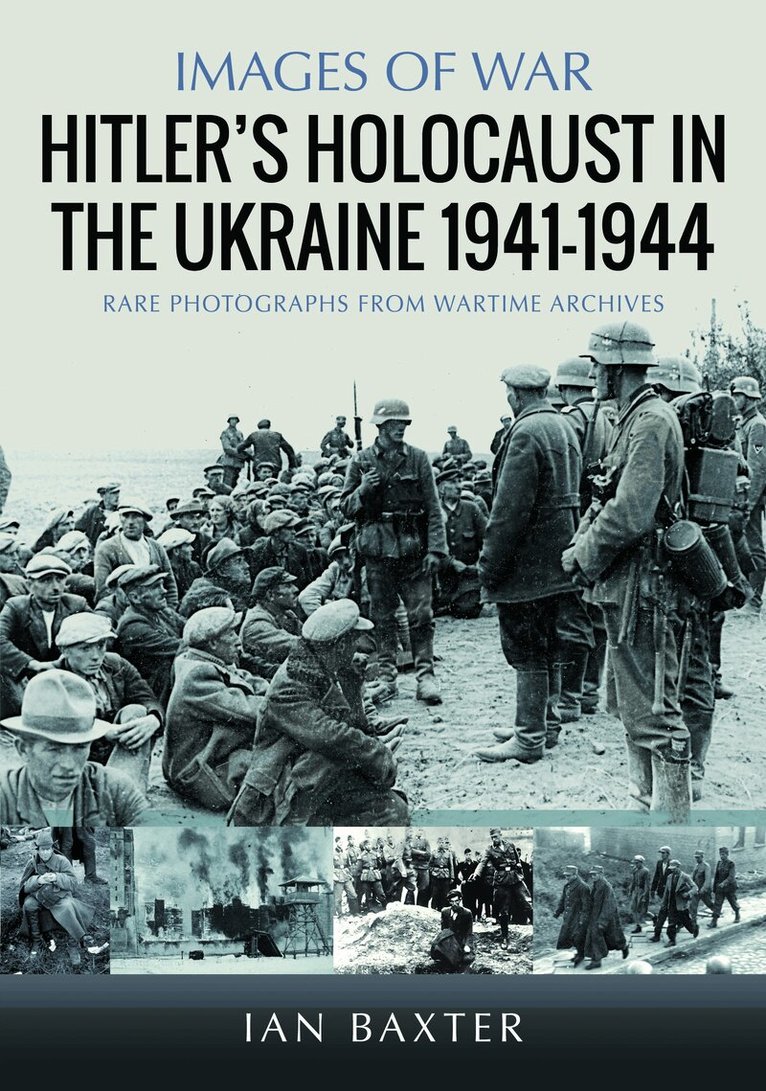
Prior to the German invasion of the Soviet Union in June 1941, Ukraine was home to one of the largest Jewish populations in Europe. It is estimated that almost one million Jews were murdered in the Ukraine between 1941 – 1944. Many of those Jews killed in 1941 were by the Einsatzgruppen death squads, Order Police Battalions, Ukrainian Police Auxiliary units, collaborators and Wehrmacht forces. Most of those people executed were killed close to where they lived.Holocaust in the Ukraine tells the plight of the Jewish community in the Ukraine and the mass killings that took place there. It shows how German forces occupied a large part of German-occupied Ukraine, and incorporated it into what was known as the Reichskommissariat Ukraine.Within a week of the German invasion of the Ukraine police units and their auxiliaries, under the guidance of members of the Einsatzgruppen began murdering Jewish communities. There were various massacres including Babyn Yar where some 33,000 Jews were executed during a two-day period in August 1941.One of the first massacres in the Ukraine was ordered only days after the start of the German invasion known as the Lviv pogroms where 6,000 Jews were murdered by Einsatzgruppen and Ukrainian nationalist. This was followed by other wholesale murders which included the Kamianets-Podilsky massacre where some 23,000 residents were killed. Other killings too included the Pavoloch, Berdychiv, Odessa Artemivsk Sarny massacrews and numerous other killings across the country.With detailed captions and text together with a host of rare photographs, this Images of War book is an important study of how Ukraine was subjected to a Nazi policy of terror with an ideological goal of eradicating communism and destroying the Jews and the Ukrainians, who were all classed as sub-human.
Inbunden, Engelska, 2025
313 kr
Skickas
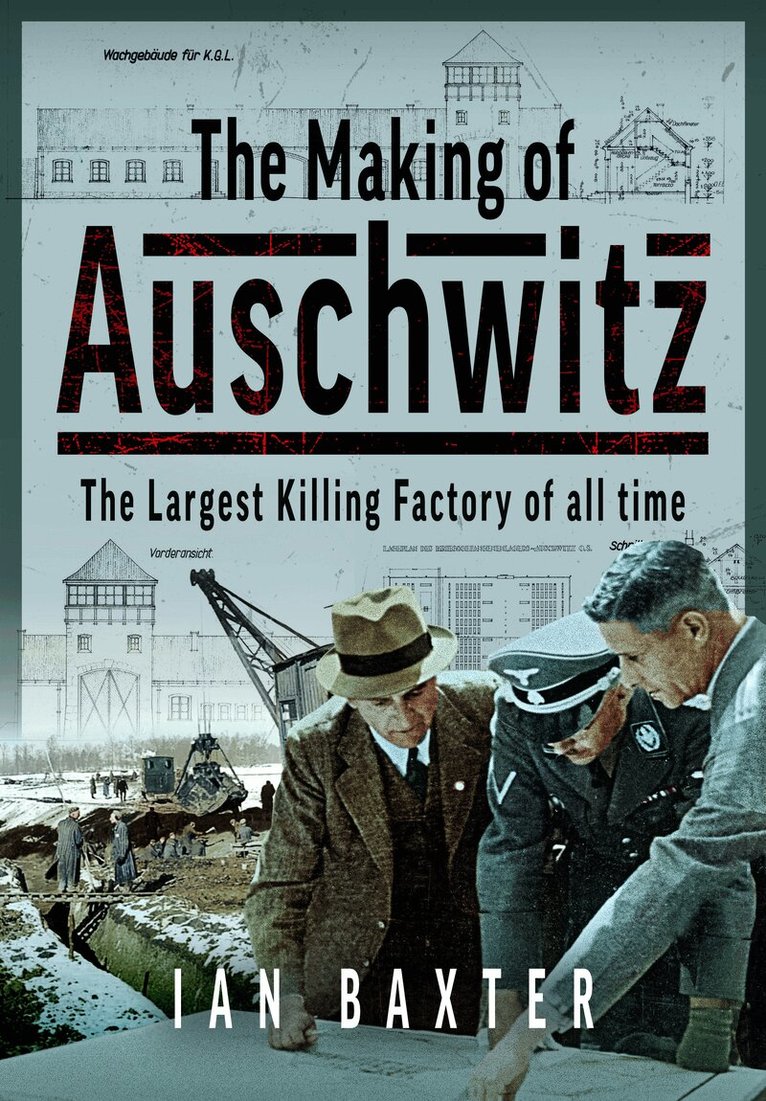
Commemorating 80 years since the liberation of Auschwitz-Birkenau, this book tells the story of the camp’s construction and its evolution into the largest mass murder factory of all time. Using hundreds of captured German documents and architectural plans, the book is a unique historical source of how the architects came to plan and accomplish the horror we now call Auschwitz.Drawing on key documents from the Building Office archive, this in-depth study uses plans, letters, telegrams, worksite labour reports and minutes of meetings. It reveals how the SS needed civilian knowledge to install electrical, sewage and heating systems, and build chimneys and other structures. It explains how various outside contractors were involved in cooperating in genocide and shows just how eager they were to produce goods for the SS for financial reward.Just after the construction had begun on Birkenau in 1941, architectural plans were presented to include new crematoria and gas chambers. By the summer of 1943 Birkenau had been transformed into a murder camp but building and planning to further extend the site continued. In November 1944 Himmler gave the order to halt and dismantle the extermination facilities to conceal their murderous activities. When the Red Army arrived on 27 January 1945, most of the camp was still intact. Although the SS had incinerated the camps’ archives they forgot to destroy the construction archive, which was kept in another building. As a result, the Russians found many of the technical drawings including construction blueprints that clearly detailed the extermination facilities.With detailed captions and text together with a plethora of rare photographs, the book is an important study into those that masterminded the murder of over 1 million people.
Häftad, Engelska, 2025
181 kr
Skickas
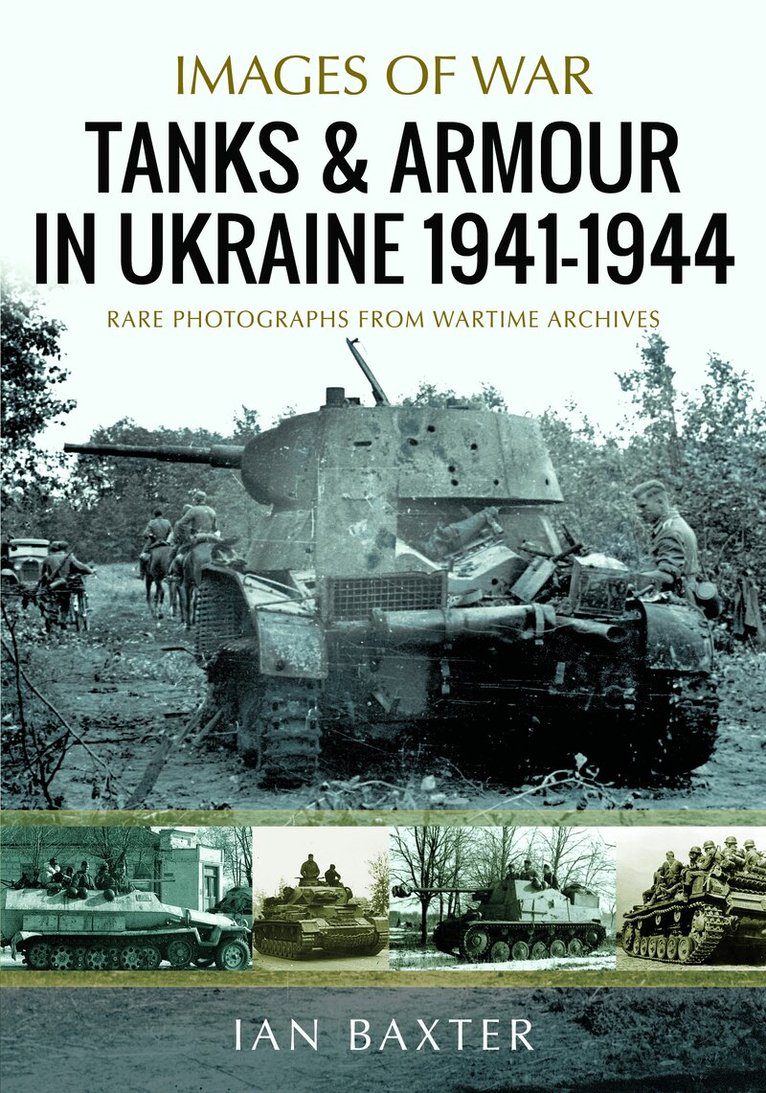
When the German war machine launched its attack against the Soviet Union on 22 June 1941, Adolf Hitler had given priority first to the capture of Ukraine, which was against the advice of his generals. In order to secure Ukraine quickly and effectively the German Army Group South entrusted its powerful Panzer Group 1 to lead the spearhead through the country. It included the III, XIV and XLVIII Army Corps (motorized) with five Panzer divisions and four motorized divisions (two of them SS) equipped with 799 tanks. Unlike their enemy, German armoured units had effective command, control, communication, and a massive supply of ammunition and support formations coupled with considerable combat experience and extensive training. What followed in the heartlands of the Ukraine was a series of powerful wide-sweeping, deep penetrating armoured attacks toward the Dnieper River. Places like Dubno, Brody, Kiev, Crimea and Kharkov saw heavy armoured fighting.This book in the Images of War series is a highly illustrated record of German tanks and armour that fought in the Ukraine between 1941 and 1944. It describes how these deadly machines fought and supported the infantry on the battlefield. It depicts how these formidable weapons were adapted and up-gunned to face the ever-increasing enemy threat. With rare and often unpublished photographs this book provides a unique insight into German armour in the Ukraine from its early triumphant days in 1941 and 1942 to its slow and painful retreat in 1944.
Häftad, Engelska, 2026
160 kr
Skickas
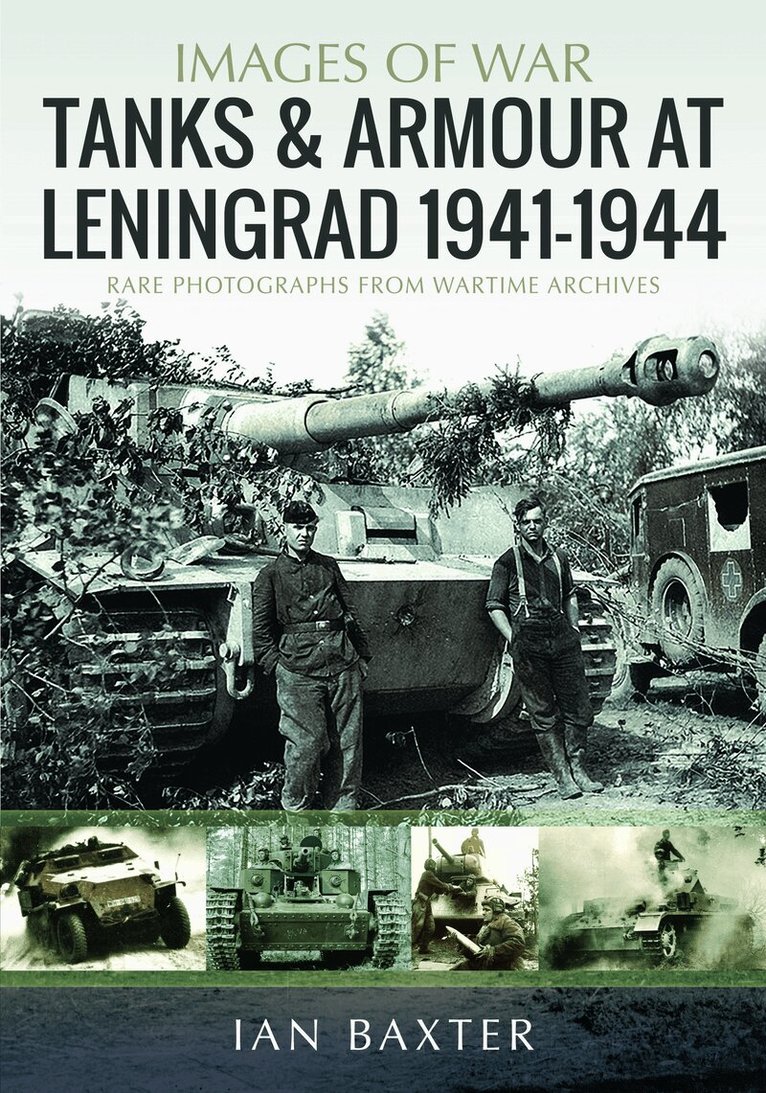
At dawn on 22 June 1941, along an 1,800-mile-long invasion front, three million German soldiers on the frontier of the Soviet Union unleashed the largest offensive in military history – Operation Barbarossa. Spearheading this titanic clash was Field Marshal Ritter von Leeb, commander of Army Group North. With 500,000 men at his disposal, comprising almost thirty divisions, six of them armoured and motorized, with 1,500 Panzers and 12,000 heavy weapons, plus an air fleet of nearly 1,000 planes, he was determined to strike through the Baltic states of Lithuania, Latvia and Estonia, straight towards their objective – Leningrad.Leeb’s offensive on Leningrad was rapid. Its armoured force was the backbone of the advance comprising of the 3rd and 4th Panzer Group with Field Marshal Erich von Manstein commanding the LVI Motorized Corps and General Rudolf Schmidt’s XXXIX Motorized Corps that included the 12th, 18th and 20th Panzer Divisions.Tanks and Armour at Leningrad 1941–1944 provides a powerful visual chronicle of how the Panzerwaffe attacked and supported the infantry that battled around the besieged city of Leningrad. With 150 rare and often unpublished images, this book provides a unique insight into German armour that operated around Leningrad from its early triumphant days in 1941 and 1943 to its slow and painful retreat in early 1944.
Häftad, Engelska, 2026
156 kr
Skickas
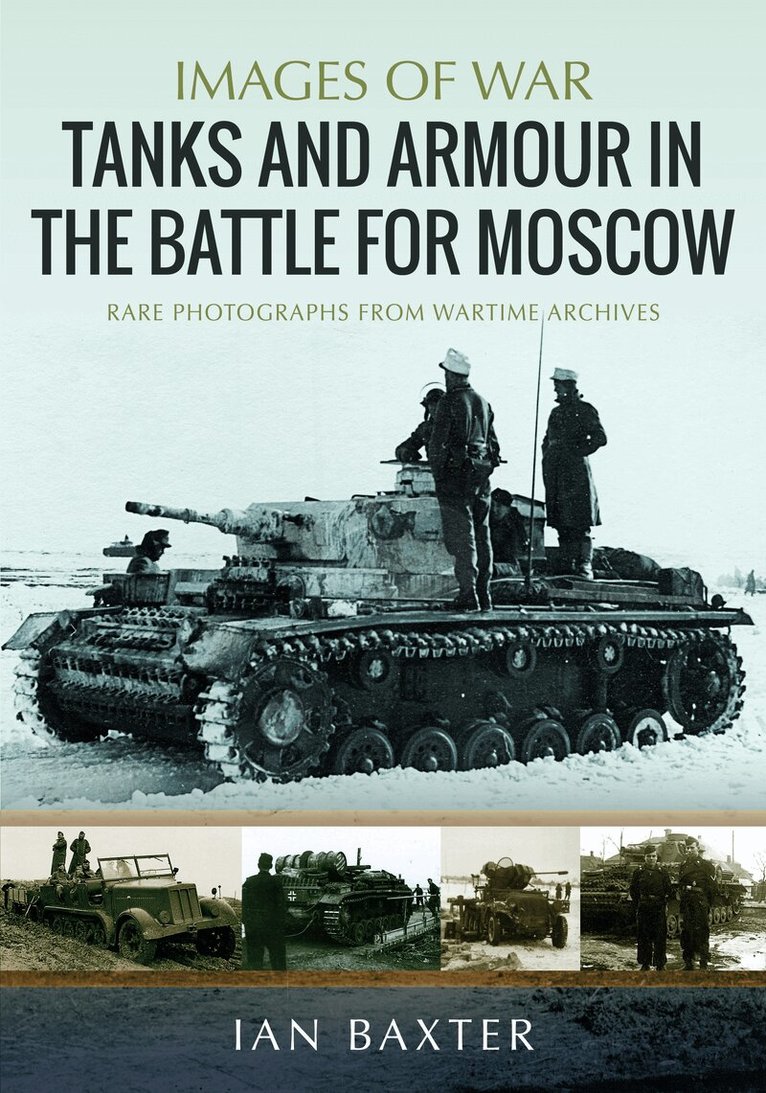
From the moment Germany launched its invasion of the Soviet Union in June 1941, code-named Operation Barbarossa, Hitler was fixated on the capture of Moscow. Yet his fear of exposing the flanks of the German Central Front led to costly diversions north and south at Leningrad and Kiev, delaying the assault on the Russian capital. When the Battle of Moscow – Operation Typhoon – finally began on 30 September, the Panzerwaffe was already weakened while Soviet forces had fortified their defences and reinforced their lines.Spanning a 370-mile front, 3rd and 4th Panzer Armies in the north and 2nd Panzer Army in the south surged towards Moscow in a vast pincer movement with hundreds of tanks and assault guns in tow, relying on the familiar tactics of Blitzkrieg. But what followed was no lightning war. Instead, German tanks and infantry were dragged into a gruelling battle of attrition during the coldest recorded winter of the twentieth century. Snowbound and under-supplied, with entire units freezing to death, the offensive ground to a halt before the gates of the capital.Tanks and Armour in the Battle for Moscow offers a compelling visual account of the Panzerwaffe’s doomed advance on Moscow, drawing on over 130 rare and unpublished wartime photographs. Through detailed captions and expert narrative, it follows the campaign from its faltering restart in the spring of 1942 to the bloody Rzhev-Sychyovka offensive and beyond, charting how the Germans lost the initiative on the Eastern Front. By early 1943, any hope of capturing Moscow had vanished, and a protracted retreat westward had begun – one that would not end until the Reich itself lay in ruins.
Häftad, Engelska, 2026
160 kr
Kommande
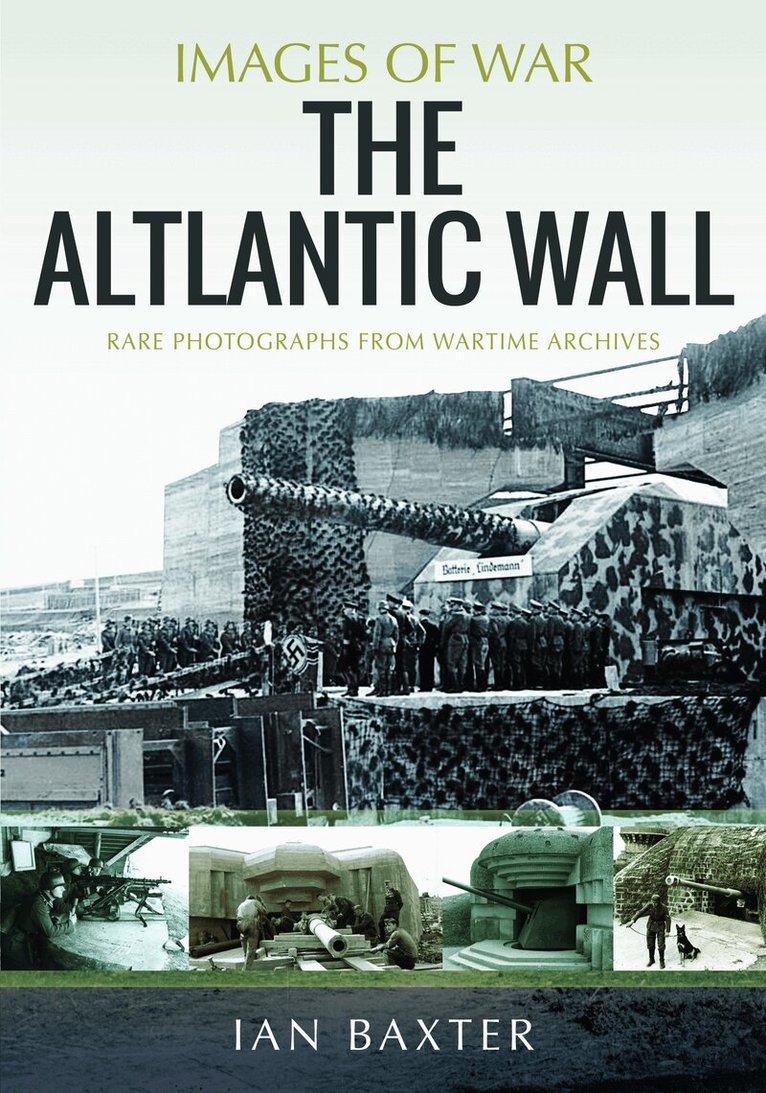
Forged in fear of an Allied invasion, Hitler’s Atlantic Wall emerged as one of the most ambitious defensive systems ever constructed in Europe. Stretching over 1,600 miles across the coasts of France, Belgium, the Netherlands, Denmark, Norway and the Channel Islands, this vast network of concrete fortifications was designed as an imposing barrier against attack. Yet rather than a single, unified project, the Atlantic Wall evolved as a complex patchwork of coastal batteries, bunkers and strongpoints, quickly assembled by German naval and army forces in a desperate race against time.Drawing upon a remarkable collection of over 130 rare and previously unpublished photographs, this compelling Images of War book reveals how these formidable structures were built at immense cost in both manpower and materials. Reinforced concrete casemates housed powerful naval and army guns, some mounted within multi-storey emplacements capable of dominating vast stretches of coastline. Batteries such as Lindemann, Friedrich, August and the imposing Todt Battery at Cap Gris-Nez stand as enduring symbols of the Wall’s intended might. Supporting them lay a hidden world of command bunkers with sleeping quarters, operations rooms and observation posts, all designed to support a coordinated defence against invasion.Yet despite its imposing appearance, the Atlantic Wall was far from impregnable and had major strategic flaws. Even under the direction of Erwin Rommel – tasked with strengthening its defences through mines, obstacles and strategic reinforcements – the system remained riddled with critical weaknesses. When Allied forces launched their assault on 6 June 1944, these flaws were laid bare. This is the story of a grand defensive vision undone by miscalculation, flawed intelligence and the relentless tide of war.
Häftad, Engelska, 2026
156 kr
Kommande
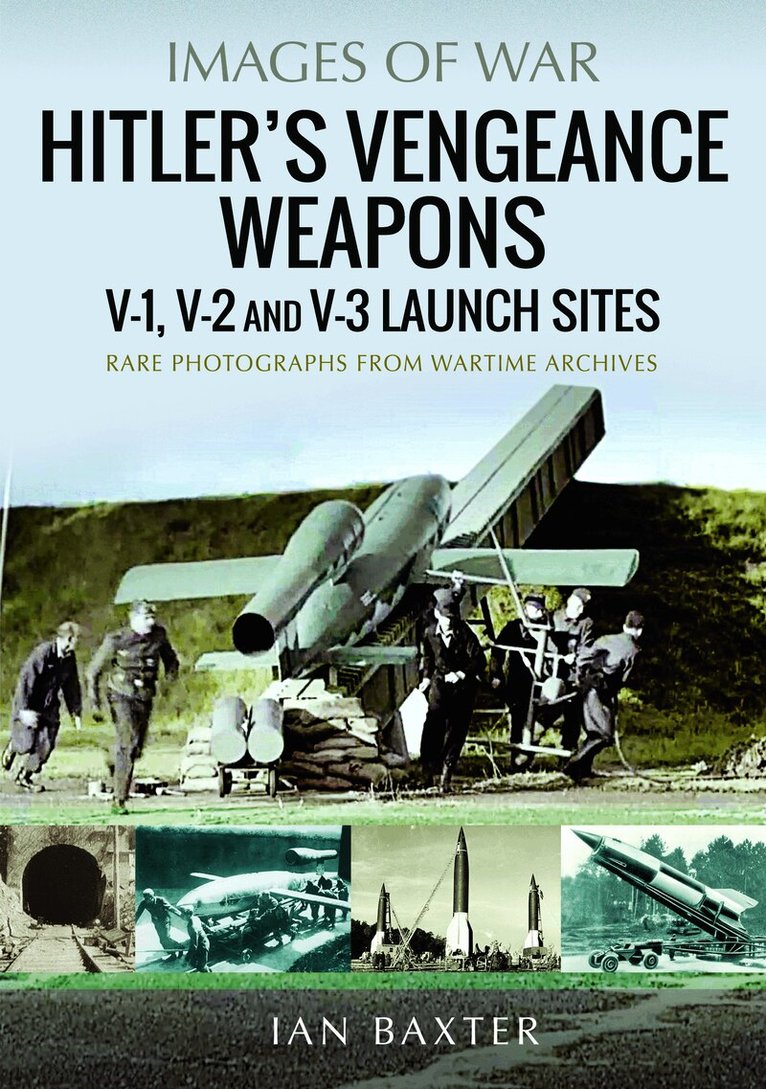
When Nazi Germany invented long-range missiles, the world entered a new era of warfare. In a desperate bid to turn the tide of the Second World War, Hitler pinned his hopes on a terrifying arsenal of so-called Wunderwaffe – ‘wonder weapons’ – designed for mass destruction and psychological terror.This richly illustrated Images of War book offers a comprehensive look at the V-1 flying bomb and the V-2 ballistic missile, known collectively as the Vergeltungswaffen or ‘retaliatory weapons’. With 150 rare and previously unpublished photographs, alongside in-depth analysis through supplementary text and detailed captions, it chronicles the development of these groundbreaking weapons, the construction of launch sites and missile manufacturing with the use of slave labour from concentration camps like Mittelbau-Dora.From the initial V-1 static launch sites of northern France, particularly in the Pas-de-Calais region, to the shift toward mobile V-2 launchers that rained destruction not only on London and other cities in England but mainland Europe, principally in France and Belgium, this book reveals the full story behind Hitler’s technological last stand. Though these weapons failed to alter the outcome of the war, they marked the dawn of a new and deadly era in military history and were responsible for 18,000 deaths, mostly civilians.A gripping and meticulously researched photographic account of ambition, cruelty and the race for technological supremacy, V-1, V-2 and V-3 Launch Sites is essential reading for anyone interested in the Second World War, military innovation or the dark legacy of Nazi science.
Inbunden, Engelska, 2025
359 kr
Skickas
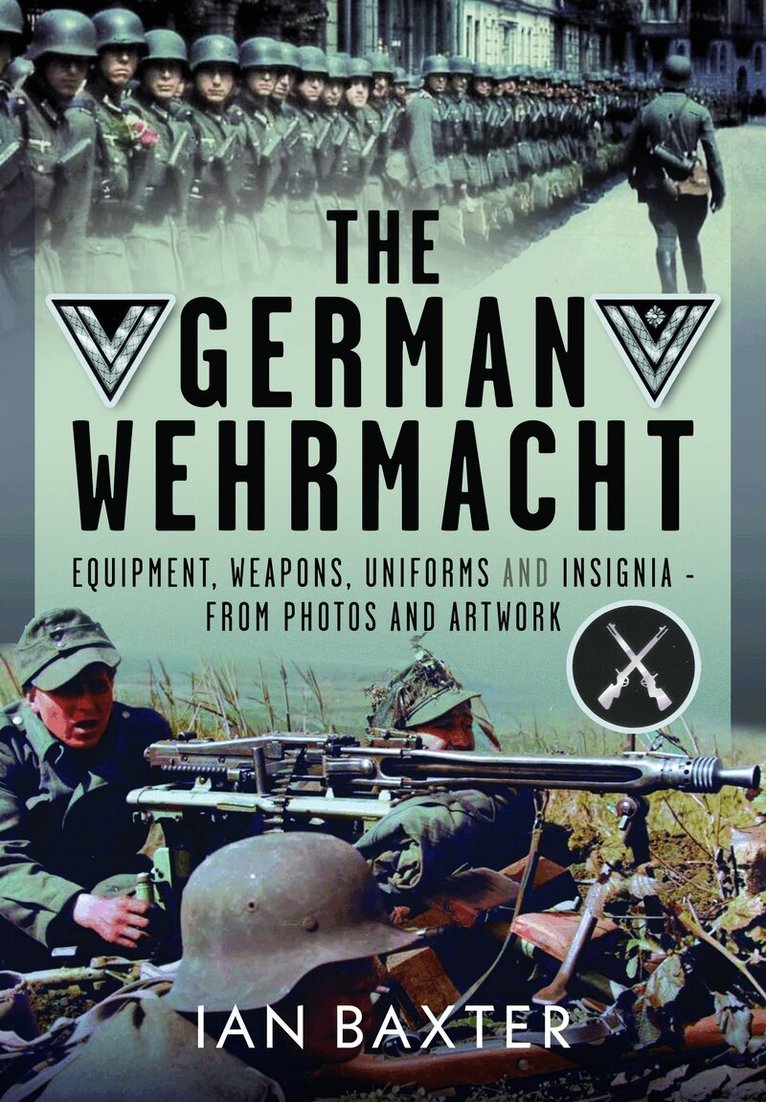
The German Wehrmacht: Equipment, Weapons, Uniforms and Insignia offers a highly illustrated record of the German soldier in the Second World War. Starting with the early victories in Poland in 1939 and concluding with the desperate final defences of 1945, this volume provides an in-depth visual exploration of the uniforms and insignia worn by the Wehrmacht at that time.Featuring over 300 rare and previously unpublished photographs, 50 of which are presented in full colour, this book showcases the full range of attire worn by German troops. From standard service dress and winter camouflage to armoured crew uniforms and protective gear, the volume covers it all, including headgear, rank insignia and battlefield equipment. Every image is accompanied by a detailed caption, bringing to life the appearance of soldiers of all ranks from privates and NCOs to generals, infantrymen, mountain troops, tank crews and assault gun operators.Beyond the visual documentation, the book offers a detailed analysis of how the German army meticulously developed its fighting force into a formidable war machine. It explores how different branches of the military were equipped across various theatres of war, from Europe and Russia to North Africa.Whether you're a military historian, collector or enthusiast, The German Wehrmacht provides a unique and comprehensive look at the clothing, equipment and insignia that defined one of history’s most formidable fighting forces.
Inbunden, Engelska, 2026
313 kr
Kommande
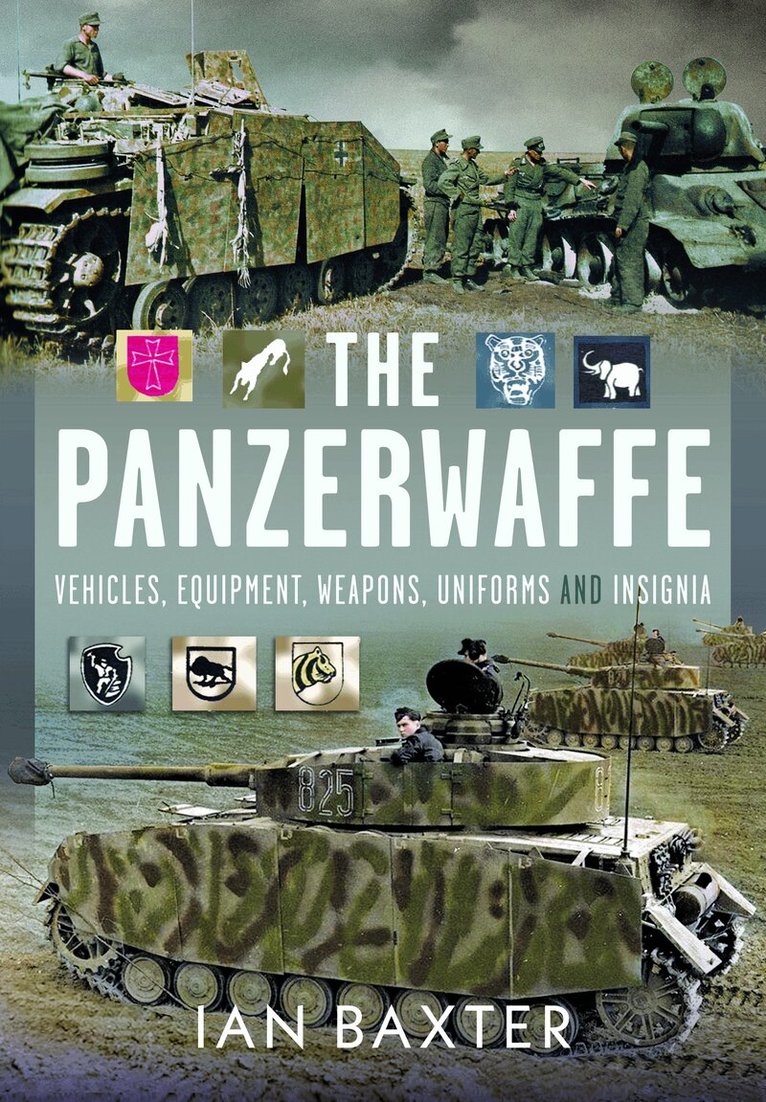
The Panzerwaffe: Vehicles, Equipment, Weapons, Uniforms and Insignia is a highly illustrated chronicle of Nazi Germany’s Panzerwaffe (Armoured Force) during the Second World War. Spanning the Blitzkrieg in Poland in 1939 to the desperate final days of the war in 1945, this comprehensive volume explores the evolution of the Panzerwaffe and its supporting units, which includes: the organization of a Panzer Division, lists of light, medium and heavy panzers including the Sturmgeschütz assault gun, self-propelled tank destroyers (Jagdpanzer), self-propelled anti-aircraft guns (Flakpanzer) and halftracks.Featuring over 200 rare and previously unpublished photographs, as well as forty meticulously drawn colour profiles, photographs and artworks, the book also covers the uniforms of armoured panzer and assault gun crew, vehicle camouflage schemes, the use and application of Zimmerit anti-magnetic mine paste and divisional insignia.With insightful text and extensive captions, this book offers a detailed look at how the Panzerwaffe adapted its tactics and technology in response to the shifting course of the war, often converting tanks into fast-moving self-propelled artillery and flak carrying vehicles. These were gradually supported by formidable heavy vehicles such as the Panther and Tiger.From the brutal fighting on the Eastern Front at Kursk to its role in defending the beaches against Allied D-Day landings in the West, The Panzerwaffe explains the key components of this effective killing machine and is an essential visual reference for military historians, modellers and enthusiasts alike.
Inbunden, Engelska, 2026
255 kr
Kommande
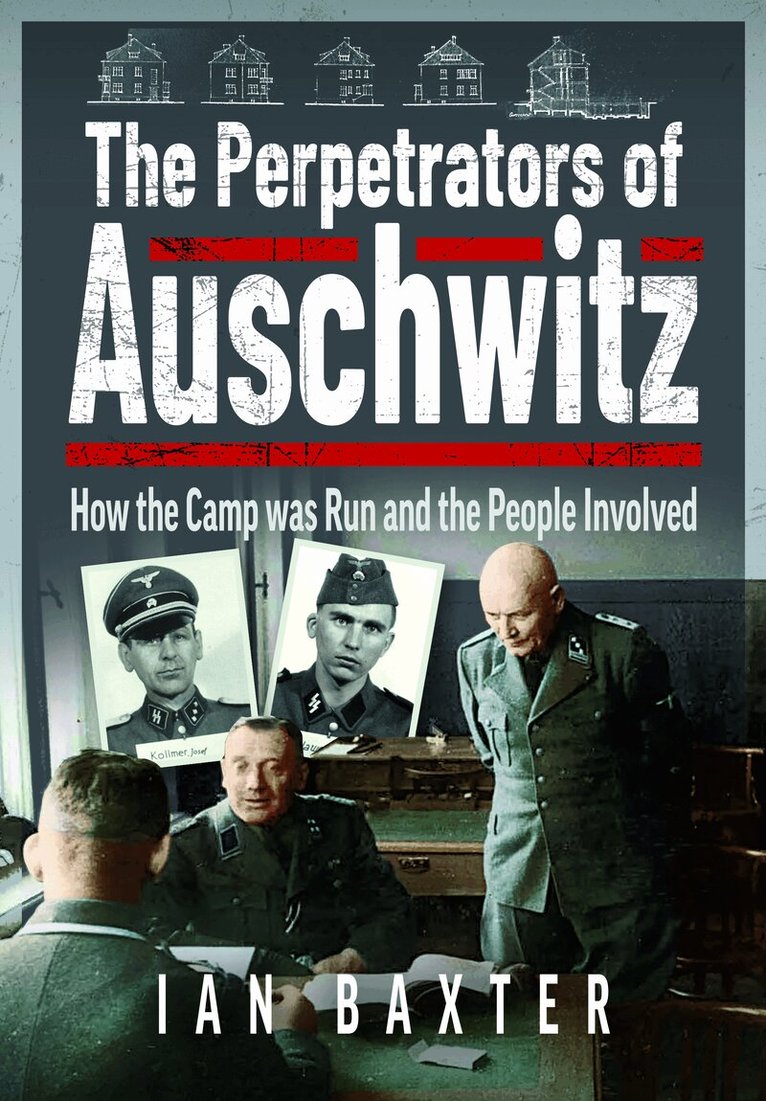
Perpetrators of Auschwitz is a chilling and comprehensive study of the men and women of the SS who operated the largest and most infamous Nazi concentration camp. Moving beyond the barbed wire and gas chambers, this book uncovers the full structure of the SS community that orchestrated and facilitated mass murder, detailing their roles, routines and disturbing attempts at normalcy.Through archival material, personal diaries and eyewitness accounts, the book explores the lives of over 7,000 SS personnel stationed at Auschwitz between its conception in 1940 to its liberation by the Red Army in 1945. It examines their organizational hierarchy, the medical staff, photographers, female guards and the seemingly mundane domestic arrangements that supported an industrialized killing machine.At the heart of the narrative is Commandant Rudolf Höss and his family, who lived in a remodelled villa just outside the camp. Their ‘normal’ domestic life, complete with servants, gardens and children, unfolded mere steps from unimaginable horror. The noises, smells and even stolen camp belongings did not seem to interrupt their focus on creating what they considered a serene home life. Drawing from testimonies of housekeepers and local workers, the book reveals how the perpetrators not only administered genocide by day but also hosted social events by night; all to uphold an appearance of normality against a backdrop of pure evil.Despite their brutality, most SS personnel had no criminal record and fewer than 800 were held accountable after the war. This book confronts the disturbing truth of how ordinary people became architects of genocide and how the Auschwitz complex evolved into a hub of systematic extermination, responsible for the deaths of over 1 million people including 200,000 children.With harrowing detail, historical clarity and containing 390 photographs, Perpetrators of Auschwitz is an essential study of the individuals behind one of history’s greatest atrocities.
Häftad, Engelska, 2022
160 kr
Skickas
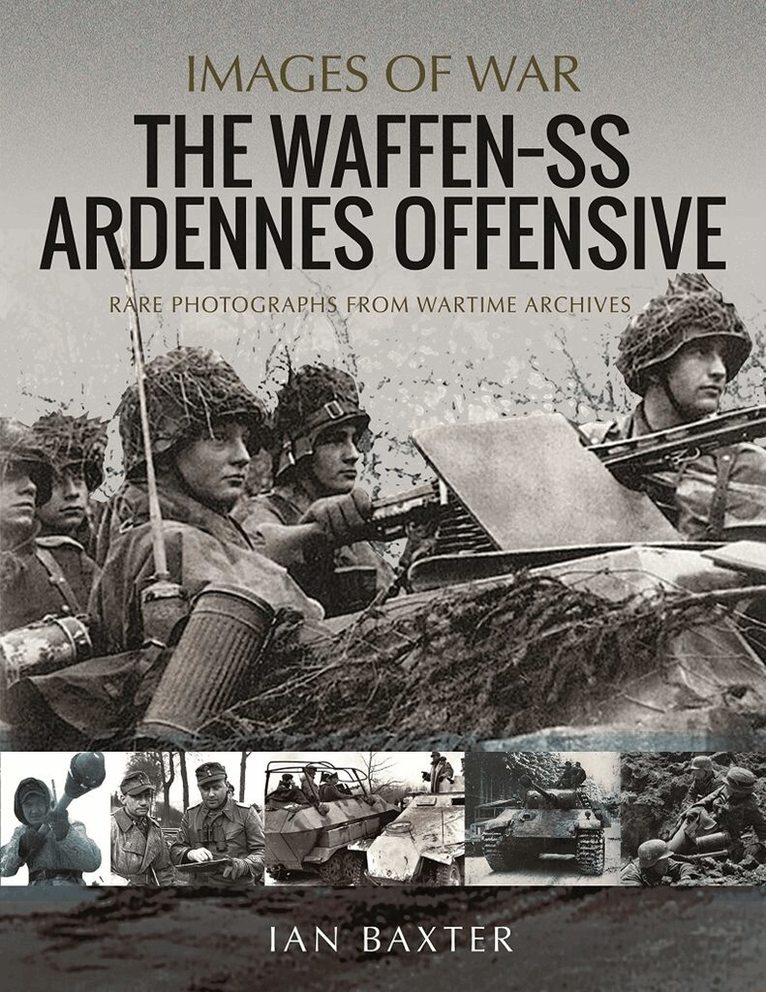
In late 1944 under extreme pressure on both the Eastern and Western fronts, Hitler realized he needed to force the Allies into negotiating a truce thereby saving Germany from total defeat. Using the Christmas period to enhance the vital element of surprise, he ordered a devastating attack through the rugged and mountainous Ardenne region with the key Allied port of Antwerp as the objective.This book, with its extensive text and rare and unpublished photographs with detailed captions, tells the story of the Waffen-SS offensive, known as `Wacht am Rhein` (Watch on the Rhine). These formidable SS armoured units with supporting Wehrmacht divisions initially achieved dramatic success making full use of the harsh winter conditions and terrain. Gradually the Allies regained the upper hand on the attackers who were increasingly suffering from lack of reinforcements and resupplies. After defeat at the pivotal battle of Bastonge, remaining Waffen-SS units withdrew and were transferred back to the Eastern Front. As described in this classic Images of War book, the Fuhrer's gamble so nearly paid off and the ruthless fighting spirit of the elite Waffen-SS divisions caused the Allied command serious concern.
E-bok
Engelska, 202214 kr
Läs direkt efter köp
In late 1944 under extreme pressure on both the Eastern and Western fronts, Hitler realized he needed to force the Allies into negotiating a truce thereby saving Germany from total defeat. Using the Christmas period to enhance the vital element of surprise, he ordered a devastating attack through the rugged and mountainous Ardenne region with the key Allied port of Antwerp as the objective. This book, with its extensive text and rare and unpublished photographs with detailed captions, tells the story of the Waffen-SS offensive, known as Wacht am Rhein (Watch on the Rhine). These formidable SS armored units with supporting Wehrmacht divisions initially achieved dramatic success making full use of the harsh winter conditions and terrain. Gradually the Allies regained the upper hand on the attackers who were increasingly suffering from lack of reinforcements and resupplies. After defeat at the pivotal battle of Bastonge, remaining Waffen-SS units withdrew and were transferred back to the Eastern Front. As described in this classic Images of War book, the Fuhrer’s gamble so nearly paid off and the ruthless fighting spirit of the elite Waffen-SS divisions caused the Allied command serious concern.
E-bok
PDF, Engelska, 202214 kr
Läs direkt efter köp
In late 1944 under extreme pressure on both the Eastern and Western fronts, Hitler realized he needed to force the Allies into negotiating a truce thereby saving Germany from total defeat. Using the Christmas period to enhance the vital element of surprise, he ordered a devastating attack through the rugged and mountainous Ardenne region with the key Allied port of Antwerp as the objective.This book, with its extensive text and rare and unpublished photographs with detailed captions, tells the story of the Waffen-SS offensive, known as Wacht am Rhein (Watch on the Rhine). These formidable SS armored units with supporting Wehrmacht divisions initially achieved dramatic success making full use of the harsh winter conditions and terrain. Gradually the Allies regained the upper hand on the attackers who were increasingly suffering from lack of reinforcements and resupplies. After defeat at the pivotal battle of Bastonge, remaining Waffen-SS units withdrew and were transferred back to the Eastern Front. As described in this classic Images of War book, the Fuhrer’s gamble so nearly paid off and the ruthless fighting spirit of the elite Waffen-SS divisions caused the Allied command serious concern.
Häftad, Engelska, 2022
160 kr
Skickas
The 1944 Arnhem airborne operation, immortalized by the film A Bridge Too Far, will forever be remembered as a great British feat of arms. British and Polish paratroopers displayed outstanding courage and tenacity in a desperate last stand situation. And yet, as this book describes, the plan was fatally flawed as the 9th and 10th SS Panzer Divisions were recuperating and concealed nearby. What followed was a bloody battle of attrition the result of which was arguably inevitable.Drawing on rare and unpublished photographs, this Images of War series work reveals the historical combat record of the `Hohenstaufen` and `Frundsberg` divisions. It describes the intensity of the fighting in and around Arnhem between these elite SS and supporting units against a lightly armed yet equally determined enemy. In spite of the war being only months away from its end and the defeat increasingly certain, the SS soldier remained fanatically motivated.This superbly illustrated book with its well-researched text and full captions captures the drama of that historic battle for a bridge over the Rhine.
E-bok
Engelska, 2022142 kr
Läs direkt efter köp
This pictorial WWII history examines the brutal Battle of Arnhem with particular focus on the SS units that fought the Allied push into the Netherlands.The 1944 Arnhem airborne operation, immortalized by the film A Bridge Too Far, will forever be remembered as a great British feat of arms. British and Polish paratroopers displayed outstanding courage and tenacity in a desperate last stand situation. And yet, as this book describes, the plan was fatally flawed as the 9th and 10th SS Panzer Divisions were recuperating and concealed nearby. What followed was a bloody battle of attrition the result of which was arguably inevitable. Drawing on rare and unpublished photographs, this volume in the Images of War series reveals the historical combat record of the Hohenstaufen and Frundsberg divisions. It describes the intensity of the fighting in and around Arnhem between these elite SS and supporting units against a lightly armed yet equally determined enemy. In spite of the increasing certainty of German defeat, the SS soldier remained fanatically motivated. This superbly illustrated book with its well-researched text and full captions captures the drama of that historic battle for a bridge over the Rhine.
E-bok
PDF, Engelska, 2022142 kr
Läs direkt efter köp
The 1944 Arnhem airborne operation, immortalized by the film A Bridge Too Far, will forever be remembered as a great British feat of arms. British and Polish paratroopers displayed outstanding courage and tenacity in a desperate last stand situation. And yet, as this book describes, the plan was fatally flawed as the 9th and 10th SS Panzer Divisions were recuperating and concealed nearby. What followed was a bloody battle of attrition the result of which was arguably inevitable.Drawing on rare and unpublished photographs, this Images of War series work reveals the historical combat record of the Hohenstaufen and Frundsberg divisions. It describes the intensity of the fighting in and around Arnhem between these elite SS and supporting units against a lightly armed yet equally determined enemy. In spite of the war being only months away from its end and the defeat increasingly certain, the SS soldier remained fanatically motivated.This superbly illustrated book with its well-researched text and full captions captures the drama of that historic battle for a bridge over the Rhine.
Häftad, Engelska, 2021
184 kr
Skickas
Drawing on a superb collection of rare and unpublished photographs SS Foreign Divisions & Volunteers of Lithuania, Latvia and Estonia 1942 - 1945 describes how the occupying Nazis recruited Lithuanian, Latvian and Estonian conscripts into the Waffen-SS. Unlike her Latvian neighbour, Lithuania had no plans to provide Germany with a National Legion. Although volunteers came forward, the majority did not. This was not the case for Latvia and Estonia, which undertook huge recruitment programmes, and thousands of men were drafted into their own foreign legion of Waffen-SS Grenadier divisions. After intensive training, these divisions saw action on the Eastern front, around Leningrad, in the Ukraine, before vicious defensive operations as the Red Army smashed its way through the Baltic States in 1944\. Even in the last dying weeks of the war, what was left of the Baltic soldiers of the 15th, 19th and 20th Waffen-SS Grenadier Divisions, continued to fight alongside their Wehrmacht and Waffen-SS counterparts until they were either destroyed or surrendered.The story of these divisions is graphically told with detailed captions and text together with many contemporary images in true Images of War style.